MICARE BY WOW DESIGN || Reclaiming the Glossy Soul of 1960s Ceramics for Contemporary Interiors
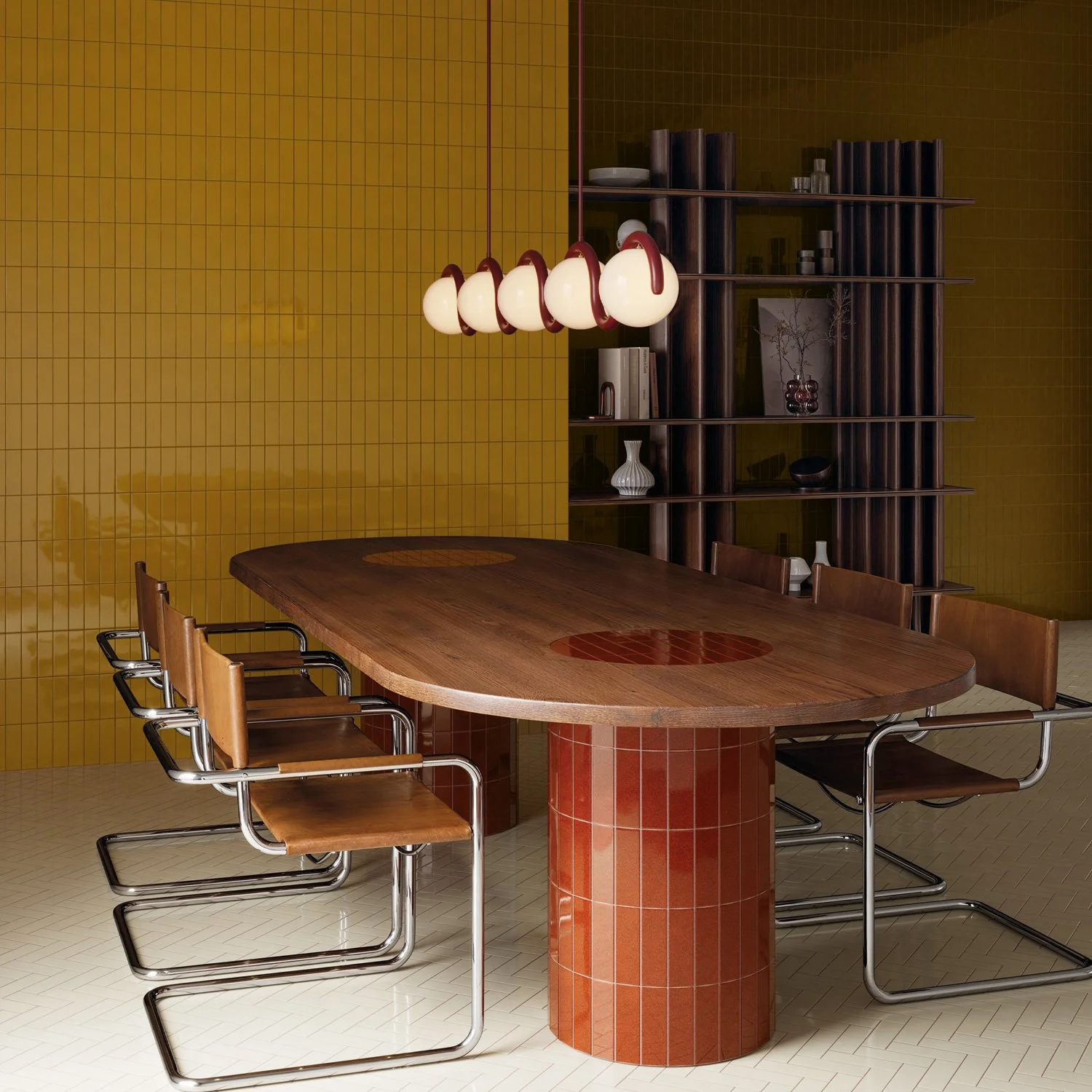
Inspired by the glassy ceramics that once defined mid-century interiors, Micare reinterprets retro glazing not as nostalgia, but as a renewed material language shaped by light, volume, and restraint.
In the mid-20th century, glazed ceramic tiles were more than surface finishes. They carried colour, depth, and a tactile presence that shaped the atmosphere of everyday interiors. Kitchens, corridors, and bathrooms became places where light danced across glossy surfaces, creating rhythm through repetition and variation. With Micare, WOW Design revisits this material legacy, translating it into a contemporary ceramic collection rooted in authenticity and craft.
Gloss and light interact across Micare’s small-format tiles, creating depth through repetition and tonal variation rather than surface decoration.
Rather than leaning on decorative nostalgia, Micare approaches glazed ceramics as an autonomous architectural material. The collection draws inspiration from the vitreous wall tiles of the 1960s and ’70s, yet its language is unmistakably modern. At its core is a refined exploration of gloss, relief, modular repetition, and tonal depth—elements that give ceramics their expressive power while allowing them to adapt to today’s interiors.
What distinguishes Micare is its surface intelligence. The collection features a richly textured vitreous glaze infused with mica, creating a subtle mineral shimmer that brings each tile to life. This is not an ornamental effect, but a microstructure embedded within the glaze itself, producing optical depth that shifts with light and movement. The surface feels alive, revealing nuance rather than demanding attention.
Rim relief introduces softened edges and gentle shadow, adding tactile warmth to architectural compositions. Canale’s graphic channel brings rhythm and direction, transforming ceramic surfaces into structured spatial elements.
Micare’s palette reinforces this sense of material honesty. Earthy neutrals, mineral greens and blues, and deeper spiced tones form six colour ranges: Linen, Ambar, Alpi, Evergreen, Midnight, and Saffron. Each range is offered in Light, Medium, and Dark intensities, enabling designers to create natural gradients, layered compositions, and tonal transitions. These variations are integral to the collection’s identity, allowing surfaces to evolve visually without losing coherence.
Relief plays an equally important role. Two sculptural profiles define Micare’s physical expression. Rim introduces a softly rounded edge that creates gentle shadow and volume, lending warmth and subtle dimensionality. Canale offers a more graphic, architectural channel, establishing rhythm and direction across a surface. Used individually or combined, these reliefs expand the compositional vocabulary, turning walls into tactile landscapes shaped by light.
Vitreous glazes infused with mica produce a quiet mineral shimmer that reveals nuance rather than spectacle.
The collection’s signature 5 × 15 cm format anchors this system. Small-format tiles, long associated with craft and precision, become tools for architectural storytelling. Through repetition, tonal variation, and relief placement, Micare enables designers to create surfaces that function as graphic planes that are responsive to light, scale, and spatial context. From calm, luminous environments to immersive, mural-like compositions, the format supports both restraint and bold expression.
Earthy and mineral tones shift subtly across light, medium, and dark intensities, allowing surfaces to feel layered and dynamic.
Micare’s 5 × 15 cm format enables modular compositions that respond to scale, light, and architectural context.
Ultimately, Micare is less about revisiting a style and more about reclaiming a way of working with ceramics. It positions glazed tile not as background decoration, but as an authored material capable of shaping spatial identity. In doing so, WOW Design reinforces its commitment to ceramics that balance memory and innovation, proving that material heritage can be reinterpreted with clarity, intention, and contemporary relevance.
Photos courtesy of WOW Design