THE JAMES SUITE HOTEL FIRENZE 1564 || The Year the World Changed Is Now the Address Where You Sleep
In 1564, Michelangelo died, Galileo was born, Shakespeare drew his first breath, and somewhere in the heart of Florence, a palazzo quietly opened its doors for the first time.
That building still stands. It still has its modest façade, its off-centre doorway, its vaulted ceilings, and the quiet inner courtyard that has absorbed centuries of Florentine life without giving much away. What it has now, for the first time, is a name: The James Suite Hotel Firenze 1564.
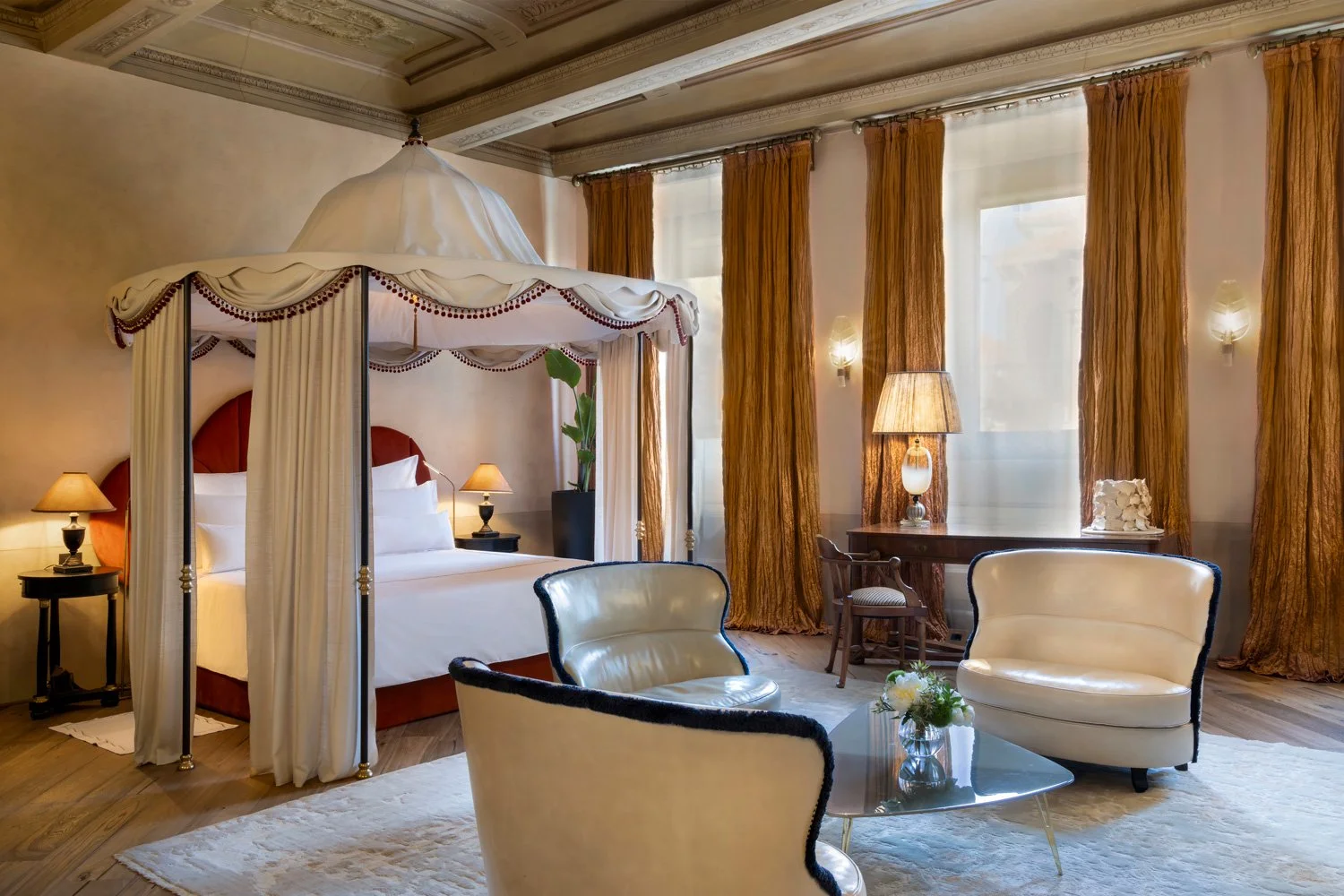
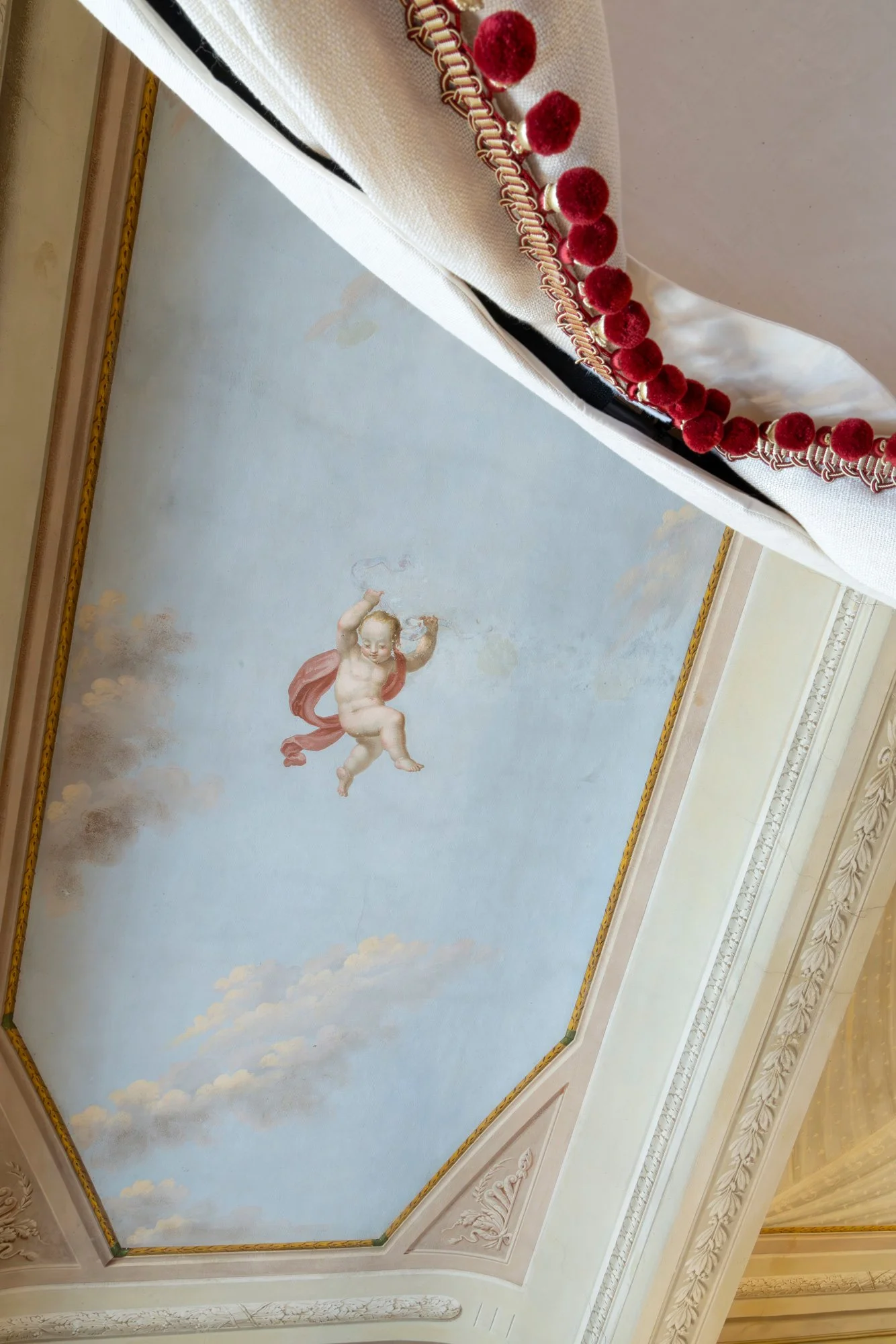
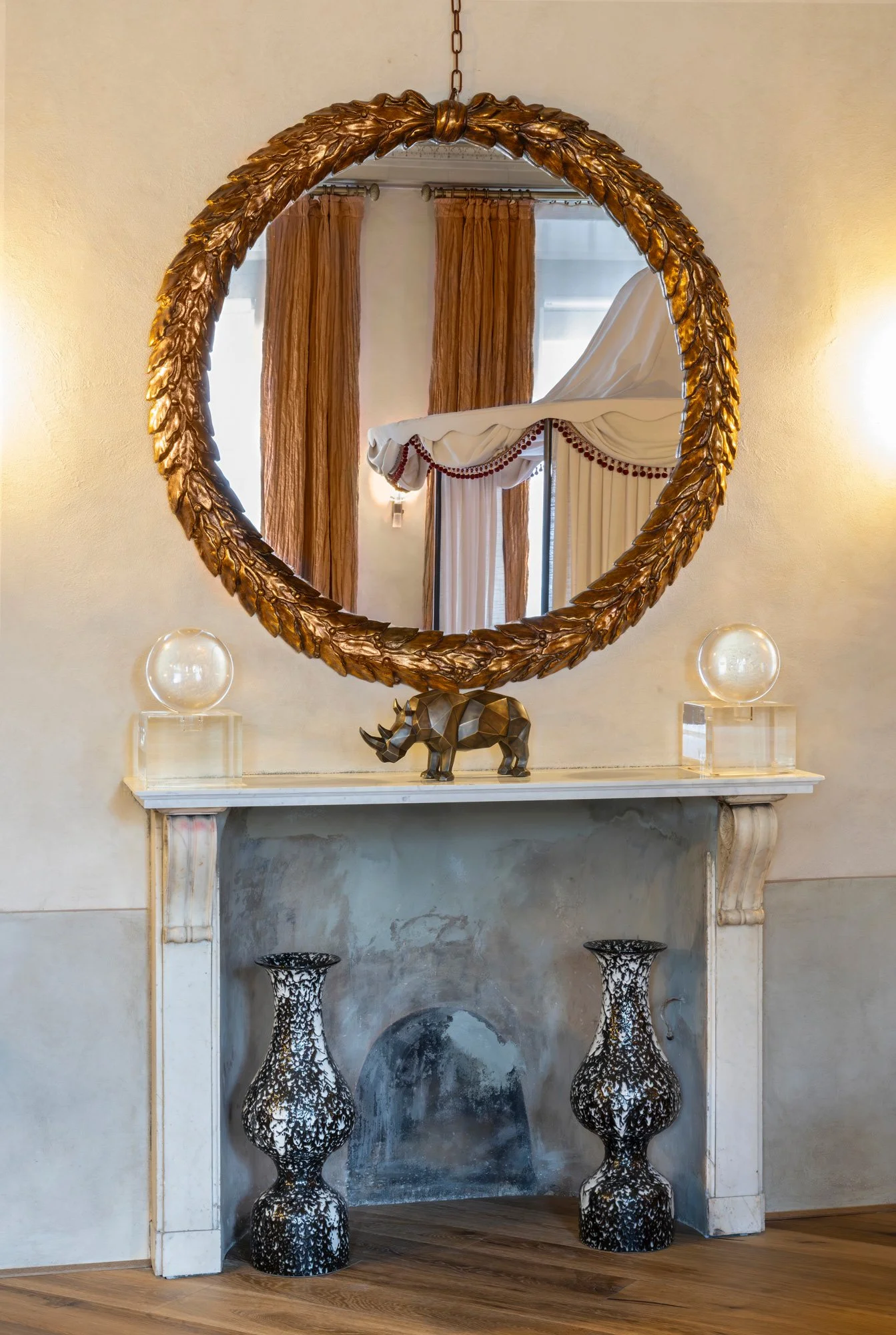
A draped four-poster bed, its cream canopy trimmed with burgundy beading, anchors the suite beneath an ornate plasterwork ceiling that has observed Florence for more than four centuries.
The hotel is the vision of James Cavagnari, architect, designer, and—in the most literal sense—a child of this city. Born in London in 1964, exactly four centuries after the palazzo was constructed, and raised in Florence, Cavagnari spent his career shaping the visual language of luxury for Salvatore Ferragamo and Bulgari before turning his attention inward. The James is his most personal project: a transformation of his childhood palazzo into fourteen suites that carry the weight of the building's history without being buried by it.
The result is a hotel that feels less like a hospitality product and more like an inheritance. Renaissance bones remain intact throughout: soaring arches, original frescoes, restored marble floors, and ceilings that rise with the quiet confidence of a building that has outlasted everything around it. Against this, Cavagnari has layered rich velvets, glossy ceramics, contemporary artworks, and vintage furnishings, not to create contrast for its own sake, but to suggest that beauty accumulates over time rather than belonging to any single moment.
The suites are individually conceived spaces where theatrical and intimate coexist without tension. Four-poster beds dressed in fine white linens sit beneath painted ceilings; amber-tiled bathrooms glow with the warmth of Sicilian craftsmanship, punctuated by ceramic figures that nod to Italian decorative tradition. A black lacquered wardrobe from the hotel's collection houses two white robes beside it in a gesture both practical and quietly theatrical. The most remarkable object in the building is also the most unexpected: the late Queen Elizabeth II's original mobile wardrobe, crafted from mahogany with compartments for garments, scarves, and accessories. It is a piece that belongs nowhere and everywhere in a hotel built at the intersection of English heritage and Tuscan craft.
The spacious suite houses a large black wardrobe. A trio of large windows invite sunlight in.
Amber honeycomb tiles line the walls and ceiling of the ensuite bathroom, where a yellow Sicilian ceramic head presides over the vanity.
Cavagnari's British identity surfaces throughout the interiors in ways that feel considered rather than costumed. The 1564 Lounge Bar, with its vaulted ceiling framed by pink Murano glass sconces and green velvet chairs, offers signature cocktails crafted with rare spirits and house-made infusions.
The James Restaurant unfolds beneath a glass-roofed courtyard where rattan chairs, geometric lanterns, and layered botanicals create a setting that feels simultaneously colonial and deeply Florentine. Traditional dishes are reimagined with a Mediterranean sensibility; the food, like the building, carries more than one story at once.
Geometric lanterns hang above rattan chairs and a floral carpet in The James Restaurant's glass-roofed courtyard, where the boundary between interior and garden dissolves quietly into the Florentine evening.
Pink Murano glass sconces bloom against the vaulted plaster ceiling of the 1564 Lounge Bar, where green velvet chairs and brass-edged tables compose a room that feels like a secret worth keeping.
With only fourteen suites, the scale of The James is part of its argument. This is not a hotel that competes with Florence for attention. It situates itself within the city's long history of making beautiful things with great care, and invites guests to inhabit that tradition for a few nights rather than simply observe it from the outside.
The palazzo has been standing since the world's most consequential year. It has learned to be patient with visitors.