CASA TAO || Living in the Shade, Learning to Slow Down
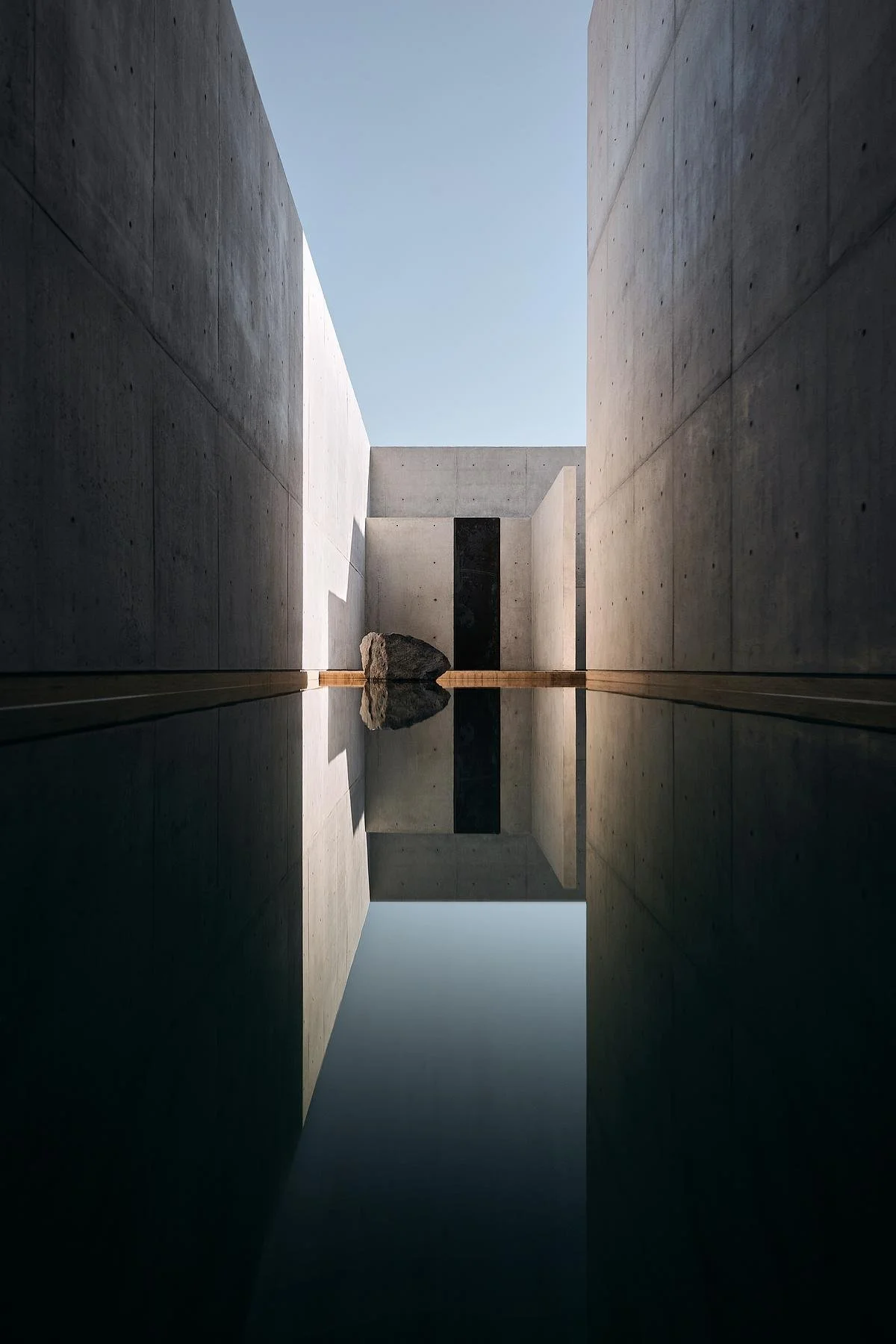
In a city defined by heat and brightness, Casa Tao makes an unusual proposition: that comfort begins not with light, but with shade.
In Puerto Vallarta, shade is not a design preference. It is a lived necessity, learned early and carried forward. Casa Tao begins from that understanding, shaping an architecture that treats shadow not as absence, but as presence. Here, shade becomes emotional refuge as much as physical relief, encouraging a quieter pace of living that resists urgency and spectacle.
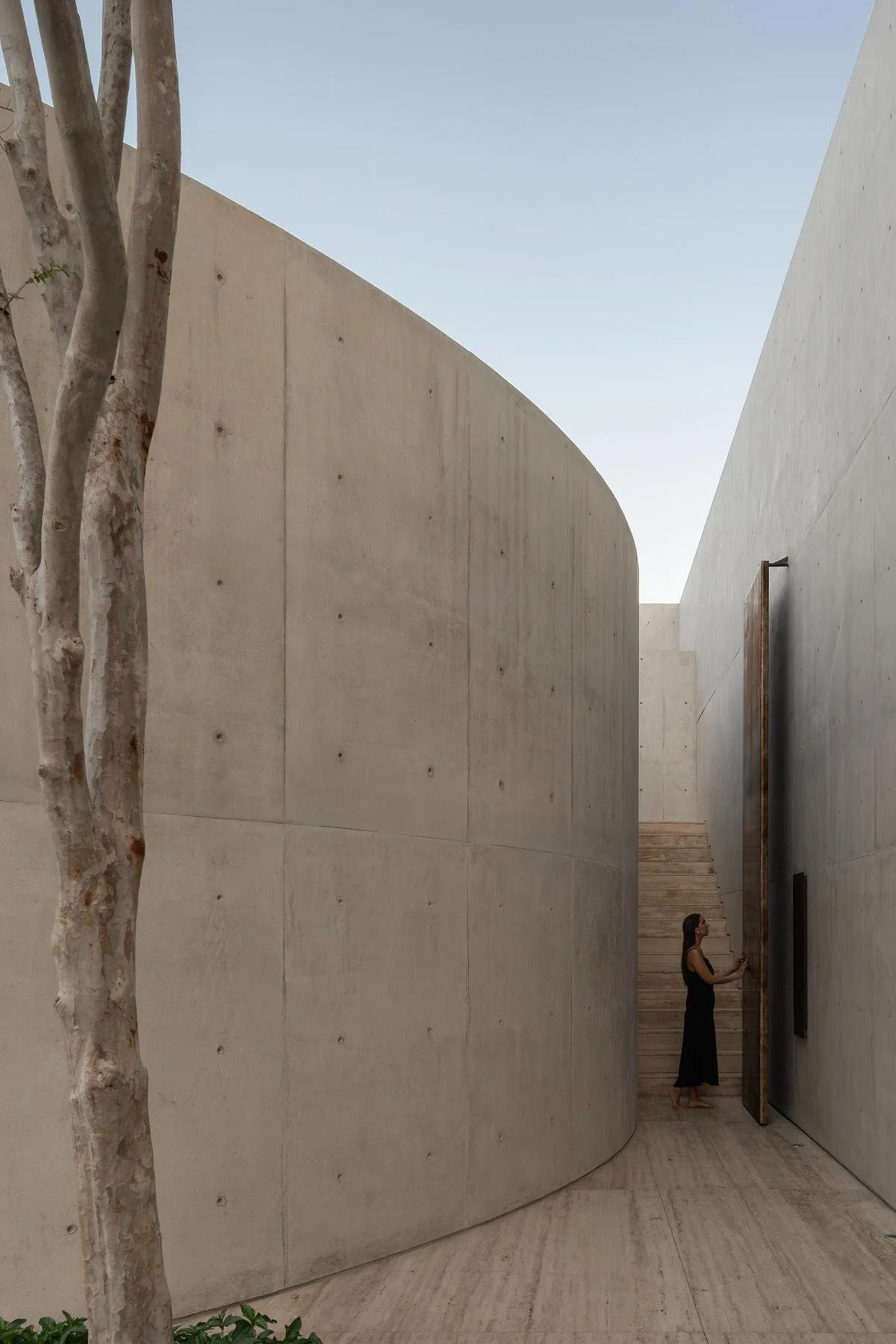
The curved concrete wall introduces Casa Tao with restraint, guiding movement inward while shielding the interior from direct sunlight.
The house was conceived for a family deeply attuned to observation rather than display. Gustavo, raised in a modest coastal home where climate dictated daily rhythm, understands shelter as something earned and valued. His curiosity spans philosophy, photography, cinema, and architecture, disciplines that share an appreciation for restraint and clarity. That sensibility is echoed throughout Casa Tao, where space unfolds deliberately and nothing competes for attention.
Rather than opening itself assertively to the street, the house turns inward. It engages its surroundings obliquely, allowing breeze, filtered light, and the scent of the nearby sea to enter without surrendering privacy or comfort. Large expanses of glass are avoided. Instead, openings are angled and measured, permitting connection while tempering exposure to heat. The result is a home that observes quietly, never fully revealing itself at once.
Elevated social spaces are lifted above street level, allowing breeze and filtered light to circulate without exposure to heat. Interior spaces open selectively, framing light as something that arrives slowly and leaves just as gently.
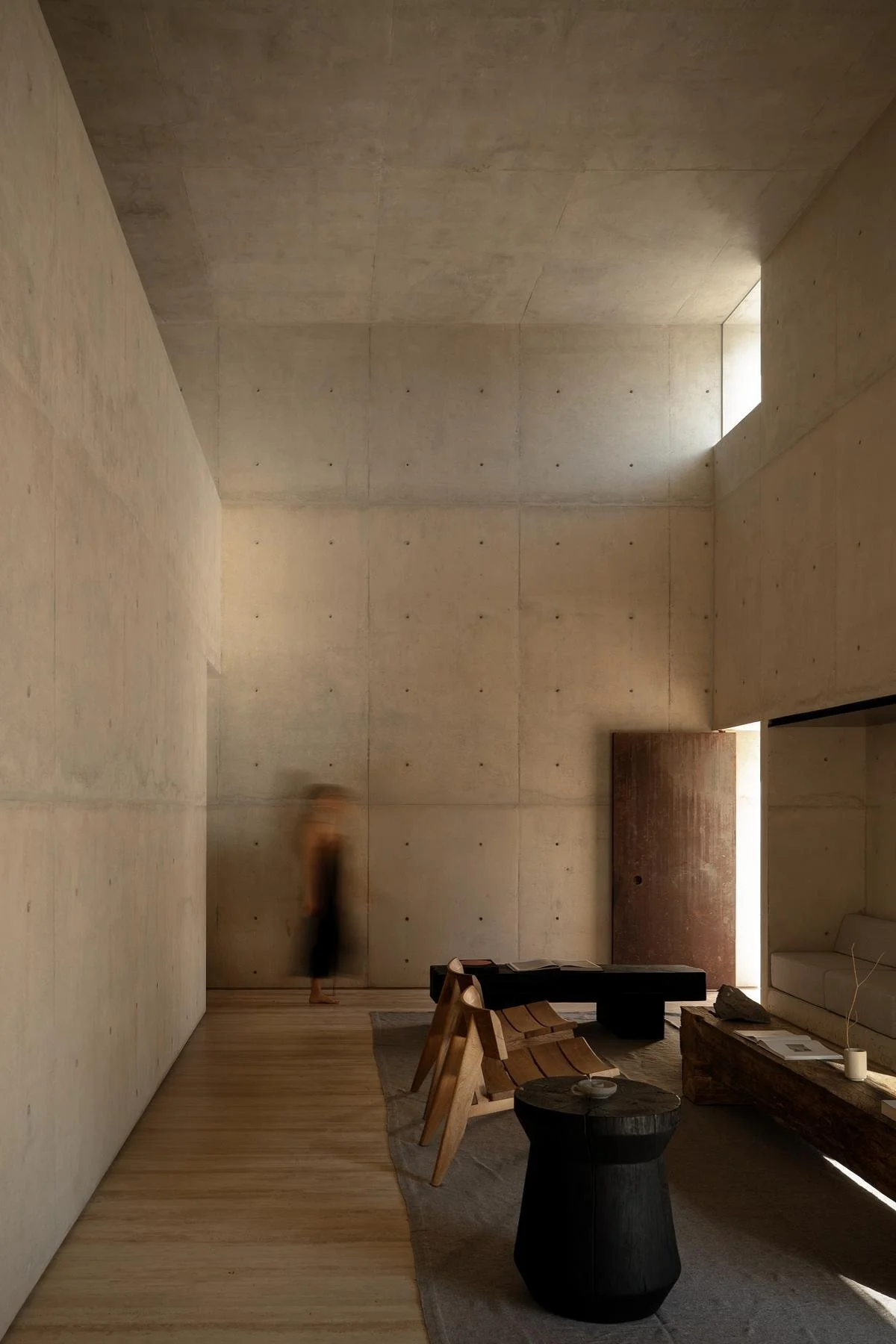
Social spaces are lifted above street level, suspended in a double height volume that captures air movement and soft daylight. Elevated patios function as places of pause rather than transition, framing moments of stillness where wind moves through trees and shadows stretch across concrete surfaces. These are not spaces designed for constant occupation, but for lingering.
Private rooms are gathered around a courtyard, reinforcing an inward focus that prioritizes calm over openness. A curved wall introduces the interior gently, guiding movement without instruction. A single tree becomes a focal point, less decorative gesture than living marker of time. The house does not shut itself off. It opens selectively, upward to the sky and inward to its own quiet rhythms.
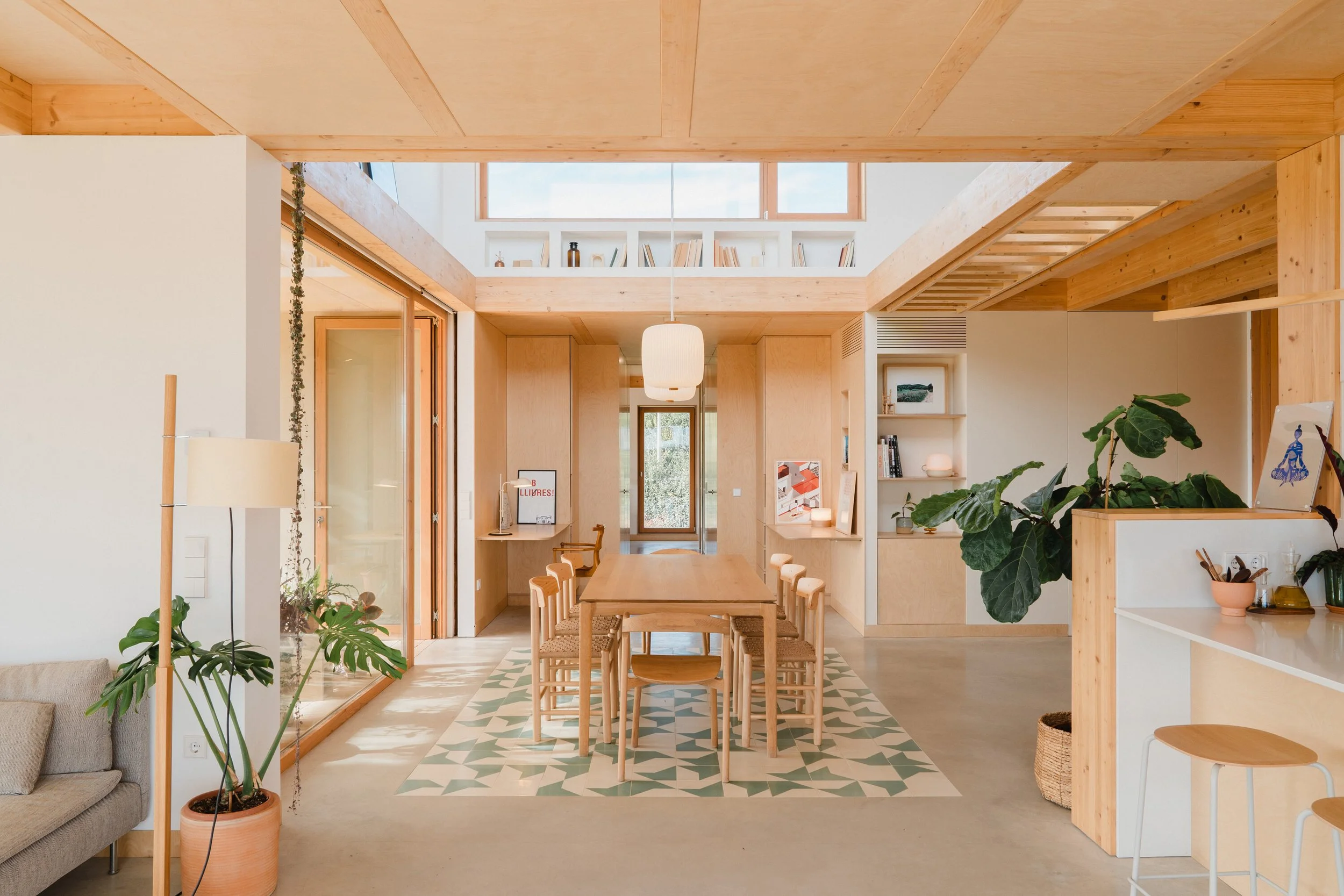
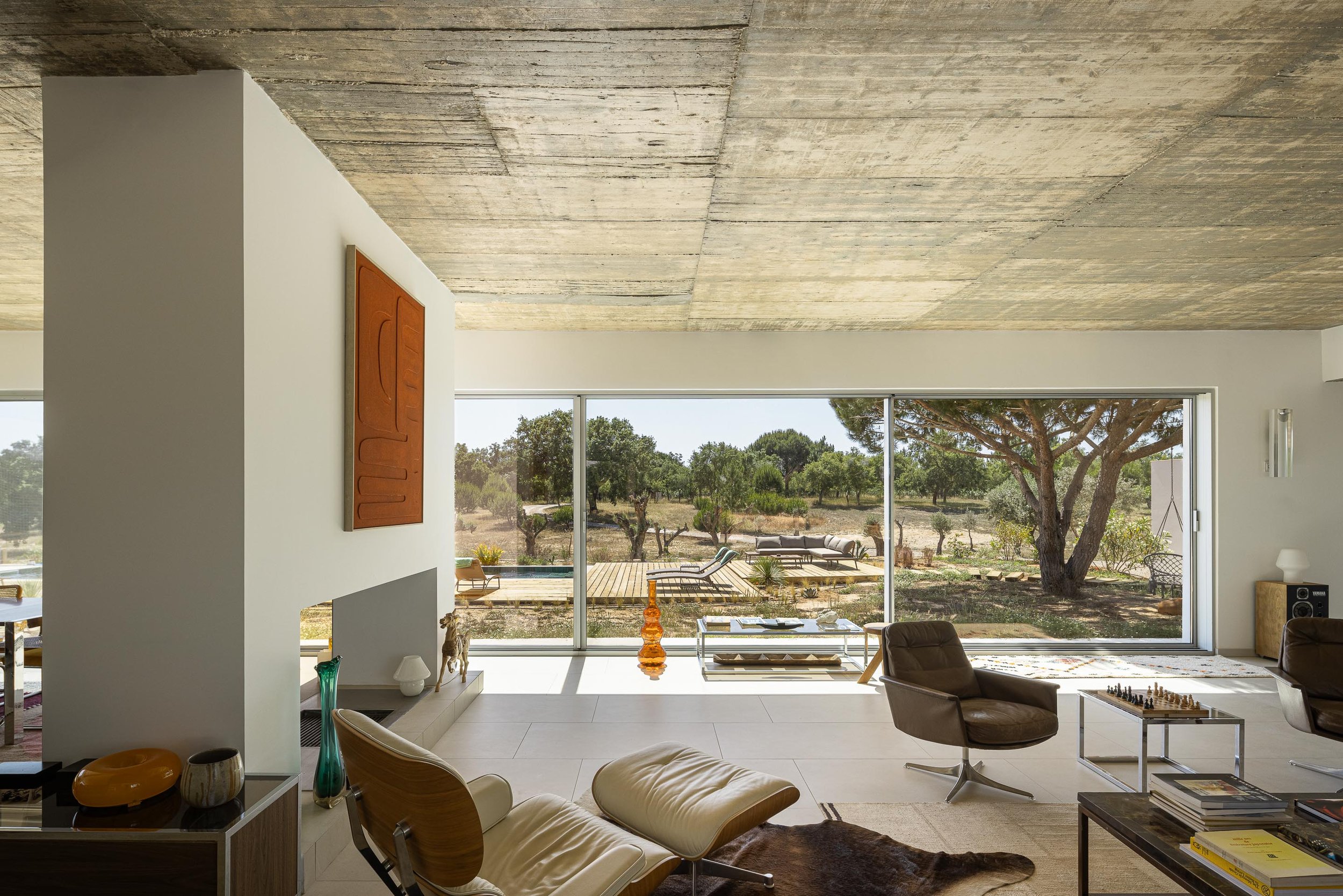
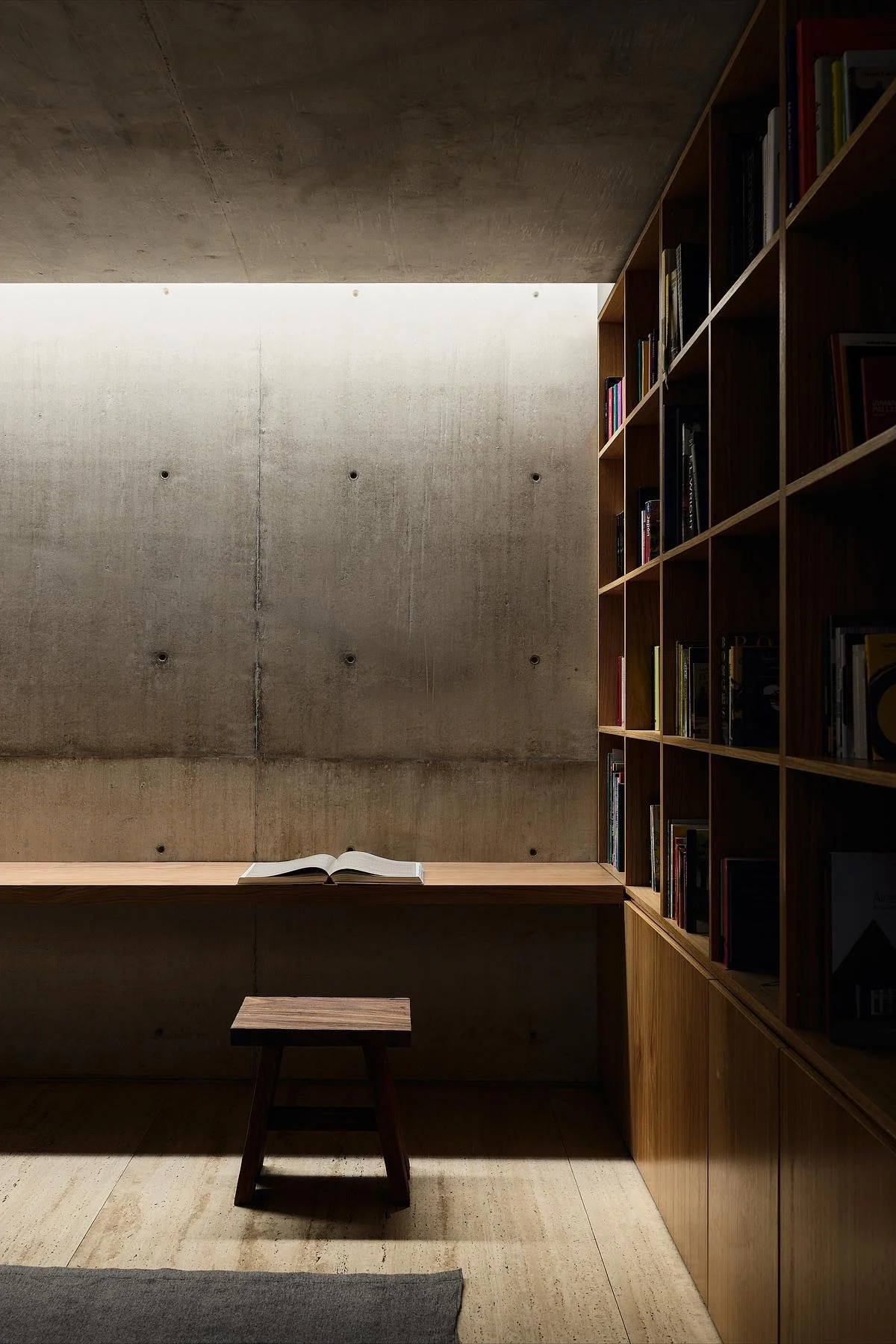
Above: Bedrooms are organized around a quiet courtyard, where enclosure creates intimacy, and the sky remains the primary point of connection. Below: Concrete surfaces absorb light rather than reflect it, creating interiors that feel warm, tactile, and settled throughout the day.
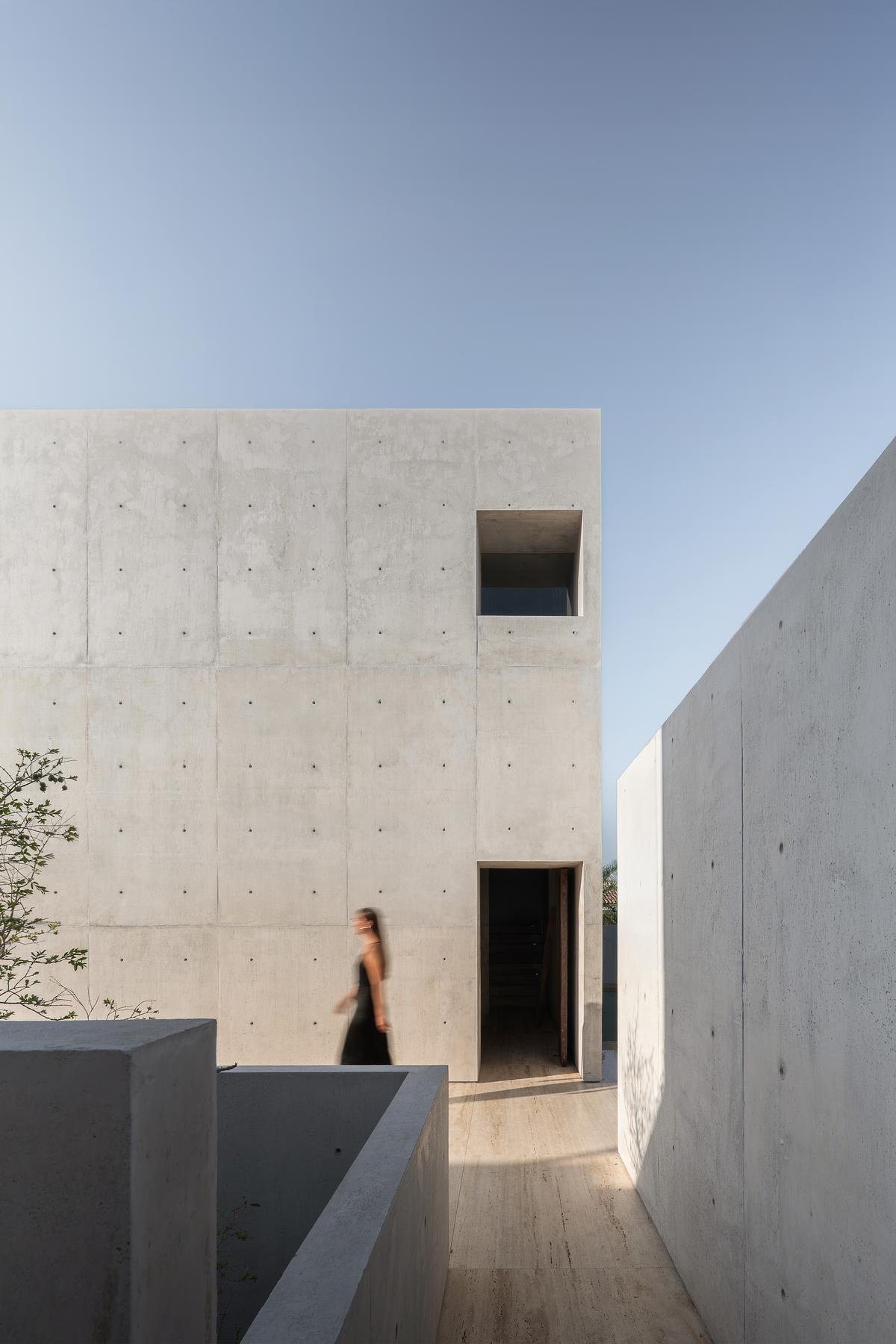
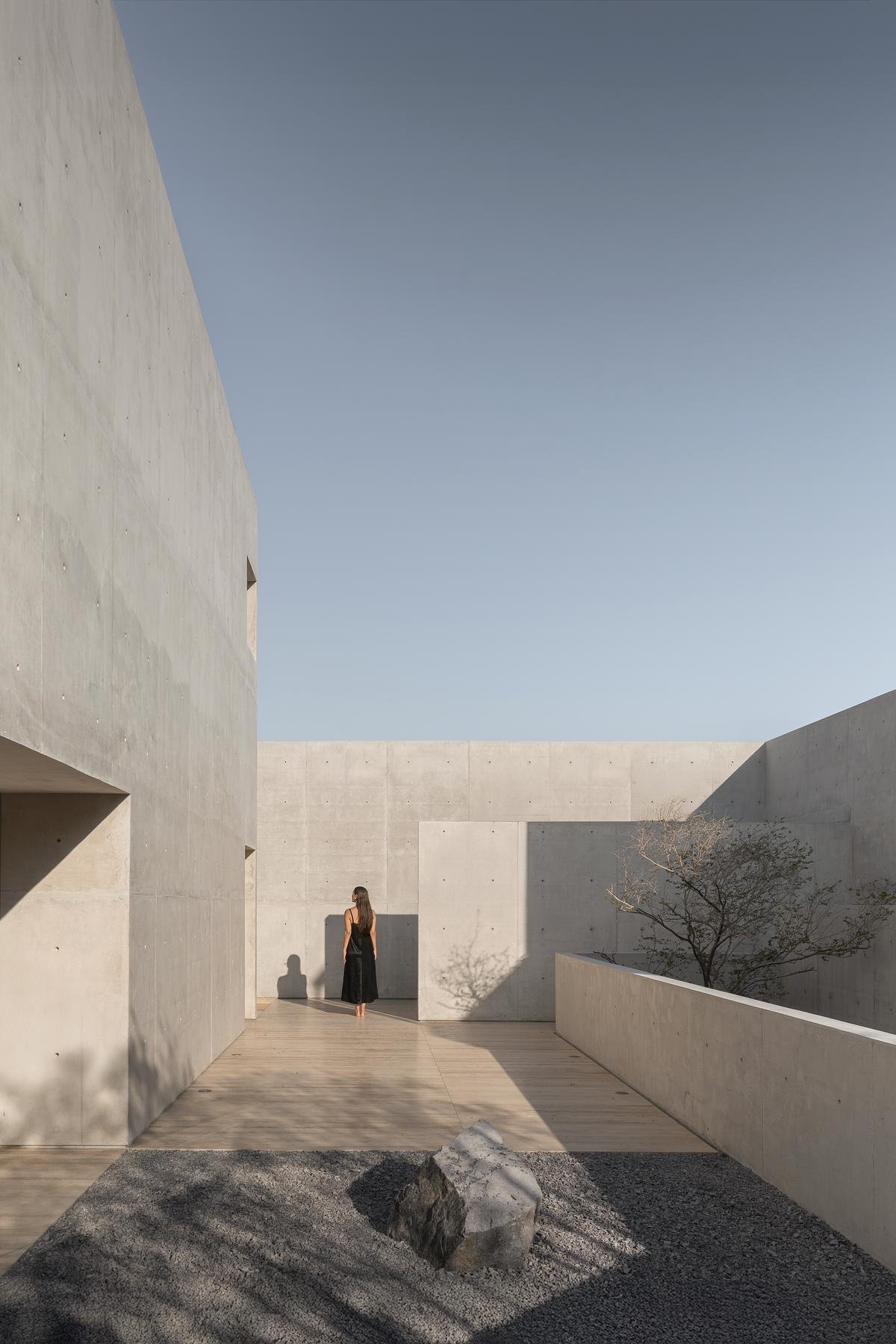
Material choices reinforce this sensibility. Concrete dominates, not as an expression of weight or severity, but as a surface that absorbs light and holds it. In this climate, whiteness can dazzle. Here, concrete softens illumination, allowing light to settle rather than reflect. Over time, its texture warms, shaped by use and atmosphere. Floors, walls, and ceilings participate equally in this slow dialogue between material and light.
Casa Tao is not interested in efficiency of movement. Circulation paths are measured. Thresholds are marked. Spaces invite pause rather than passage. The architecture encourages its inhabitants to notice subtle shifts in temperature, shadow, and sound. In doing so, it reframes daily life as something to inhabit attentively rather than move through quickly.
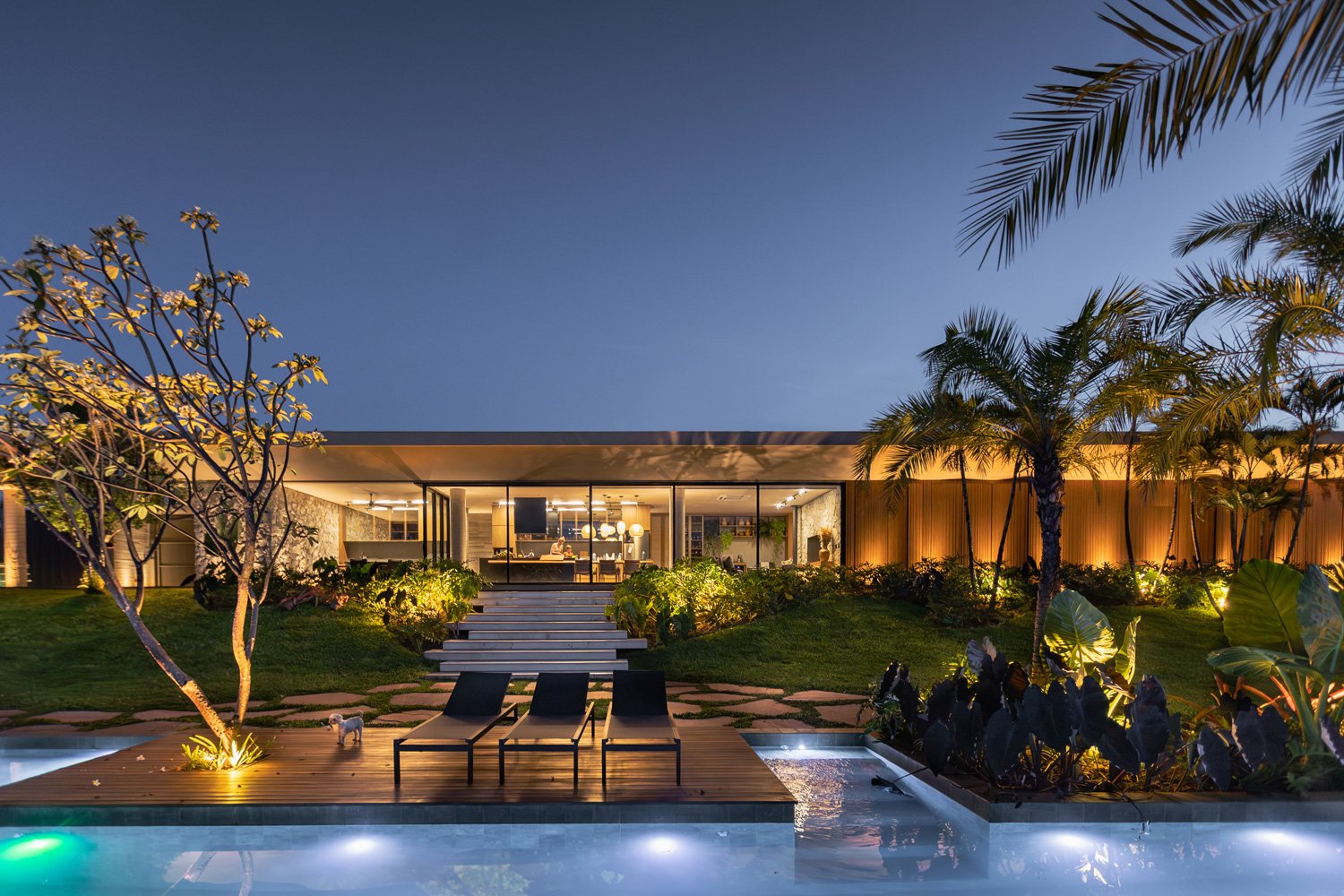
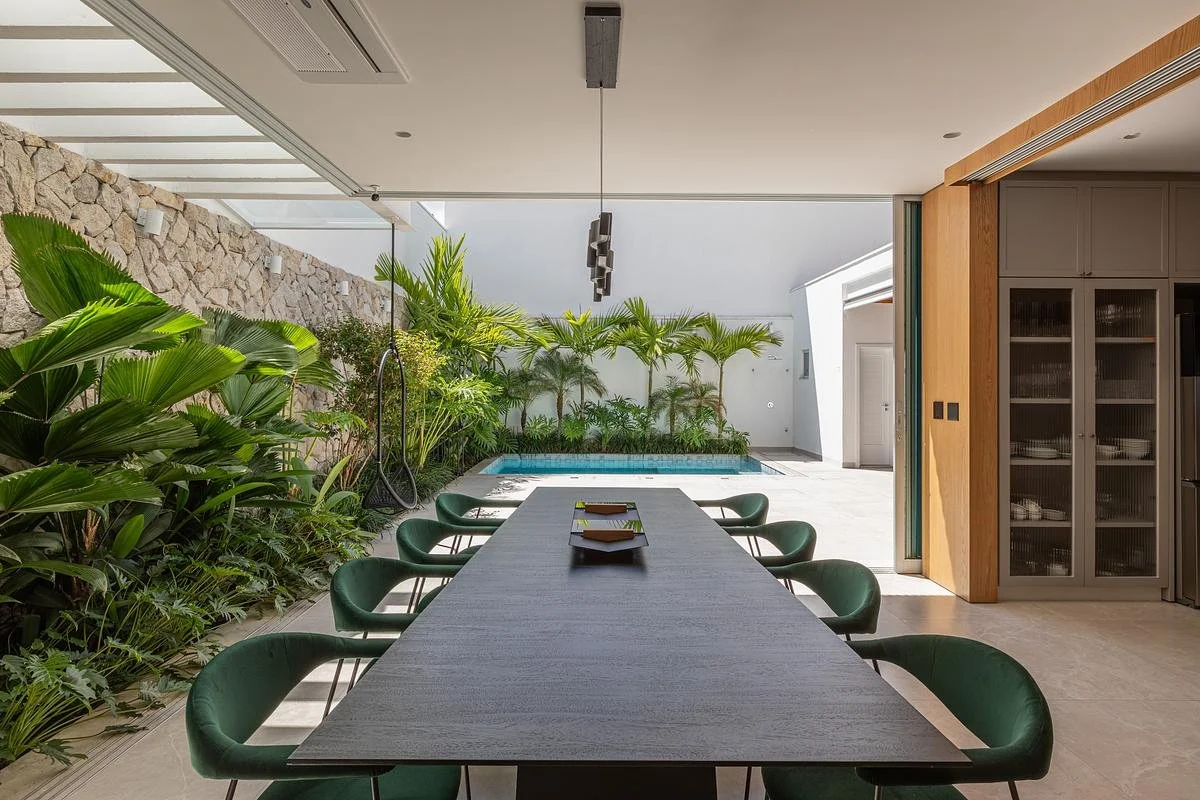
Water, stone, and shadow work together to create moments of reflection, reinforcing the house’s contemplative rhythm.
There is a quiet kinship here with the ideas explored by Junichiro Tanizaki, where shadow is understood as a way of seeing rather than a lack of visibility. Casa Tao embraces this logic without imitation. Light filters gently, never dominating. Darkness remains present, protective, and generous.
Ultimately, this is a house that withdraws from excess in order to offer something rarer. A place where shade slows the body, space calms the mind, and architecture becomes an instrument for living with greater care. In Casa Tao, comfort is not announced. It is felt, gradually, as time begins to stretch.
PROJECT DETAILS
Project size: 472 m2
Site size: 410 m2
Project budget USD 940,000
Completion date: 2024
Building levels: 4
Architect: HW Studio
Photographers: cesar belio, Gustavo Quiroz, Tirso Domínguez, HW Studio