CASA AL PRADET || When an Architect Designs Her Own Way of Living
Casa al Pradet did not begin as a commission, but as a question of how an architect chooses to live.
Designed by Clara Crous for her own family, the house unfolds through decisions shaped by use, memory, and the realities of place.
Set in the village of Vilamacolum in Spain’s Alt Empordà region, Casa al Pradet is both deeply personal and quietly methodical. Designed by Clara Crous Arquitectura, the project reflects what happens when architecture is stripped of performative gestures and instead answers directly to daily life. Here, design is not about display, but about continuity: between structure and furniture, tradition and technique, landscape and routine.
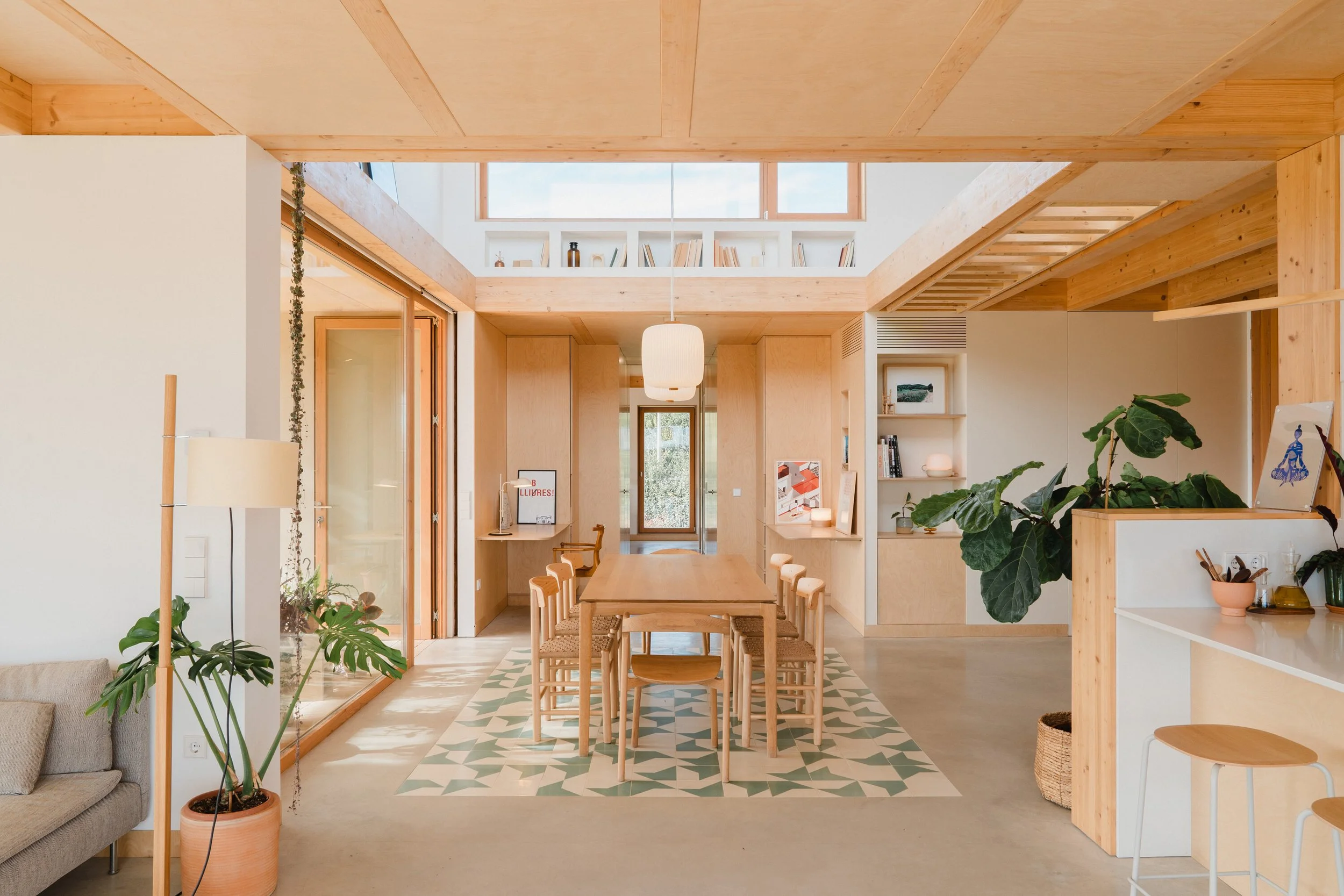
A continuous timber language shapes structure, ceiling, and built-in furniture, dissolving boundaries between architecture and interior design.
The triangular plot, the last available parcel on the street, sits within an agricultural terrain shaped by wind, water, and seasonal cycles. That context influenced not only the form of the house, but the way it was built. Construction began after the corn harvest, when local labour became available, aligning the project’s timeline with the rhythms of the land rather than an abstract schedule. What could have been a logistical constraint instead became a guiding principle, grounding the house in the tempo of its surroundings.
Exposed timber beams and expansive windows frame a calm, light-filled living space designed for everyday use rather than visual performance.
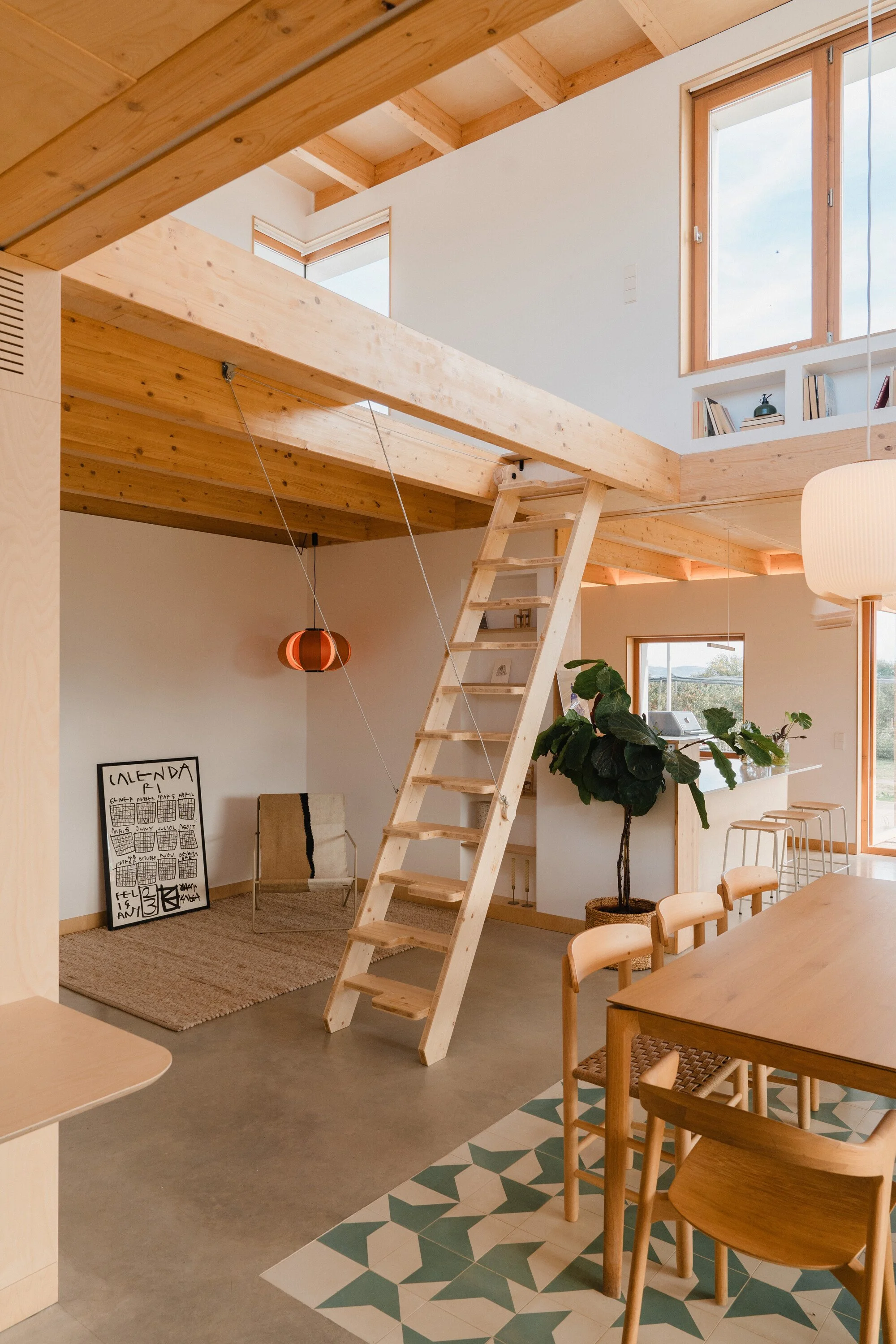
Casa al Pradet is organized as a sequence of timber volumes of varying heights, a contemporary interpretation of the incremental extensions found in traditional Catalan masias. The light timber frame was prefabricated off-site to streamline construction, then assembled with a clarity that remains legible throughout the interior. Raised 1.2 metres above ground to accommodate natural water flow across the site, the house is positioned to protect itself from the region’s strong tramontana winds while maintaining an open relationship with the landscape.
Inside, architecture and interior design are inseparable. Wood is not merely a finish, but the defining element of the home’s identity, shaping ceilings, cabinetry, shelving, and custom furniture as a single, coherent system. This continuity creates spaces that feel calm and intuitive, where circulation and use take precedence over formal expression.
Custom wood cabinetry and restrained detailing prioritize daily use over visual excess, reinforcing the home’s quietly functional ethos.
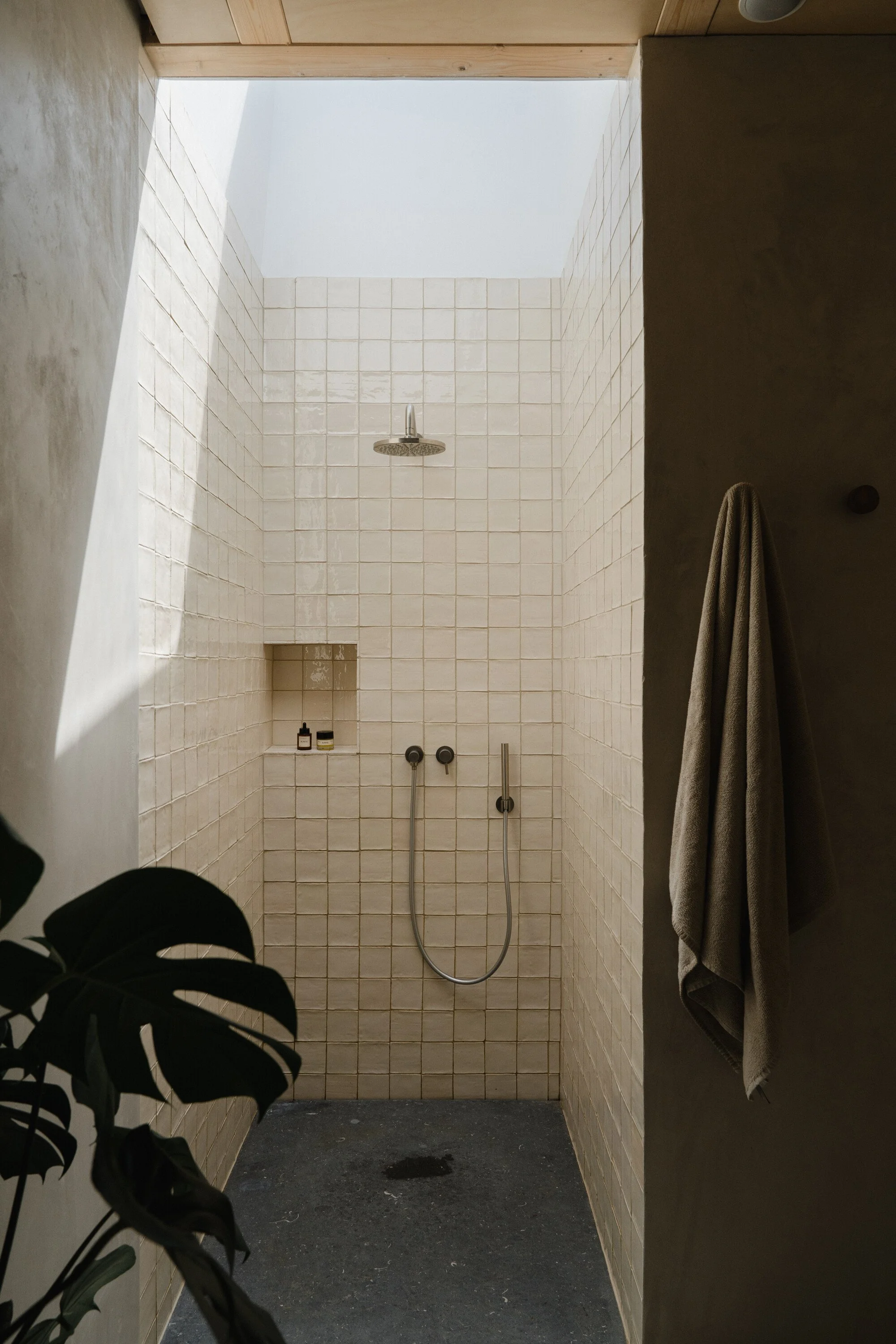
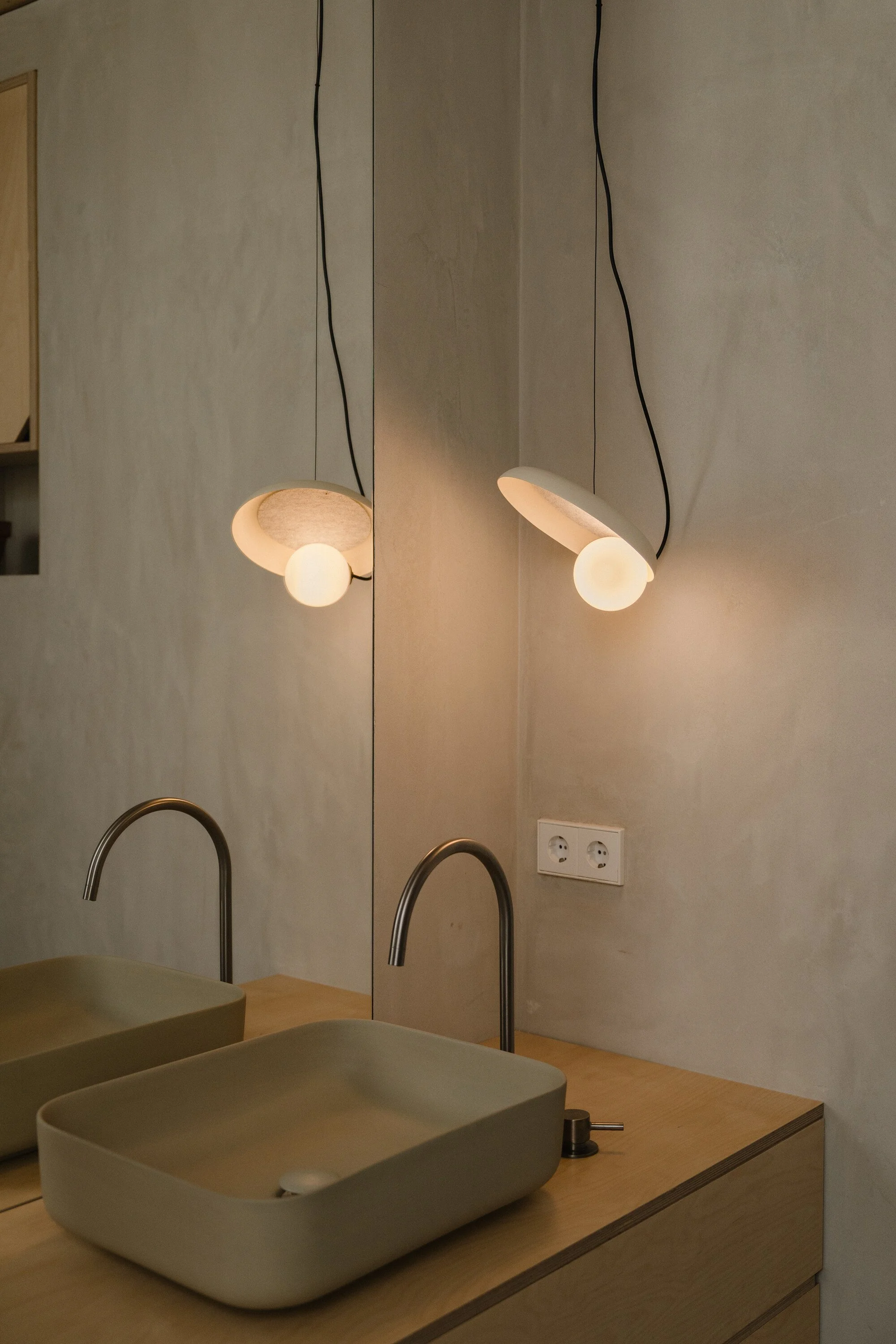
Natural materials reinforce this sense of material honesty. Lime mortar, cork, clay, terracotta, and custom hydraulic tiles appear throughout the house, chosen for their tactile qualities and regional relevance. Polished concrete floors anchor the interiors with a quiet robustness, while handmade ceramic details introduce subtle variation and warmth. The result is an environment that feels lived-in rather than styled, precise without becoming austere.
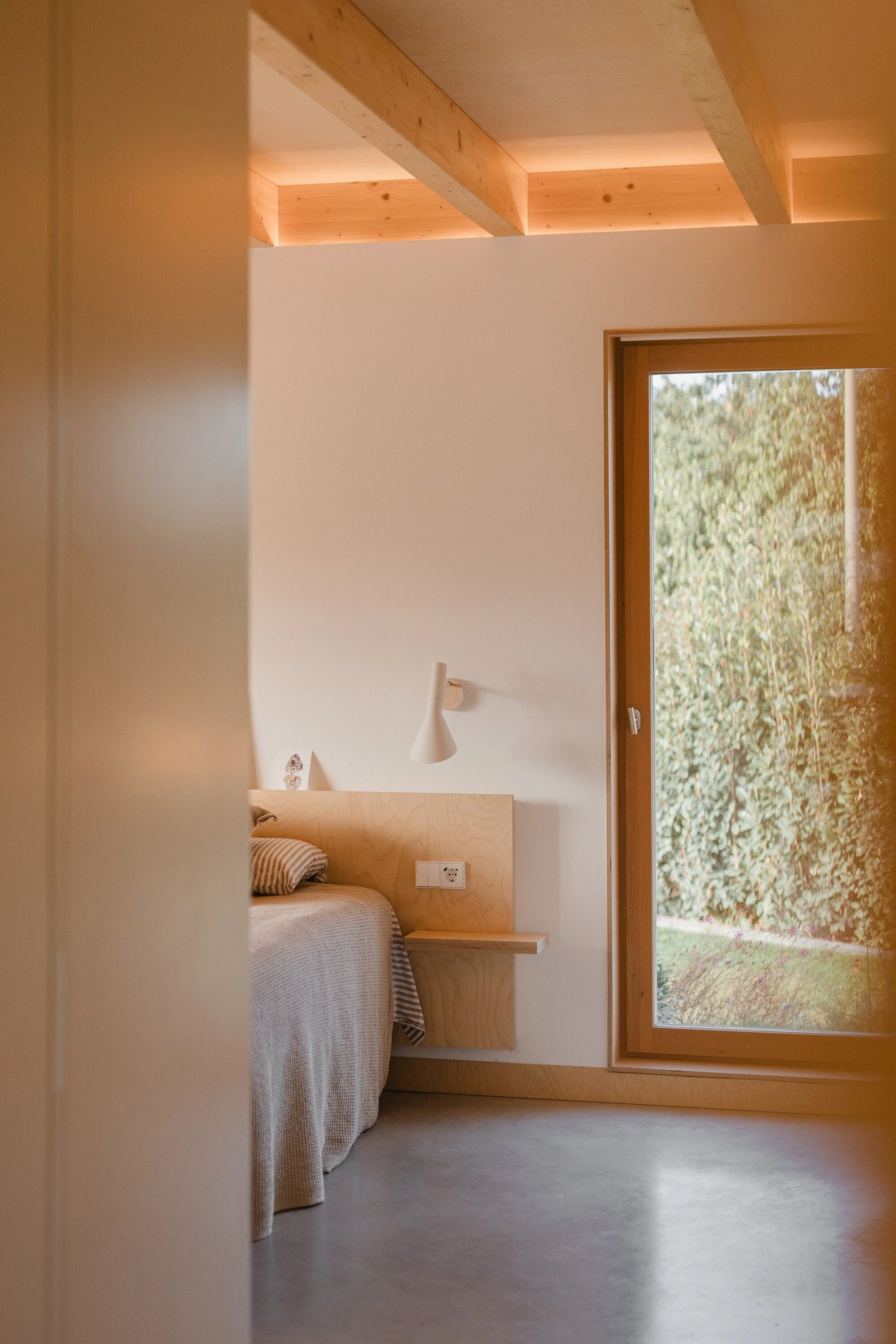
Above: Wood-lined walls, integrated shelving, and soft daylight create a restrained sleeping space where material continuity supports rest and routine. Below: Handmade zellige tiles and lime finishes shape a tactile, open-air shower that balances Mediterranean tradition with contemporary restraint.
Hand-cooked terracotta and ceramic gravel support drainage while extending the material logic of the house into the landscape.
Modern systems are present, but deliberately unobtrusive. Motorized shutters respond automatically to sun exposure and wind conditions, balancing comfort and efficiency without interrupting the home’s visual restraint. Outside, a perimeter of ceramic gravel supports drainage, extending the logic of practical decision-making beyond the walls of the house.
What makes Casa al Pradet compelling is not a single gesture, but the accumulation of considered choices. It is a home shaped by proximity: to land, to craft, and to the realities of family life. In designing for herself, Clara Crous demonstrates how contemporary domestic architecture can be both exacting and generous, rooted in place while unmistakably of its time.
A custom timber desk and storage wall turn work into a quiet, integrated ritual.
PROJECT DETAILS
Project Name: Casa al Pradet
Architecture Studio: Clara Crous Arquitectura
Architect: Clara Crous Fort
Design Team: Jordi Collell Puig, Amanda Soler Vela
Location: Vilamacolum, Alt Empordà, Spain
Project Years: 2020–2023
Completion: 2024
Photography: Montse Capdevila