HOTEL INDIGO NALATI || Where Architecture Moves at the Pace of the Seasons
Some hotels are designed around views; this one is designed around time.
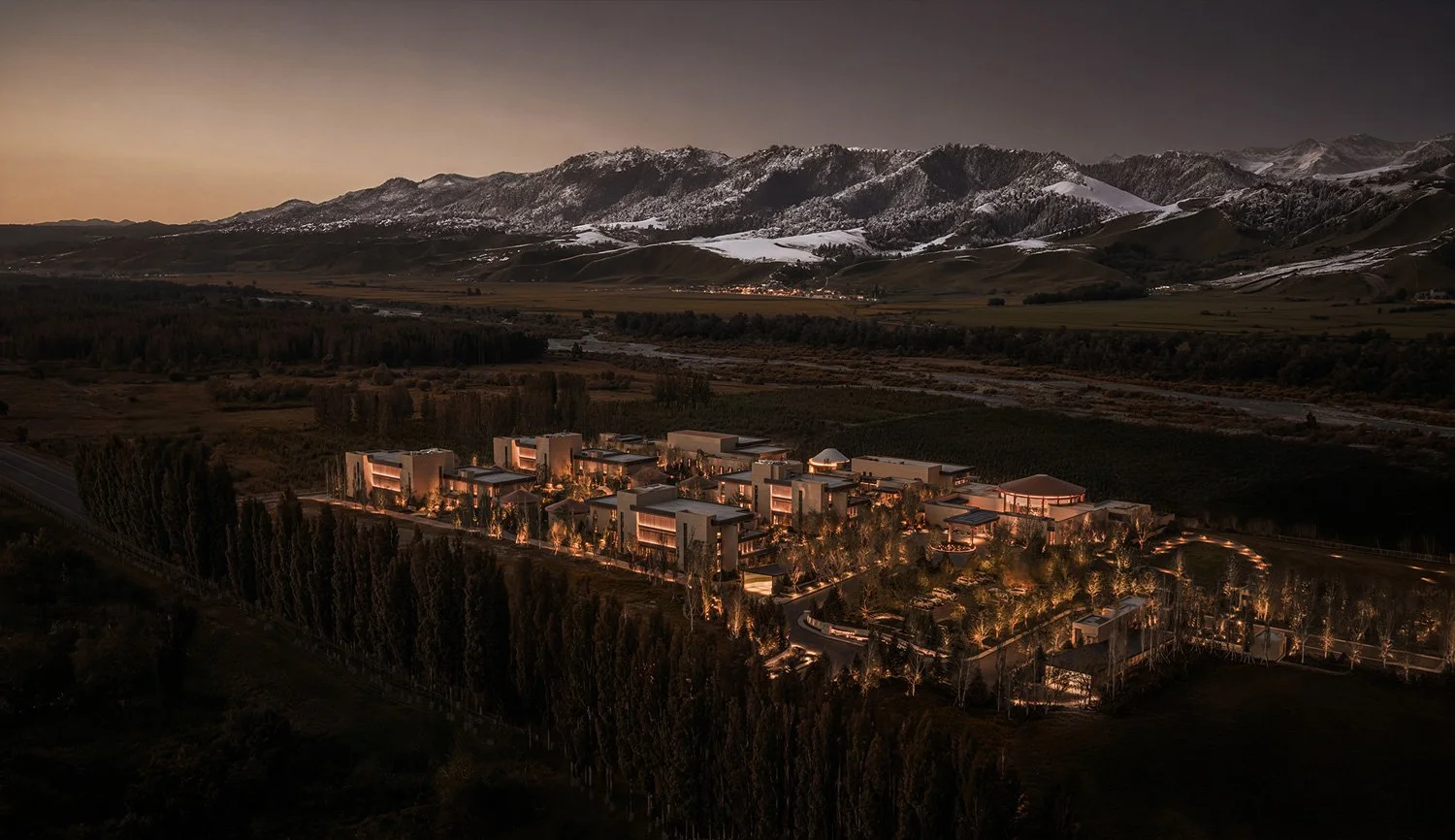
Set within the vast grasslands of Xinjiang’s Nalati region, at the intersection of the Duku Highway and the Ili Figure-8 Scenic Loop, Hotel Indigo Nalati unfolds as a spatial journey shaped by seasonal rhythms, nomadic traditions, and the slow choreography of light across the Tianshan Mountains.
Scattered across the grasslands like a quiet settlement, the hotel’s low-profile architecture follows the contours of the land rather than competing with it.
Rather than presenting itself as a singular architectural gesture, the hotel adopts a dispersed layout, with low-lying volumes scattered gently across the landscape. From a distance, the complex reads less like a resort and more like a forested settlement, connected by winding paths that echo the migratory logic of grassland life. This approach resists monumentality in favour of coexistence, allowing architecture to recede while the surrounding terrain remains visually dominant.
At dusk, the domed lobby glows from within, its yurt-inspired geometry and central hearth anchoring the hotel as a place of gathering against the dramatic silhouette of the Tianshan Mountains.
Designed by CCD, the project is anchored in the concept of “mausym,” the Kazakh word for season. Here, seasonality is not treated as a metaphor but as an organizing principle. Spatial sequences shift subtly with time of day and weather, and materials respond to light rather than compete with it. The architecture becomes a framework for observing change rather than a static object to be admired.
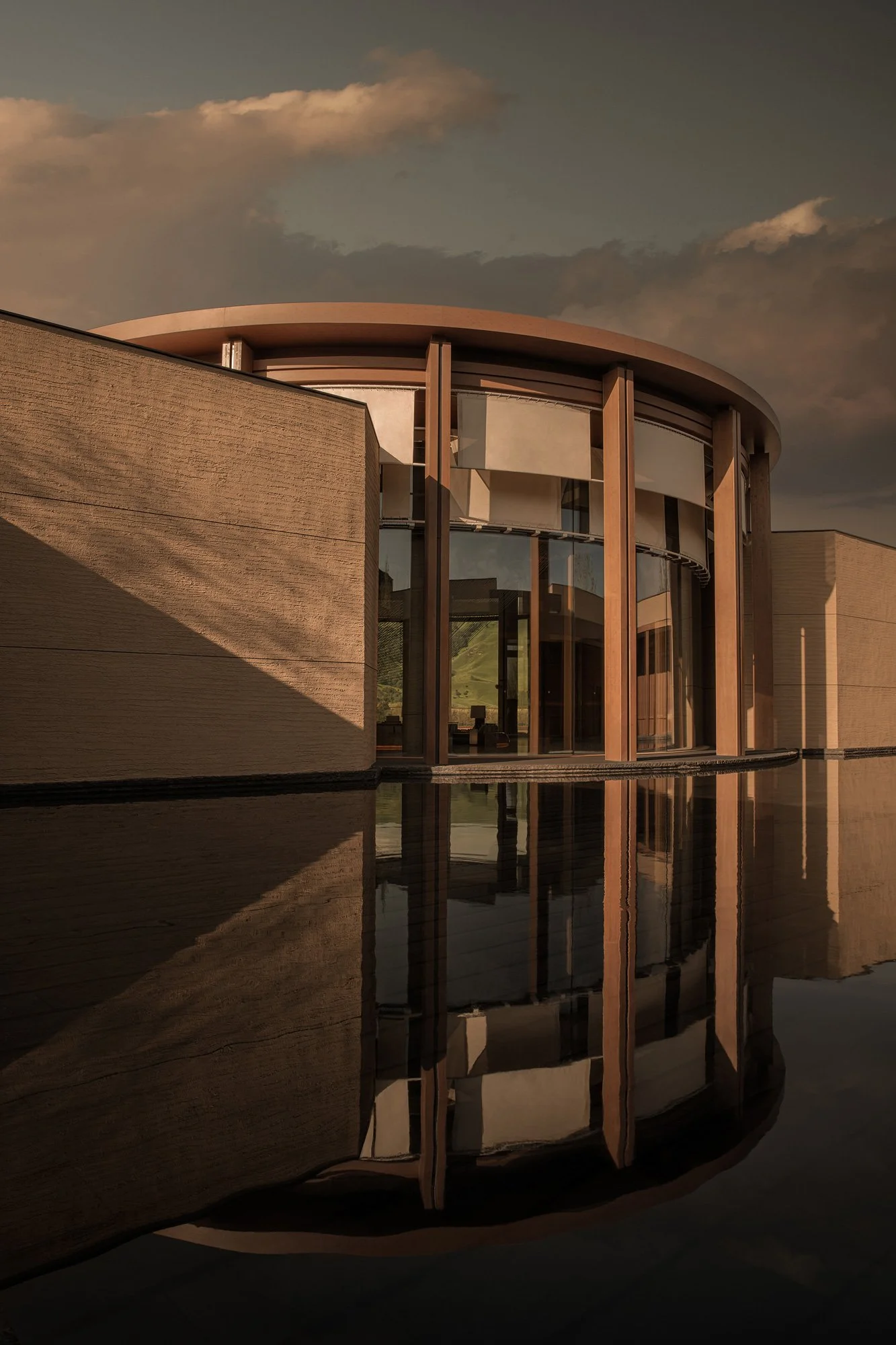
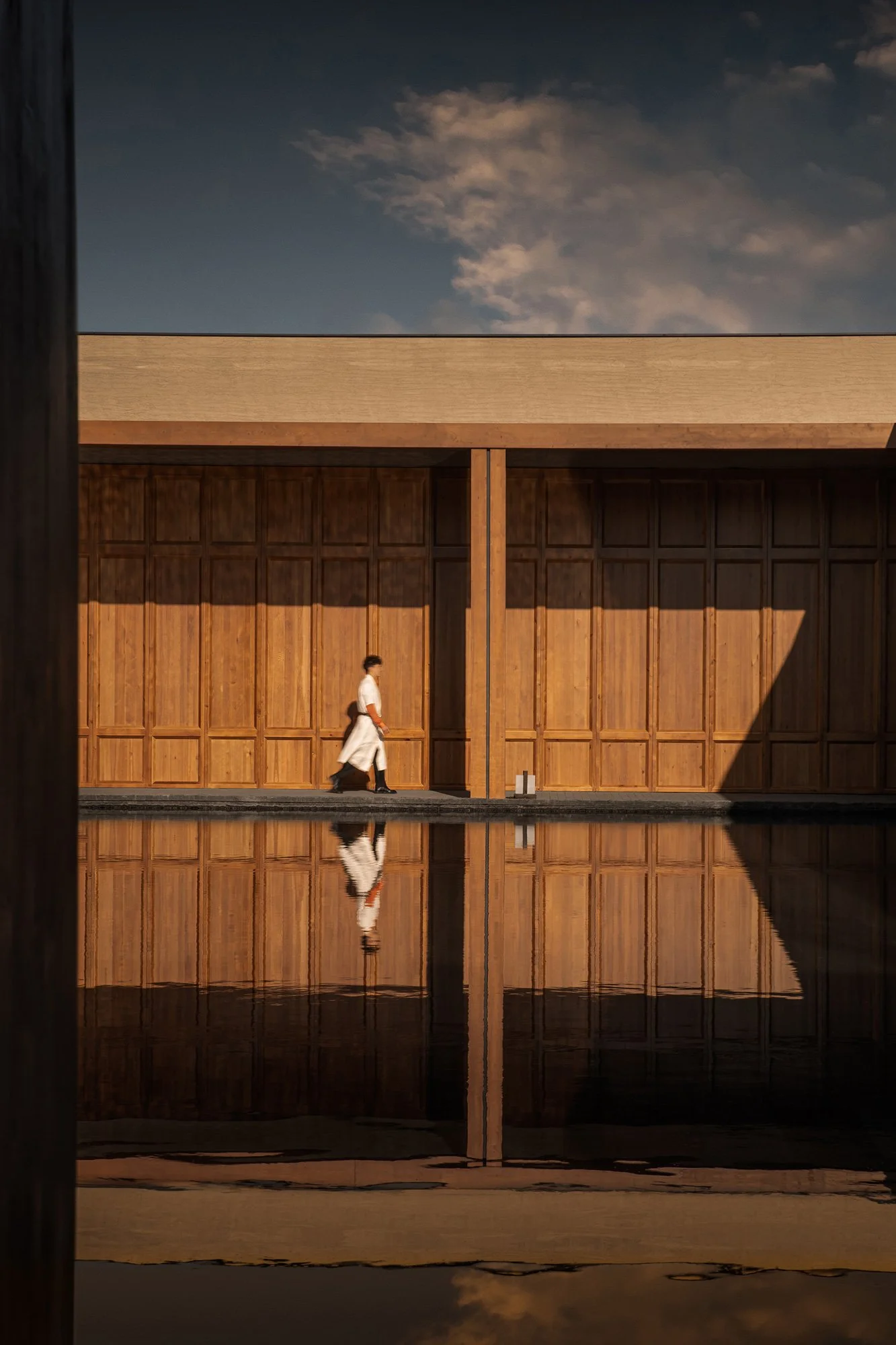
Arrival is deliberately unhurried. A curved entrance canopy, inspired by the Nalati sunrise, introduces a softened threshold between road and refuge. Beneath it, a sheltered courtyard forms naturally, offering shade and compression before release. This gradual transition from movement to stillness sets the tone for the experience ahead, guiding guests away from the speed of travel and toward a slower, more attentive state.
Inspired by the Nalati sunrise, the curved entrance canopy creates a softened threshold between road and refuge, slowing the pace of arrival.
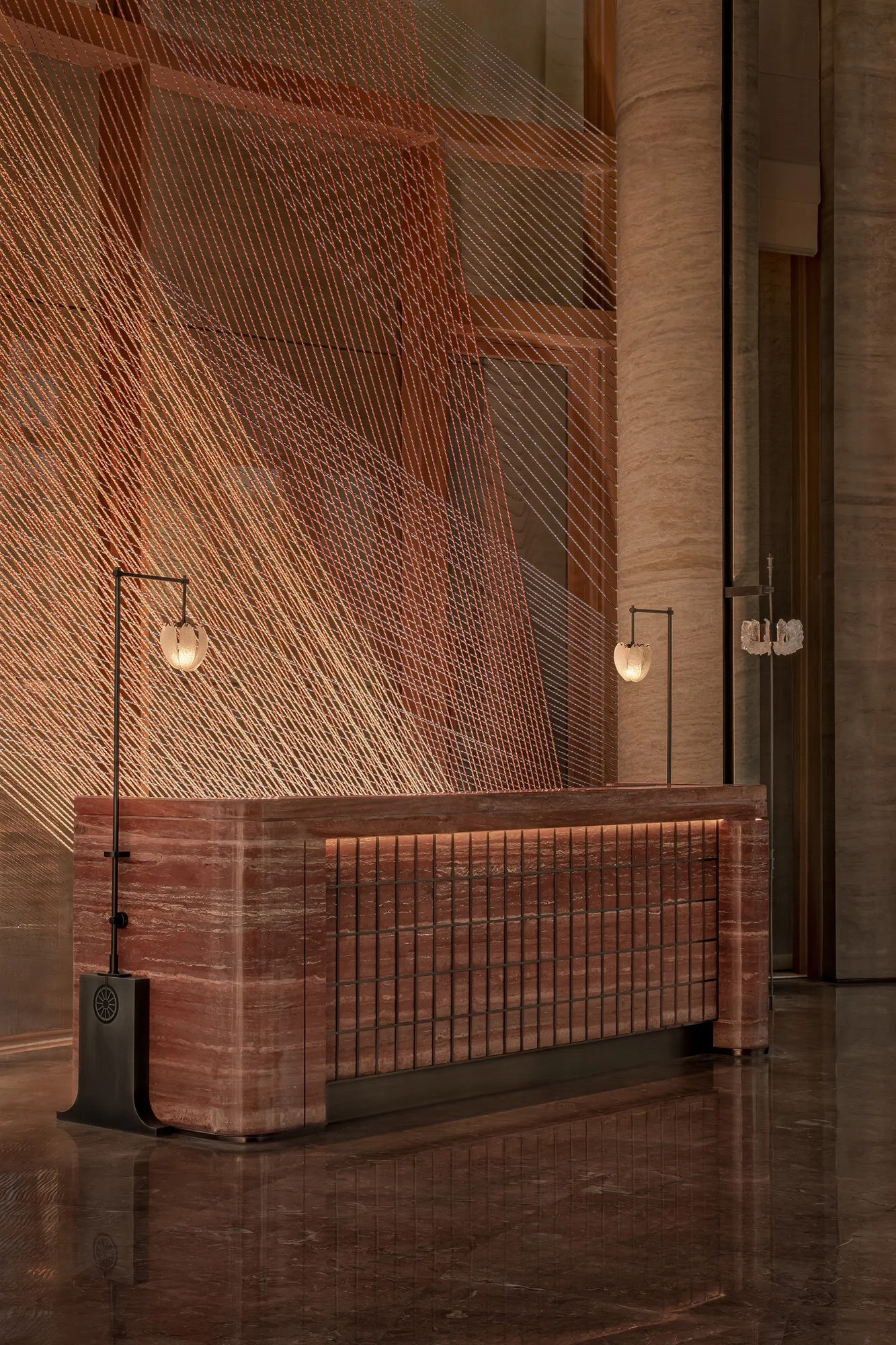
Inside, the lobby opens beneath a domed ceiling that recalls the structure of a traditional yurt. Earth-toned materials ground the space, while red brick walls and rhythmic columns establish a sense of permanence. Overhead, layered textures ripple across the dome, their scale shifting as light filters through. Floor-to-ceiling curved windows frame expansive views of the Nalati grasslands and the distant Tianshan range, keeping the landscape a constant presence within the interior.
At the heart of the lobby sits a contemporary reinterpretation of the hearth. In nomadic culture, the fire pit is both functional and symbolic, serving as a place of warmth, nourishment, and shared stories. Here, it becomes a modern fireplace and social anchor, around which seating is arranged to encourage quiet gathering. Whether read in solitude or conversation, the space fosters a sense of calm rooted in collective presence.
A domed ceiling reinterprets the structure of a traditional yurt, with light, texture, and scale working together to create a calm, grounded gathering space.
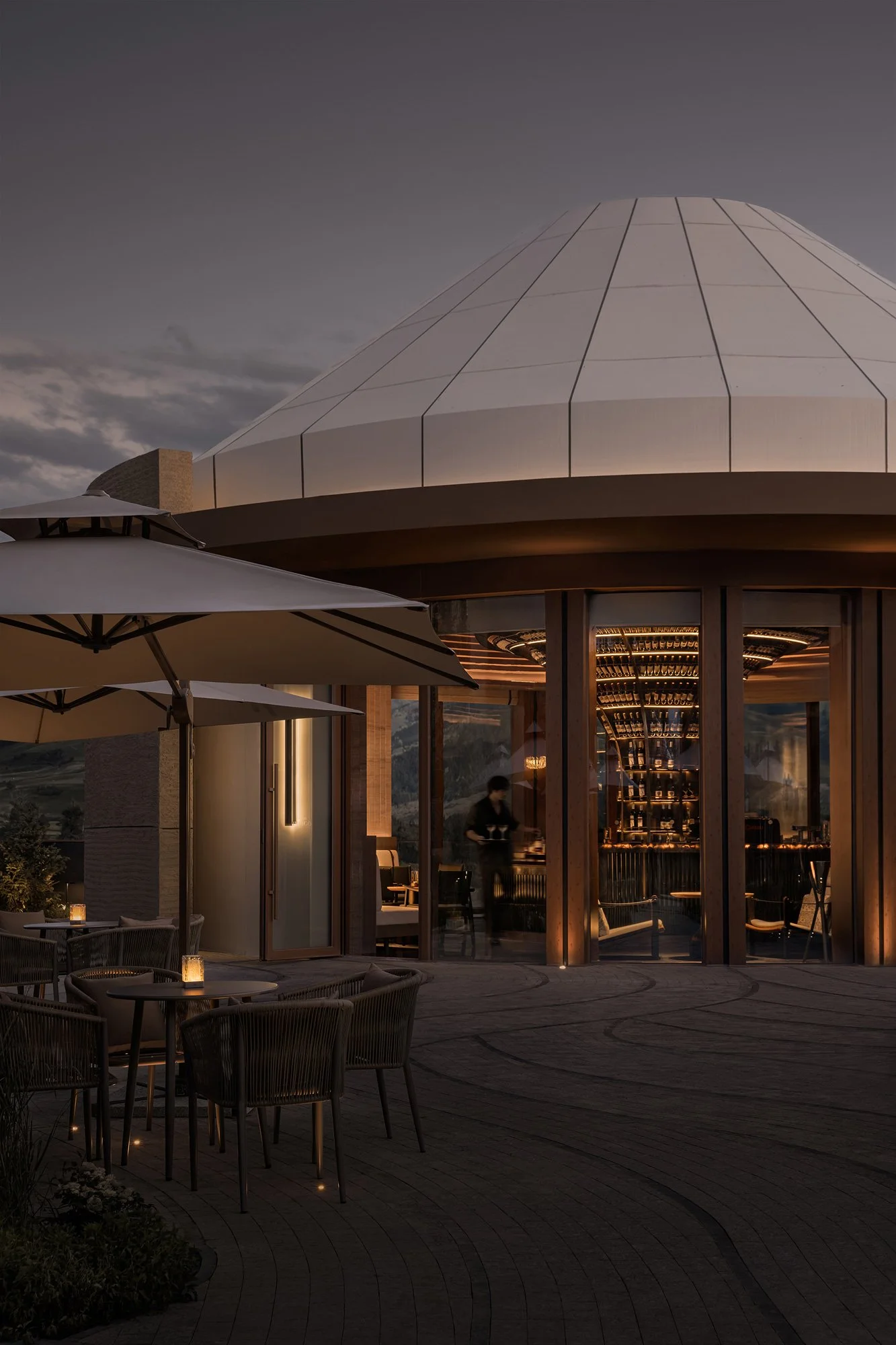
A ring-shaped bar draws on the image of a solitary tree on the steppe, forming an intimate social anchor within the space.
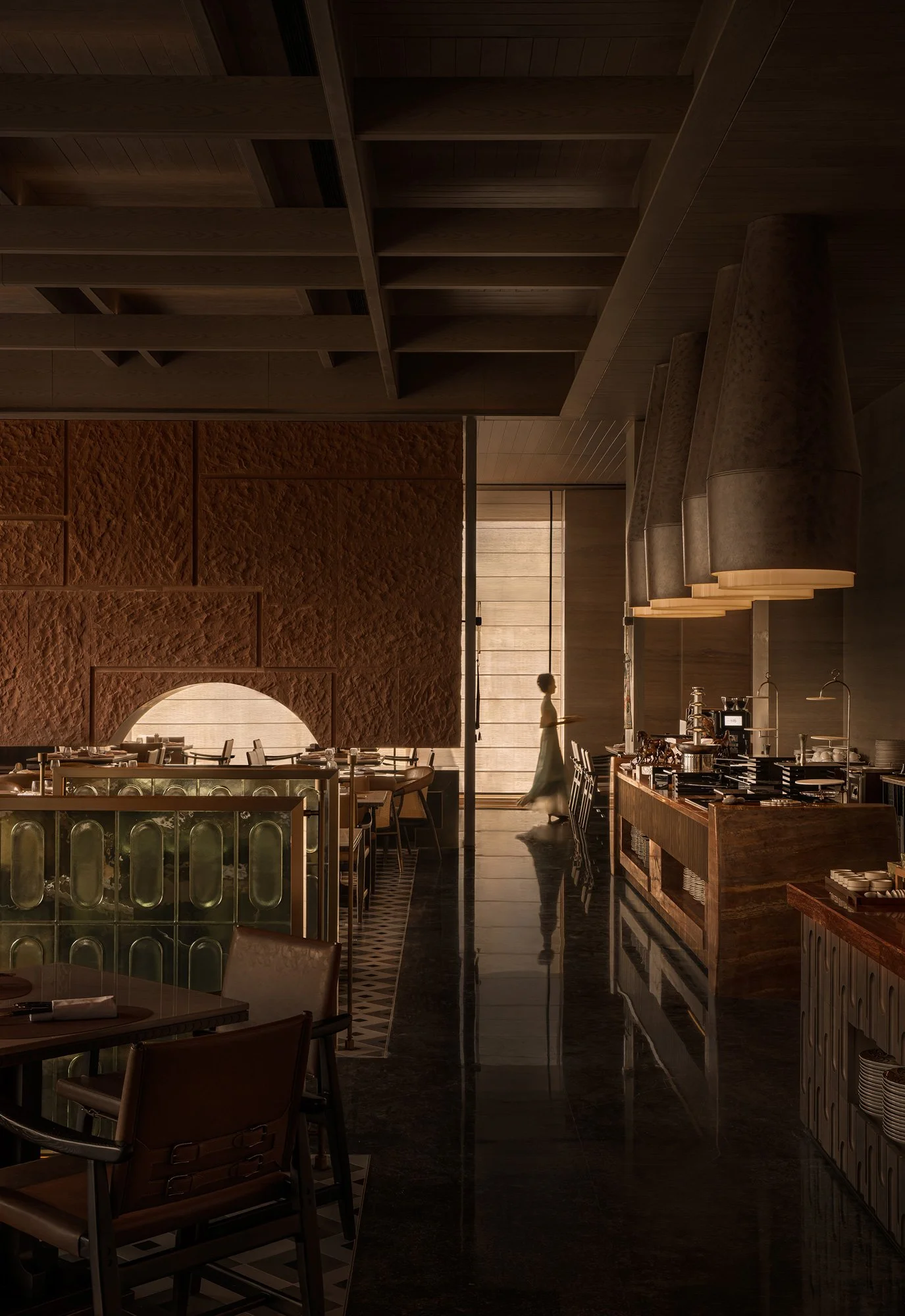
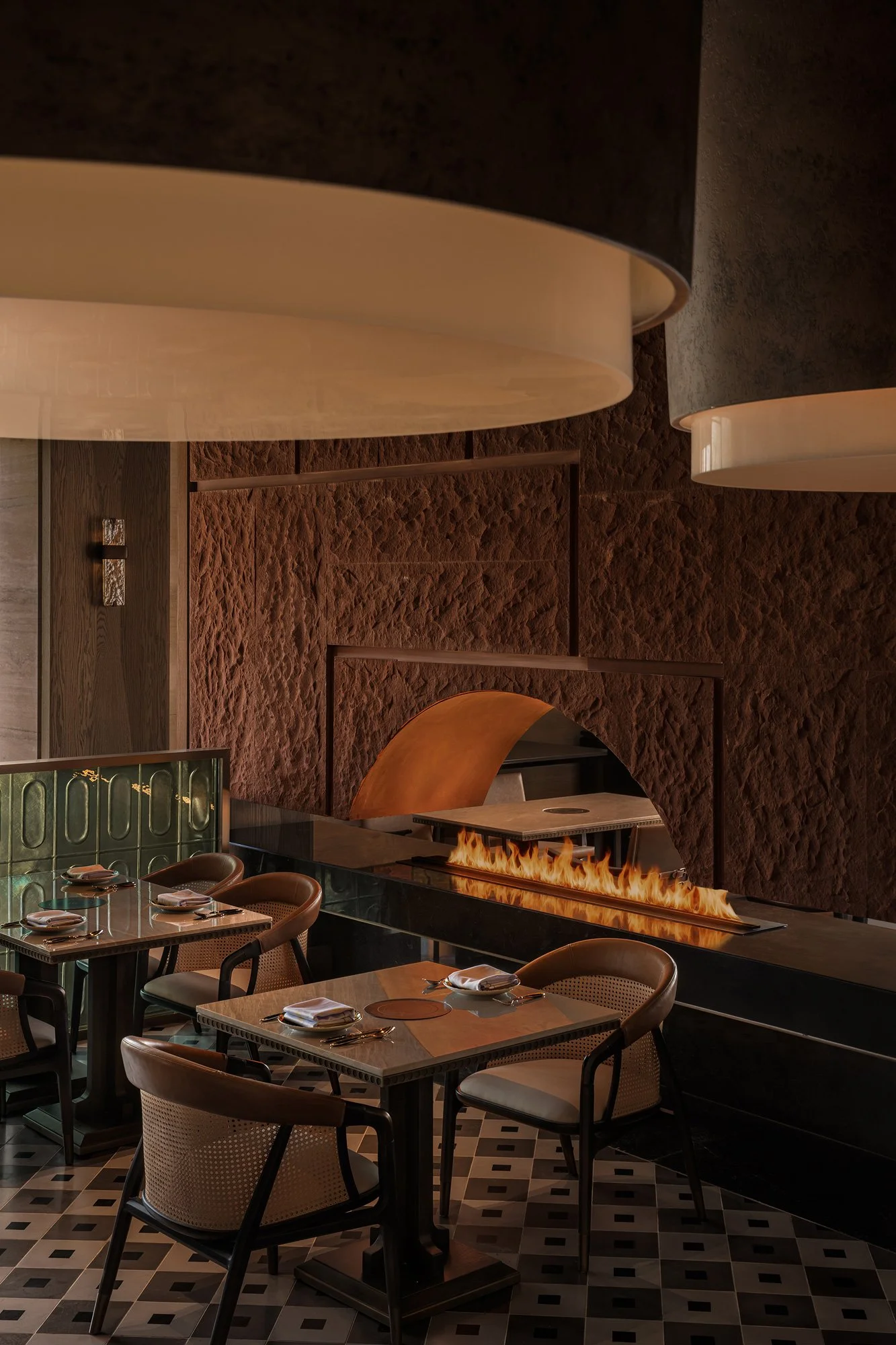
The restaurant and bar continue this narrative through form and material. Curved circulation paths and circular layouts evoke the movement of water and migration across open land. A ring-shaped bar references the image of a solitary tree on the steppe, creating an intimate focal point within a broader social setting. Brick, washed stone, warm timber, and metal accents work together to balance tactility with restraint, ensuring the space feels grounded rather than theatrical.
Curved circulation paths and warm materials echo the movement of water and migration across the grasslands.
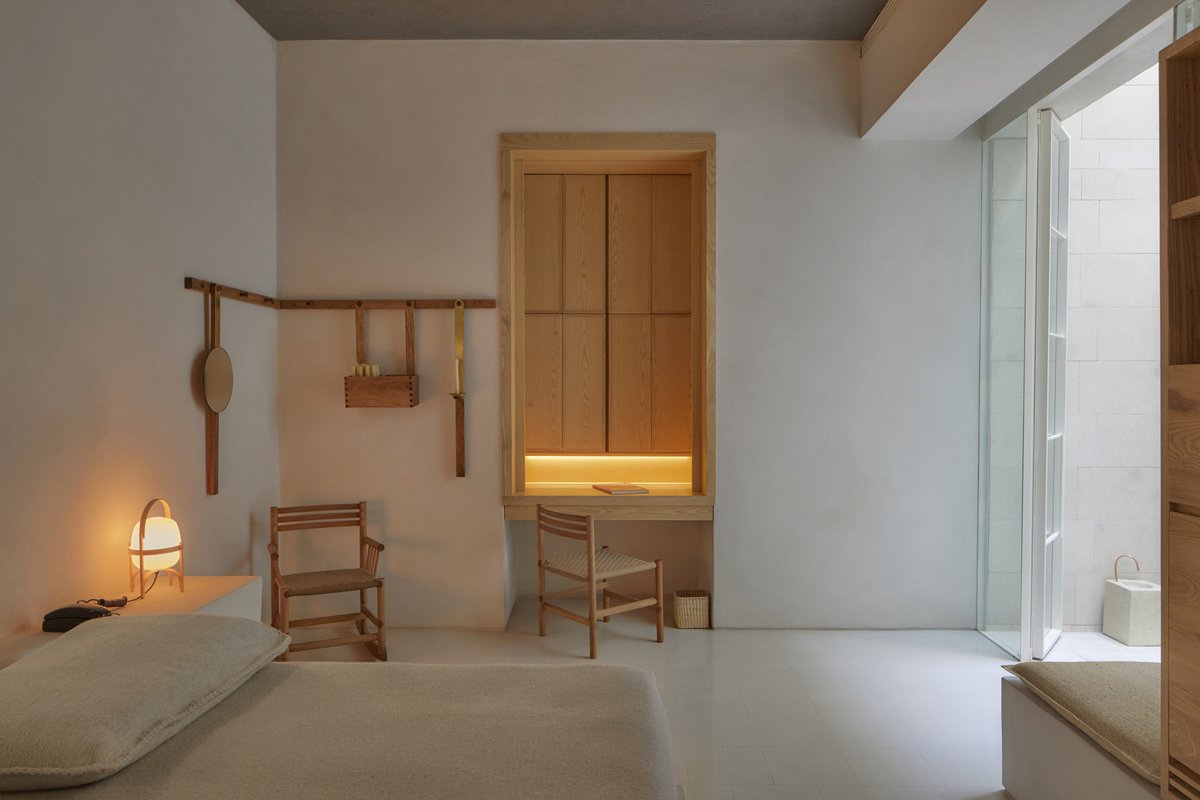
Guestrooms offer a more intimate expression of the same ideas. Yurt-inspired skylights draw daylight deep into the rooms, tracing slow arcs of illumination across walls and floors. Traditional felt craftsmanship informs textiles and wall treatments, while lattice patterns reinterpret the structural logic of nomadic dwellings. These elements do not overwhelm the space but quietly reinforce a sense of shelter and continuity.
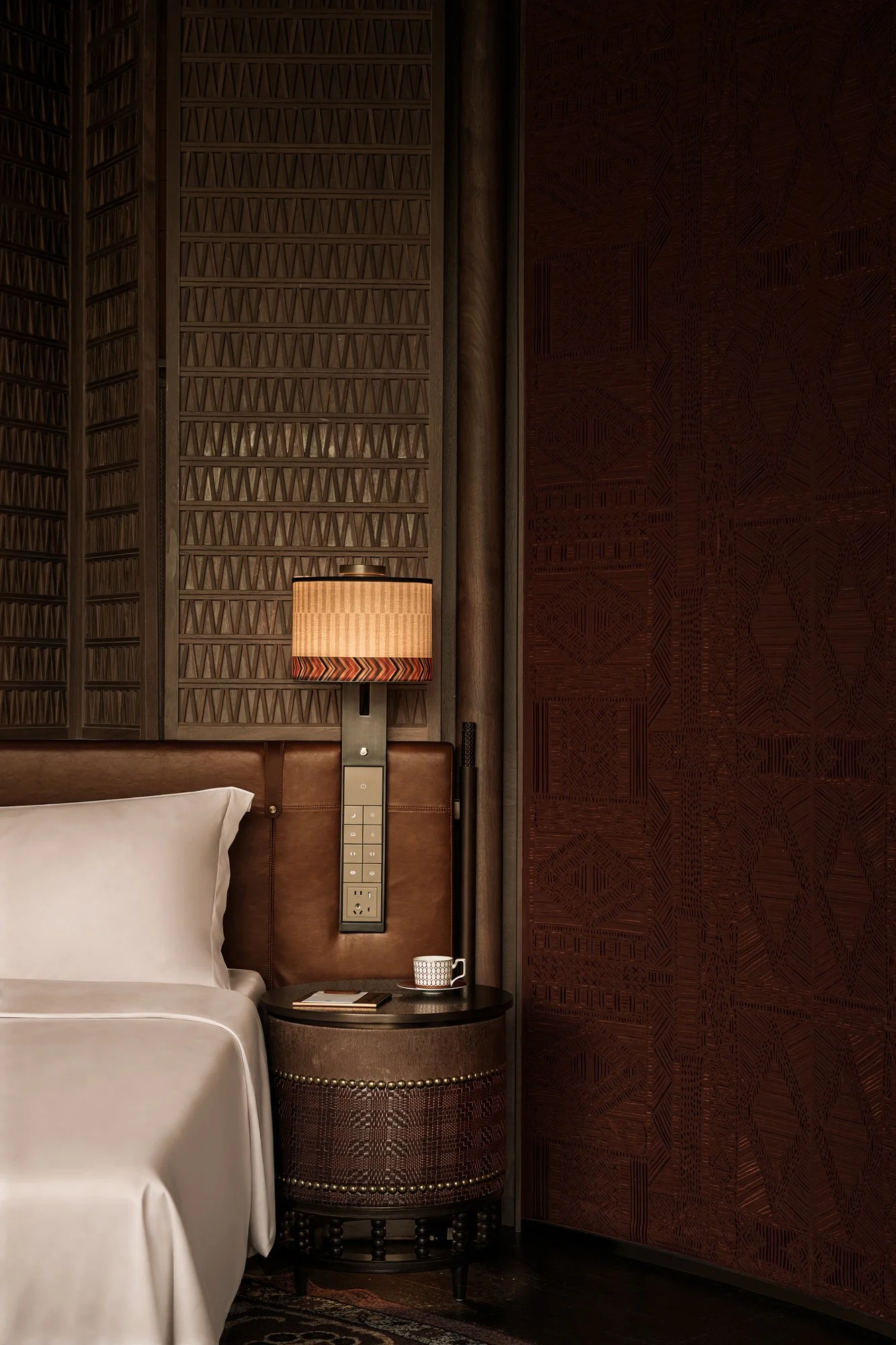
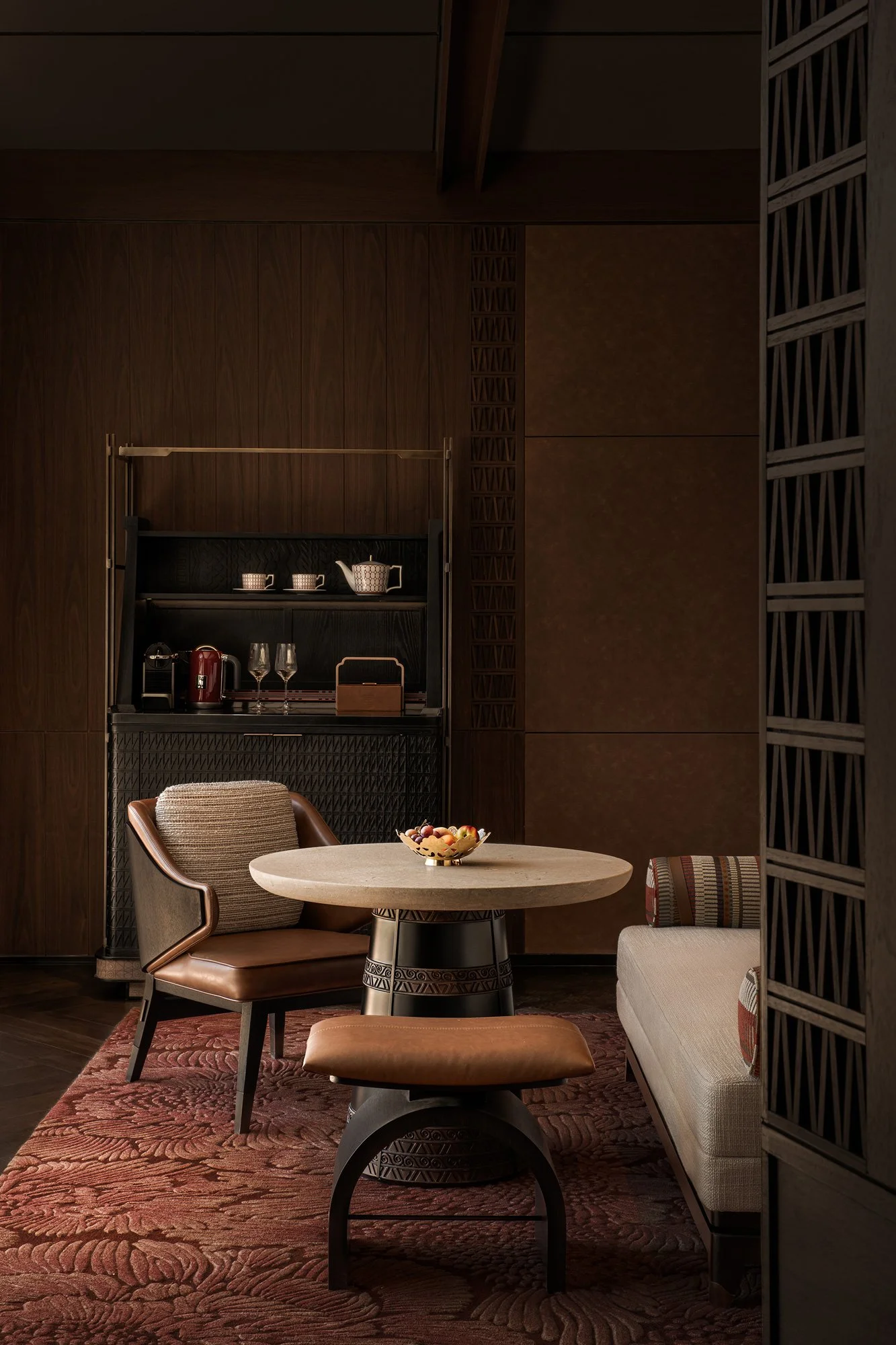
Felt craftsmanship and lattice motifs reinterpret nomadic structures through a contemporary lens, offering warmth without ornamentation.
At Hotel Indigo Nalati, architecture does not attempt to dramatize its setting. Instead, it listens to it. By aligning space with season, movement, and ritual, the hotel transforms hospitality into an experience of temporal awareness. When guests depart, they carry not only memories of a place but also an understanding of how design can move in step with the land itself.
A glass-enclosed corridor reveals the circular bar beyond, where warm light, layered structure, and distant mountain views create a moment of pause between interior ritual and the surrounding landscape.
PROJECT DETAILS
Project Name: Hotel Indigo Nalati
Client: Xinjiang Huamei Resort Tourism Co., Ltd.
Location: Nalati Town, Xinyuan County, Ili Kazakh Autonomous Prefecture, Xinjiang, China
Architectural Design: H2 Architecture Design Group
Interior Design: CCD
Soft Furnishings: CCD
Visual Identity and Signage: CCD·ATG BEYOND
Material Platform: IDEAFUSION
Design Area: 13,052 square metres
Completion: June 2025
Photography: Wang Ting