N1: A Shop House || Rewriting a London Shopfront Through Lines and Thresholds
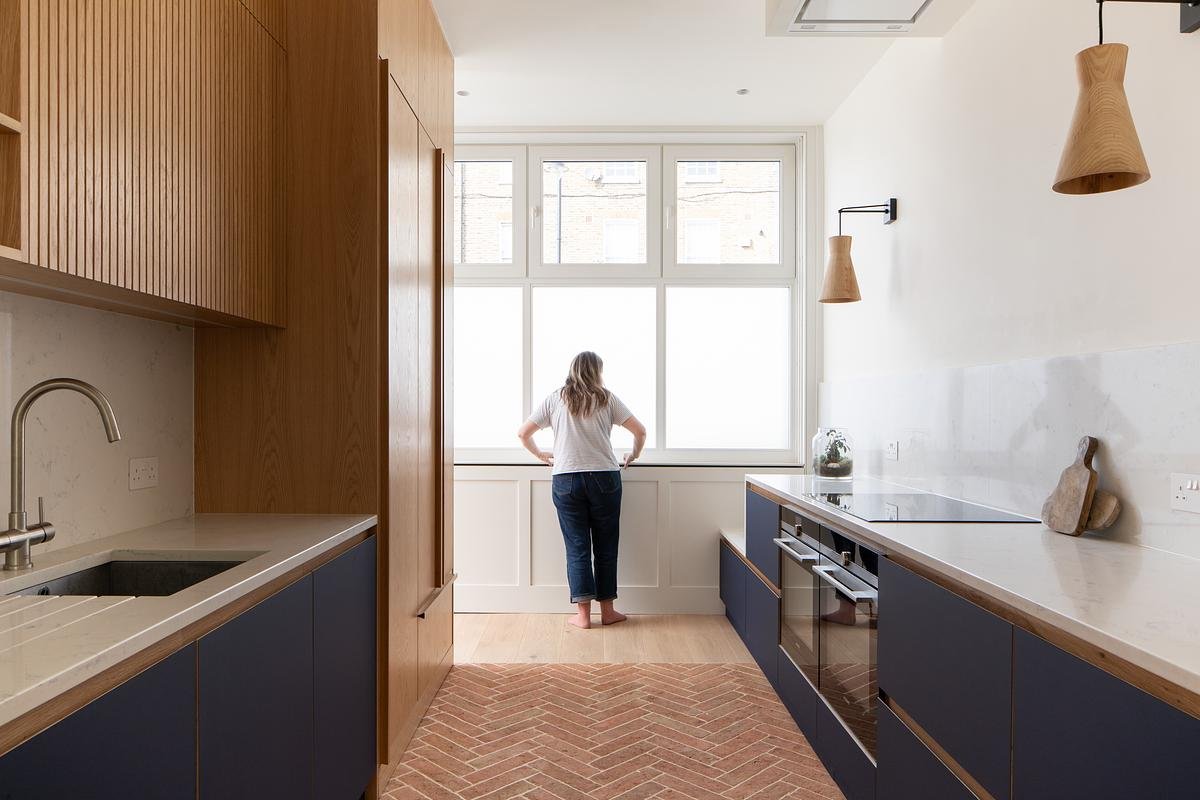
What was once a place of passing trade is now a threshold into private life.
In Greater London, this quietly assured home began not as a residence but as a fish-and-chips shop. Before that, it is rumoured to have served other purposes entirely. Rather than treating this layered past as something to be concealed, the architects chose to work with it, allowing the memory of the shopfront to become the starting point for a new domestic narrative.
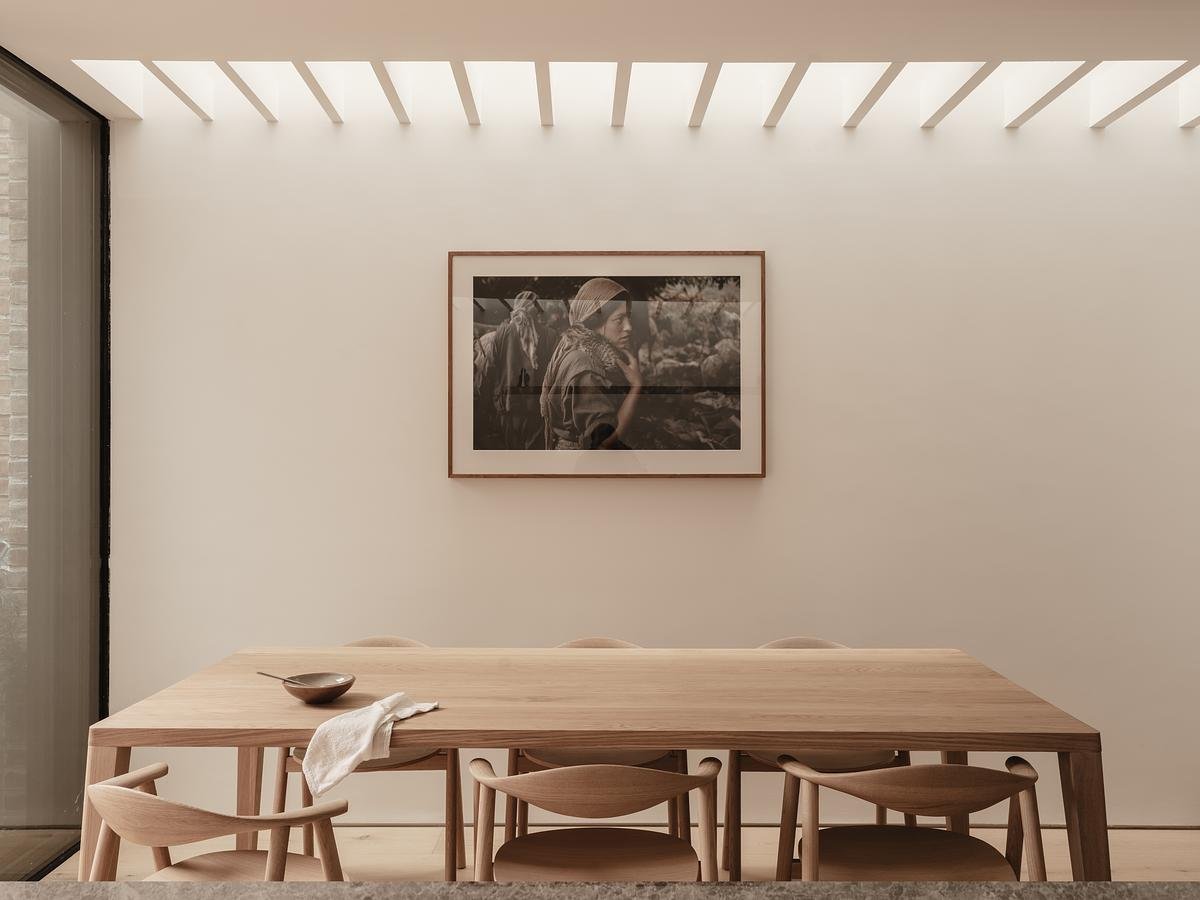
A restrained palette and clear geometry allow the kitchen to sit comfortably within the home’s open sequence of rooms. Below: Thresholds are marked through alignment and proportion rather than doors or partitions.
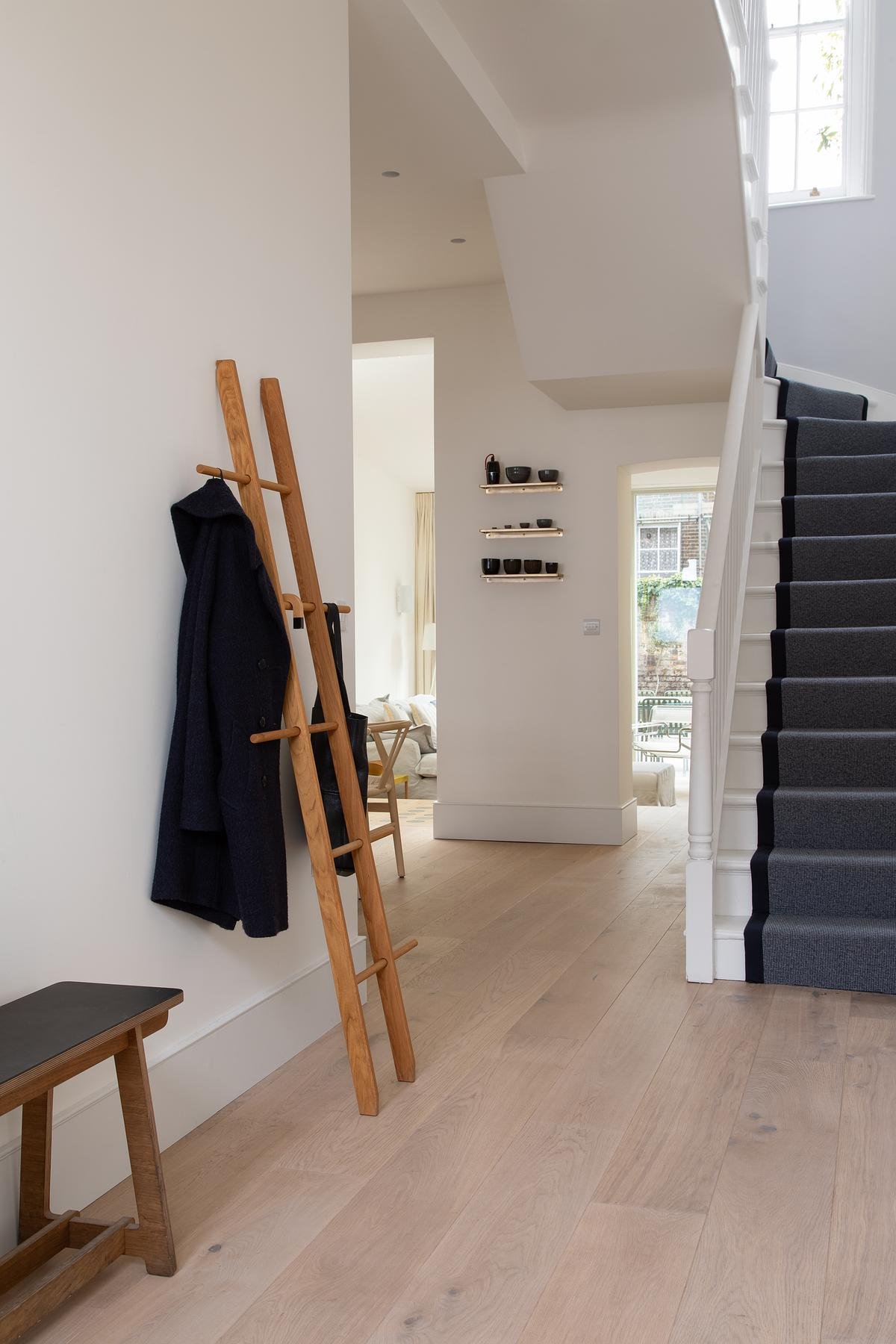
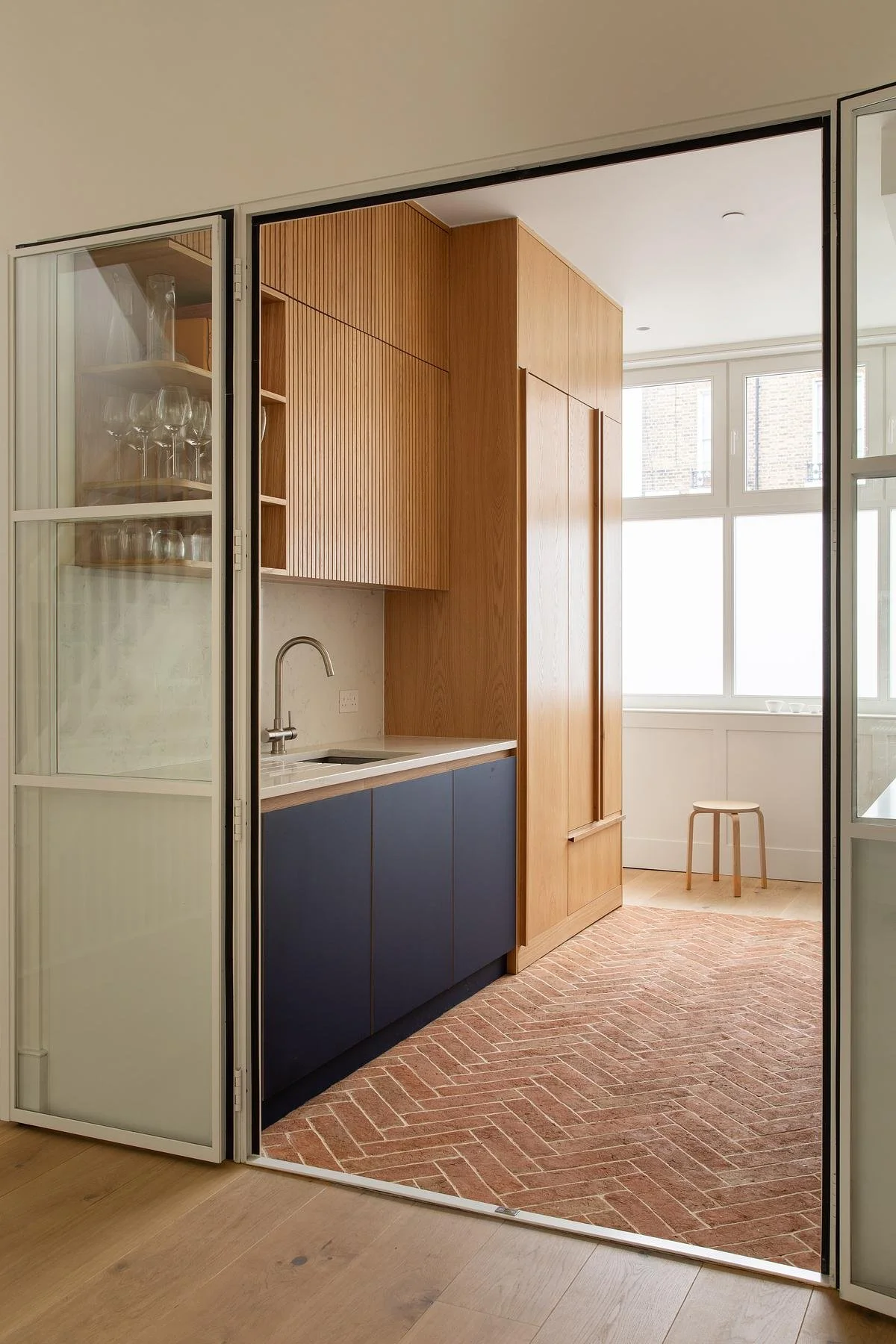
The former storefront remains legible in the building’s relationship to the street. Its horizontal emphasis and sense of presence are not erased, but softened. Where there was once an invitation to enter and order, there is now an invitation to arrive. The threshold is no longer transactional; it is deliberate, measured, and domestic. This subtle recalibration sets the tone for the rest of the house.
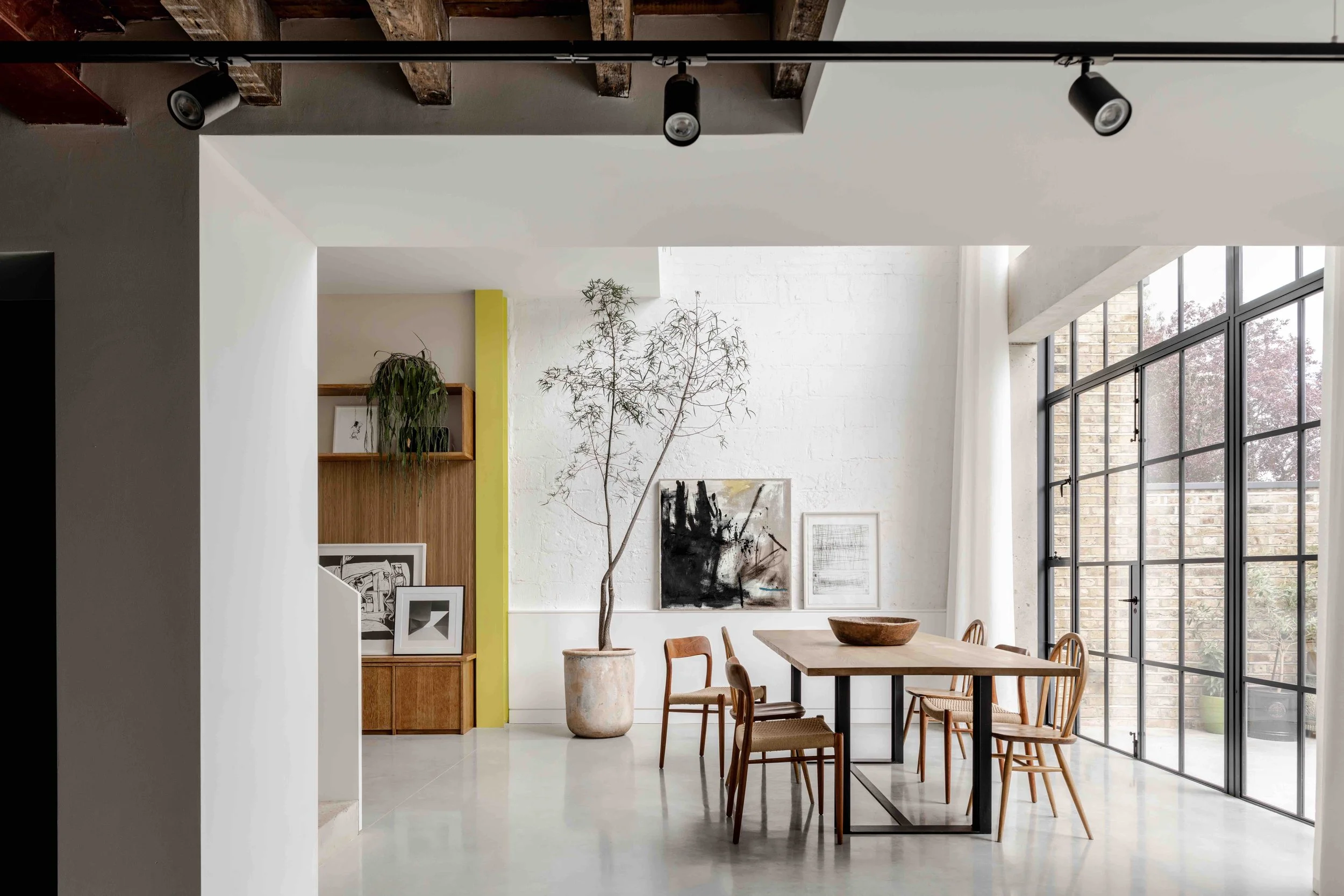
Inside, the project unfolds through a disciplined architecture of lines. These lines are not decorative gestures, but organizational tools that guide movement, frame views, and quietly signal transitions between spaces. Thresholds replace corridors. Changes in volume, alignment, and material define moments of pause and progression. The plan moves from public to private without relying on overt separations, allowing the home to feel continuous while still offering intimacy.
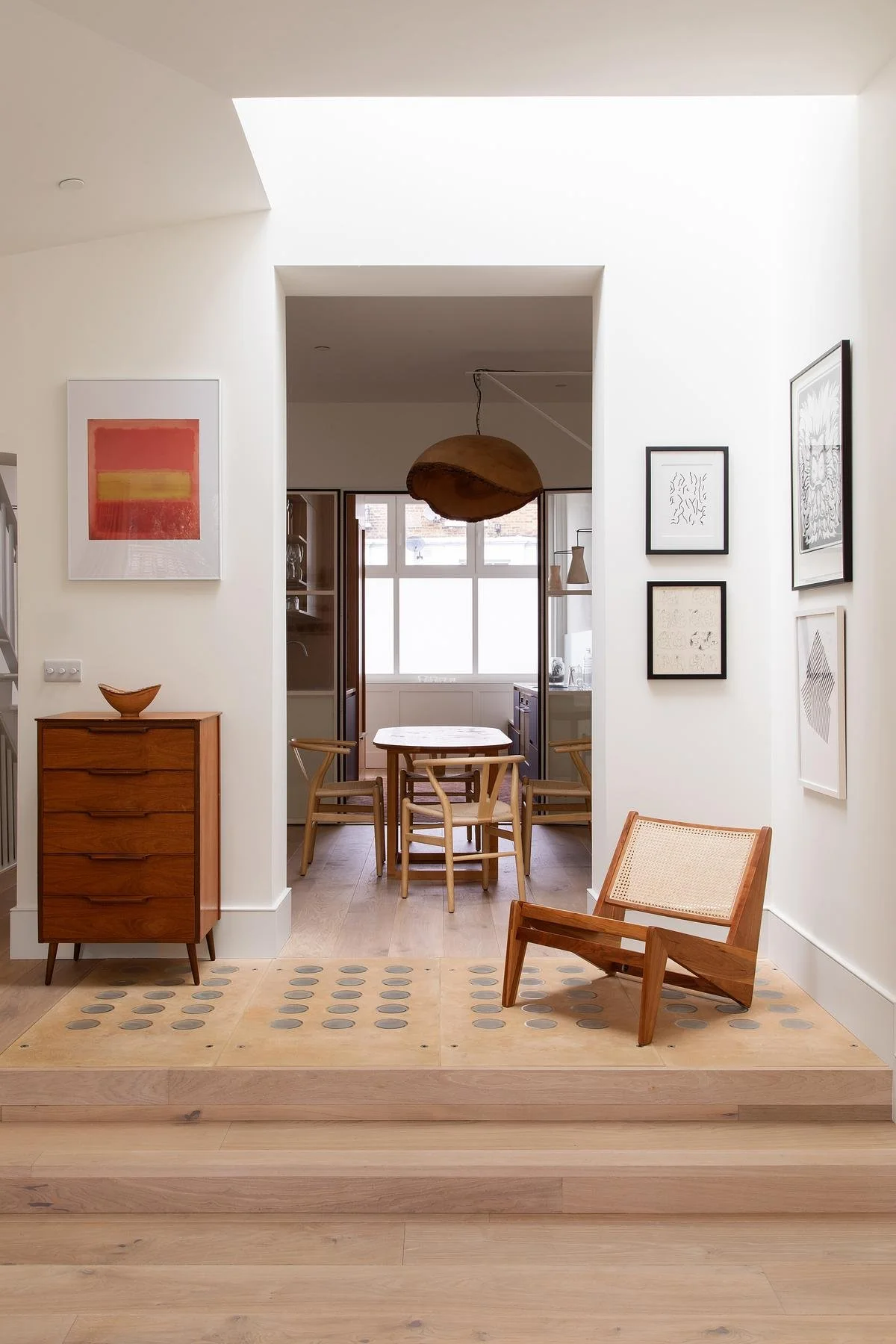
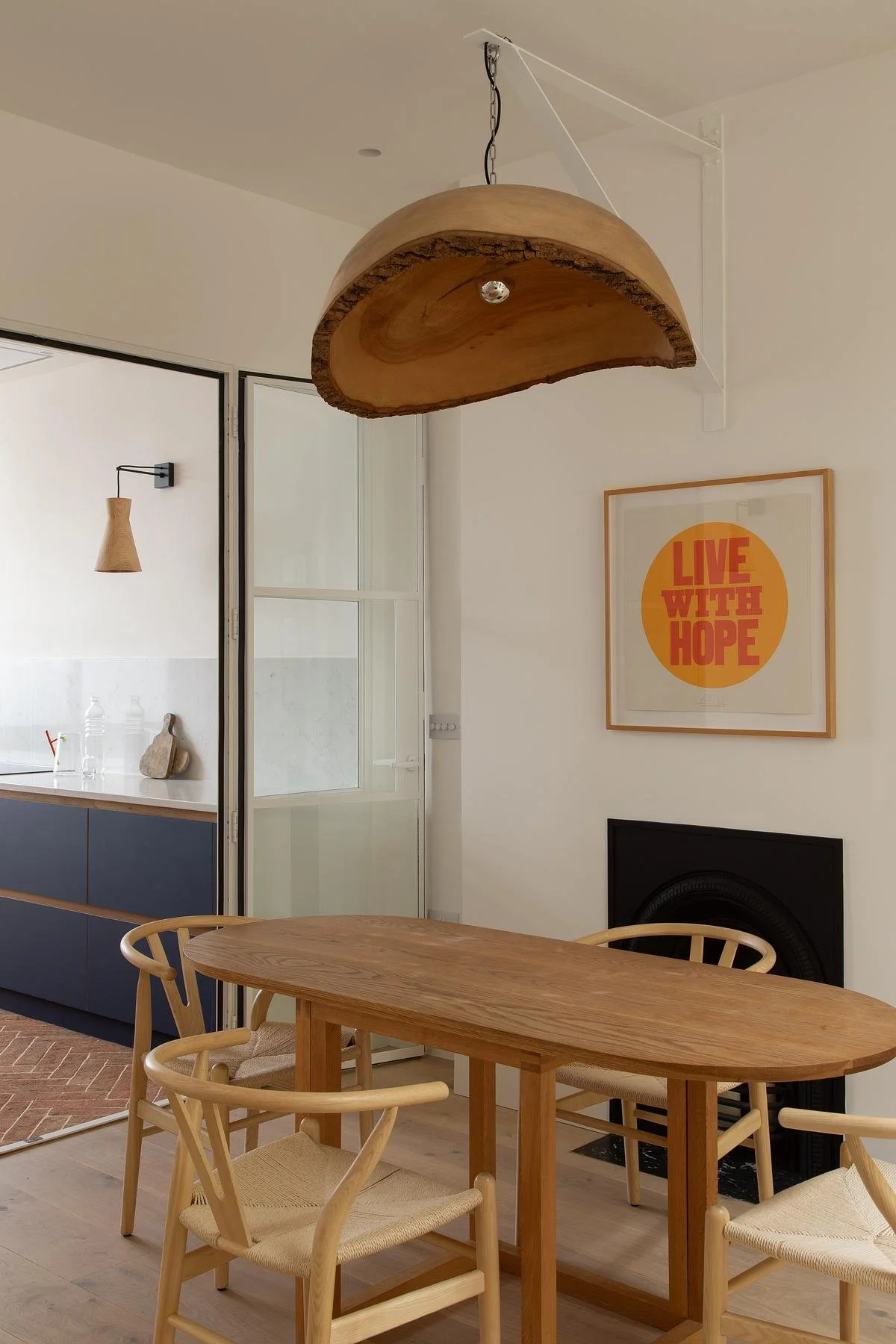
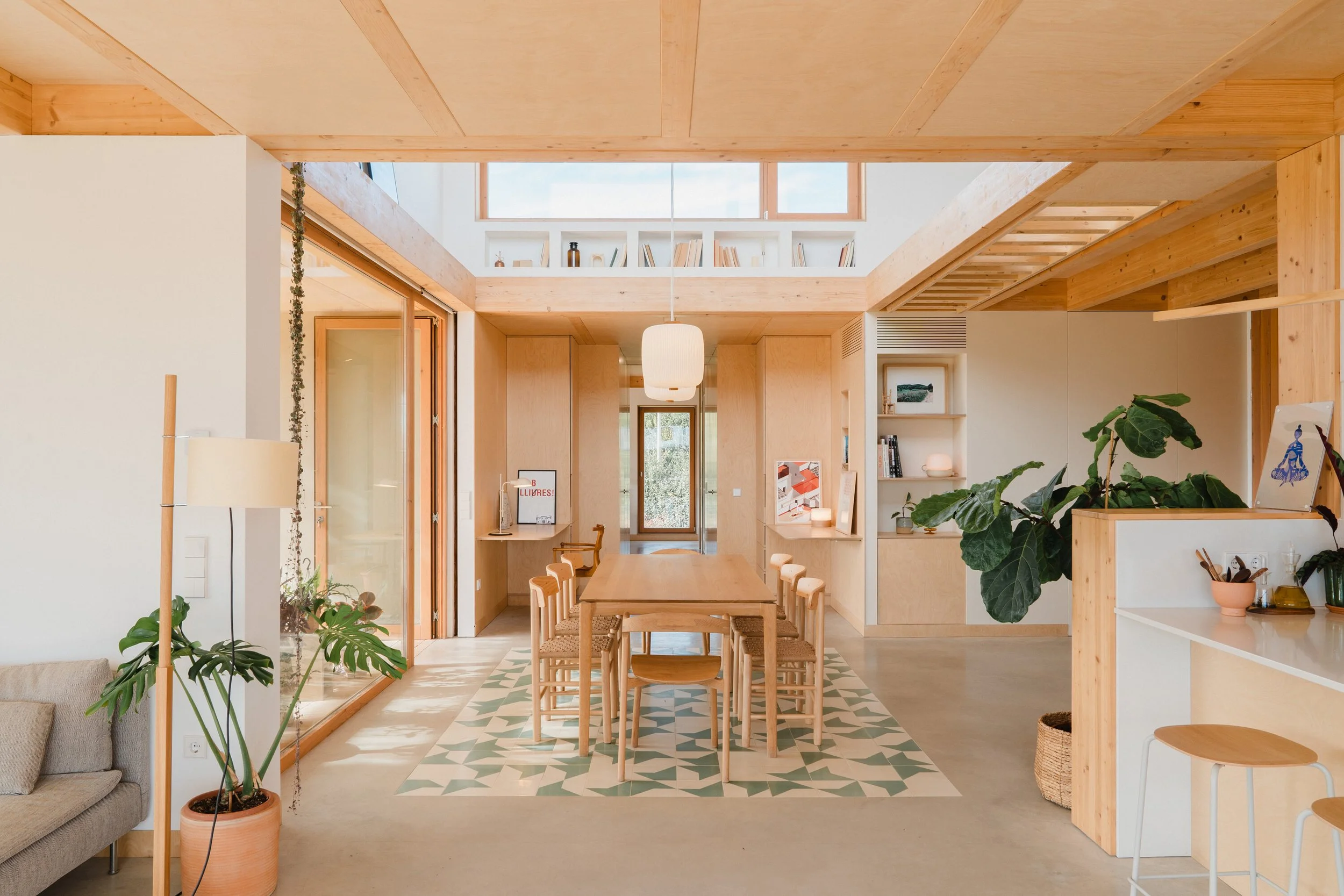
Above: Spatial continuity replaces rigid separation, creating a sense of flow without sacrificing intimacy.
Thoughtful detailing like built-in seating maximizes utility while reinforcing the home’s measured, lived-in character.
Each room carries its own character, yet none feel disconnected from the whole. The kitchen opens into living spaces without spectacle, defined instead by careful proportions and visual continuity. Built-in seating and joinery make efficient use of space, reinforcing the idea that domestic comfort does not require excess square footage. Throughout the house, light is choreographed with restraint, entering where it is most useful and lingering where it can be enjoyed.
What distinguishes this project is its refusal to dramatize its transformation. There is no performative exposure of the building’s past. Instead, history is embedded in the plan's geometry and the interior's rhythm. The former shopfront becomes a conceptual line that travels through the house, reappearing in subtle alignments and framed moments that connect rooms without flattening them.
Light and reflection extend the perception of space within a compact footprint.
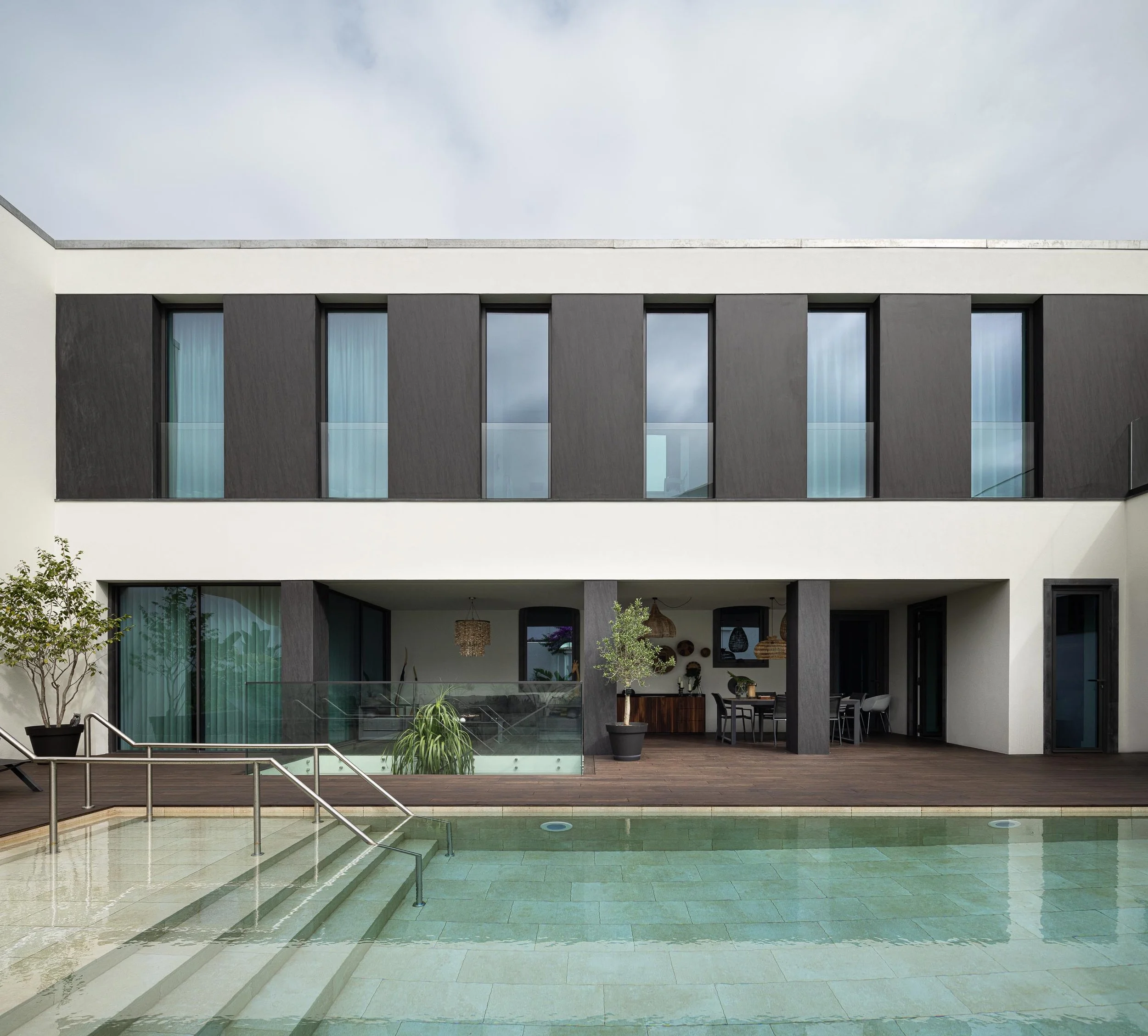
As the house shifts deeper into private territory, the choreography becomes more introspective. Spaces are revealed gradually, encouraging a slower pace of movement and a heightened awareness of scale. This is a home designed for living rather than display, where everyday rituals are given architectural weight.
In an urban context where space is often limited, N1: A Shop House offers a compelling argument for thoughtful adaptation. It demonstrates how architecture can honour what came before without being beholden to it, and how small-scale living can be enriched through clarity, restraint, and intention. The result is a home that does not deny its past, but quietly reshapes it, line by line, into something both contemporary and deeply rooted.
The vibrant blue used for the street-facing facade provides visual consistency for the home’s exterior.
PROJECT DETAILS
Location: Greater London, England, GB
Architects: Turner Architects
Photography: Adam Scott Images