CASA T+A || How a Pre-1951 Azores House Was Rebuilt for Contemporary Life
Ponta Delgada keeps its history close, in the scale of its streets, the weight of its volcanic stone, and in houses like this one, which have absorbed generations of living without giving much away.
Casa T+A sits in the historic heart of Ponta Delgada, embedded in the city's consolidated urban fabric as it has been since before 1951. When Atelier d'arquitectura Lopes da Costa took on the project, the directive was not to reimagine the house but to listen to it. The result is a 1,084-square-metre residence that feels both deeply rooted and quietly renewed, where the logic of the original building remains legible at every turn.
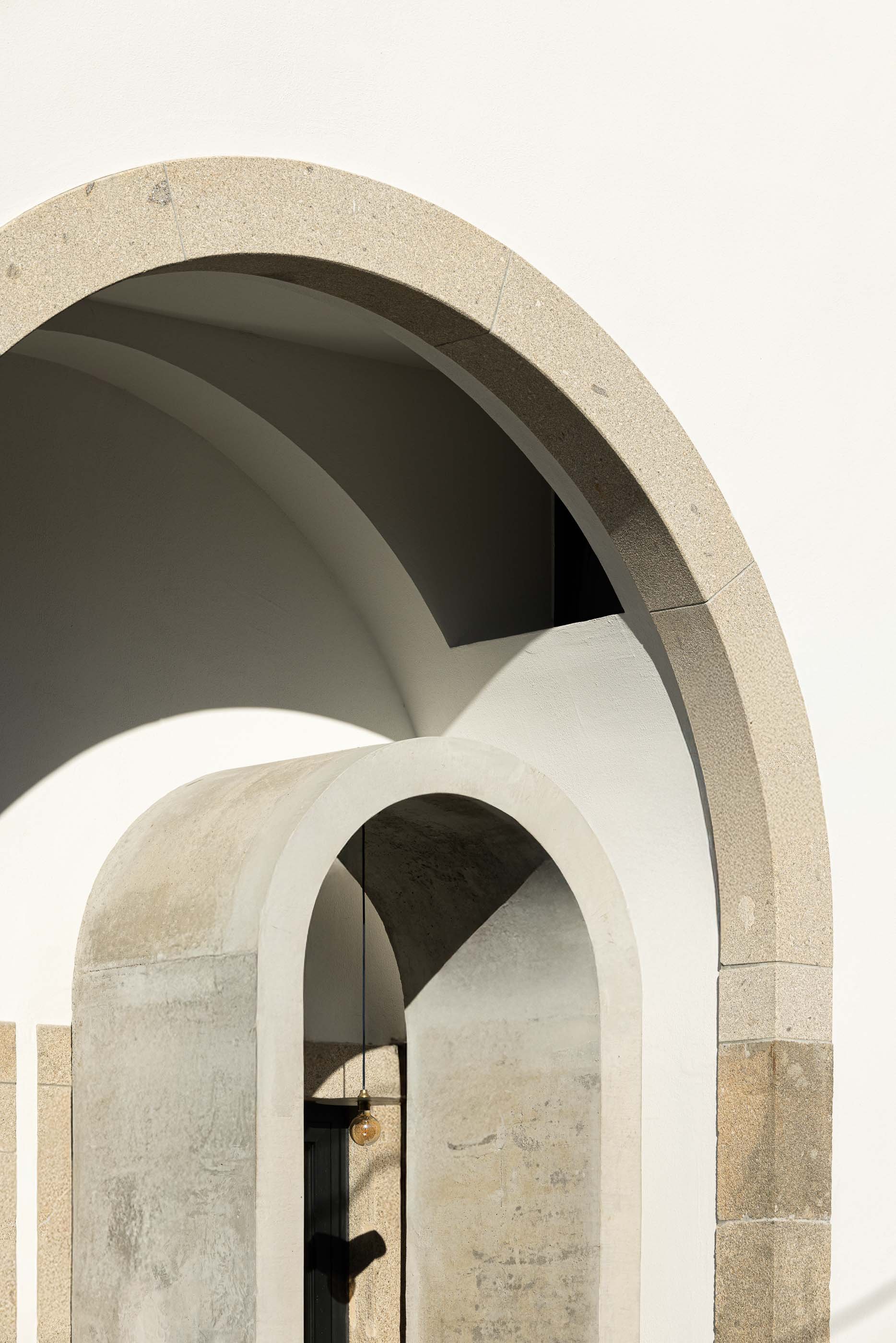
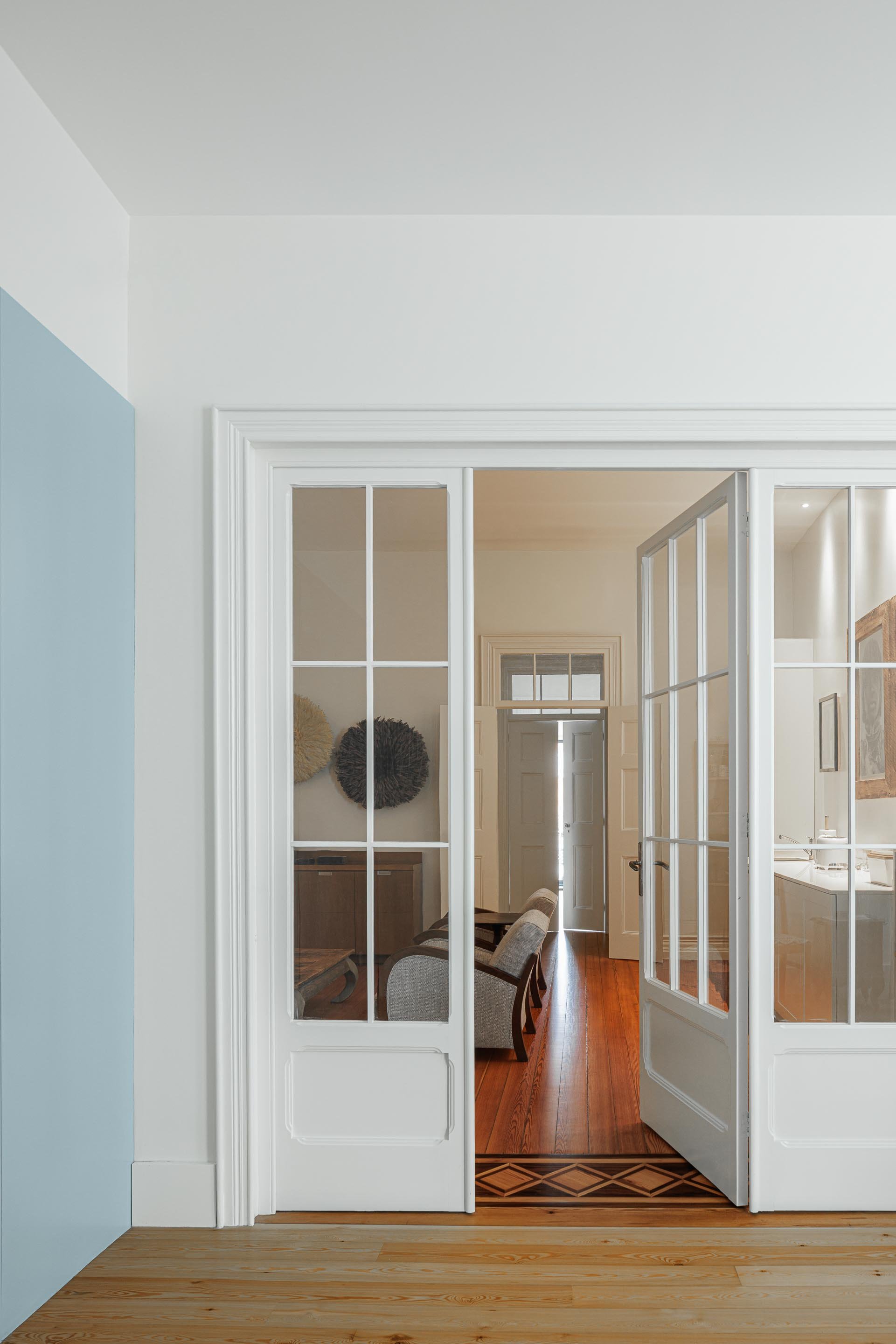
The original volcanic stone arch at the entry corridor frames the intervention's central argument: that what already exists is worth preserving. Below right: A detail of the original inlaid hardwood threshold reveals the craftsmanship the architects chose to honour rather than replace.
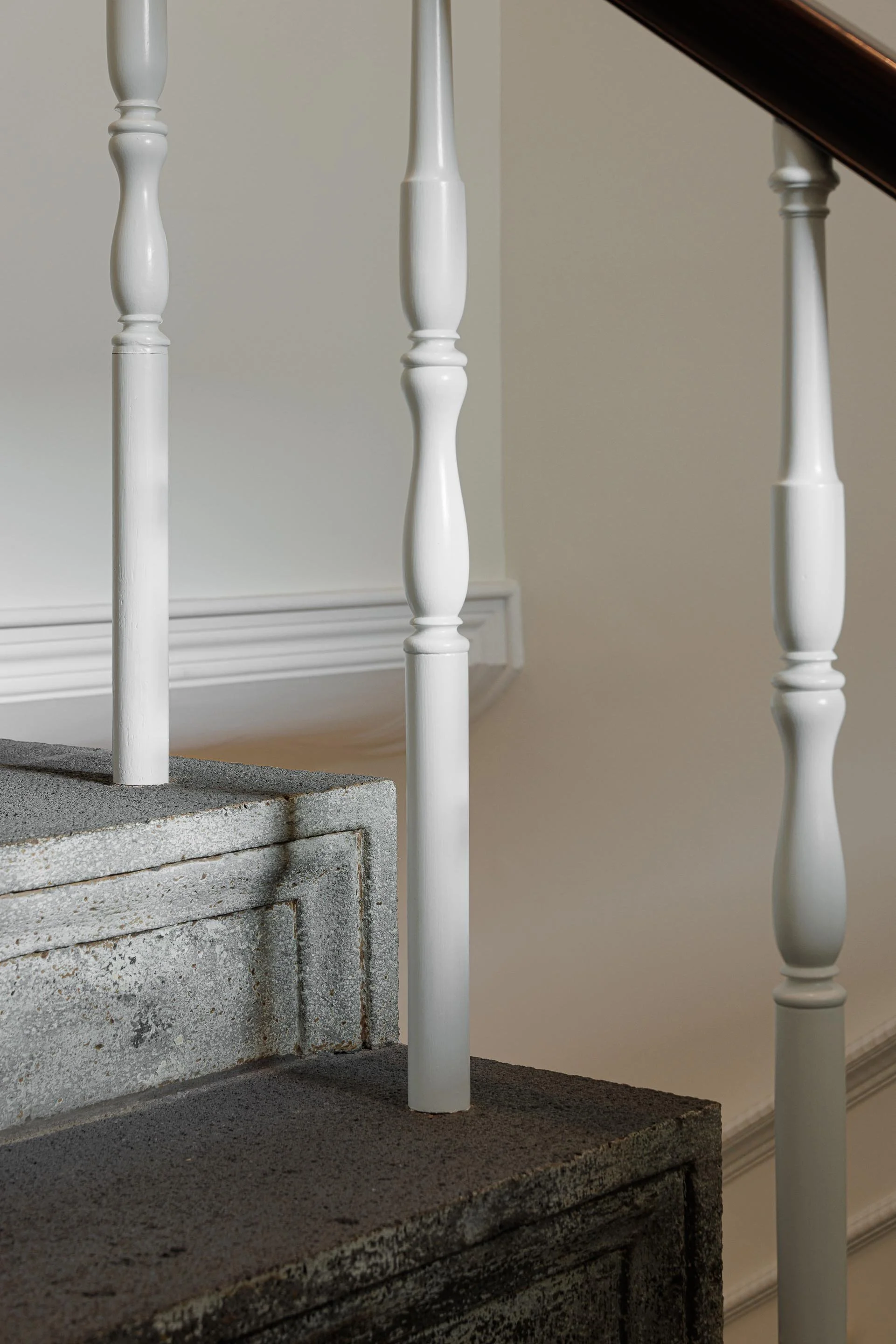
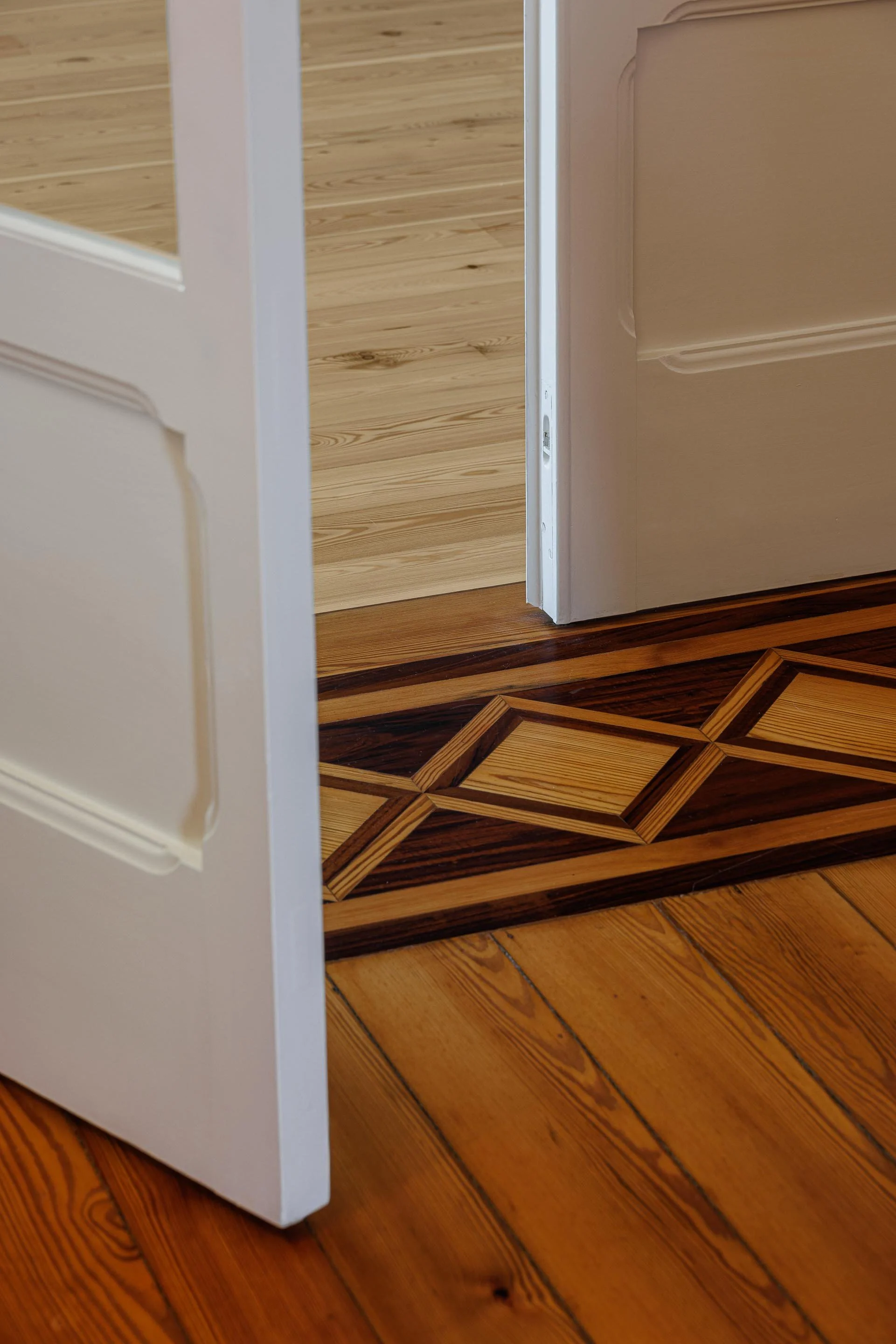
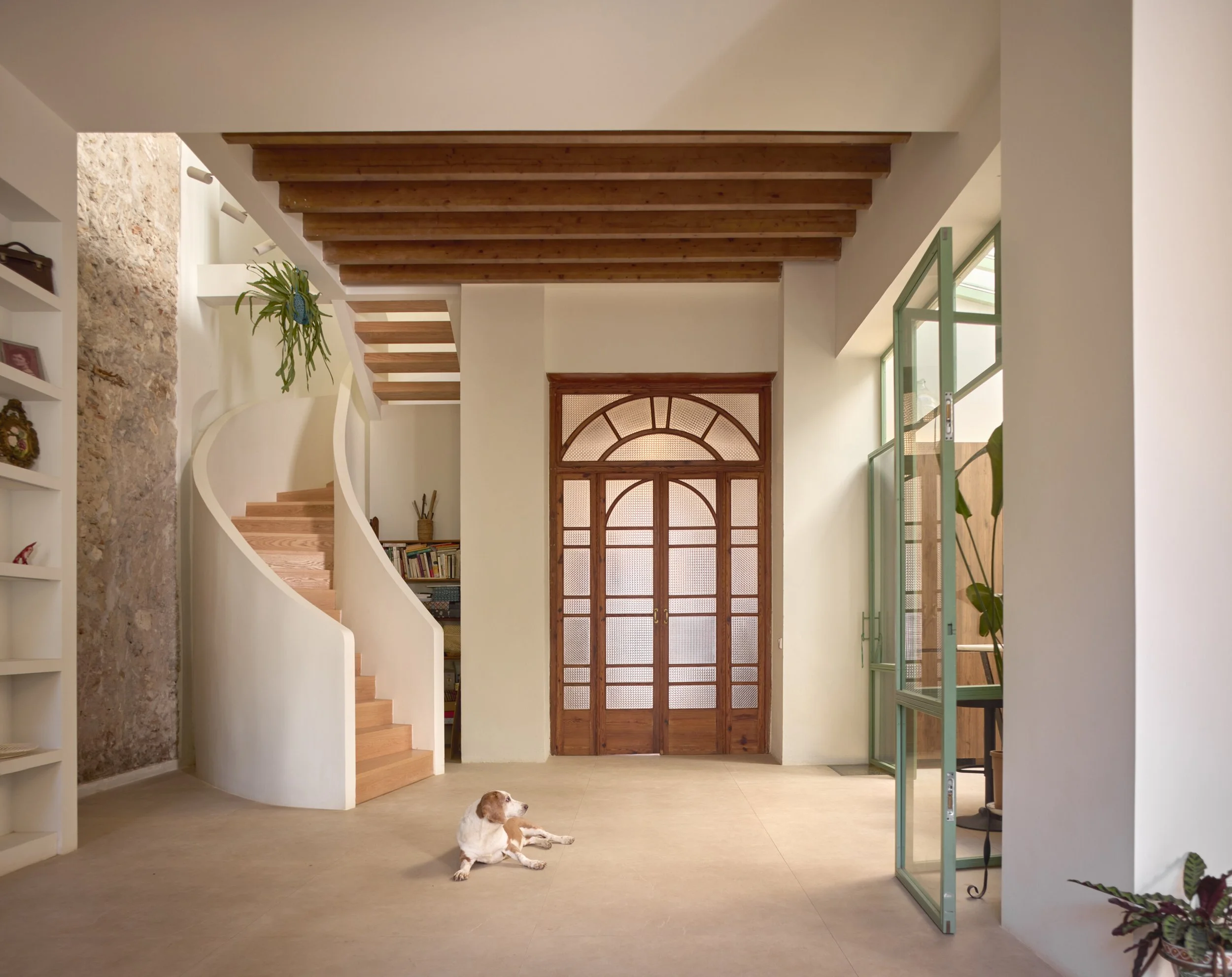
The guiding principle was preservation of what is fundamental. No volume was added. The building footprint was left untouched. Instead, architects José António Lopes da Costa and Rita Gonçalves worked within the existing structure, carefully reorganizing the interior to meet the demands of contemporary living without erasing the spatial memory of the original house. Timber floors, window frames, trims and the stairwell were all recovered wherever possible, ensuring the house reads as a continuous whole rather than a before-and-after exercise.
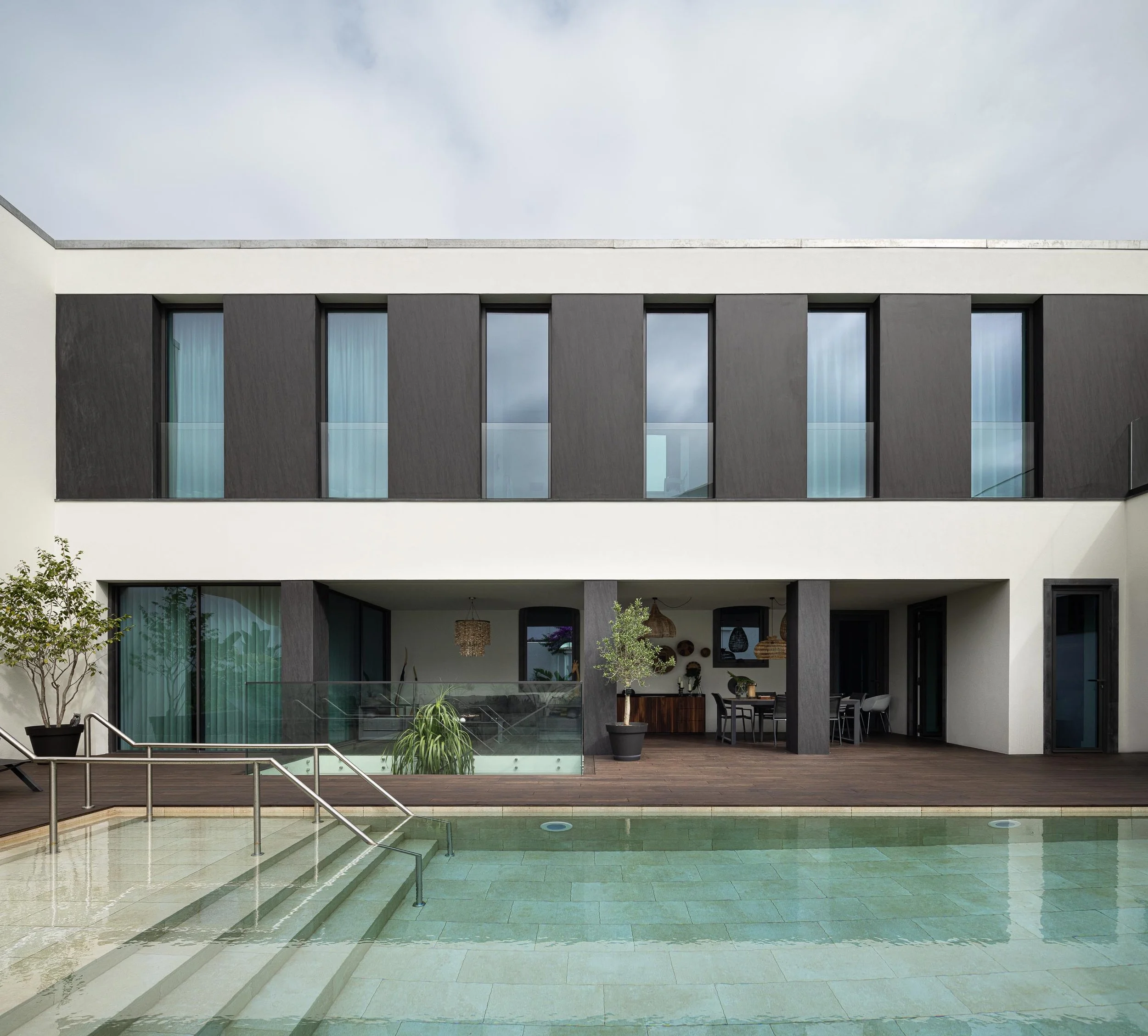
The rear garden and elevated pool deck reveal the project's most expressive gesture, where volcanic lava stone garden beds and tropical planting frame the contemporary addition.
It is on the rear facade, facing the interior of the plot, that the intervention is most expressive. New window frames adopt a more contemporary profile while remaining chromatically integrated within the house's palette of stone, plaster and wood. The outdoor space was redesigned as a place for leisure and contemplation, with a swimming pool emerging as its central element. Rather than sitting directly on the ground, the pool rests on an elevated timber structure that preserves soil permeability, a considered detail that reflects the project's broader commitment to lightness over intervention. The deck extends the interior spaces outward, with open-jointed timber reinforcing that sense of closeness to the land. The existing volcanic stone patios were preserved intact, material witnesses to the place and its particular geology.
The kitchen runs beneath a restored vaulted ceiling, its pale blue cabinetry and dark timber open shelving bridging the historic structure and contemporary living.
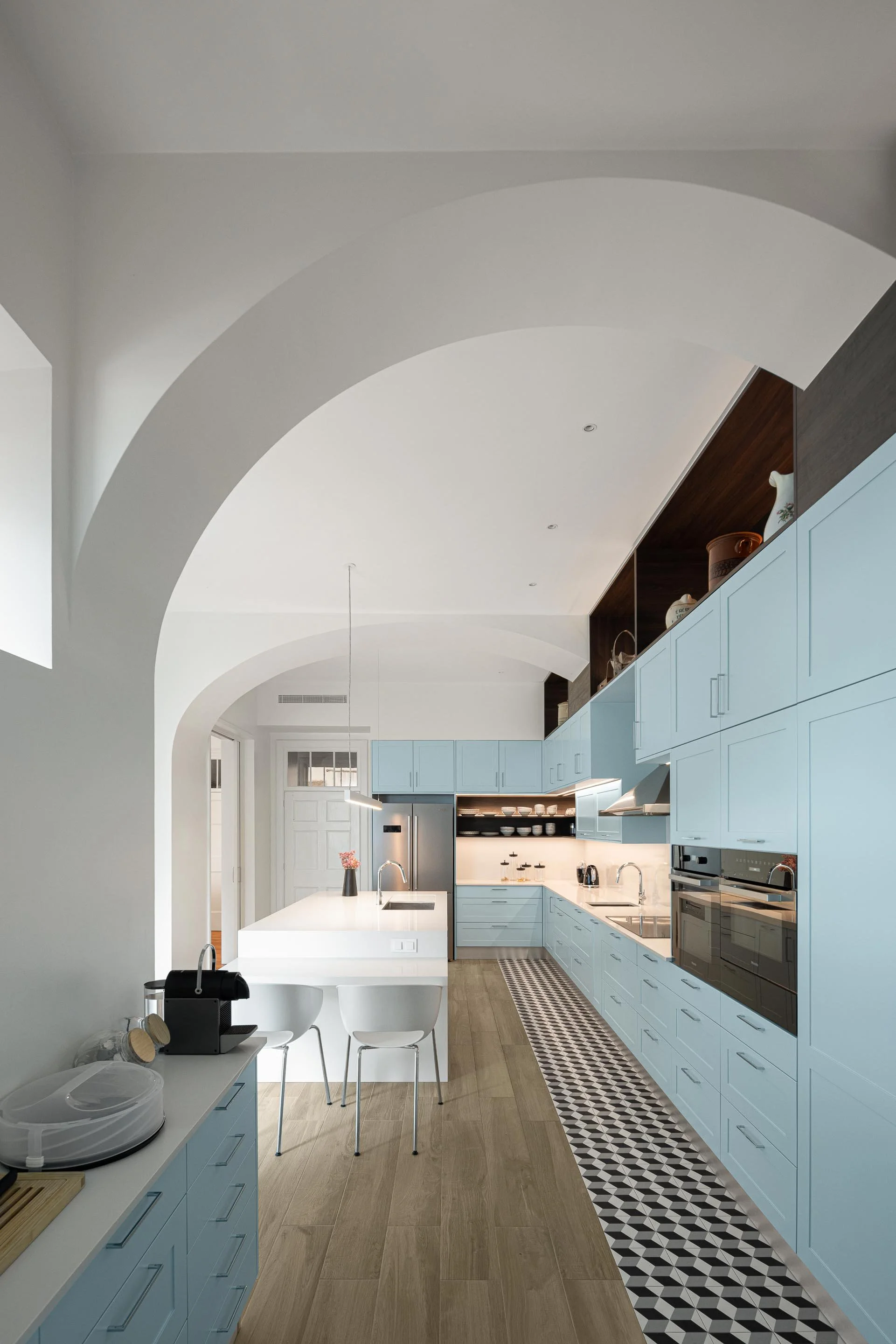
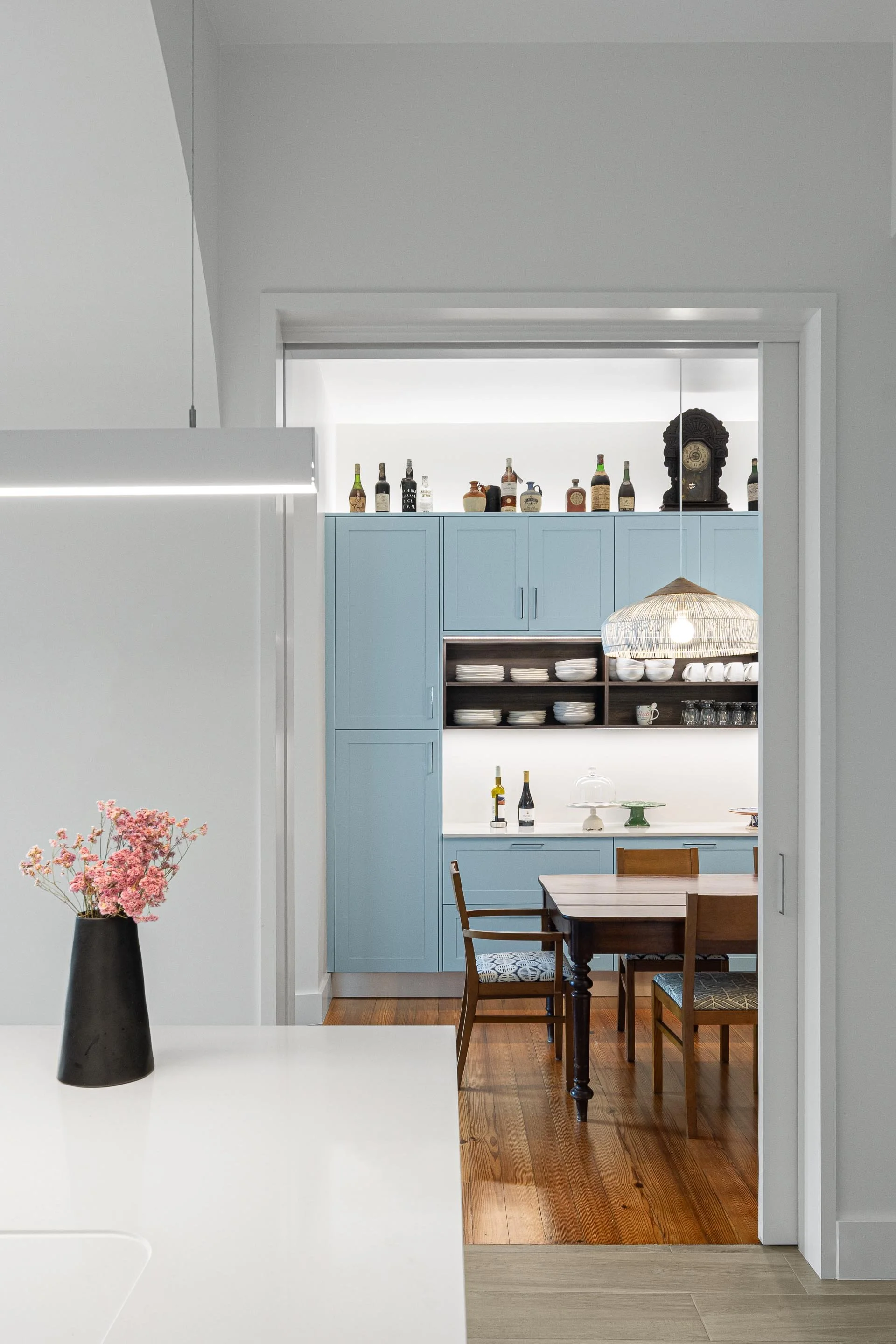
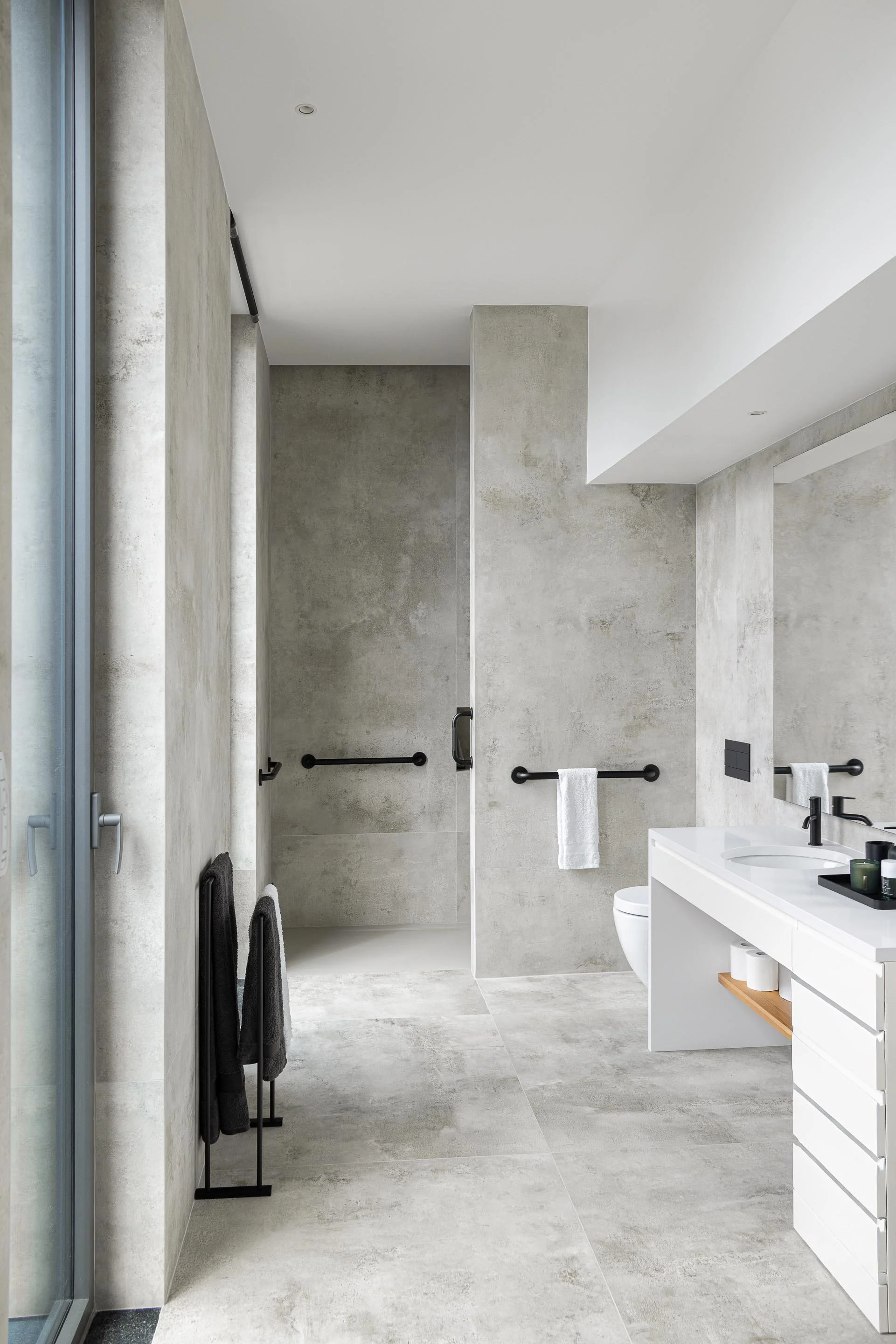
Inside, the house unfolds across three storeys articulated through vertical continuity. Natural light enters through original openings and is amplified in the areas of longer occupation. Private spaces gain greater autonomy through the introduction of en-suite bathrooms, while common areas become more fluid and generous, promoting natural movement between levels. The kitchen, running beneath a vaulted ceiling in pale blue cabinetry with dark timber open shelving above, is one of the project's most assured moments; it manages to feel both historically grounded and entirely of the present.
In the master bedroom, a powder-blue panel wall, antique furniture and floor-to-ceiling glazing demonstrate how the project balances historical character with contemporary openness.
What makes Casa T+A worth studying is how it reframes the question renovation typically asks. Rather than asking what can be added or updated, the project asks what is worth keeping, and then keeps it with conviction. In an archipelago where volcanic stone, salt air and centuries of habitation have shaped every building in ways that are difficult to replicate, that restraint is not timidity. It is the most responsible approach available.
Past and present coexist here not as a compromise but as a considered argument for what a house can be when it is trusted to carry its own history forward.
A teal-tiled arched shower enclosure in one of the en-suite bathrooms offers one of the project's most playful gestures within an otherwise restrained interior palette.
PROJECT DETAILS
Project Name: Casa T+A Açores
Architecture Office: Atelier d'arquitectura Lopes da Costa
Main Architects: José António Lopes da Costa and Rita Gonçalves
Collaboration: Afonso Tigre Lopes da Costa
Location: Ponta Delgada, Açores, Portugal
Year of Completion: 2025
Total Built Area: 1,084 m²
Builder: Tecnicouto, Lda.
Engineering: Strumep Engenharia, Lda.
Landscape: Mónica Barbosa, Arquitecta Paisagista
Light Design: Projedomus; Arquitecta Joana Forjaz
Photography: Ivo Tavares Studio