Taipei Collector's House || A Living Collection Where Art and Daily Life Share the Same Floor
The things Chih-Da Jason Lin's father has spent a lifetime acquiring: Han dynasty stone sculptures, Ming dynasty huanghuali chairs, and paintings by Sanyu, were never meant for a gallery wall.
That premise sits at the heart of the Taipei Collector's House, a 350-square-metre residence on Qingtian Street in the city's Da'an District, designed by Taiwan-born, Shanghai-based architect Chih-Da Jason Lin for his parents. The project merges two adjacent apartments into a single three-bedroom home, and its ambition goes well beyond square footage. It asks what happens when museum-quality objects are returned to the rhythms of daily life, and what a home looks like when a collection is its foundation rather than its decoration.
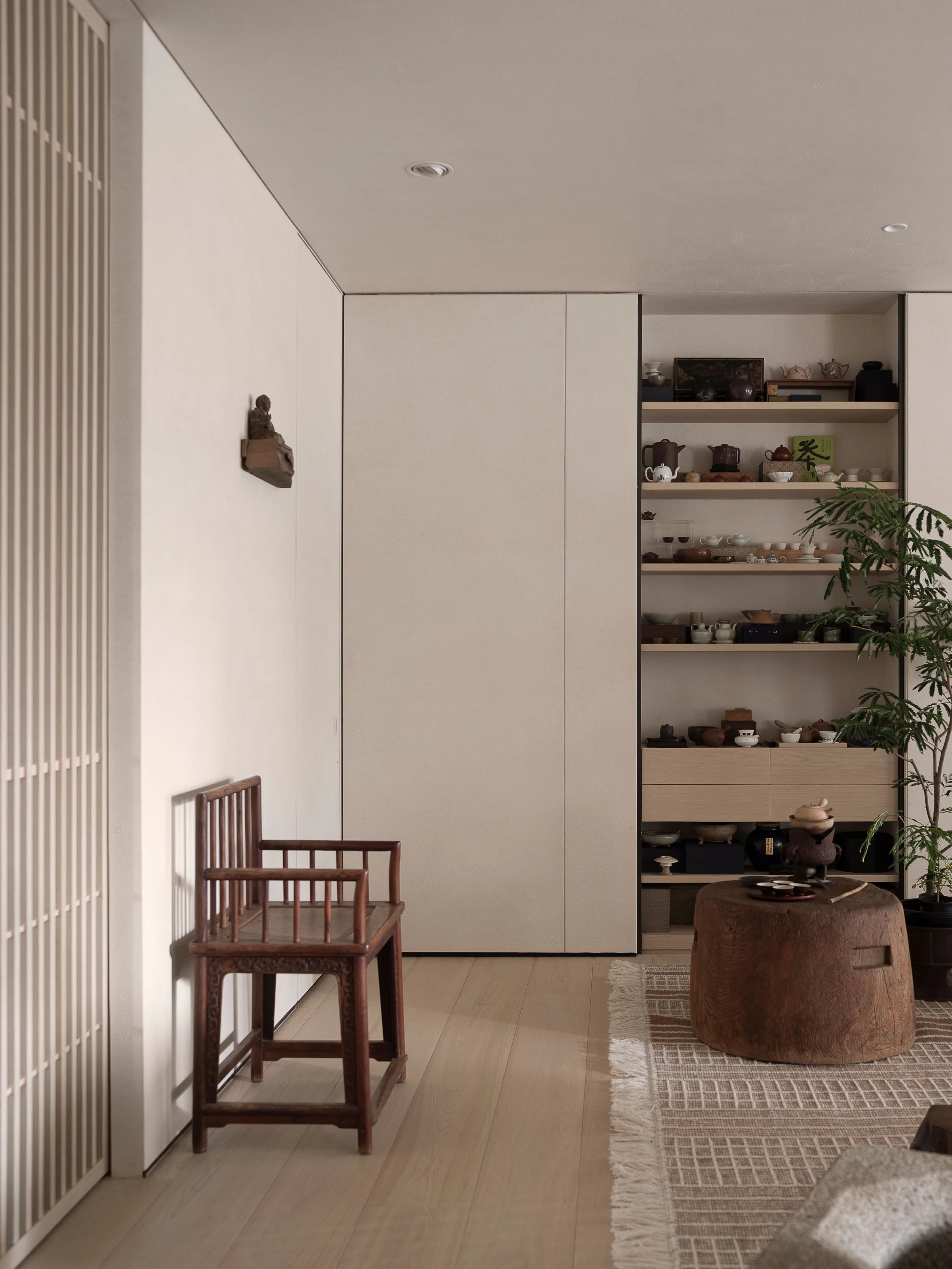
A dark stone coffee table and a carved antique chair hold their ground in a room where centuries of collecting have become the architecture of the everyday.
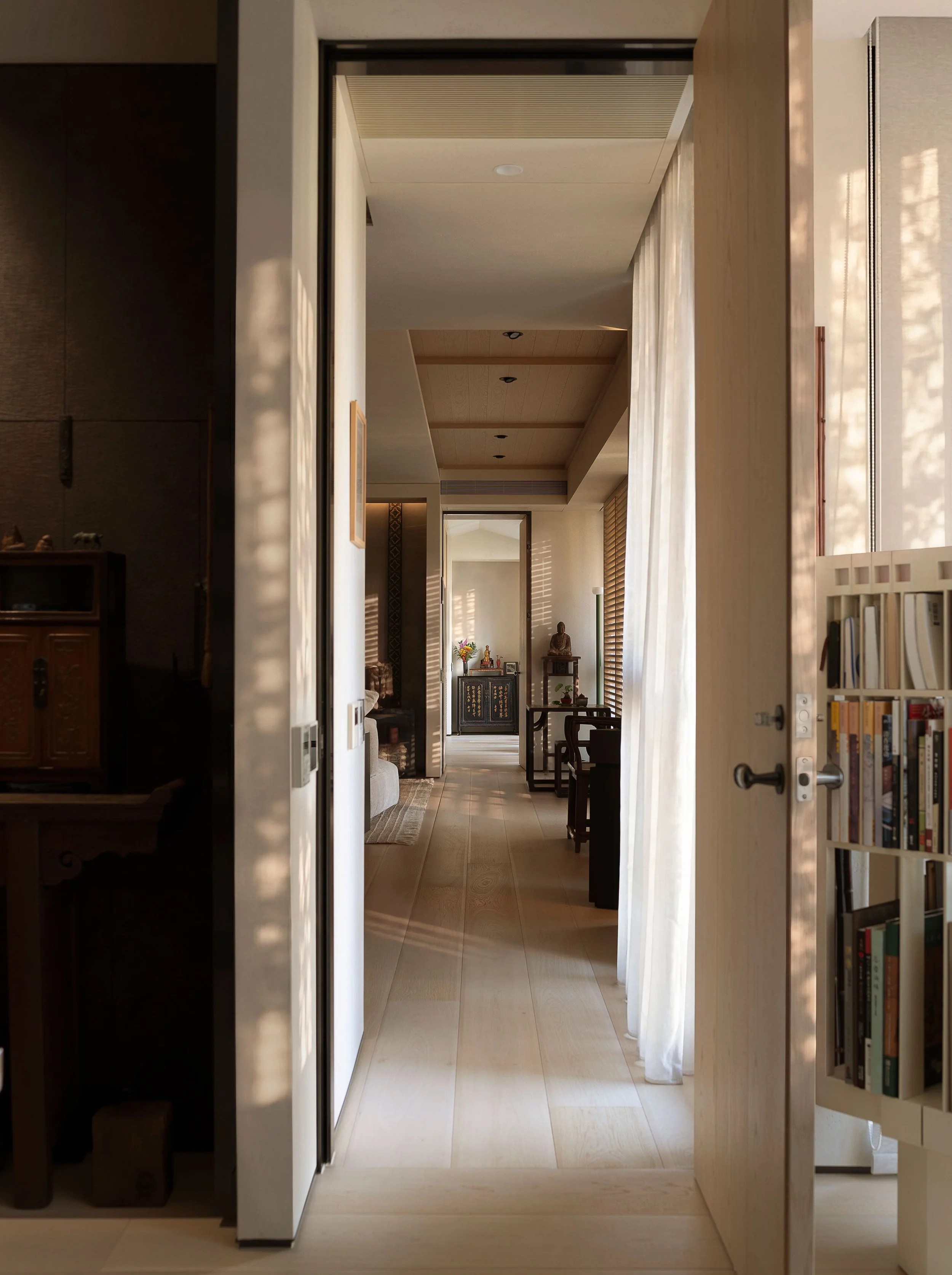
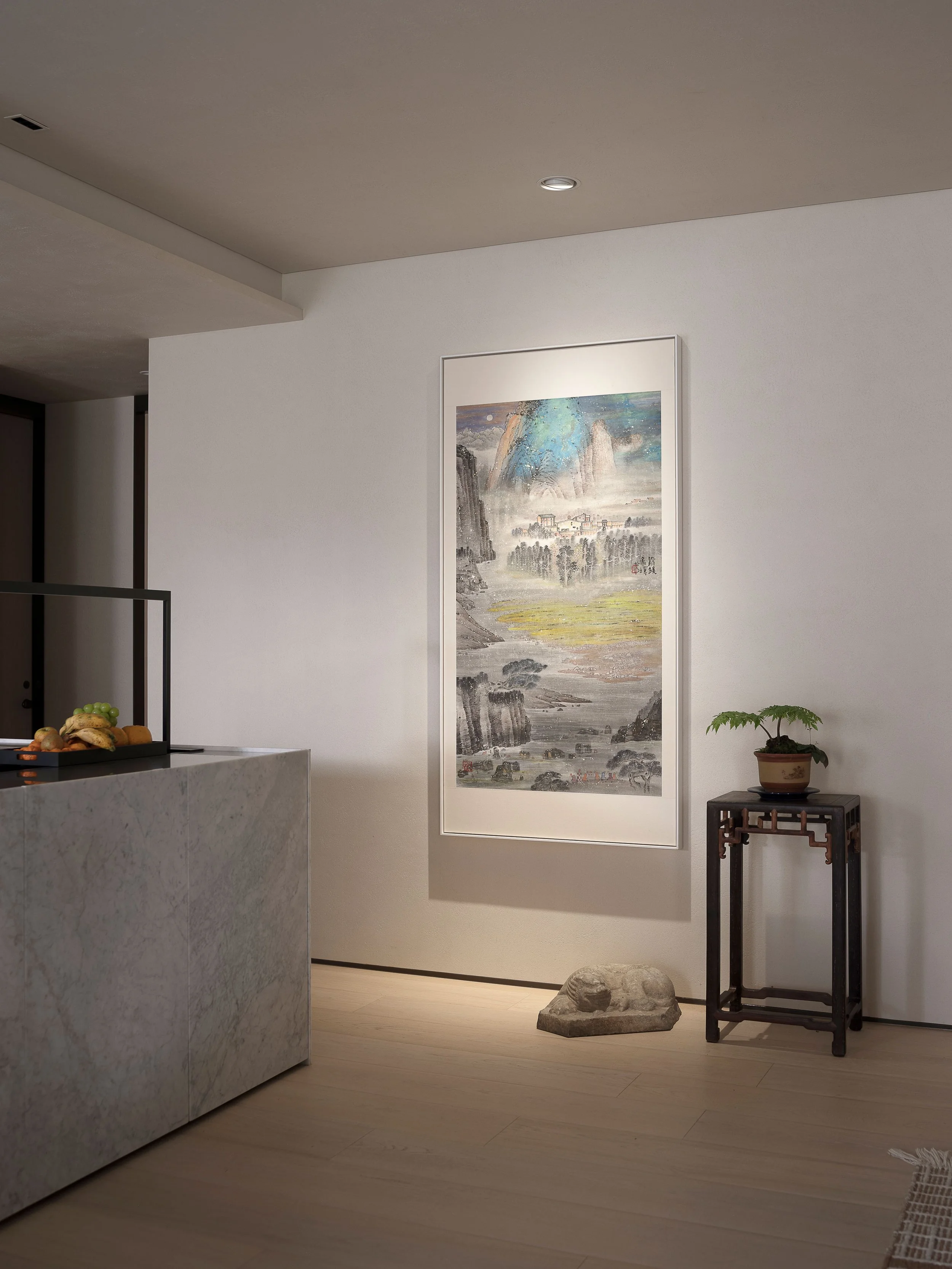
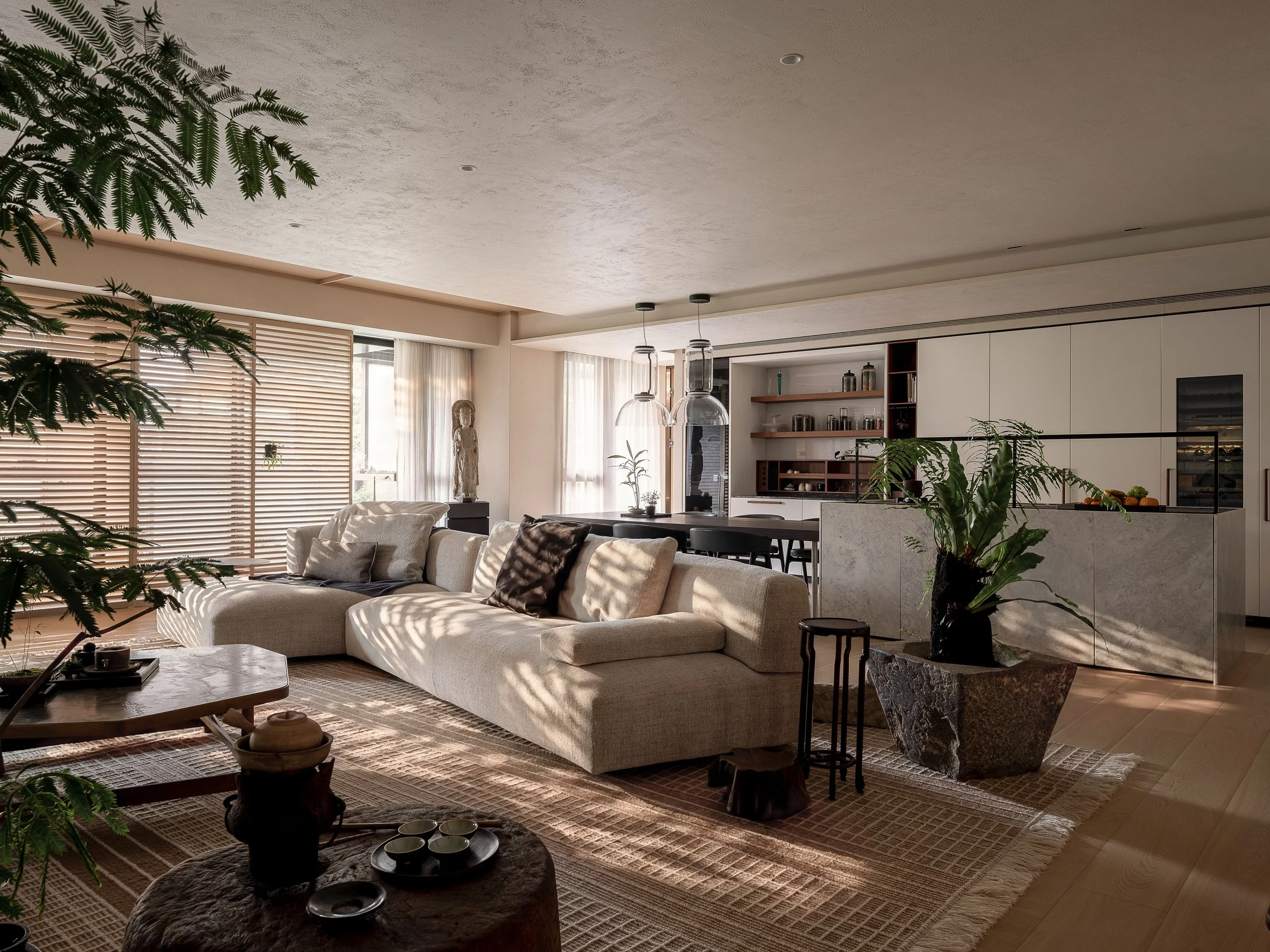
The open-plan layout, spanning two merged apartments, allows art, furniture, and family life to circulate without interruption.
The answer, here, is quietly extraordinary. A Han dynasty stone sculpture anchors a corner not as a centrepiece but as a presence. A Ming dynasty official's hat chair is something to sit beside, to notice over morning tea, to let recede into the background of an ordinary afternoon. "When you engage with a Ming dynasty official's hat chair at home," the owner has said, "its materiality and sense of history are far more valuable than any luxury item. These pieces should be part of the architecture itself, not mere objects on display."
Lin's spatial strategy serves that philosophy directly. Existing partitions were removed to create open, continuous circulation, with private zones defined not by walls but by entry thresholds and concealed door systems that Lin describes as "magical boundaries." Rooms are distributed along the perimeter, each with enough independence to feel like its own world, while the communal areas remain generous and connected. The layout is guided by what Lin calls a "non-interference philosophy": coexistence without disturbance, solitude and togetherness held in careful balance.
A latticework screen placed next to the private sitting area in the bedroom references the mother's childhood in Yilan.
The material palette reinforces the same restraint. Soft beige tones, textured wall finishes, natural oak, and grey-brown surfaces establish a calm visual foundation that asks nothing of the eye. Accents of Carrara marble and dark tile introduce contrast without drama. Large windows fitted with adjustable louvers shift light and shadow through the interior across the day, animating the space without altering its character. Contemporary pieces from Henge, Cassina, and Boffi sit alongside the family's antiques without hierarchy or apology.
Carrara marble, dark timber, and glass pendants bring the home's material dialogue into the kitchen and dining zone.
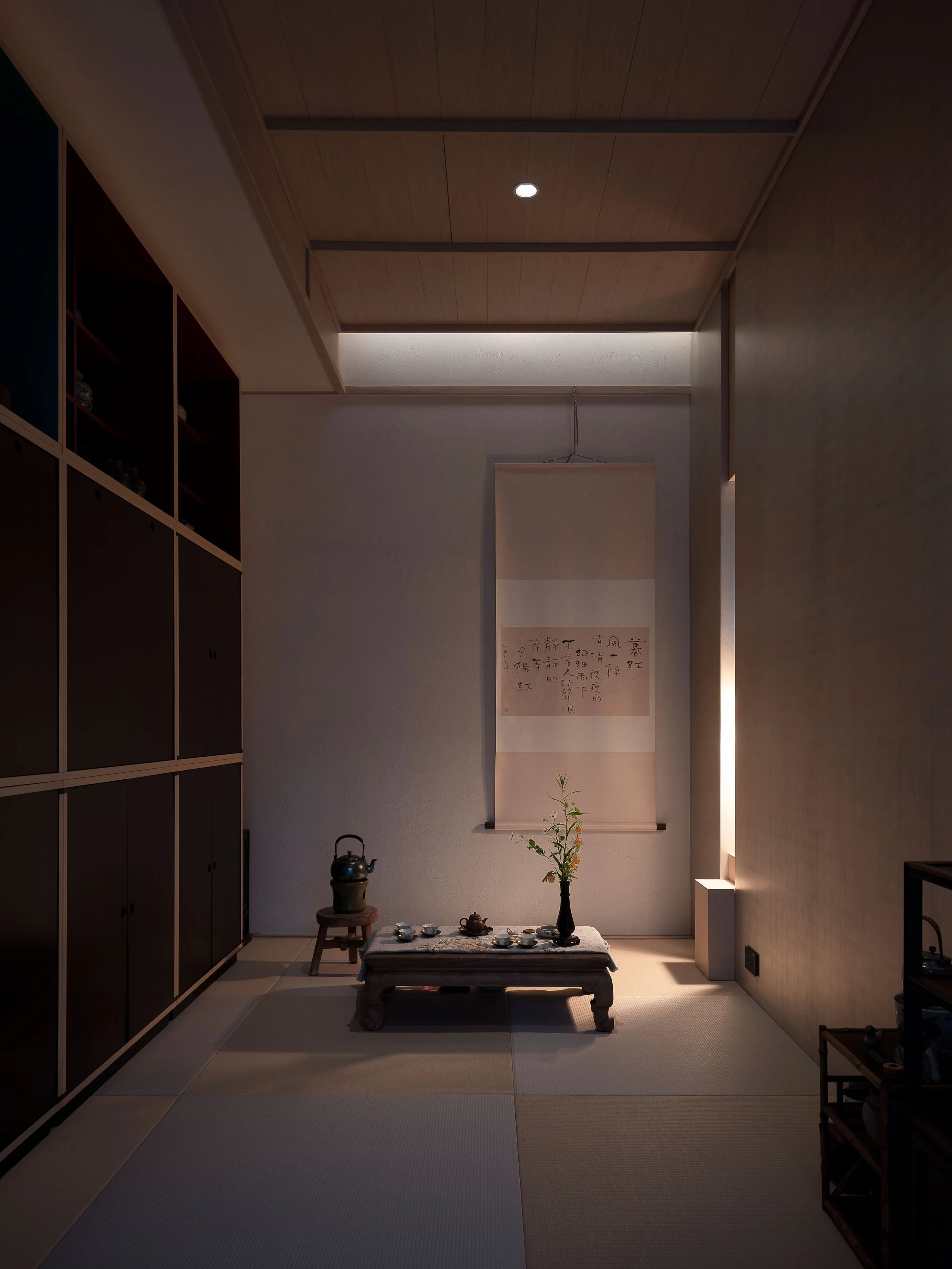
Cultural memory is woven in with equal care. Sliding doors in the mother's tea room incorporate handcrafted Taiwanese latticework referencing her childhood in Yilan, translating personal history into light and shadow. Two distinct tea settings serve the family's tea-centred lifestyle: one serene and floor-seated for traditional ritual, the other anchored by a dark wood tea table and a full wall of tea ware for gatherings. Buddhist sculptures and Zen-influenced objects appear throughout, less as religious markers than as quiet invitations to stillness.
Above: The dark wood tea table anchors the space meant for social gatherings over a mindful brew. Below right: The floor-seated tea room, lit by a single ceiling aperture, strips the ritual down to its essentials: water, heat, and a hanging scroll.
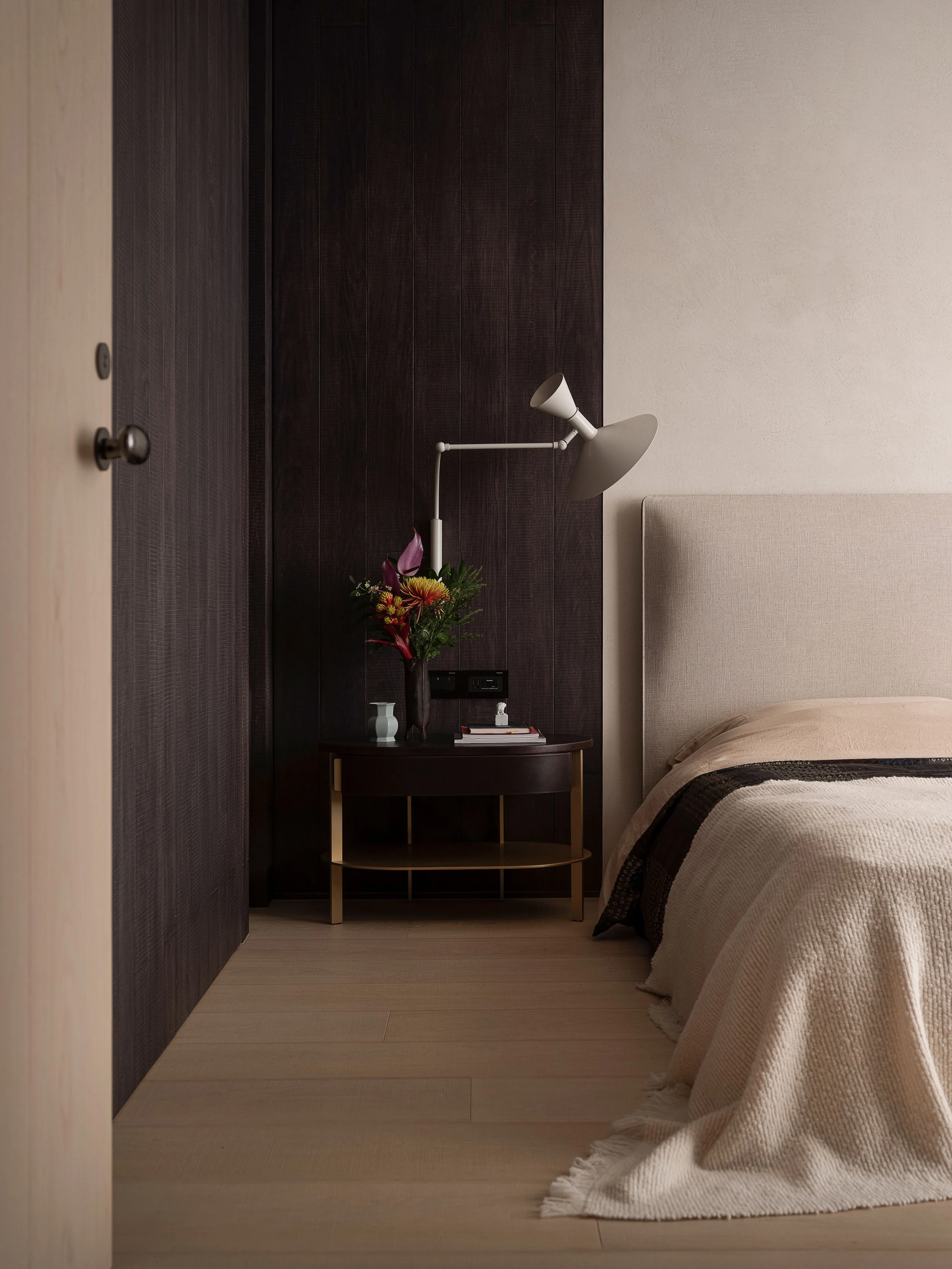
What Lin has built for his parents is not a showroom or a shrine. It is a home in which a lifetime of collecting has become the architecture of everyday life, where objects from different eras and cultures share the same floor with the people who love them. That, more than any single piece in the collection, may be the rarest thing here.
PROJECT DETAILS
Project Name: Taipei Collector's House
Location: Qingtian Street, Da'an District, Taipei
Design Company: Superorganism Architects
Chief Designer: Chih-Da Jason Lin
Design Period: January – June 2023
Construction Period: July 2023 – July 2025
Total Interior Area: 350 sqm
Total Budget: 7 million RMB
Main Materials: Oak, Tiles, Marble, Wall Paints
Photography: Boris Shiu