Maison Terra || The Dubai Villa Designed to Put Screens Second
Maison Terra was built on the premise that architecture can change how a family spends an evening together, starting with removing the television from the room where everyone gathers.
In this four-bedroom villa in Tilal Al Ghaf, Dubai, the main living areas are screen-free by design, leaving room for conversation, reading, and the kind of unplanned interaction that a glowing screen tends to interrupt. A separate family room absorbs the television instead, allowing the rest of the home to operate on different terms: more open, more present, and less organized around a single point of focus.
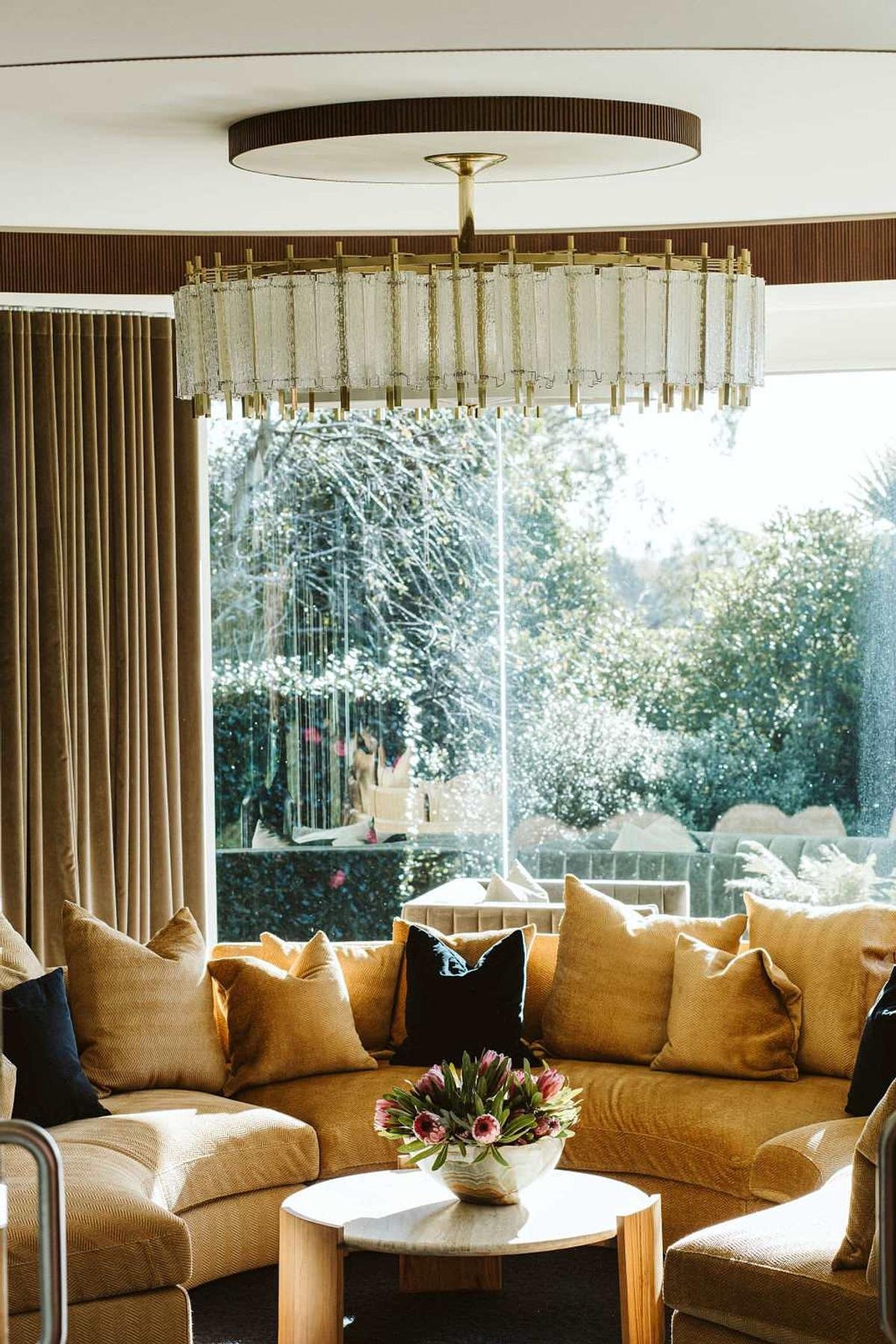
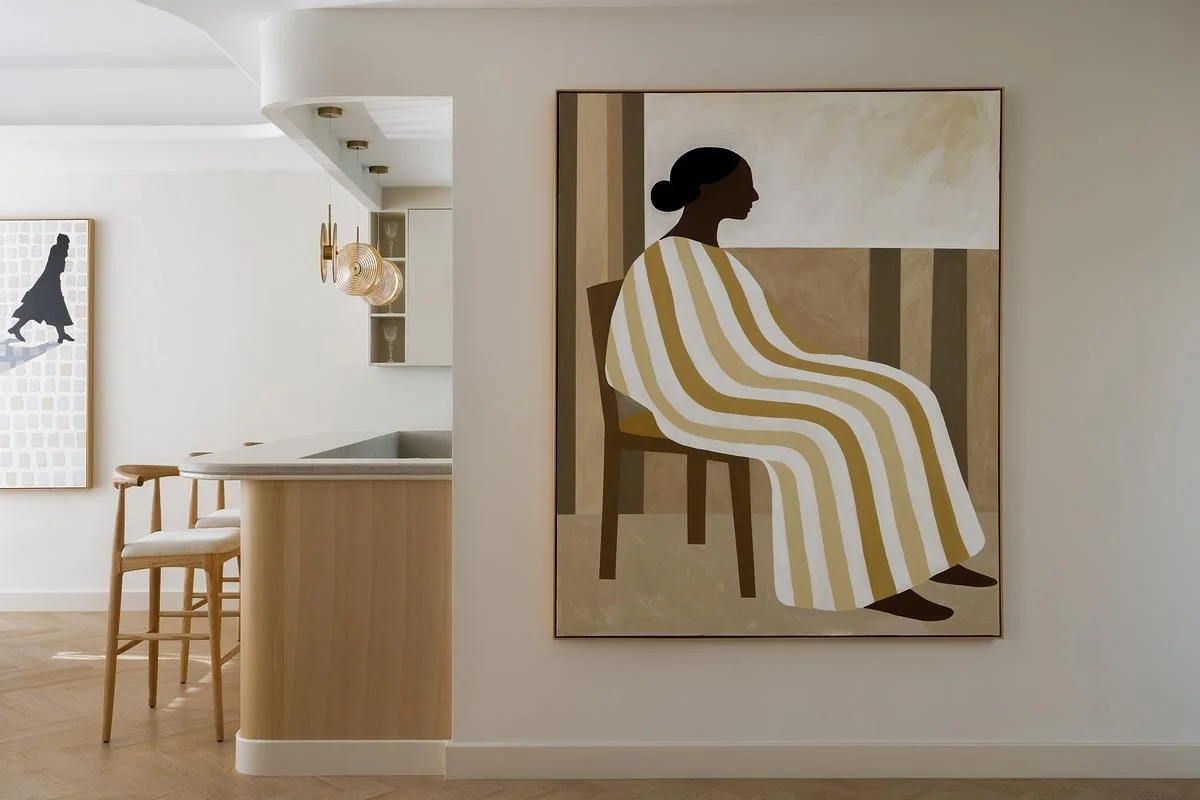
Without a television to anchor it, the room organizes itself around conversation instead.
That same instinct toward intentional living shaped everything that followed. The project began with two targeted extensions, expanding the living areas and introducing a pair of home offices that acknowledge how thoroughly work has folded into domestic life. Rather than treating these additions as afterthoughts, the design team built them into the home's existing logic, so the offices read as rooms with purpose rather than rooms tacked on out of necessity.
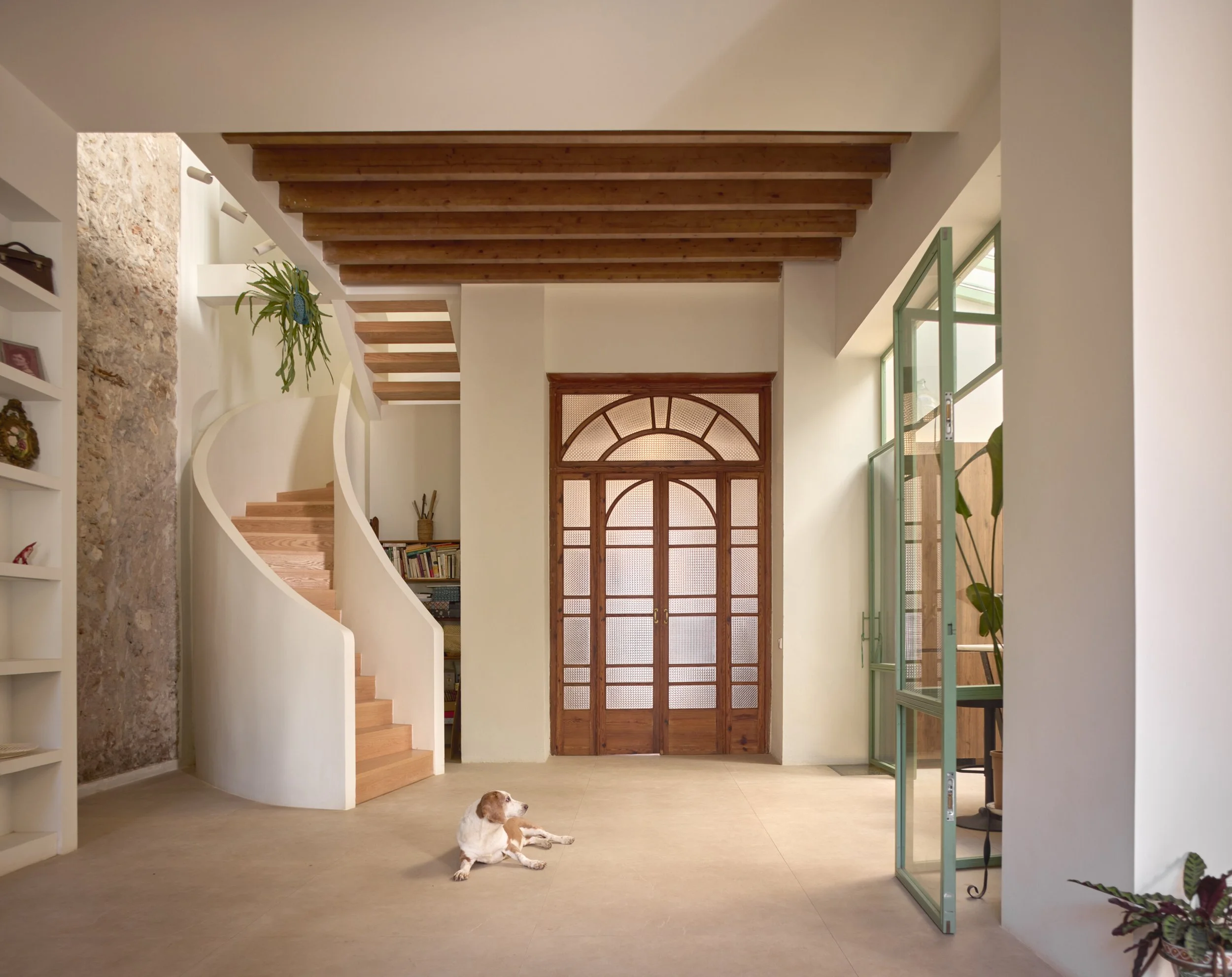
The villa's defining gesture came from a problem rather than a plan. A structural column near the center of the ground floor could not be removed, so it was reworked into a curved architectural feature that now separates the living and dining areas. The shape became a kind of signature, echoed afterward in ceilings, joinery, mirrors, and freestanding furniture throughout the home. What began as a constraint set the tone for a house defined by geometry that stays precise without ever turning hard-edged, softening movement from one room to the next.
The reworked column that once threatened the floor plan now sets the rhythm for everything around it.
Material choices reinforce that same restraint. Plastered walls, light oak flooring, and natural stone establish a warm, continuous base, layered with muted tones of blush, terracotta, plum, mustard, and softened yellow. The palette gives the home personality without letting any single colour dominate, a balance the design team credits to careful layering rather than bold statement-making.
Bespoke furnishings, developed with DOT Objects, tie the rooms together with a consistency that feels architectural rather than decorative. The dining table, the curved mirror near the entry, and the integrated shelving were each designed specifically for Maison Terra, ensuring that no space feels disconnected from the next. A behind-the-scenes preparation kitchen keeps the main kitchen visually calm, freeing it to function as a social space built for hosting rather than a working one built for cooking alone.
Designed specifically for Maison Terra, the dining table extends the home's curved language into its most communal room.
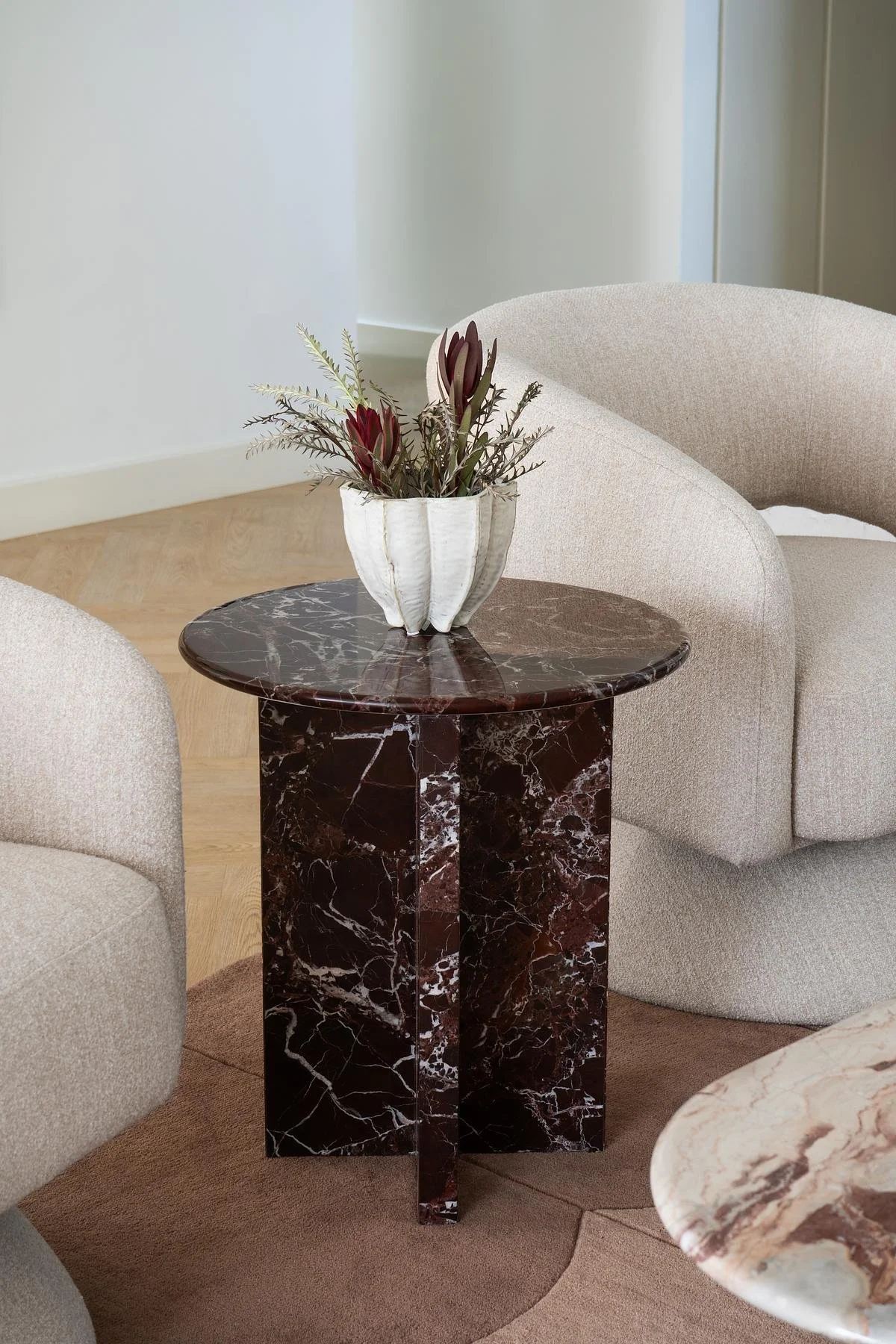
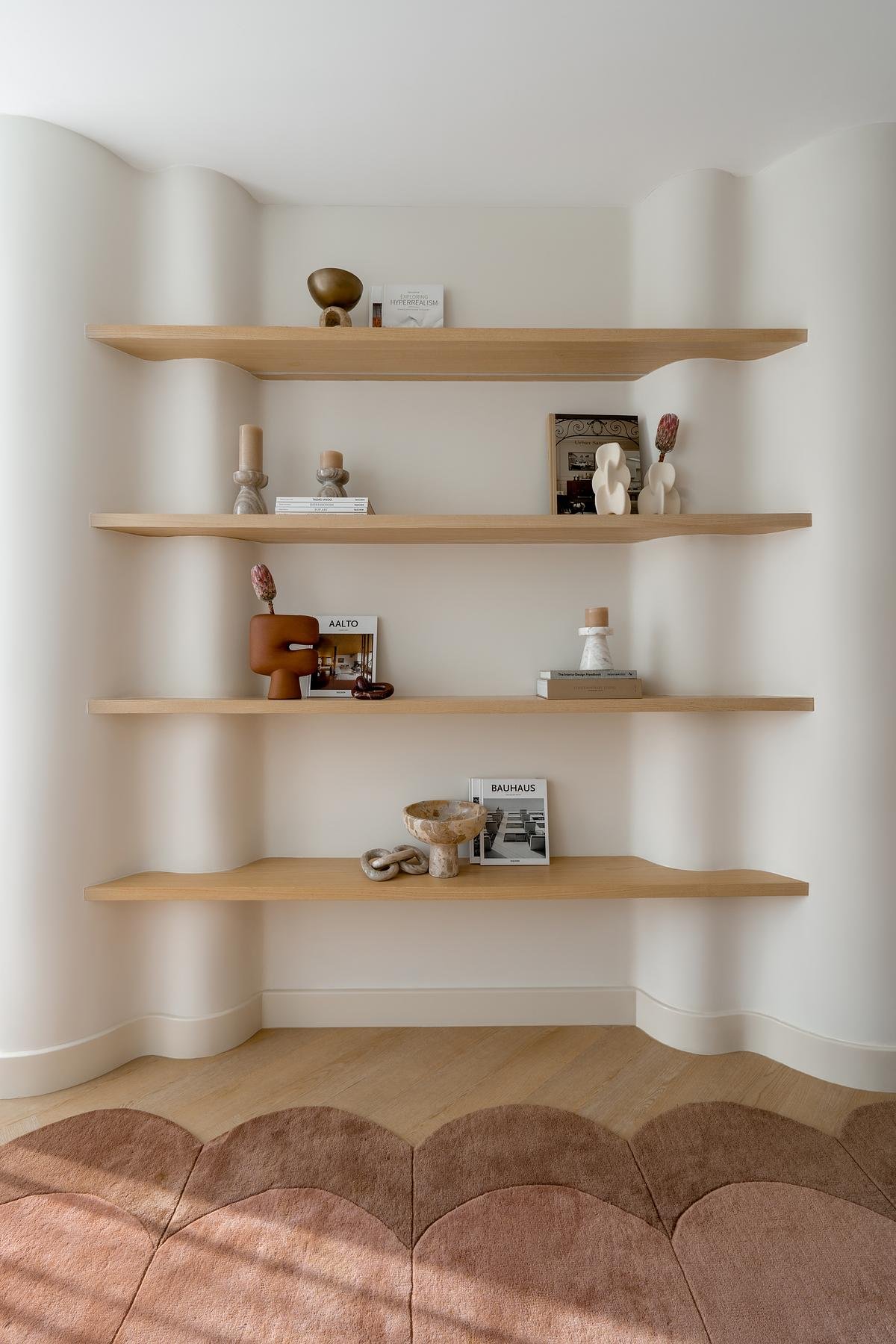
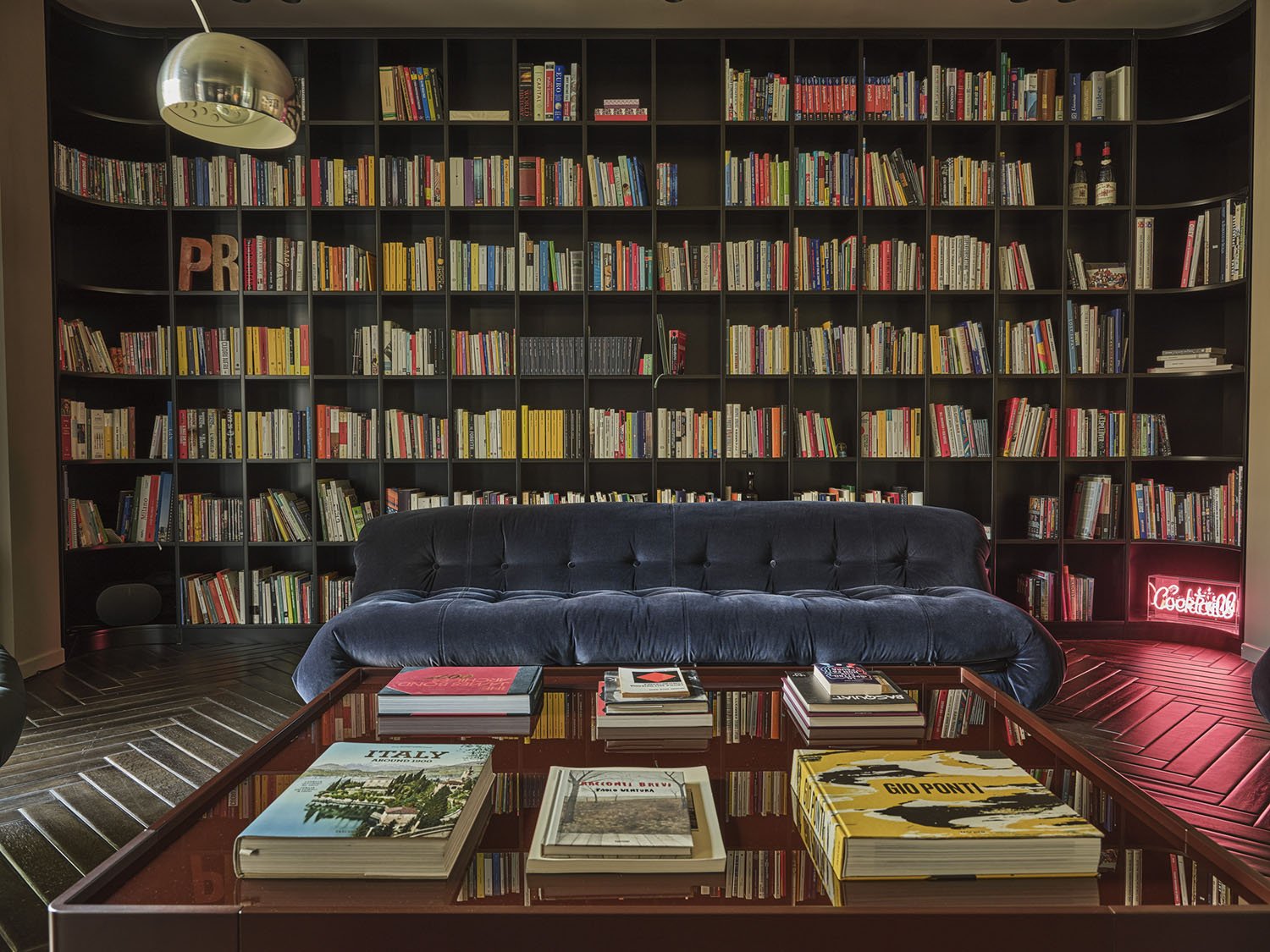
A second seating area offers a quieter register, proof the home was built for more than one mood.
The ground floor is organized into distinct zones: one arranged for gathering and conversation, another set aside for quieter reading and retreat. This layering of function lets the home adapt naturally through the rhythms of a single day, from morning coffee to evening hosting, without requiring anyone to leave the room they're in.
Maison Terra demonstrates how structure and softness, clarity and warmth, shared space and private space can all coexist without friction. The screens were the easy part to remove. What the design team built in their place, a home genuinely shaped around the people living in it, is the harder achievement.
Upstairs, the same restraint reads as calm rather than absence, proof that warmth doesn't require noise.
PROJECT DETAILS
Architect: D'Ora Tokai Designs
Photographer: Casa Mia Visuals
Project size: 2902 m2
Completion date: 2026
Building levels: 2