JIMBOCHO || Tokyo’s Literary Underworld Crowned the Coolest Neighbourhood in the World
I rarely fall for superlatives. Someone gushes that a place is “the best ever,” and my inner skeptic lights up like a warning beacon.
There’s one exception: when Jimbocho in Tokyo was officially named the Coolest Neighbourhood in the World for 2025 by Time Out’s global index, based on surveys of tens of thousands of urban explorers, local insiders, and cultural tastemakers across 33 cities worldwide, I had no objections. I get it. Especially if your love language is pages printed on paper.
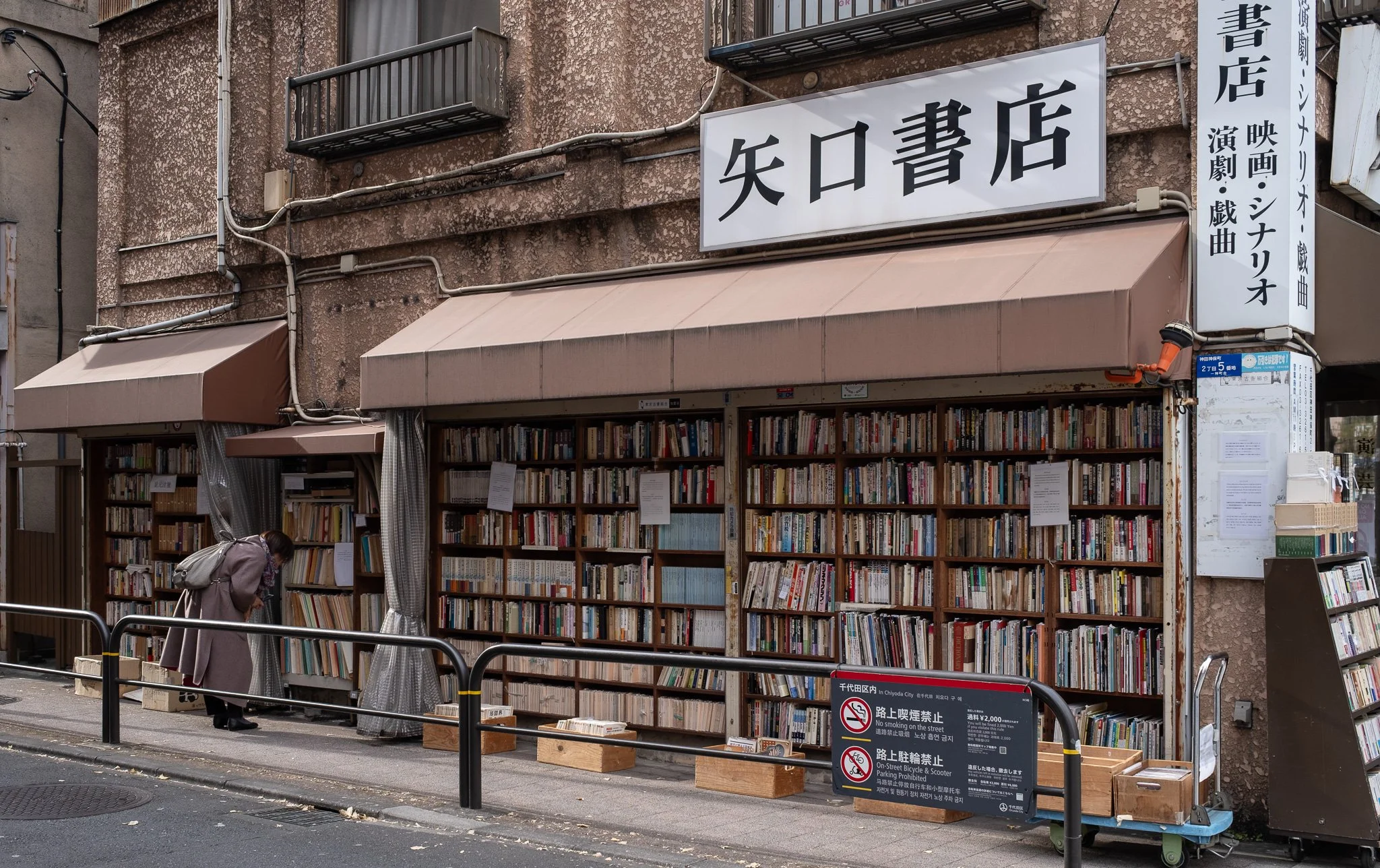
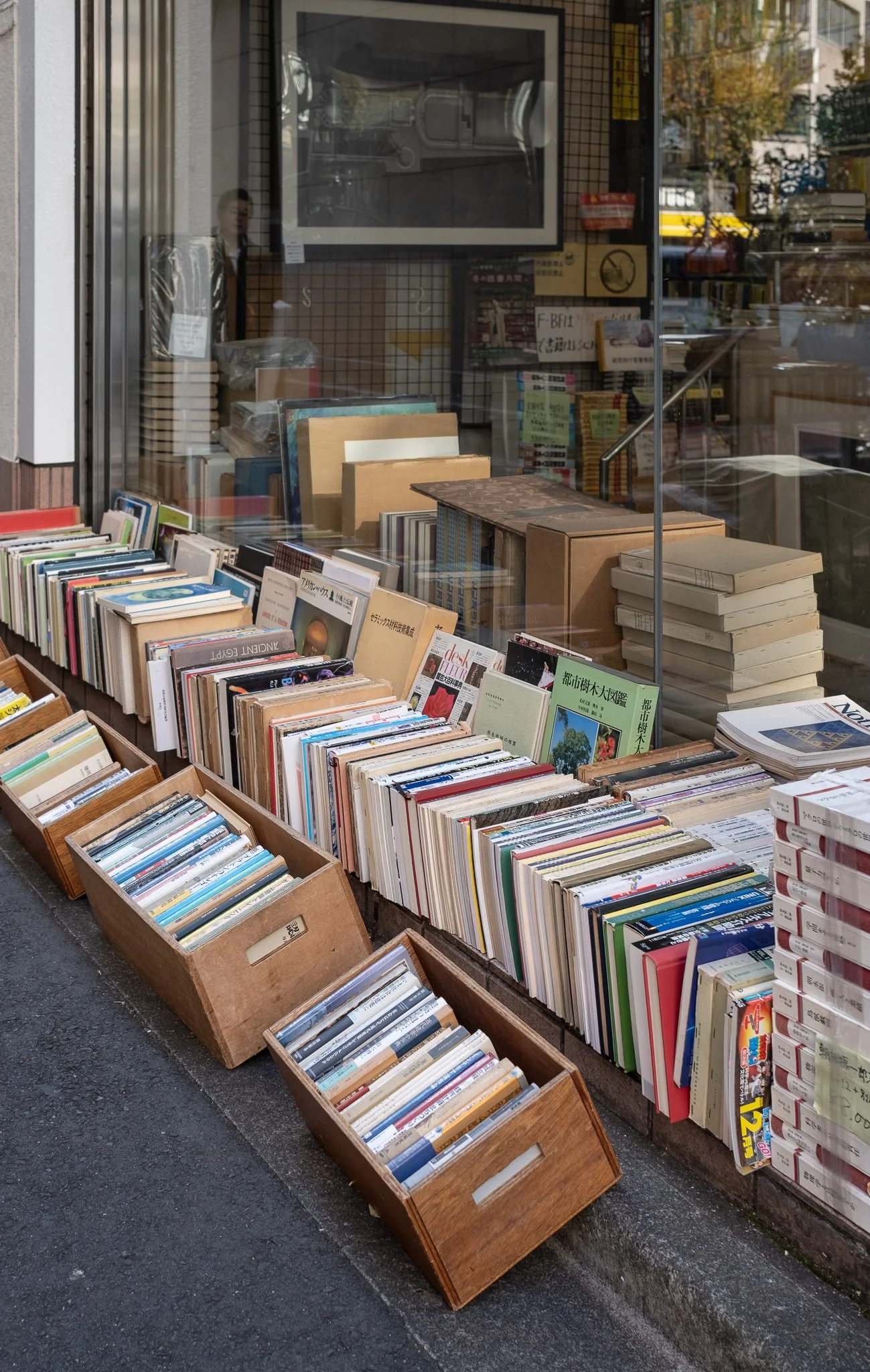
A passerby pauses by the overflowing bookcases outside the shop to browse the used titles.
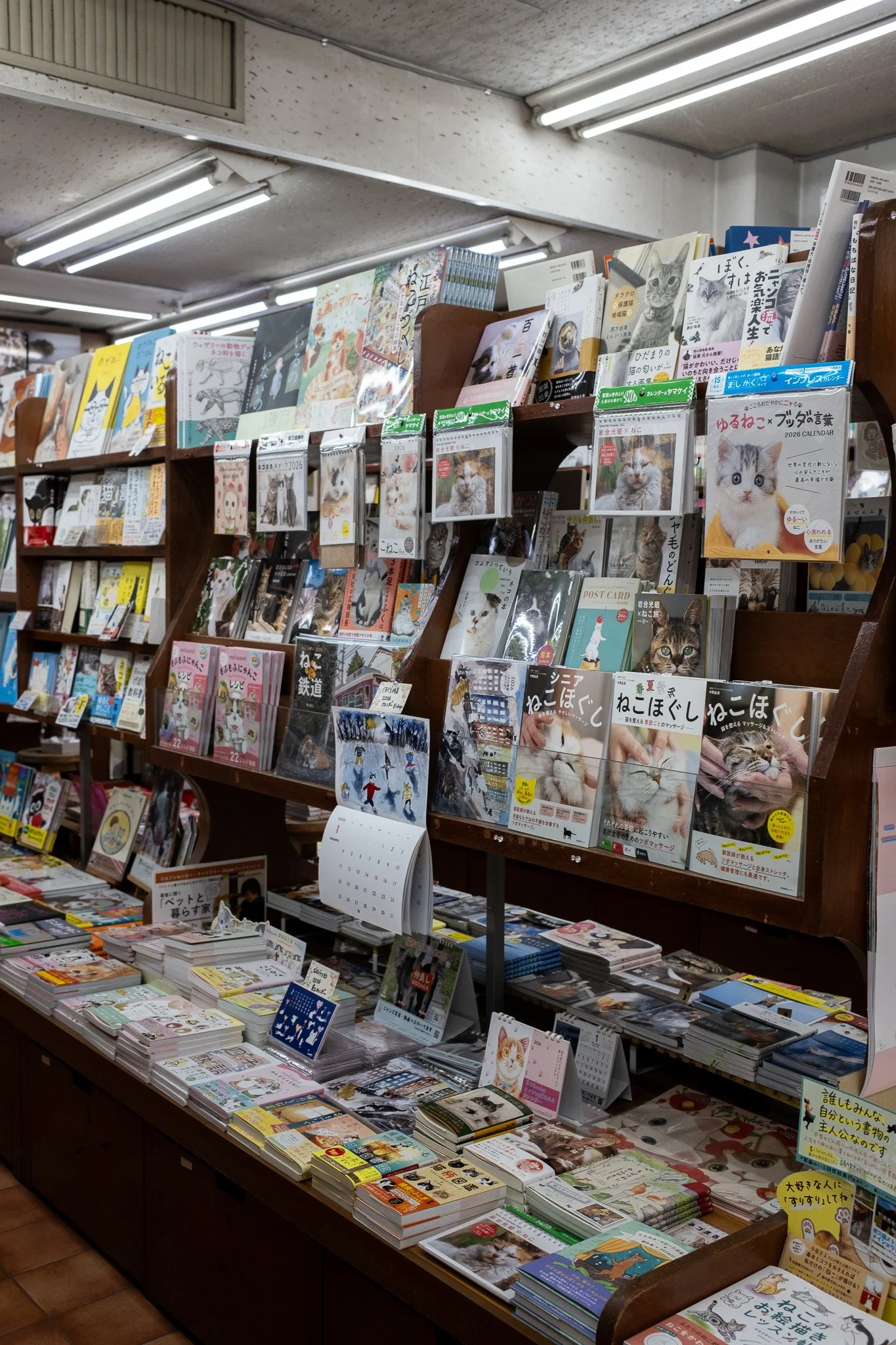
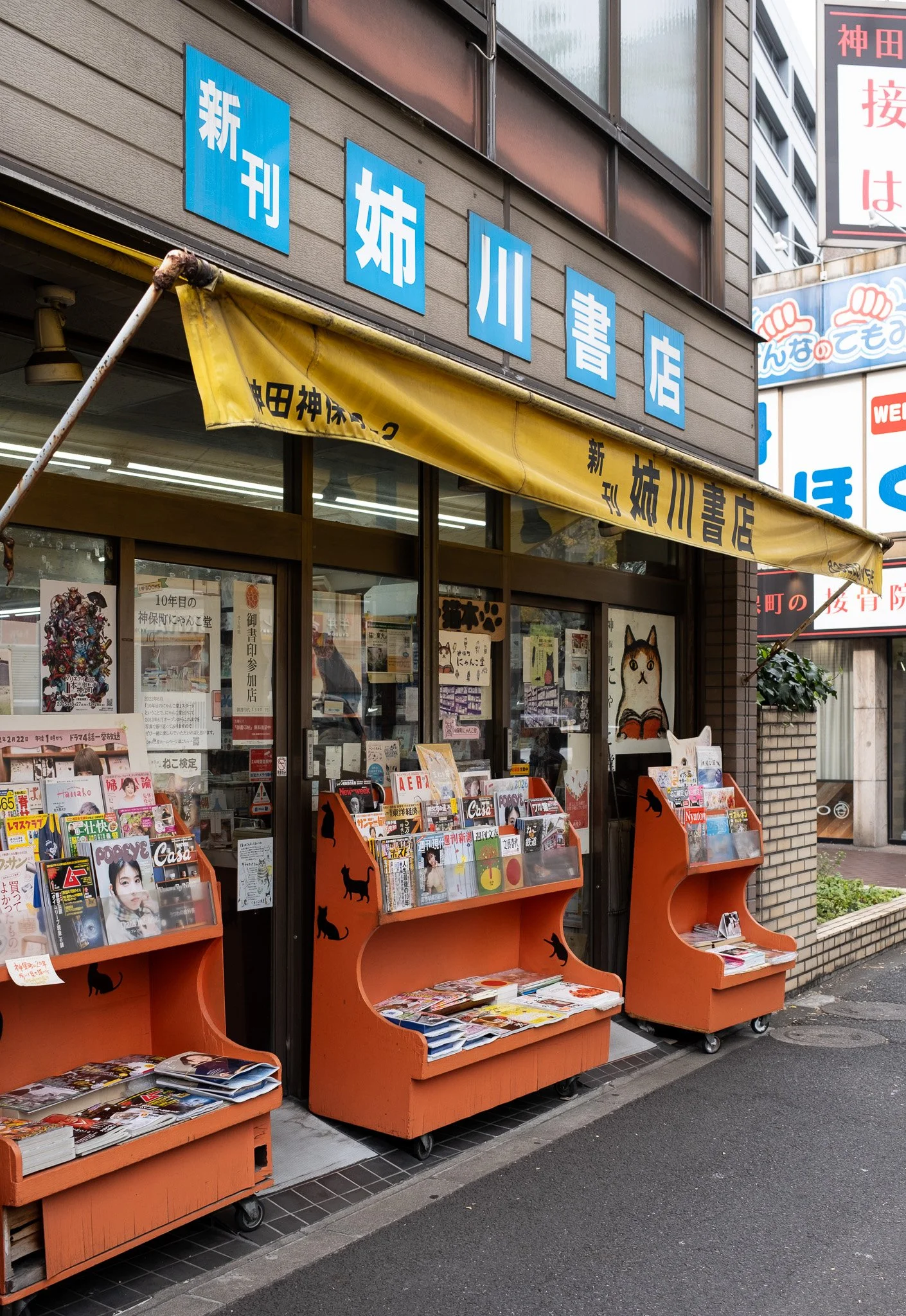
Jimbocho is, quite literally, book heaven: over 130 bookstores clustered within a few walkable blocks. Antiquarian tomes sit shoulder-to-shoulder with pop culture zines. First editions rub up against dog-eared classics. Want a shop dedicated solely to books about cats? Yep—you’ll find that here too.
And yes, I bought a Mofusand cat book that teaches English phrases.
Did I need it? Absolutely not. Did I enjoy it? Yes.
There are ancient scrolls tucked in protective sleeves, elegantly calligraphed manuscripts, decades-old magazines, rare newsprint ads; some items would be near-impossible to unearth anywhere else in the world.
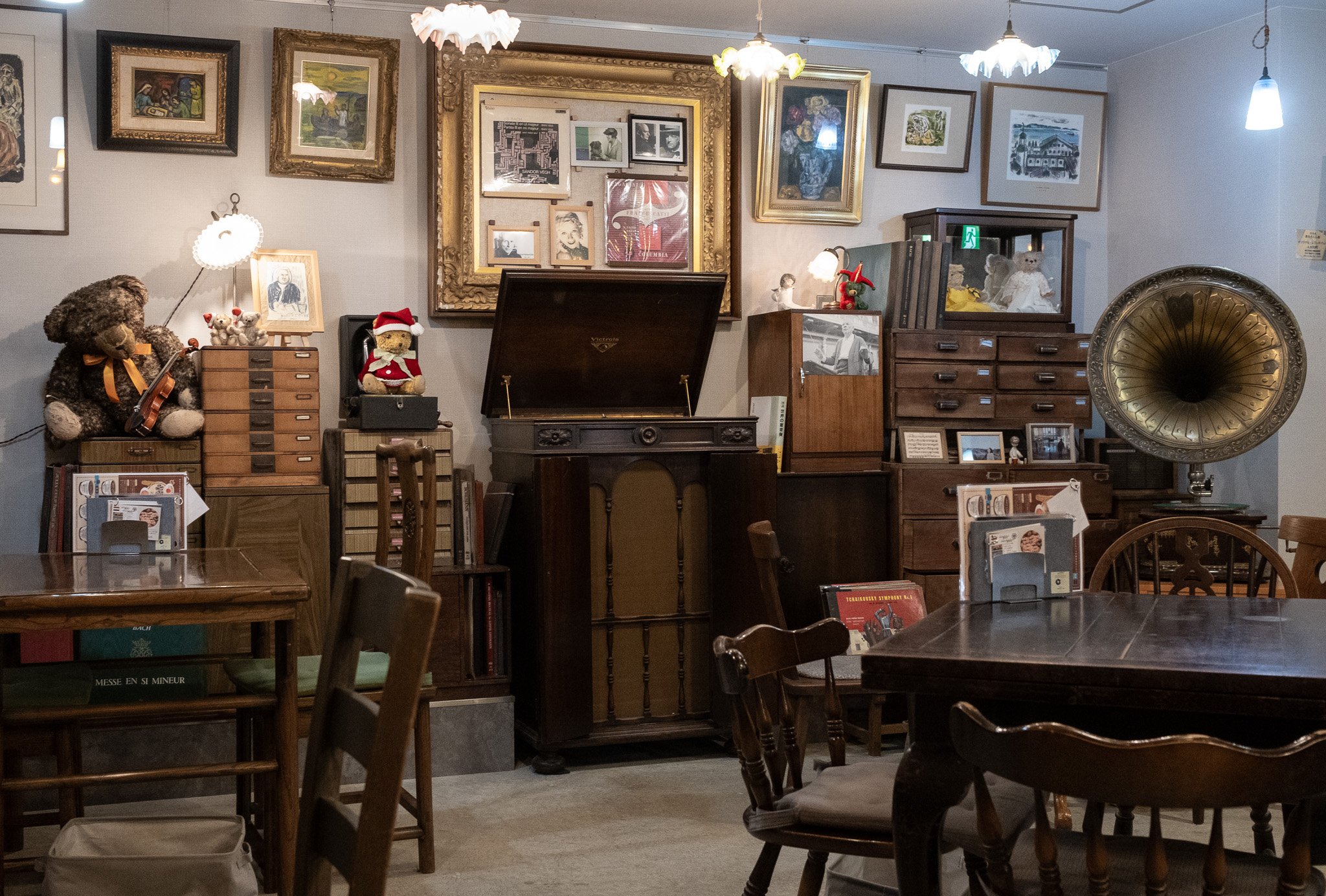
The soothing sounds of classical music permeates the space. Stacks of vinyl records are arranged on bookshelves and paintings adorn the walls.
A refreshing earl grey jelly topped with fresh peach slices.
I arrived in Jimbocho mid-morning and ducked into Café Ataraxia. The quaint cafe offers a basement refuge where classical vinyl spins on a gramophone, single-origin coffee is brewed with the deliberate flair of a ritual, and interior walls are lined with records and vintage wood cabinets. A piano lounges against one wall, paintings adorn the walls, and teddy bears laze atop cabinets. It feels as if you’ve stepped into someone’s living room, your head spinning around and around trying to take in all the trinkets and collectibles. I chose Ethiopian coffee and a peach-topped Earl Grey jelly that tasted impossibly fresh. Sit down, crack open a book, and suddenly the world above feels miles away.
Once midday arrived, I ventured north onto the narrow streets where bookstores cascade into one another like a literary waterfall.
For a bookworm like me, the scent of books welcoming me into every shop, the well-cared-for pages neatly arranged on bookshelves, the treasure trove of used books to discover, and just the simple fact that I was surrounded by books was pure delight. I was in heaven. I could have spent hours on end wandering every floor of every bookstore, pulling out every book from the shelves to read the description.
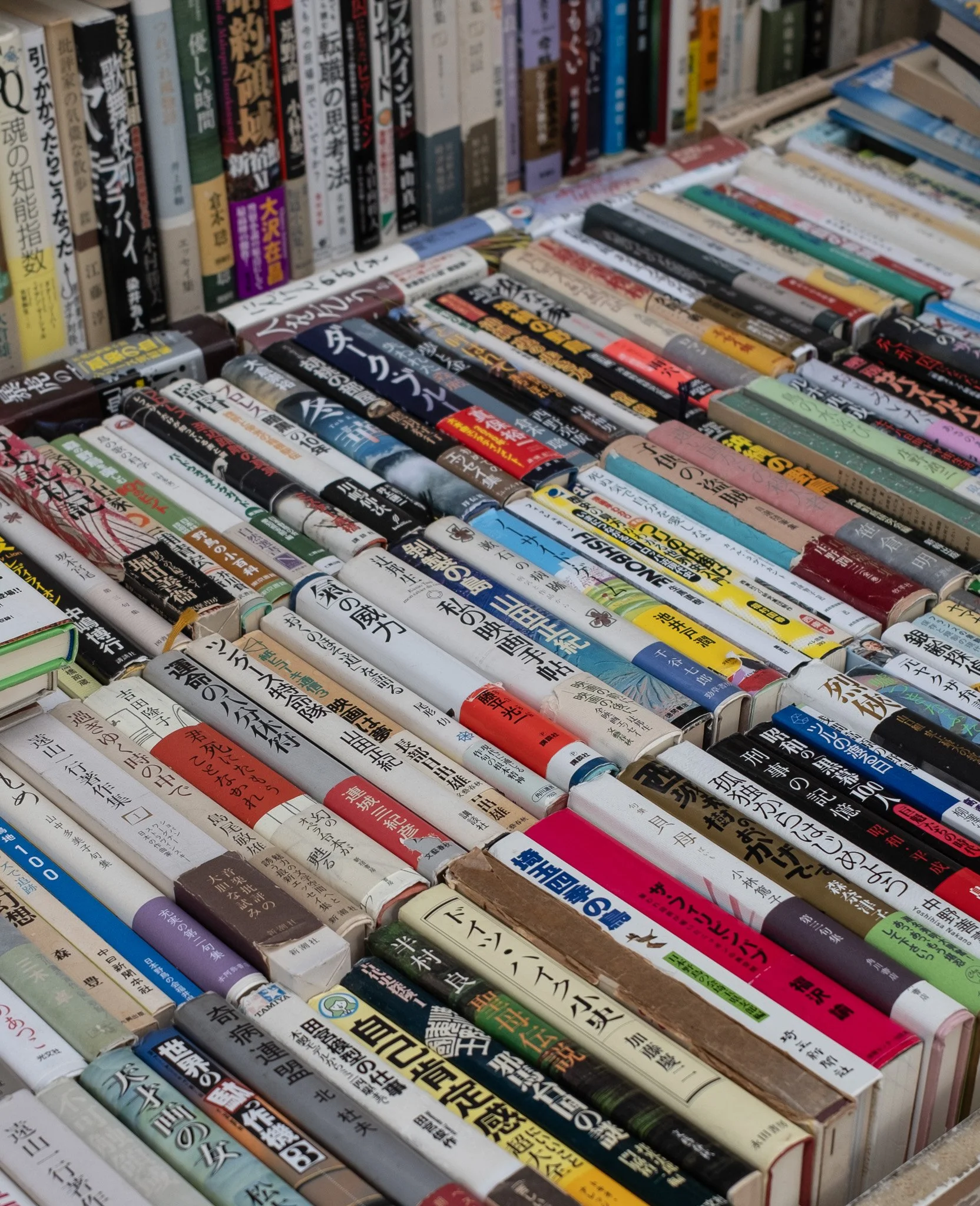
Passage by All Reviews is a must on my list because I love the interior design and they have a selection of English books for me to peruse as well. I also picked up bookshelves decorations and a short novel (yes—during my brief stay in Tokyo I convinced myself that I can read in Japanese).
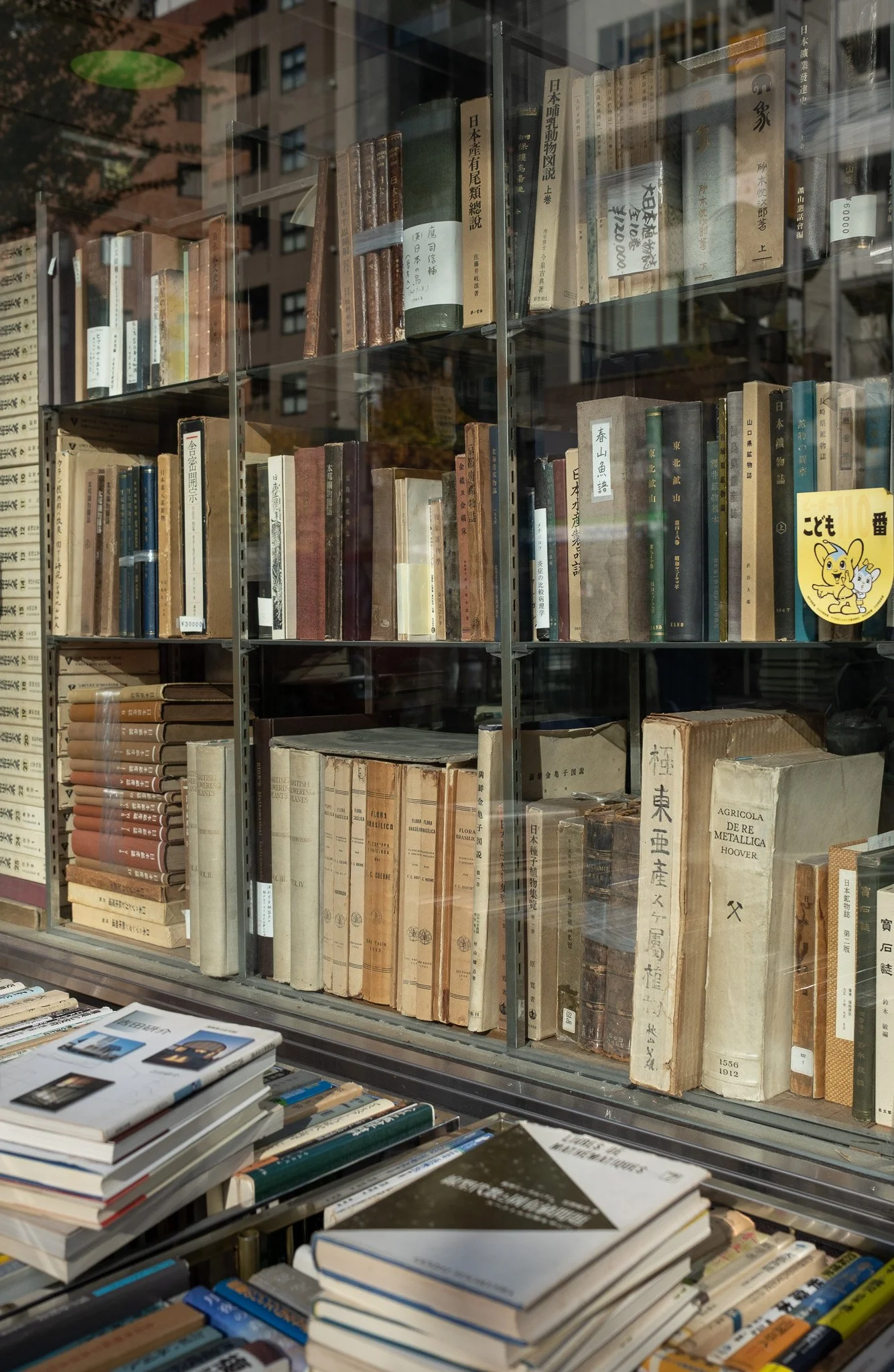
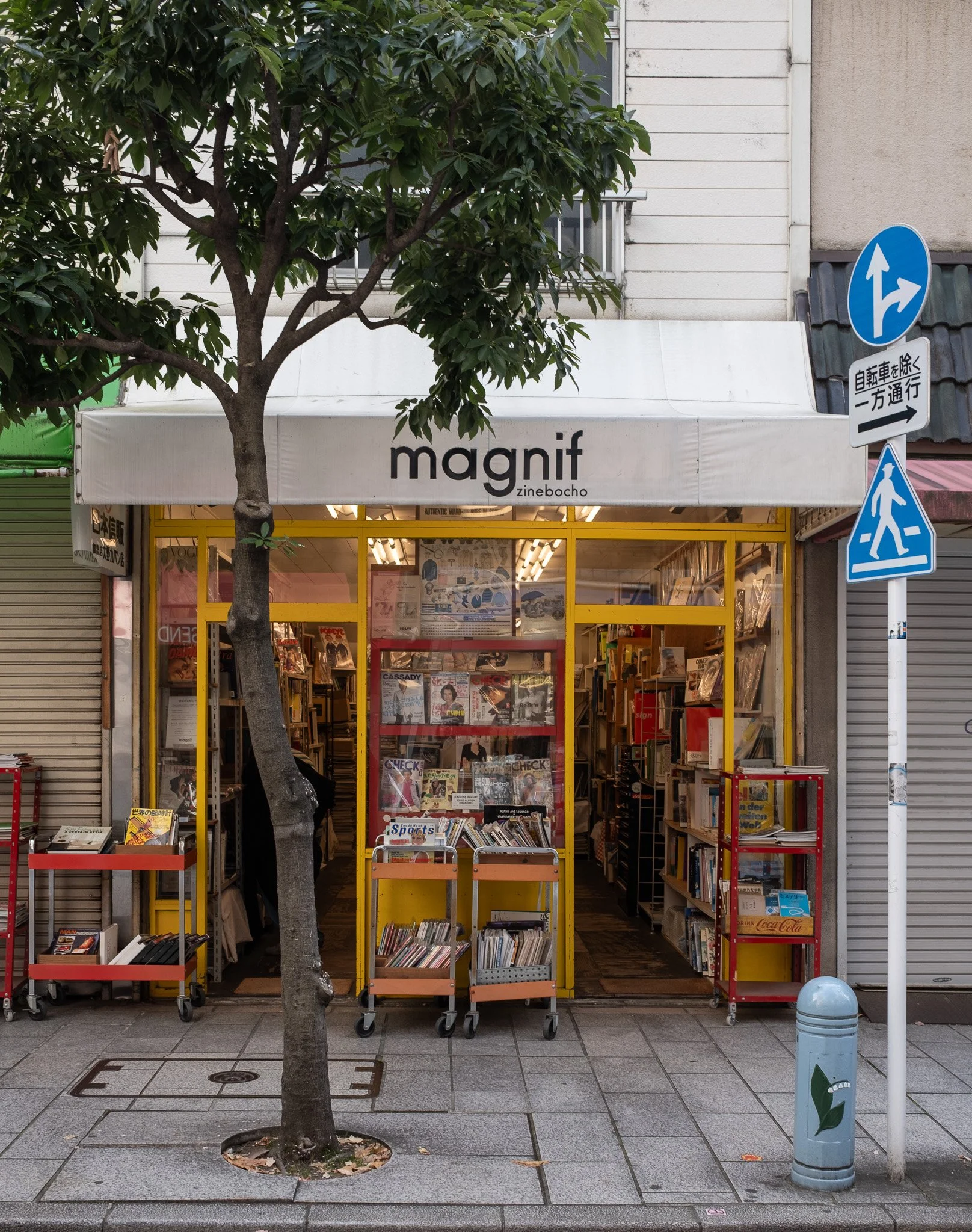
There is a bookstore for every reader. This shop curates magazines or newsprint ads from the past several decades.
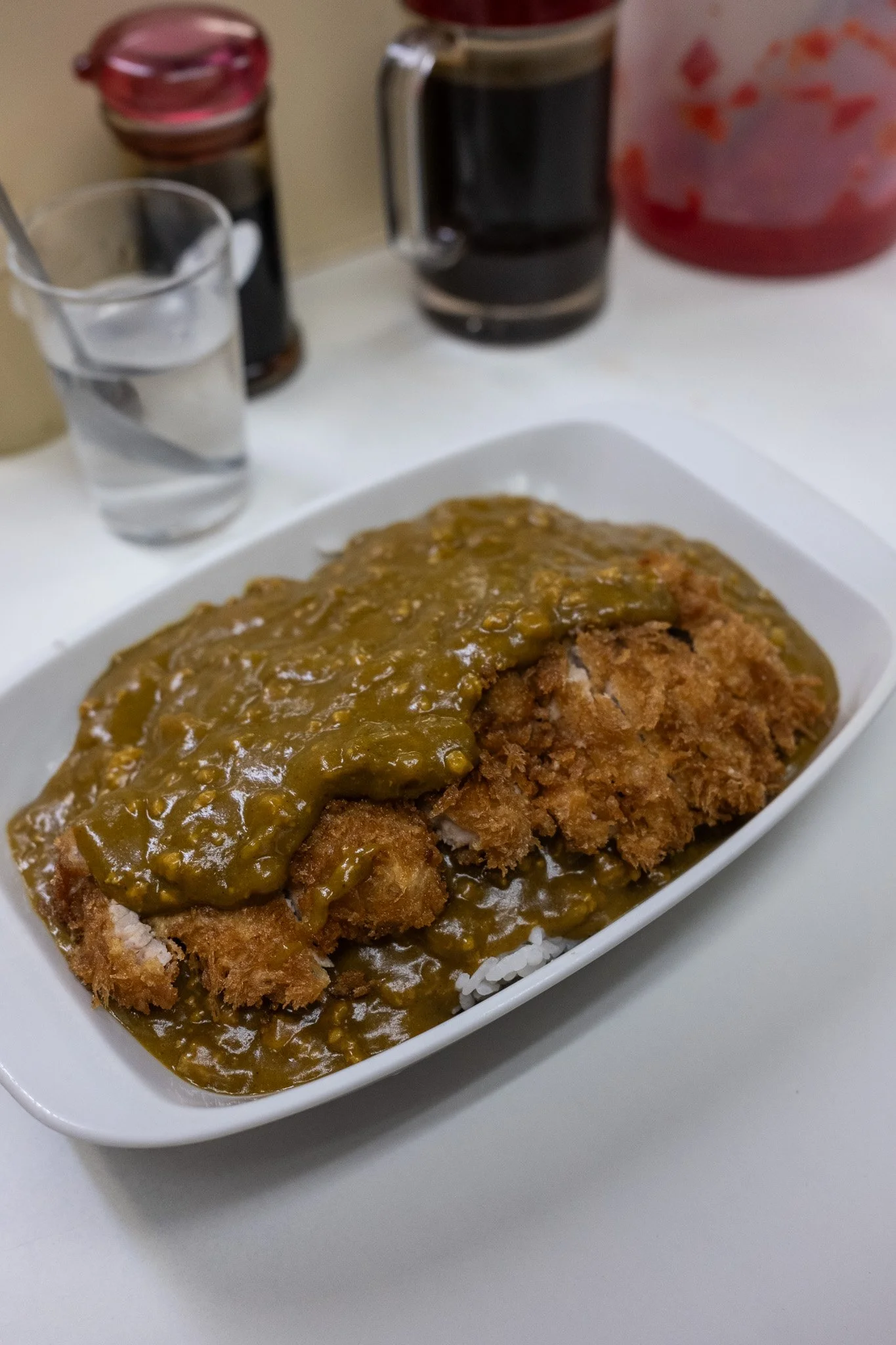
If your spine starts to protest from all the “tachiyomi”—the Japanese habit of reading standing up in store aisles—pause for lunch. There are a plethora of selections for tasty eateries in the area; Kanda Tempura Hachimaki is an institution: tempura crafted with reverence. It draws a crowd every afternoon, and this was where I enjoyed a scrumptious lunch two years ago when I first visited the neighbourhood. This time, I had a sudden craving for curry, and opted for a stamina curry so rich and portion so large that other diners (all men) sitting around the counter eyed my plate with curiosity. Before I started my meal, I was convinced the portion might break me. It didn’t. Walking 15,000 steps a day sharpens your appetite and your pride.
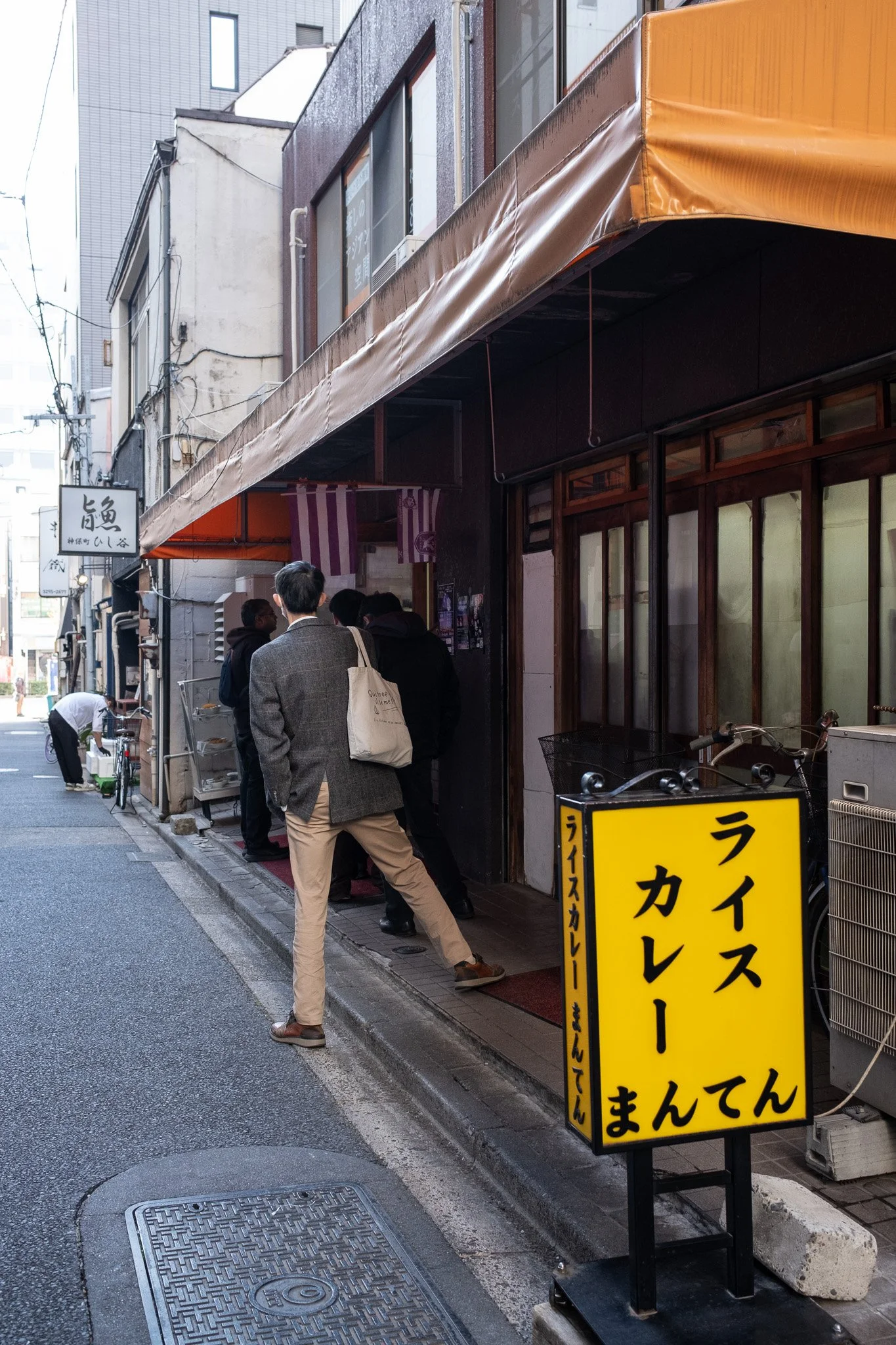
On my first Jimbocho visit, I wasted precious hours trying to map the maze of shops. This time I blocked out a full day — morning through dusk. I mentally marked promising places on the first pass, then circled back after lunch to commit my findings. Strategy matters when your haul weighs on your shoulders.
A recent bonus: because of this neighbourhood’s new global honour, an English-language Jimbocho map now exists, available in most bookstores. It’s a small fold-out compass in a sea of printed wonders.
What keeps me returning isn’t just the number of bookstores, it’s how each one feels curated by a living archivist. Each doorway promises something distinct: a niche focus, a dusty artifact, an idea you didn’t know was missing from your life. Jimbocho doesn’t just house books. It houses possibility.
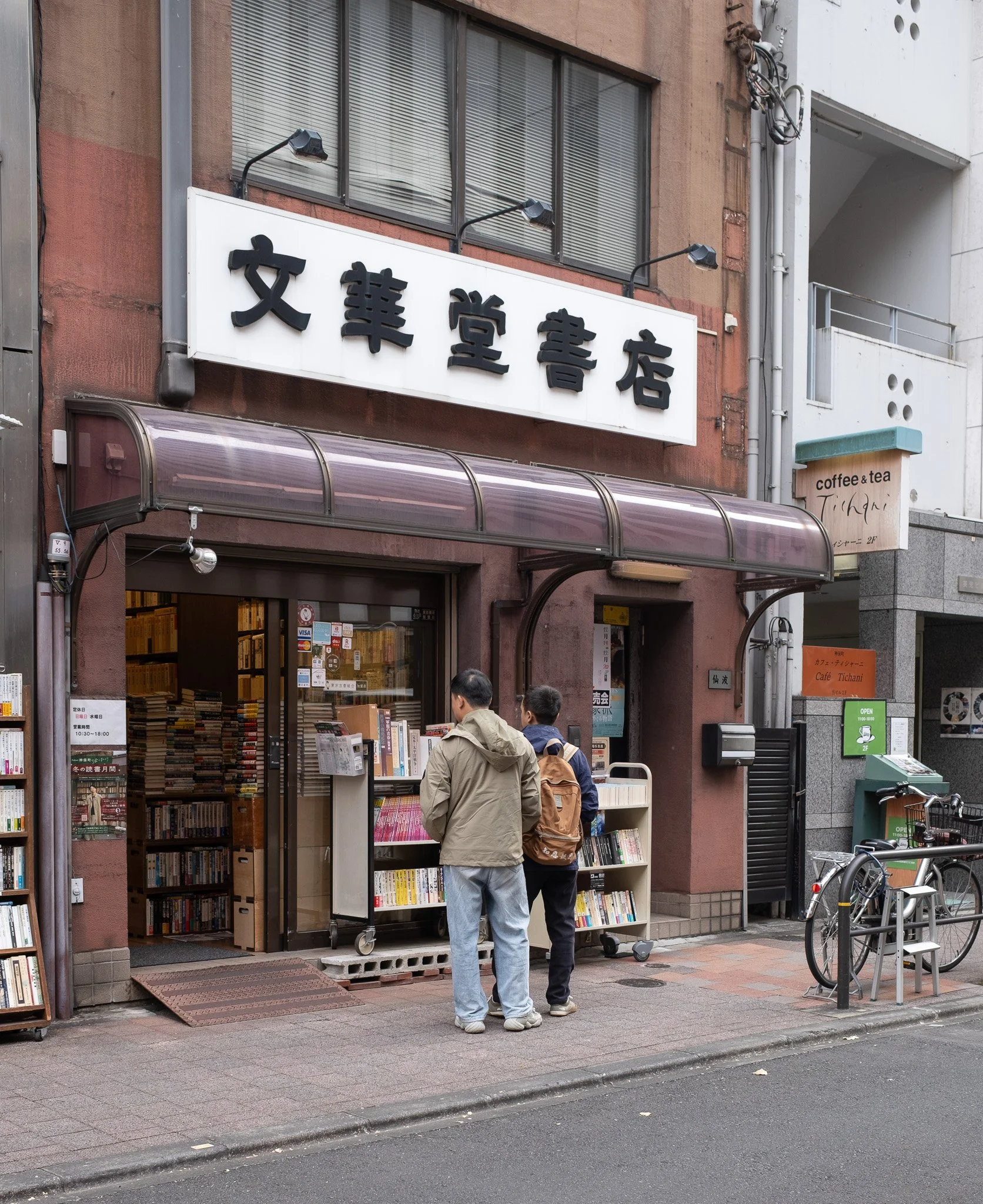
This is my favourite photo from this visit. I was standing across the street. The cars were waiting for a red light. The midday sun was falling against the buildings just so. I aimed and shot this perfectly imperfect image where the storefront of this iconic bookshop is gently highlighted.
Photos by Florence Leung