EILEEN KIYONAGA || Migration, Water, and Wind Take Shape in Wood
Fish moving as a pack, water tracing its course, a breeze shifting the air: Eileen Kiyonaga builds her work from the quiet choreography of nature.
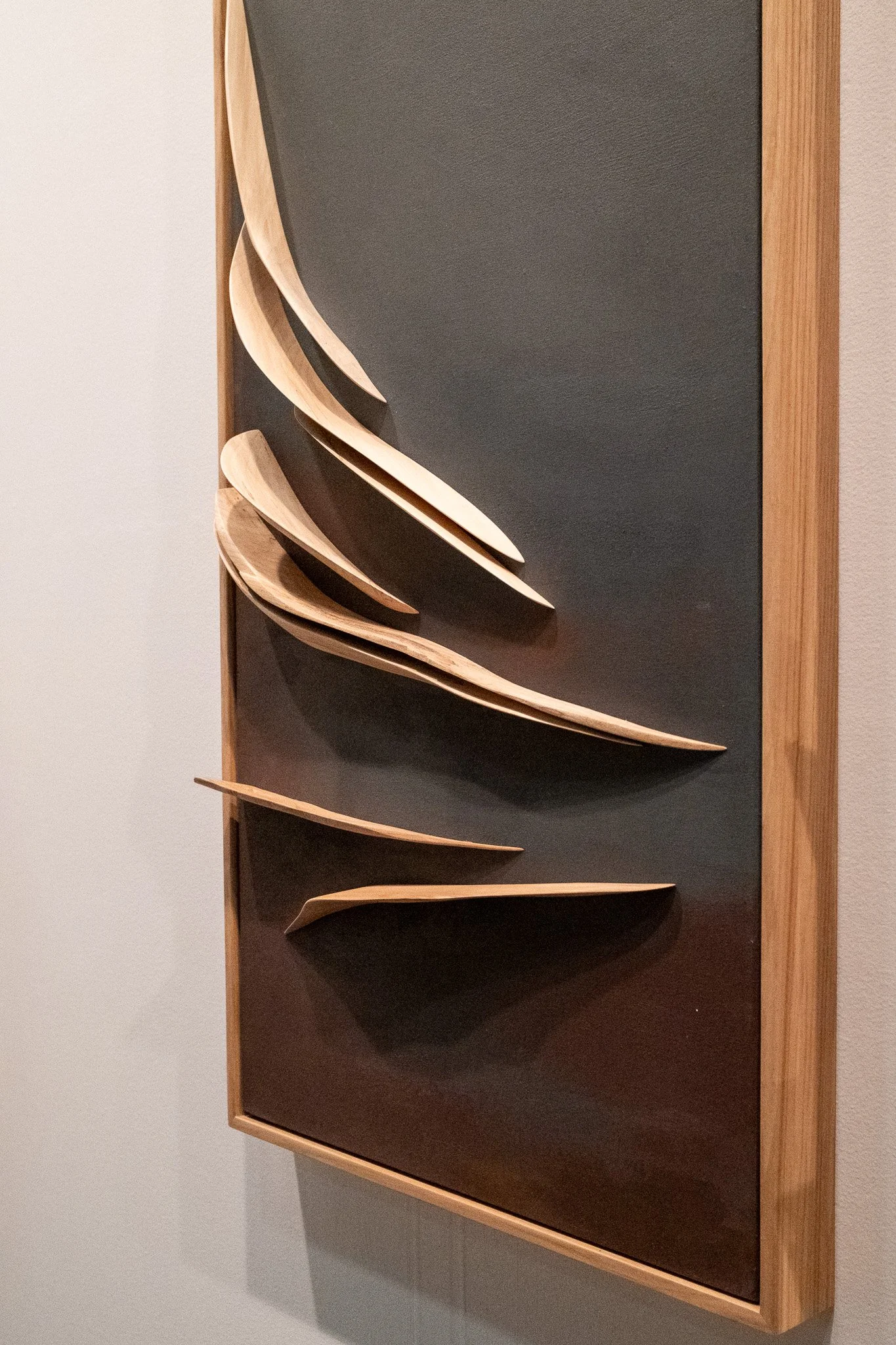
At the Interior Design Show in Vancouver, held September 24 to 27, the Squamish, BC, artist presented Currents, a wood triptych that translates migration patterns and the flow of water and air into a composition roughly ten feet wide.
Currents (2026)
Currents is made of Western maple on acrylic-painted panels, framed in ash. The painted grounds borrow the colours of sunset and dusk, while the maple forms drift across them like a school of fish changing direction. Kiyonaga designed the three panels to stand alone or hang together, and she deliberately made the middle panel lighter than its neighbours. She enjoys the challenge of making pieces speak to one another without repeating the same background.
Kiyonaga is a multidisciplinary artist who works predominantly in wood, with watercolour and acrylic. Trained in industrial design as well as fine furniture and joinery, she has the precision of a maker, and the softer, perfectly imperfect lines of nature come through in her pieces. Soft-spoken in person, she lights up when the conversation turns to pushing wood toward delicacy.
Her process keeps the evidence in view. Much of her wood is salvaged, including some spalted Western maple from a former employer's surplus that she has been processing for several years. She keeps everything, and her existing pieces serve as a starting point for new ones. She also leaves the saw marks and roughness visible, a quiet record of how each form was made.
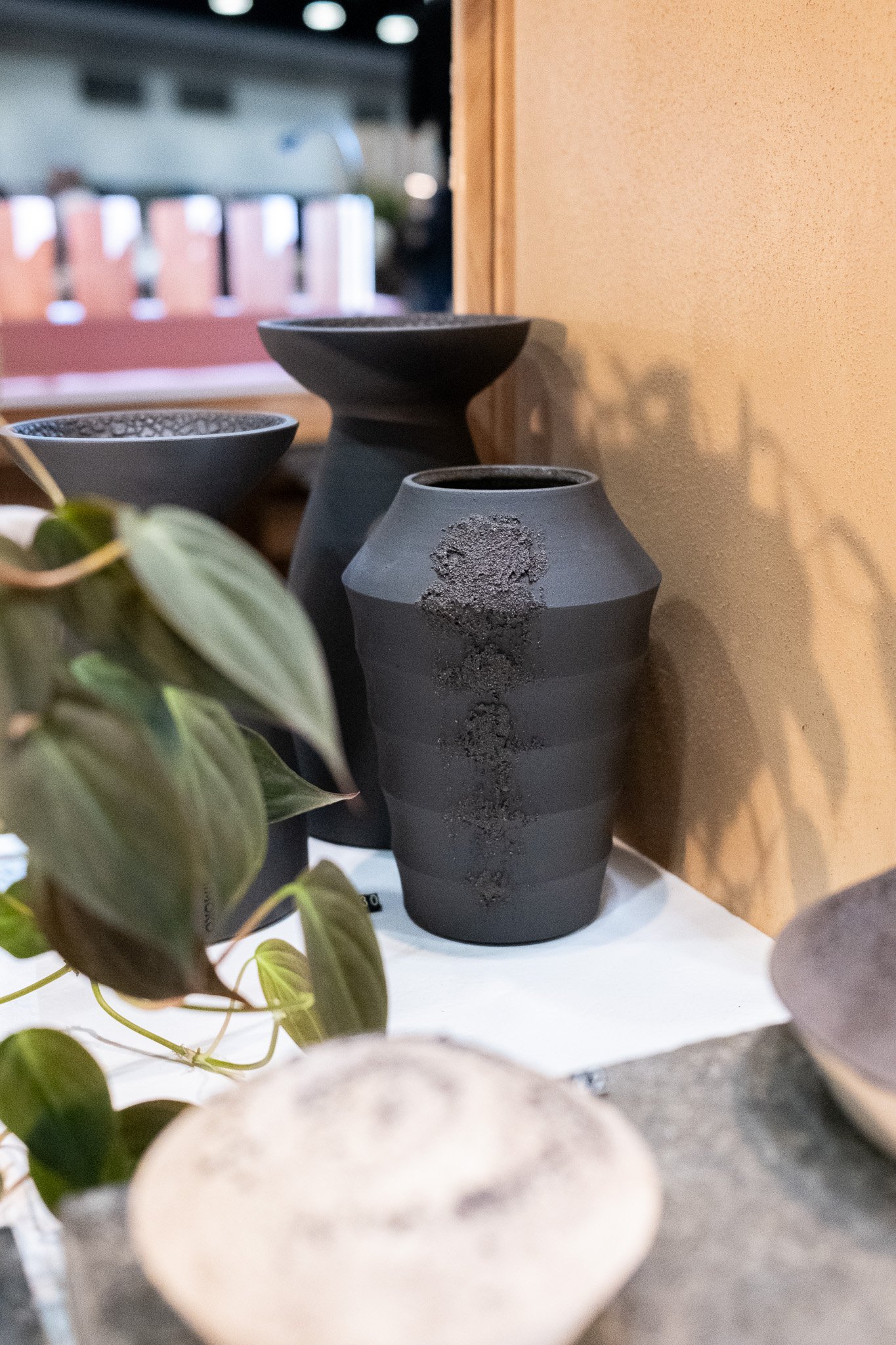
She is also drawn to how wood weathers and wears away, and to the strongest grain that remains. That idea runs through the rest of the exhibit. Ember, a vase of Western maple and wire, is scorched on the inside, inspired by burnt-out stumps, so its charred hollow sits against the warm grain of the exterior.
Ember (2026)
What's Left Behind, in Eastern maple and cotton warp cord, is built from thin ribbons of wood cut on a bandsaw and clamped into shape. The seams are visible up close, and Kiyonaga pushed the piece as delicate as she could while keeping its strength. Closed Circuit, a single closed-loop sculpture in yellow cedar framed in ash, hangs from above and casts its outline in shadow on the wall.
What’s Left Behind (2026)
Closed Circuit (2026) and two panels of the Currents triptych.
The collection grew from a series she calls Beneath, which asks what lies beneath the surface and what structure builds things up. The work evolved, and she left the collection unnamed, yet movement became its central thread. It echoes the philosophy on her website, first calm, then curious, where weathered stumps and pillows of moss linger longer in her memory than any sweeping vista.
For anyone considering how art shapes a room, Currents offers a flexible model. Because its panels can hang separately or as a set, the composition can adapt to the wall it meets, and the warm maple against dusk-toned grounds brings the movement of the outdoors indoors.
Stand close enough, and the seams, the sawmarks and the scorch tell the same story: wood keeps moving long after the tree is gone.
Photography by Florence Leung