PALACIO BELLAS ARTES || The Film-Inspired Brand Identity of San Sebastián's Cinema-Turned-Hotel
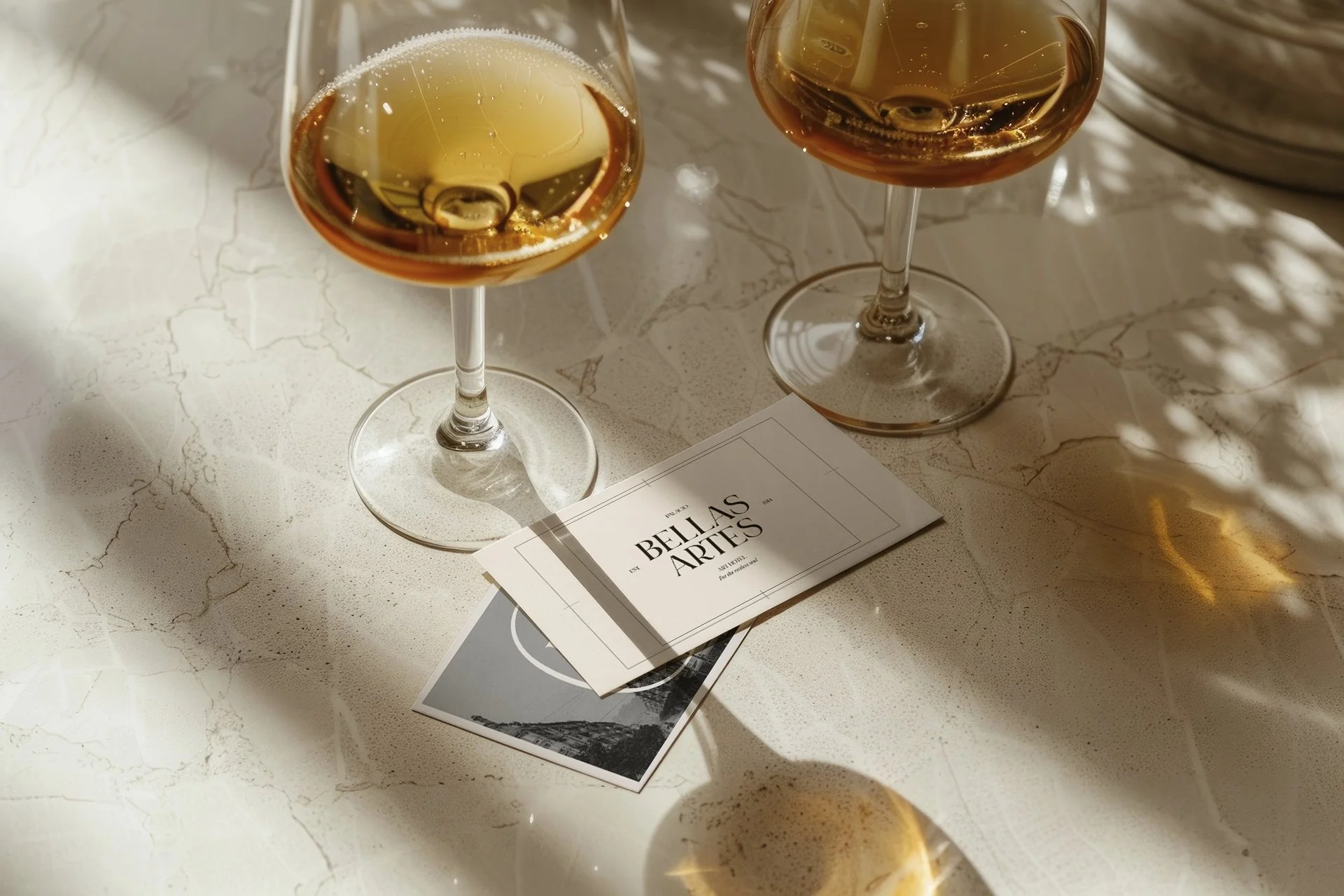
A trace of green runs through every colour in the Palacio Bellas Artes brand identity, even the reds, borrowed from the tint that creeps into aged film stock.
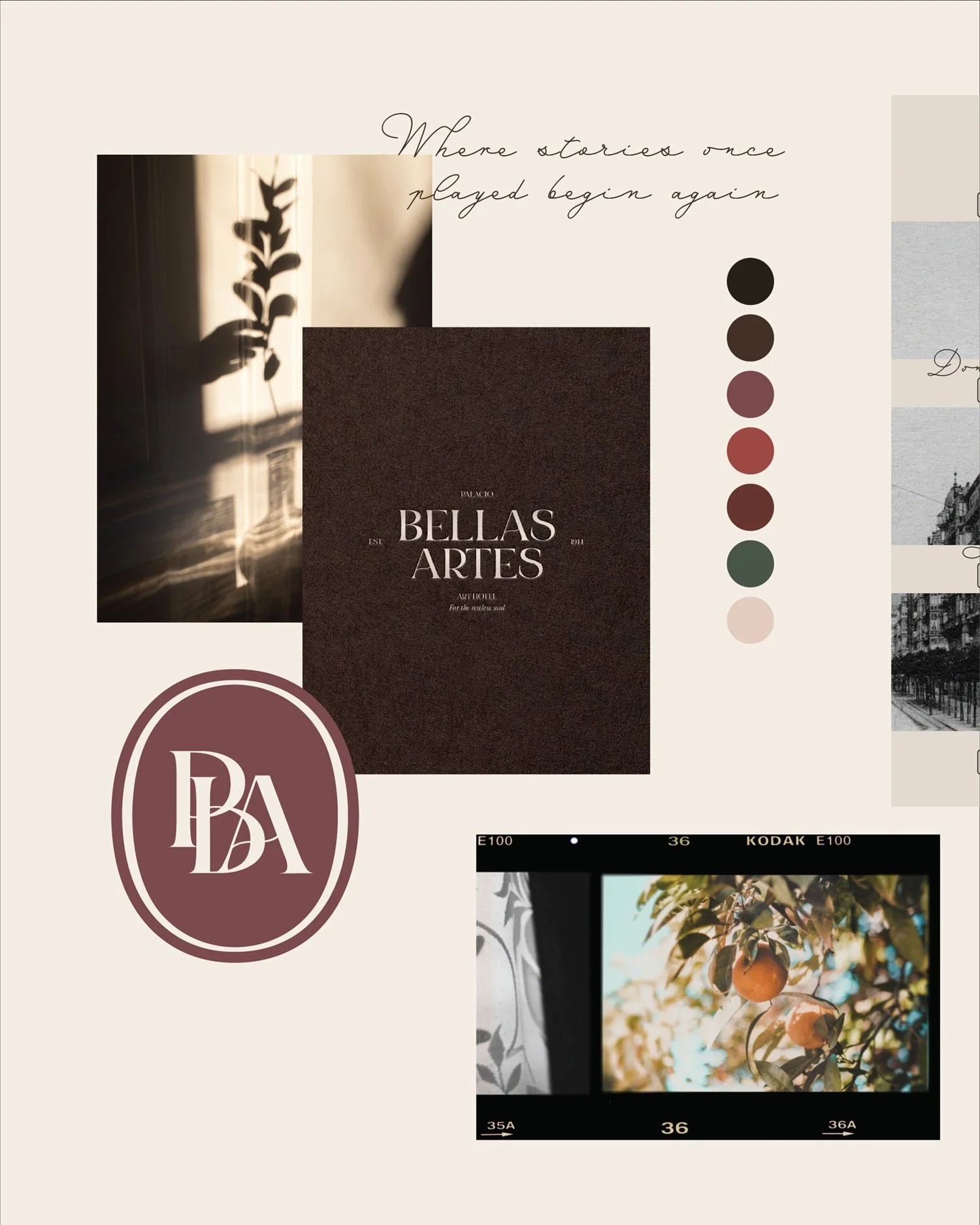
Aylott + Van Tromp (AVT), the design and strategy studio with offices in London, Berlin, and Lisbon, built that detail into an eight-colour palette drawn from hand-colored and analog film photography. Guests rarely spot it consciously, yet co-founder James Van Tromp credits it with making the whole hotel feel like "a memory rather than a set."
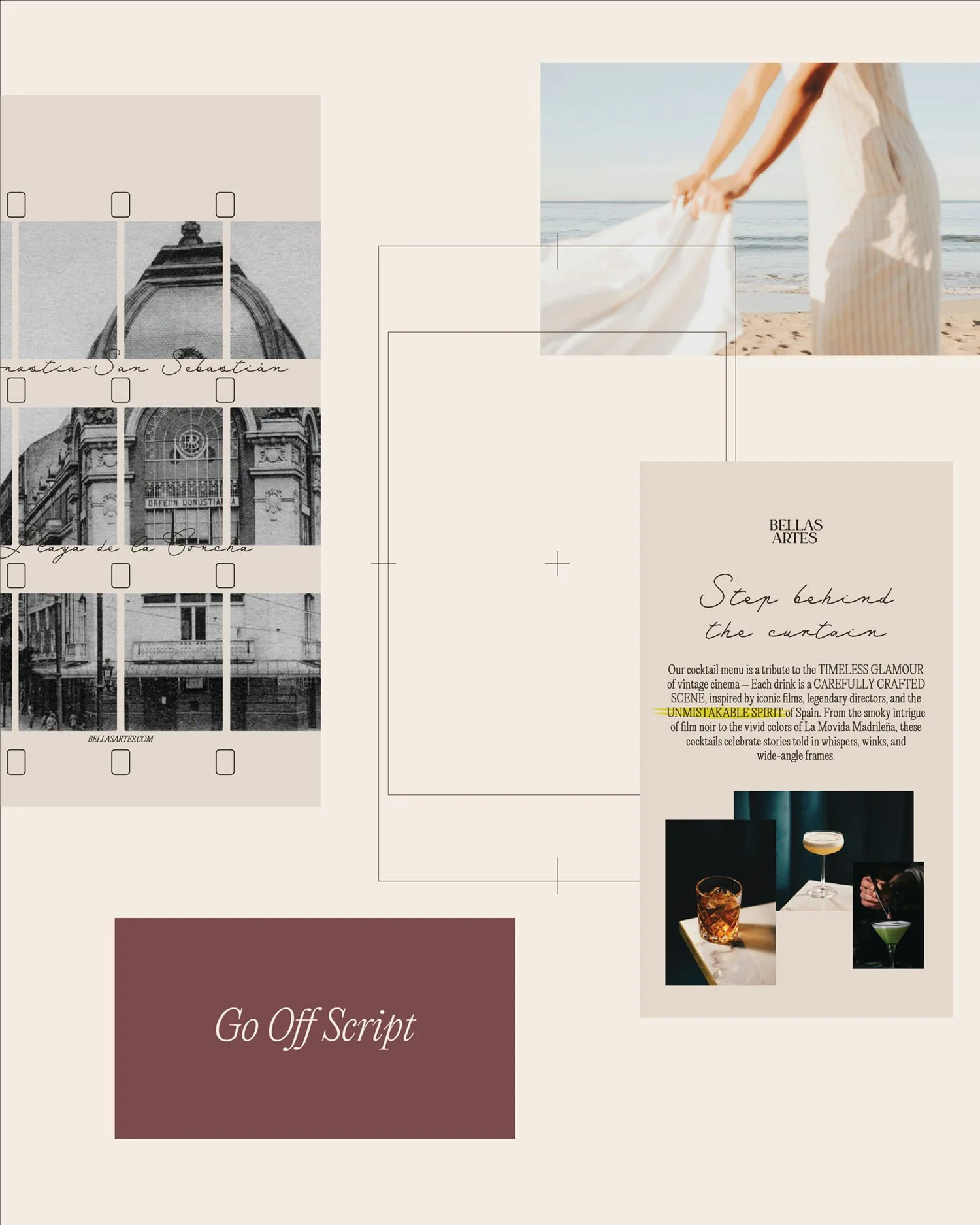
Palacio Bellas Artes opened in 1914 as one of Spain's earliest cinemas, designed by Ramón de Cortázar in the Beaux-Arts style within San Sebastián's expanding Ensanche. It screened films until 1982, then stood quiet for four decades before reopening in July 2026 as an 81-room Curio Collection by Hilton hotel. Its owner is SADE, the family firm that built it and has held it ever since.
AVT opened the project in the archives, working through old maps and the history of who had used the building and why. One question guided the research: if this building disappeared tomorrow, what exactly would be lost? The answer was its place in early cinema and its unbroken line of ownership, and that became the brief. It also kept the Bellas Artes name, since SADE's continuity makes the history real. "You can't manufacture a story like that," says co-founder Nathan Aylott.
Cinema is an easy heritage theme to turn into a novelty, so the studio set one rule: use the language of film, never its props. That ruled out ticket stubs, film posters, and photographs of stars. The principles a director uses to build a scene, including balance, contrast, movement, emphasis, and repetition, shaped the brand identity and the guest experience instead.
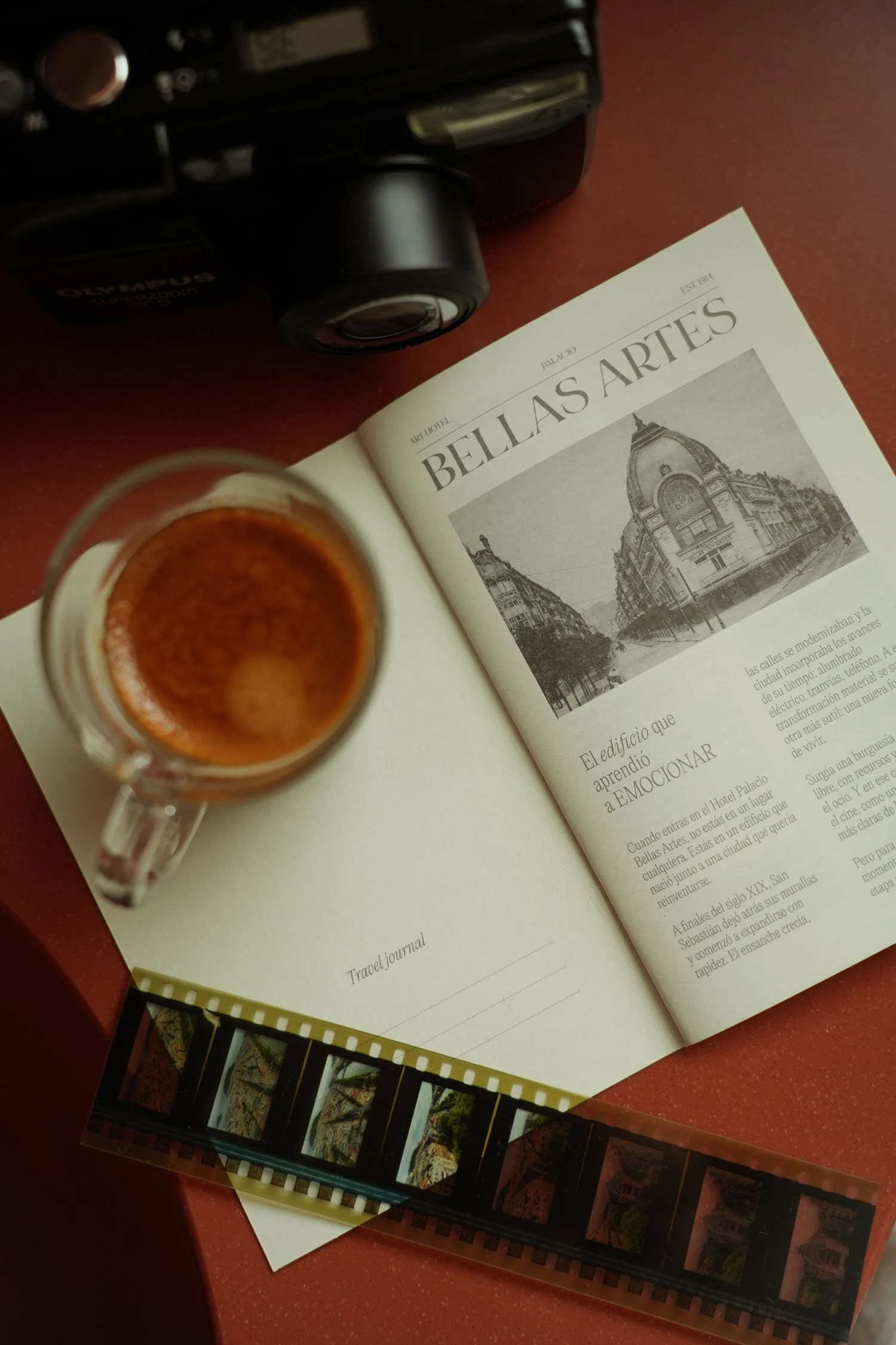
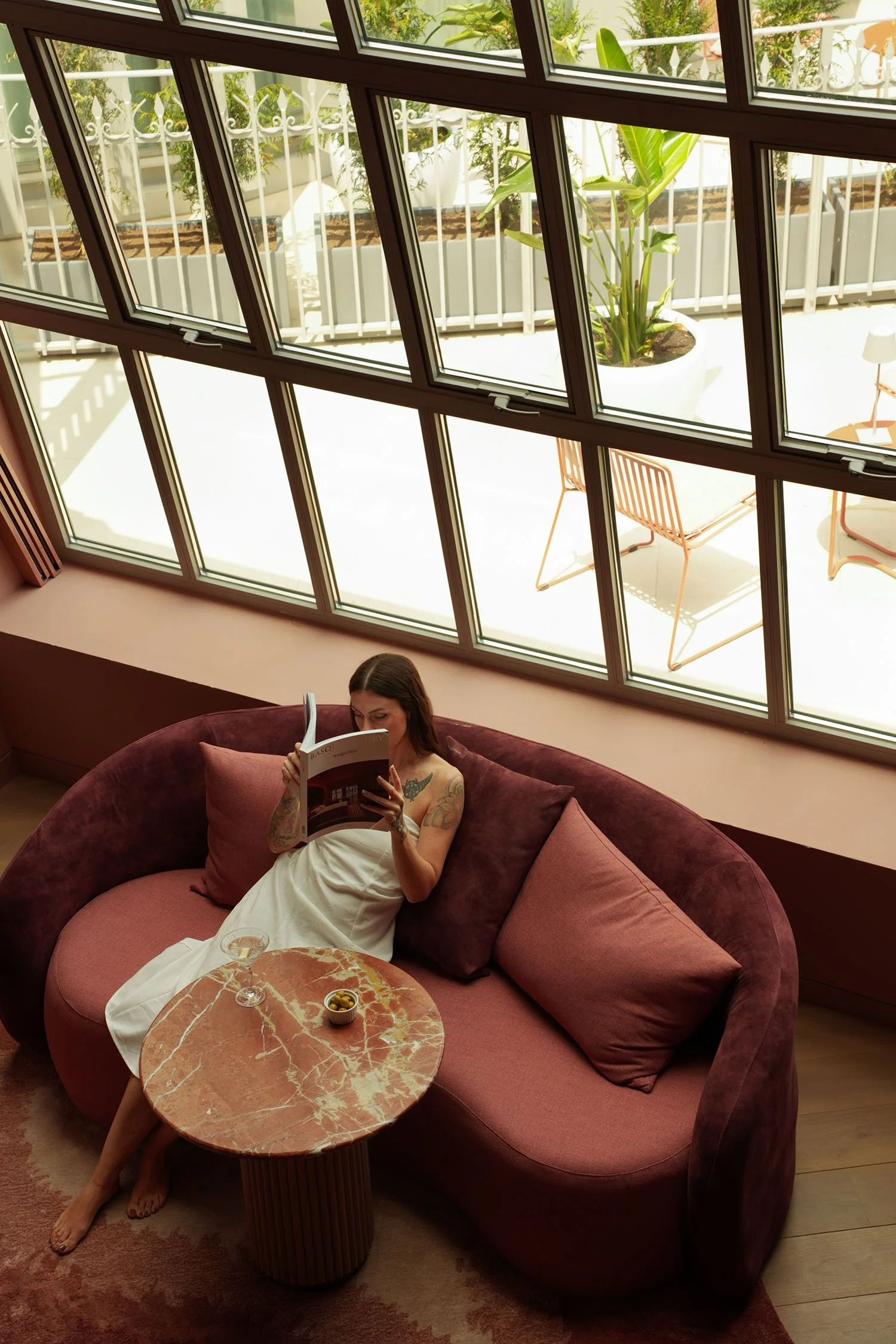
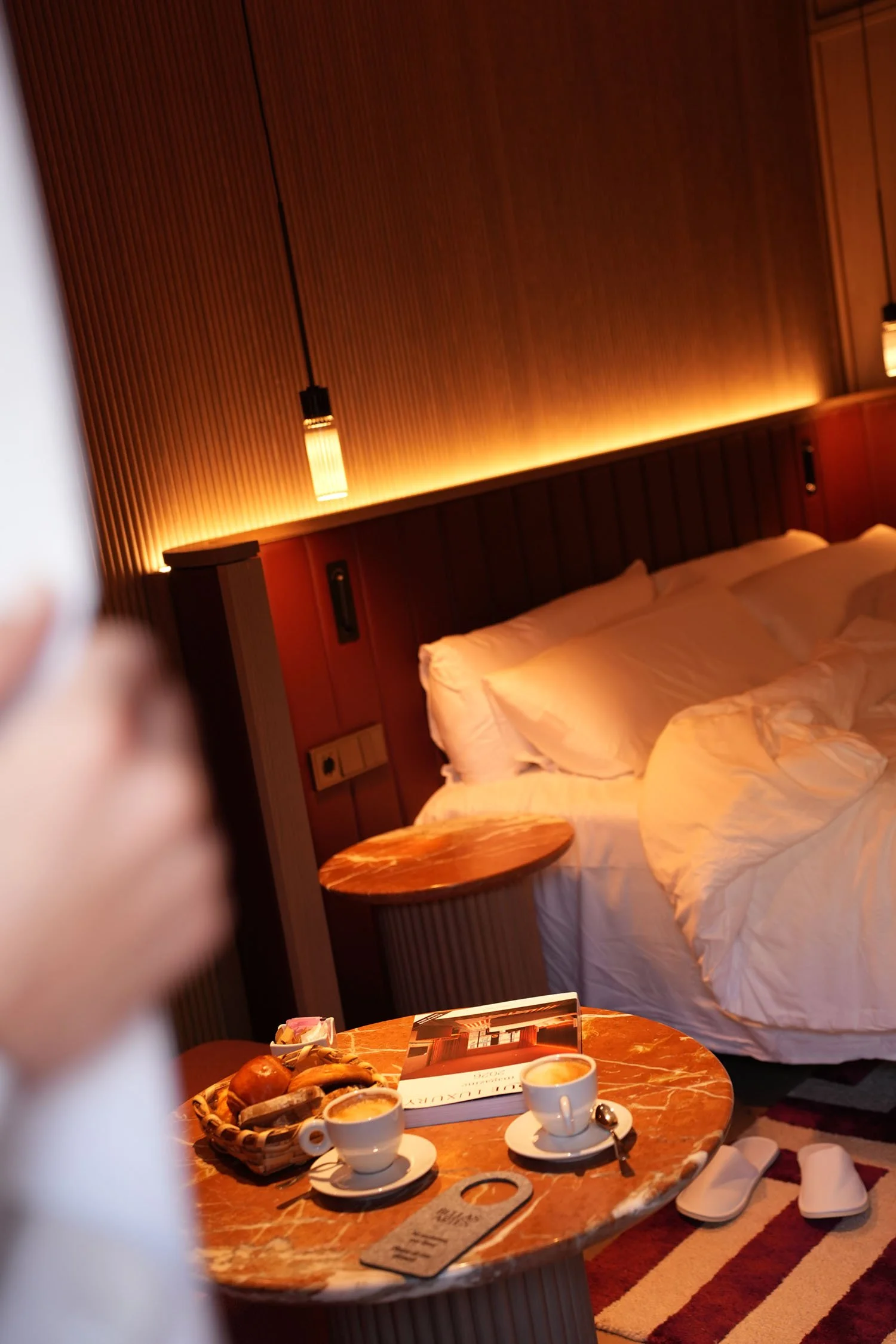
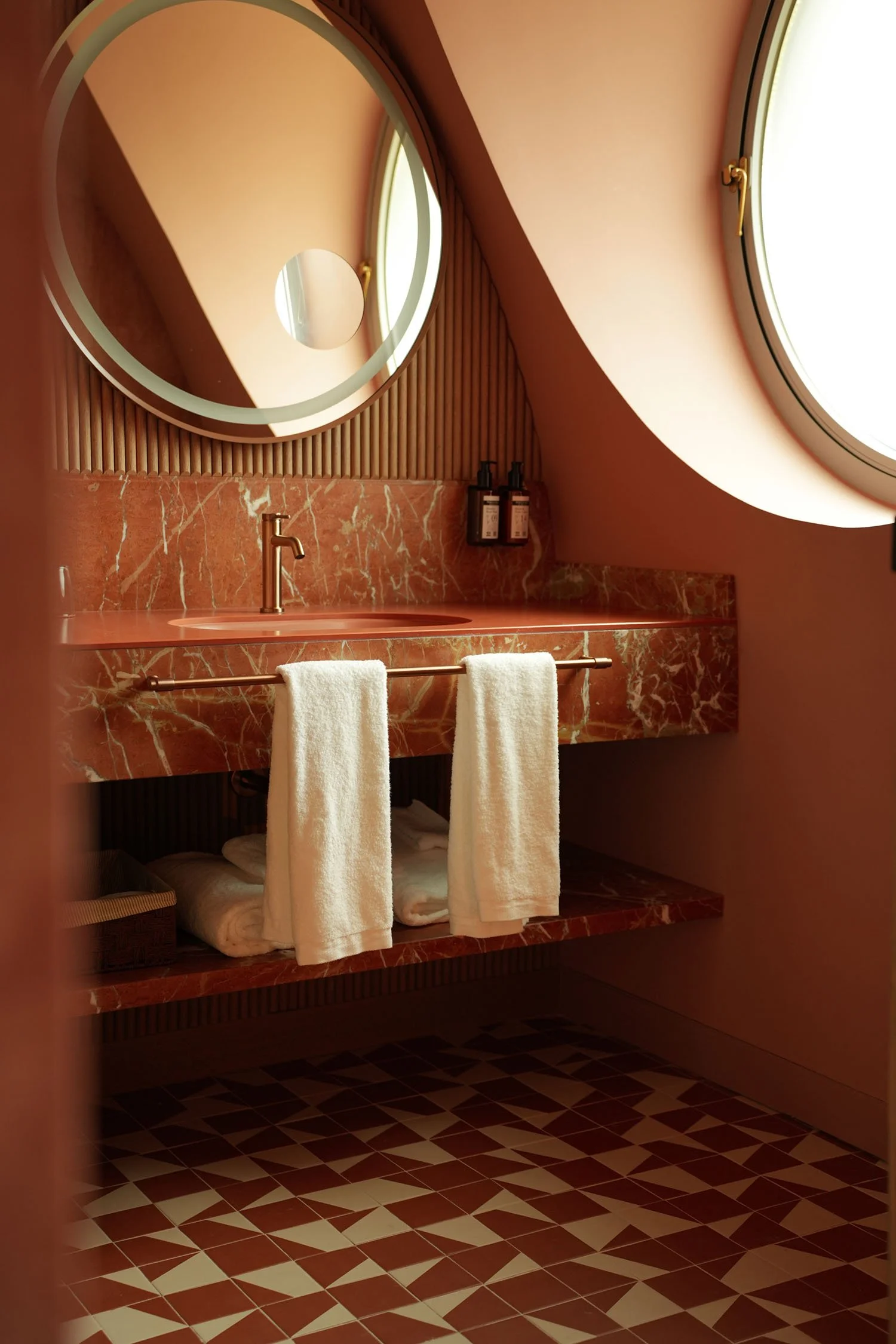
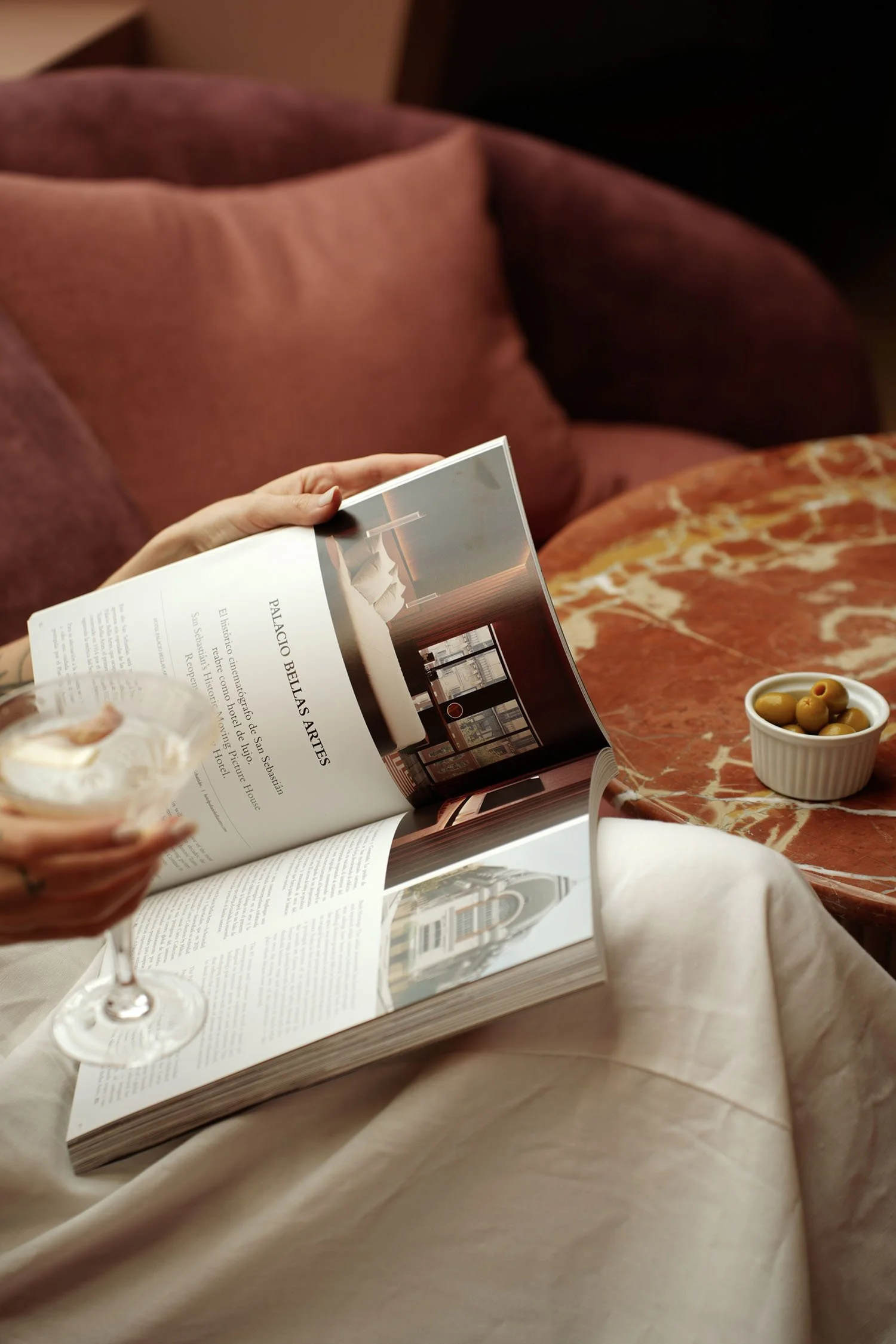
The palette leans warm and low in saturation, with deep rosy shades, umber, and sienna set against pearl and ivory. Even the black is a mixed-ink chromatic black, layered the way faded film never sits at pure black. Typography runs across three registers: a display serif, an editorial serif for headlines that mix cases and weights as film titles once did, and a handwritten accent modelled on the annotations cinematographers scribbled onto contact sheets.
The graphic devices abstract the physical materials of film into reel perforations, edge vignetting, scanner marks, and the viewfinder brackets a camera operator sees through the lens. The viewfinder crop appears on printed pieces and signage and is etched into felt door hangers. The studio's test for every element was whether it could be recognized without being obvious, a standard Van Tromp sums up as "present, not announced."
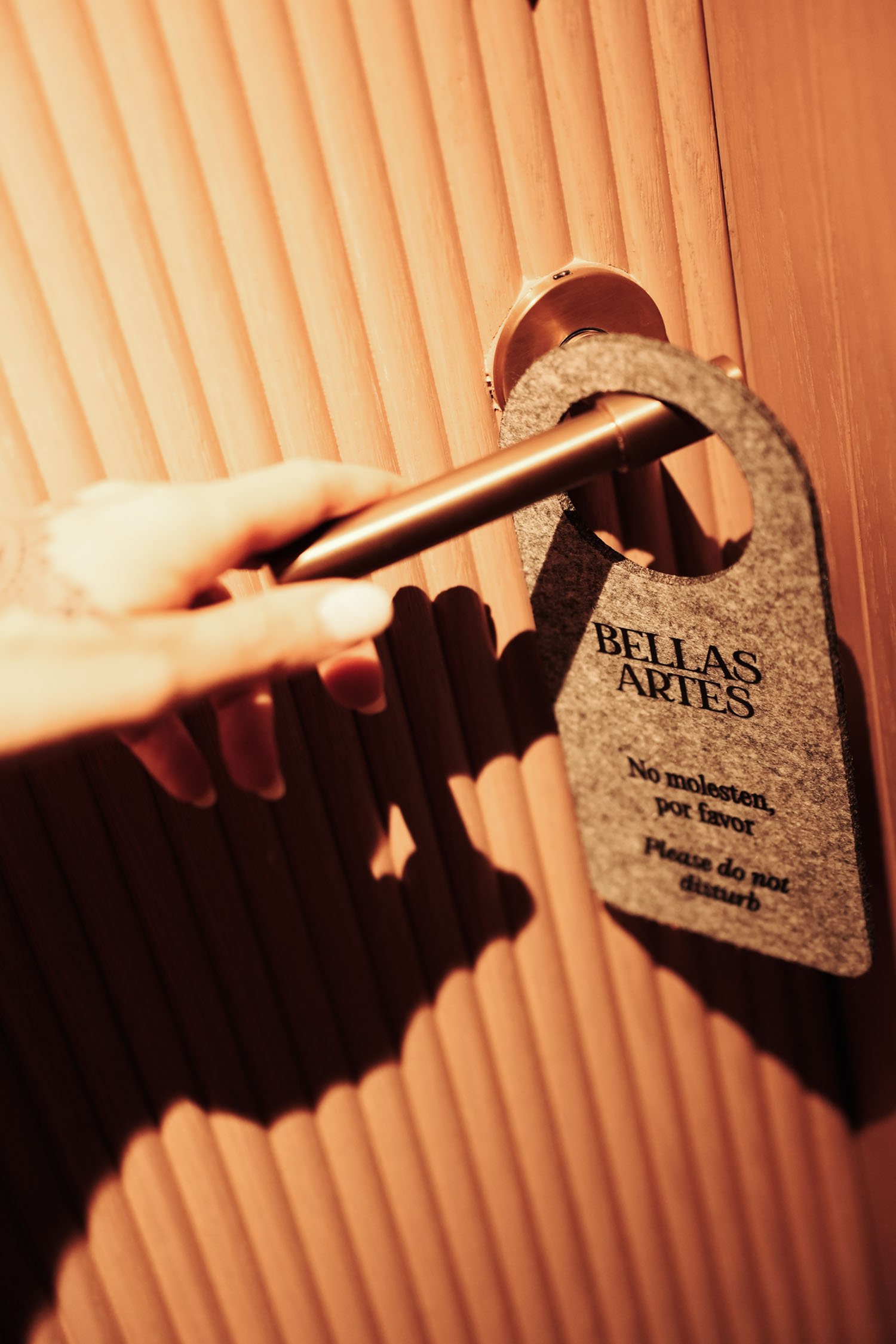
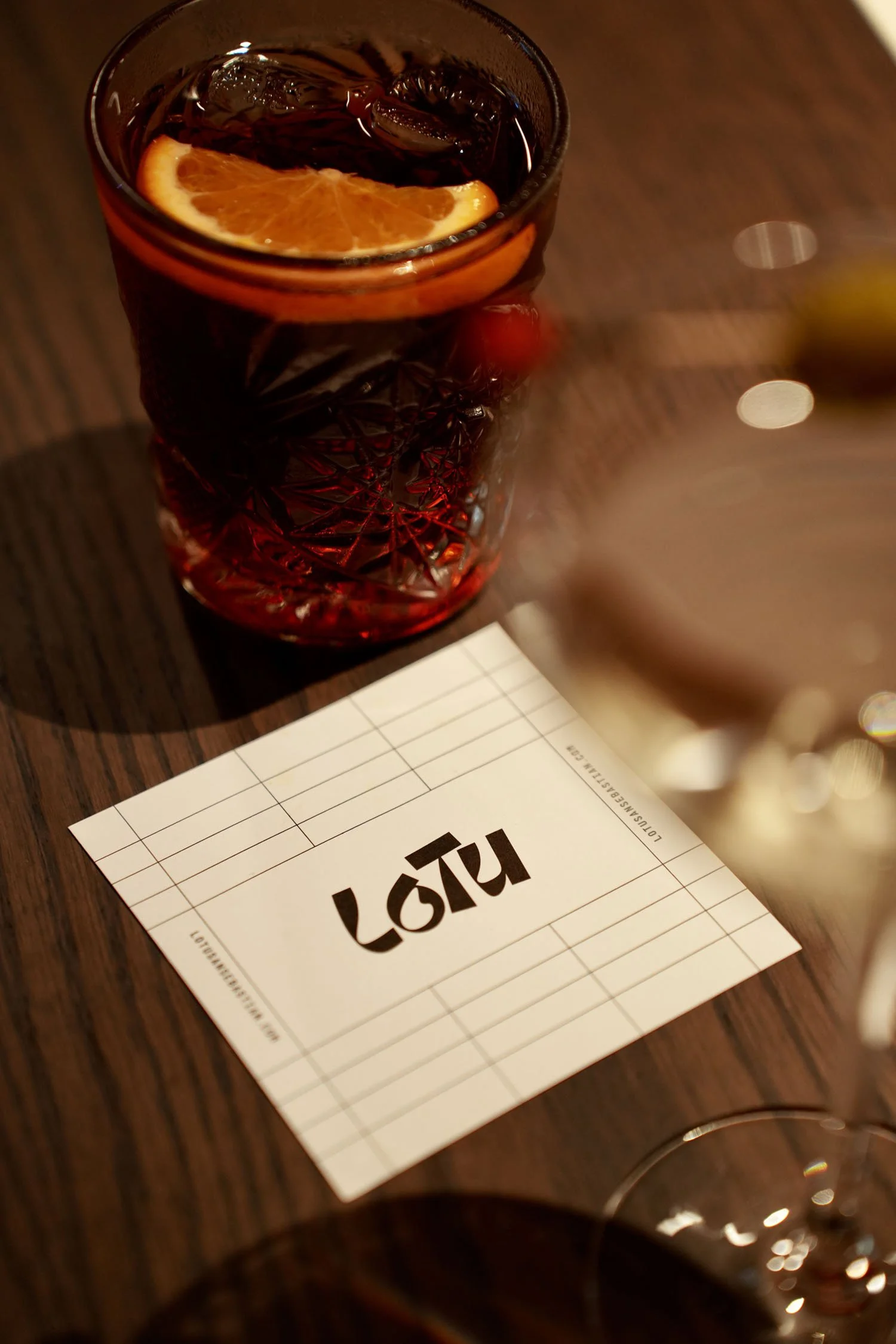
The same logic carries through the hotel's details. A 16:9 widescreen ratio frames everything from notepads and gift boxes to invitation cards and ground-floor window vinyls. Room categories named Gallery, Amphitheatre, Stalls, Grand Stalls, Box Suite, and Cúpula move guests through the old auditorium and double as wayfinding. For dining, AVT created the environmental graphics and Lotu lightbox, positioning the restaurant as a moment "behind the velvet curtain."
AVT is wary of the word storytelling. "It sounds like marketing, but we're not inventing anything," says Aylott. The studio measures its work by whether guests remember the building first. In a place that once screened other people's stories, the brand's quiet job is to keep the building's own in focus.
PROJECT DETAILS
Project: Palacio Bellas Artes, Curio Collection by Hilton
Location: C/ Urbieta 61, 20006 Donostia–San Sebastián, Spain
Opened: Early July 2026
Size: 81 rooms and suites across six floors
Brand strategy, visual identity, and design direction: Aylott + Van Tromp
Architect: Ignacio Quemada
Interior design: Isabel López Vilalta + Asociados
Restaurant: Lotu, developed by IXO Grupo under the creative direction of Andoni Luis Aduriz
Art program: 81 site-specific works by Lander Andonegi / Nor
Owner/operator: SADE, owners of the building since 1914
Photography: © Alessia Morellini
Brand assets: © Aylott + Van Tromp