GROUNDED IN PLACE || Monique Skelton Creates New Textures with New Zealand Sand and Vancouver Coffee Grounds In Her Ceramics
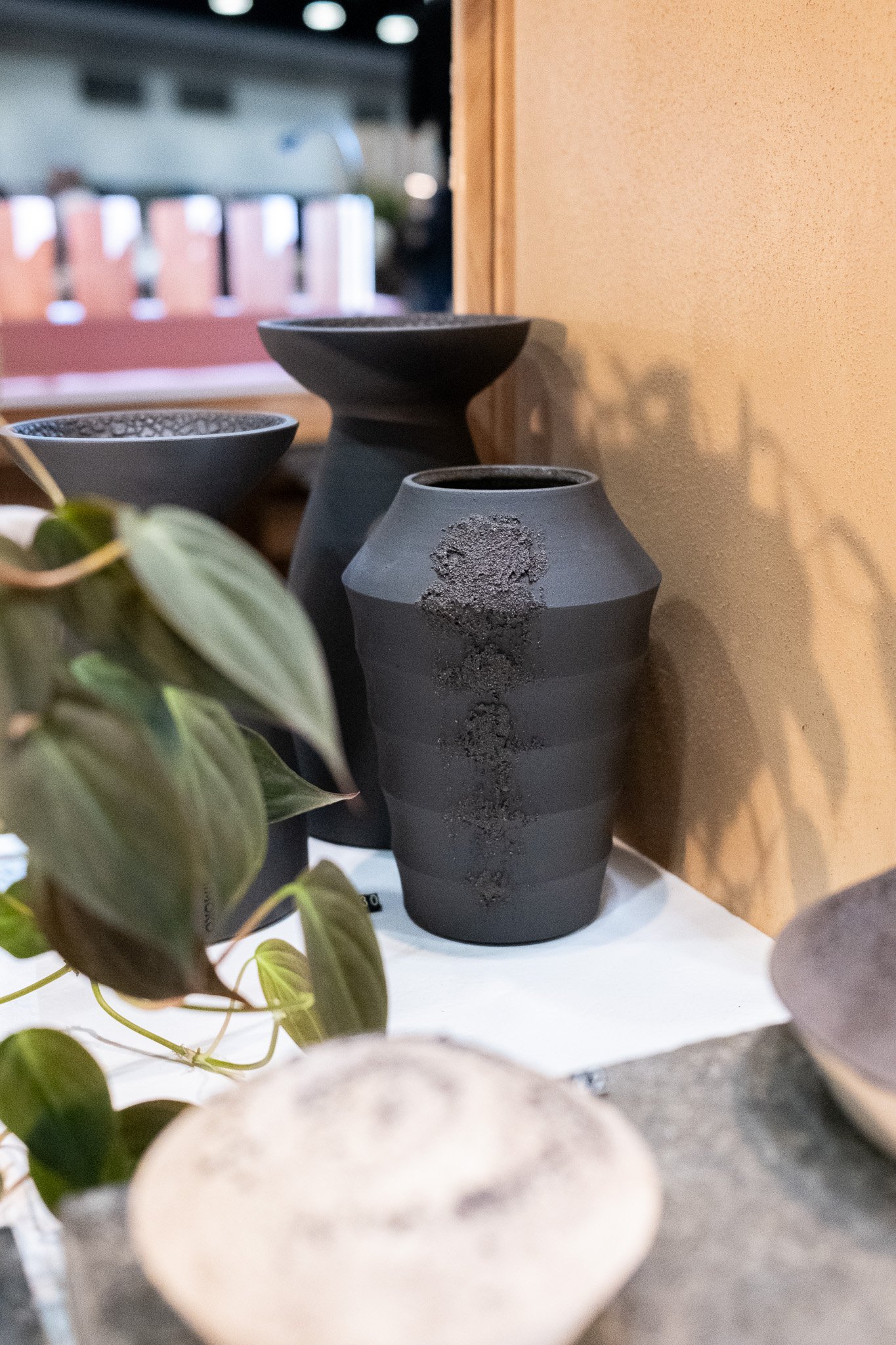
Monique Skelton brought back a bit of black sand from Piha Beach in New Zealand, giving her Vancouver ceramics a new texture while keeping their calm, sophisticated look intact.
The sand anchors Grounded in Place, the latest collection from MiMOKO Ceramics, the Vancouver brand Skelton founded in 2015, soon after her first pottery class. At IDS Vancouver, she explained the idea behind these place-based ceramics: materials gathered from specific locations, so each piece carries a sense of where it comes from.
The idea took shape in Japan. During a five-week trip, Skelton visited pottery towns, including Hagi in Yamaguchi Prefecture, where ceramics have been made for more than 400 years. Each region, she noticed, holds to an aesthetic shaped by local clay, glazes and firing methods, even as kilns and technology advance. Hagi ware is known for its fine glaze crackle, a cousin of the crackle glaze and raw clay finish she has designed with for eight years. The question that followed was what her own work could say about belonging, whether to New Zealand, where she grew up, or Canada, where she lives now.
Piha, a city in New Zealand, supplied the first answer. The fine, iron-rich black sand comes from her favourite surf beach, a place she visited often as a child. Back in Vancouver, she mixed it into clay, sprinkled it on, and brushed it out with a Japanese brush just before the clay hardened, so the sand fires into the piece. Her Sand Ripple Vase takes the idea further: a hand-thrown porcelain vessel painted at the leather-hard stage with a heavily textured slip of liquid porcelain, Piha sand and used coffee grounds from a local roaster, with a clear glaze sealing the interior. The sand comes from where she grew up, the coffee grounds from the city where she lives now.
British Columbia supplied the second answer. Skelton crushes rocks she brought back from Harrison Lake, near Harrison Hot Springs, with a steel mortar and pestle, and her four-year-old son, an avid rock collector, helps. The results have mostly been failures, she says, because many rocks aren't compatible with clay, so she's done more research into each rock's mineralogy and whether it will survive the kiln. Volcanic basalt from the Coast Mountains has worked, leaving an oily spot on the surface, and a recent lava glaze, she says, looks like the face of the moon. Kits Beach sand paired with black clay gives a distinctly grainier texture, and a hotter firing melts the sand further into the surface. For Skelton, that unpredictability is the beauty of ceramics, since the same medium in a different artist's hands gives a different result.
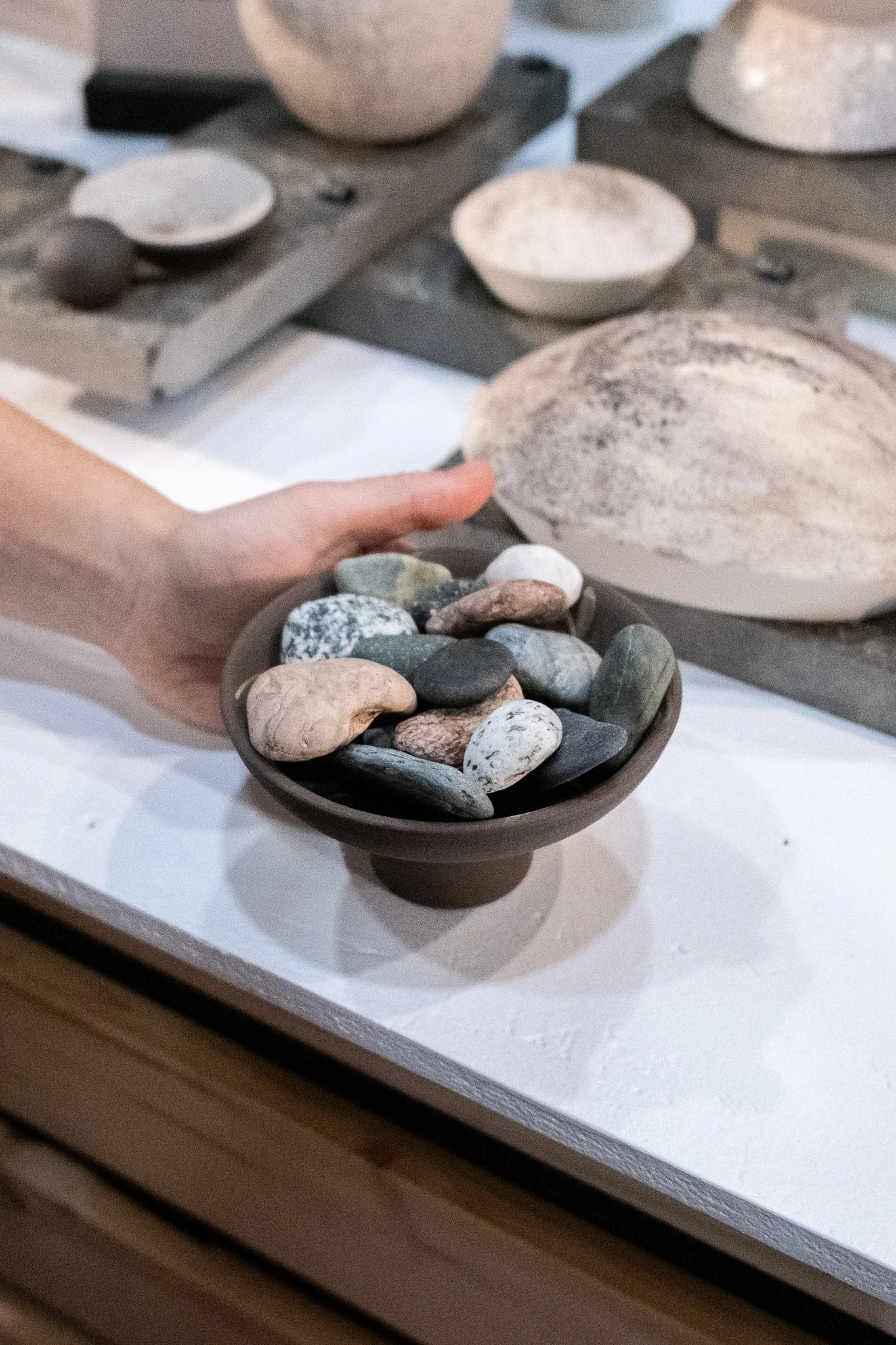
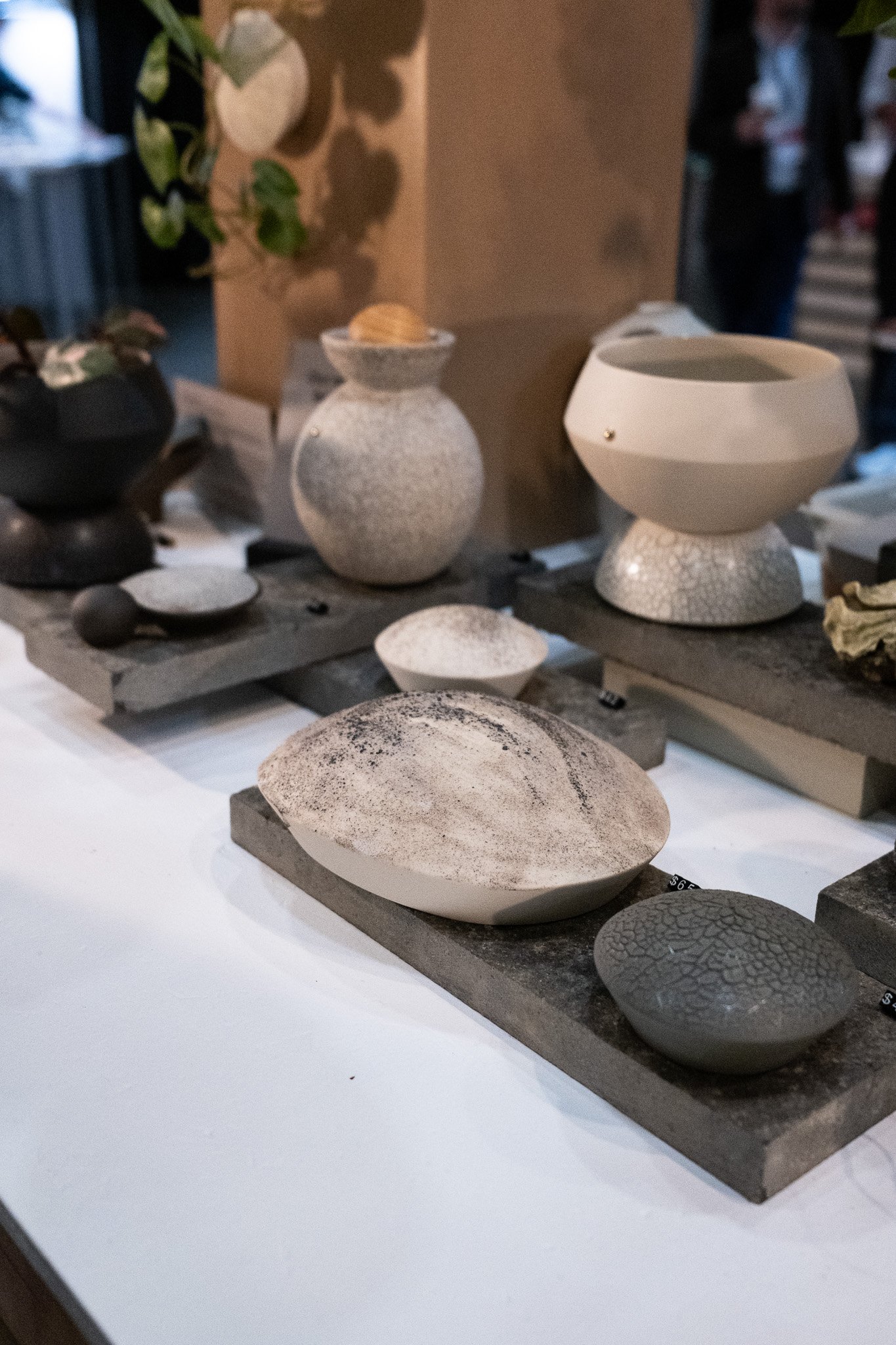
The collection suits living spaces too. Skelton's wall vases are hollow and hold fresh water, so cuttings can root and stay in them indefinitely with a monthly water change. She says the opaque walls block light and keep algae from building up. A newer pebble-shaped form echoes the rocks that inspired the series, and she wants the pieces mixed and matched across textures and finishes. That approach suits MiMOKO's Japanese-inspired philosophy of natural materials, asymmetry and balance, where restraint lets the plants take center stage.
"Each place tells a story," Skelton says, and in Grounded in Place she lets a few of them show through the surface. Belonging, in her hands, has a texture, and it invites touch.
Photography by Florence Leung