CREMORNE STREET TOWNHOUSE || How a Melbourne Home Uses Materiality to Expand a Compact Space
Most people wonder how architects make compact homes feel larger, and this Melbourne townhouse offers a clear and beautifully crafted answer.
Designed by Winter Architecture, the Cremorne Street Townhouse reimagines what is possible within a modest footprint, proving that thoughtful interventions can shift the energy of a home without altering its structure. Rather than expanding outward, the design expands inward, using material honesty and precise spatial moves to unlock a sense of calm and openness.
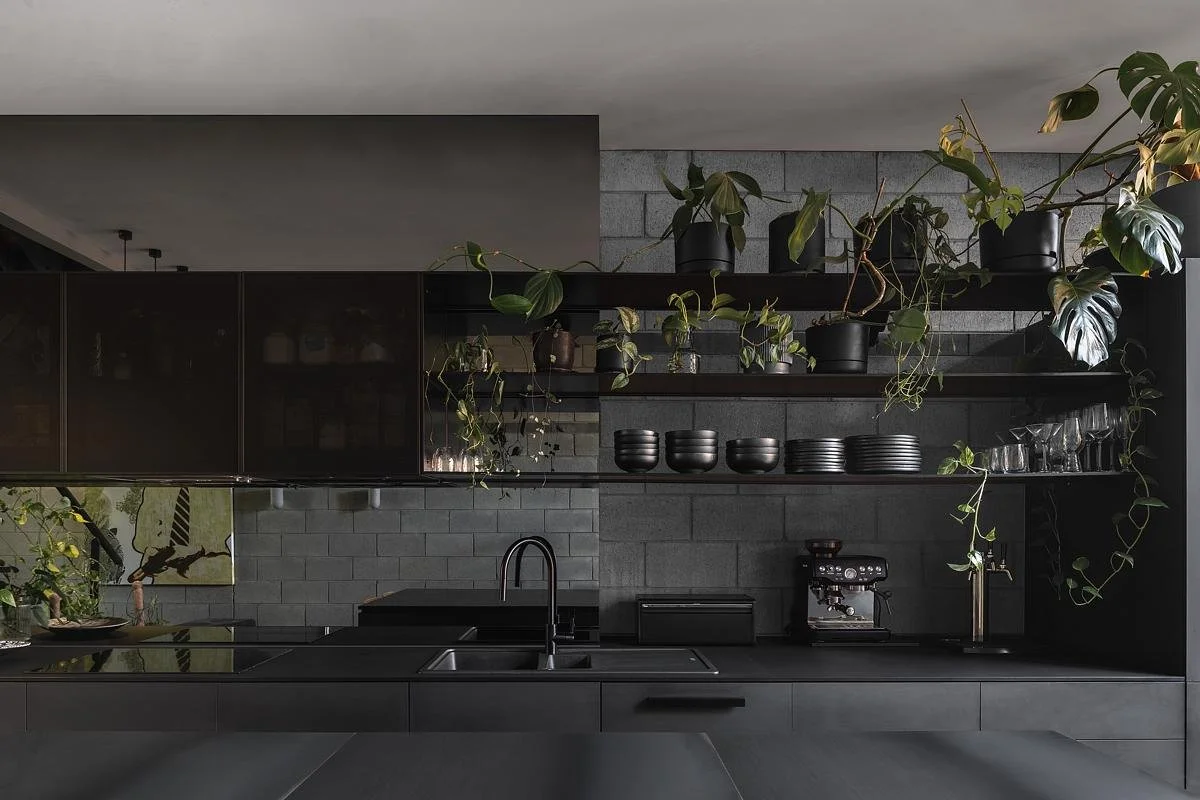
At just 31 square metres of interior space, every decision carried weight. Winter Architecture approached the project with the confidence of a practice deeply rooted in material craftsmanship. Instead of masking the home’s existing fabric, they revealed and elevated it. Spotted gum flooring was restored to its original warmth, while the blockwork that once faded into the background now anchors the interior with a grounded, tactile presence. This stripped-back approach forms the foundation for a design that feels both raw and refined.
Restored spotted gum flooring and exposed blockwork bring warmth and texture to the minimalist palette.
The most transformative gesture occurred on the ground floor. By removing a dividing wall between the living room and kitchen, the architects created a new visual and functional continuity that instantly enlarged the space. Light now flows unobstructed from the front of the home toward the garden, making daily routines feel more fluid. The dining table sits at the centre of this reprogrammed layout, becoming the stage for cooking, gathering, and conversation. Its placement signals the importance of connection and transforms a previously segmented area into a cohesive living environment.
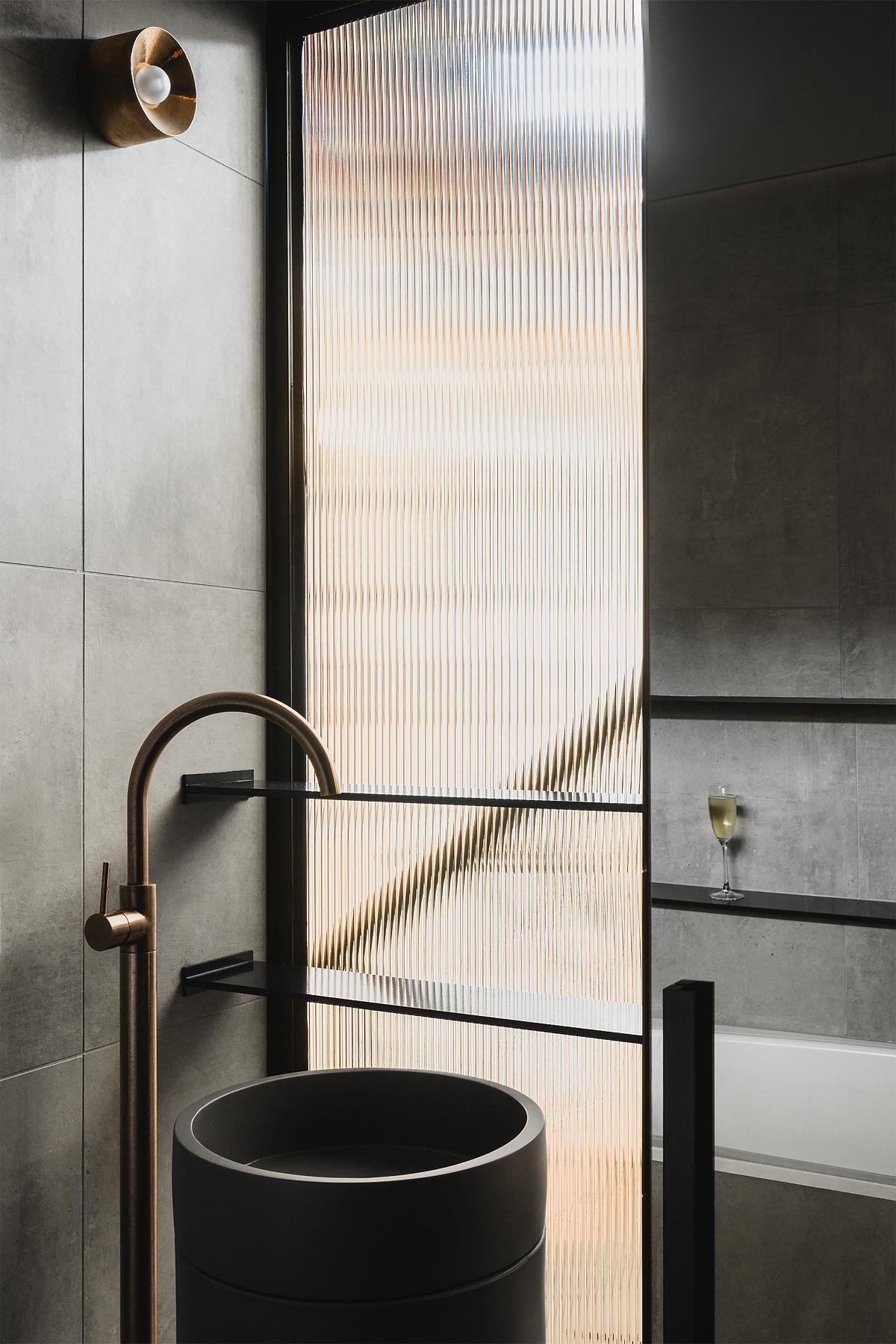
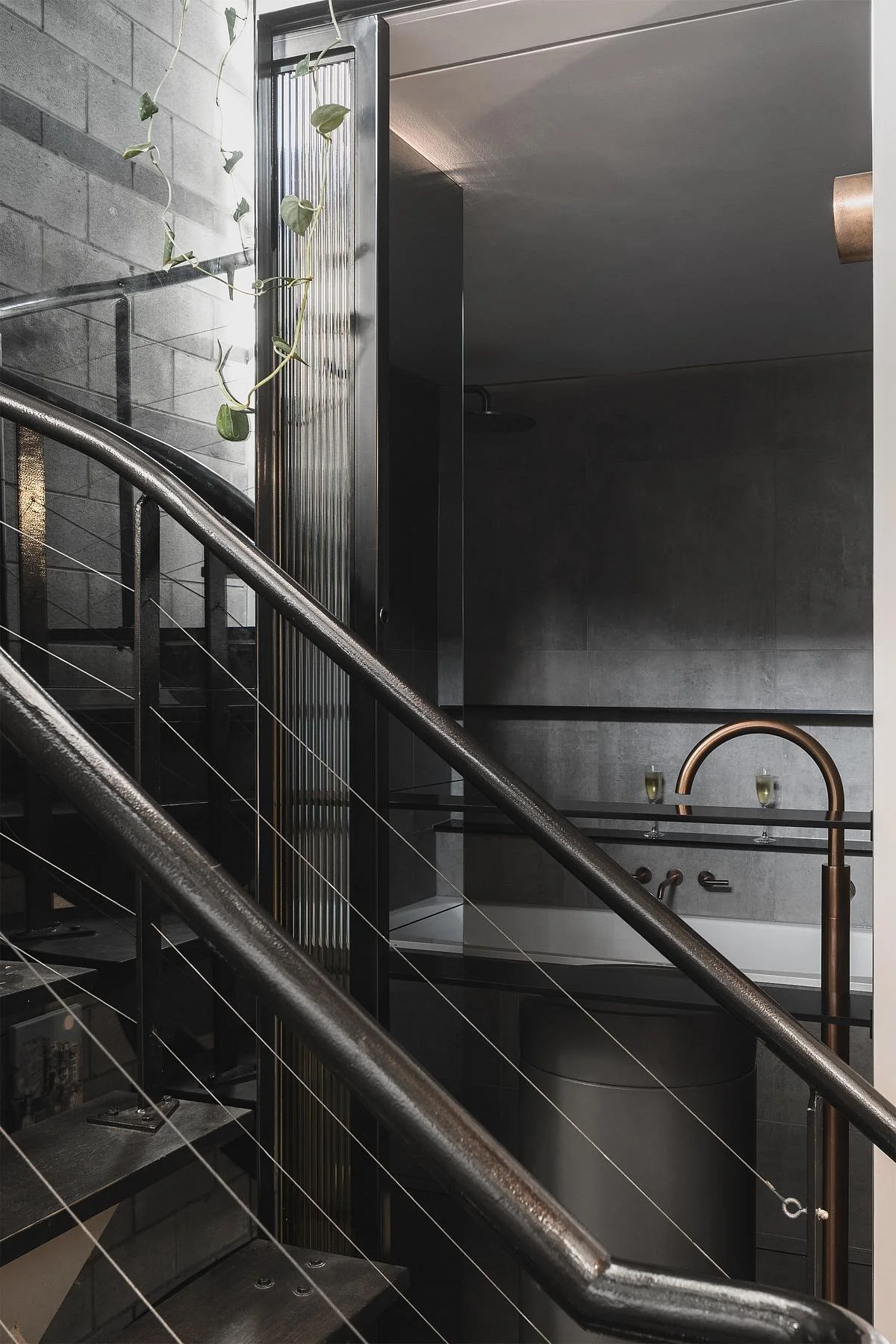
Reflection plays a key role in the next level of the townhouse. On the first floor, the bathroom was reconceived as both a functional space and a sculptural volume. Dark stone and metal accents shape a refined palette, while black mirror walls introduce a sense of depth far greater than the room’s physical limits. These reflective surfaces fold the surrounding architecture into themselves, creating a visual ambiguity that softens boundaries and draws in light. The result is a meditative, almost cinematic atmosphere that makes the compact room feel unexpectedly serene.
A new ensuite on the second floor continues this interplay of tactility and reflection. The material palette remains consistent, reinforcing the vertical coherence of the home. Smooth stone, textured concrete, and the rich grain of timber create a quiet rhythm, while the restrained detailing allows each material to speak clearly. In a project that could easily have felt confined, these surfaces guide the senses and build a sense of permanence. This is small-space living shaped not by compromise but by intention.
The upper-level ensuite maintains the project’s raw-meets-refined palette with stone, concrete, and soft timber tones.
A continuous folding plane of black mirrors expands the ensuite, creating a sculptural sense of depth.
What makes the Cremorne Street Townhouse particularly compelling is the discipline behind every design choice. Winter Architecture resisted the temptation to overfill or overstyle the interiors. Instead, the home relies on a few powerful ideas carried through with precision. Existing materials are celebrated. Light is invited to travel freely. Reflective planes amplify volume. Each intervention supports the next, resulting in a home that feels cohesive, grounded, and surprisingly expansive.
In an era when many homeowners turn to extensions to address spatial limitations, this project demonstrates the power of interior reprogramming. When design focuses on material clarity and spatial flow, even the most compact home can feel generous. The Cremorne Street Townhouse is a thoughtful study in how architecture can reshape perception, proving that space is not measured only by meters but by experience.
PROJECT DETAILS
Project size: 31 m2
Site size: 104 m2
Completion date: 2024
Building levels: 3
Architect: Winter Architecture
Photographer: Anthony Richardson