BRIGHTER BY DESIGN || A Compact Dublin Terrace Reimagined Through Natural Light and Quiet Craftsmanship
Light has a remarkable way of reshaping a home when it is invited in with intention.
At Greenville Terrace in Dublin 8, this idea becomes the guiding force behind a thoughtful transformation that turns a once derelict nineteenth-century cottage into a luminous sanctuary for a young family. Rachel Carmody Design approached the renovation with clarity and restraint, responding to the compact footprint not with excess, but with a disciplined use of daylight and proportion.
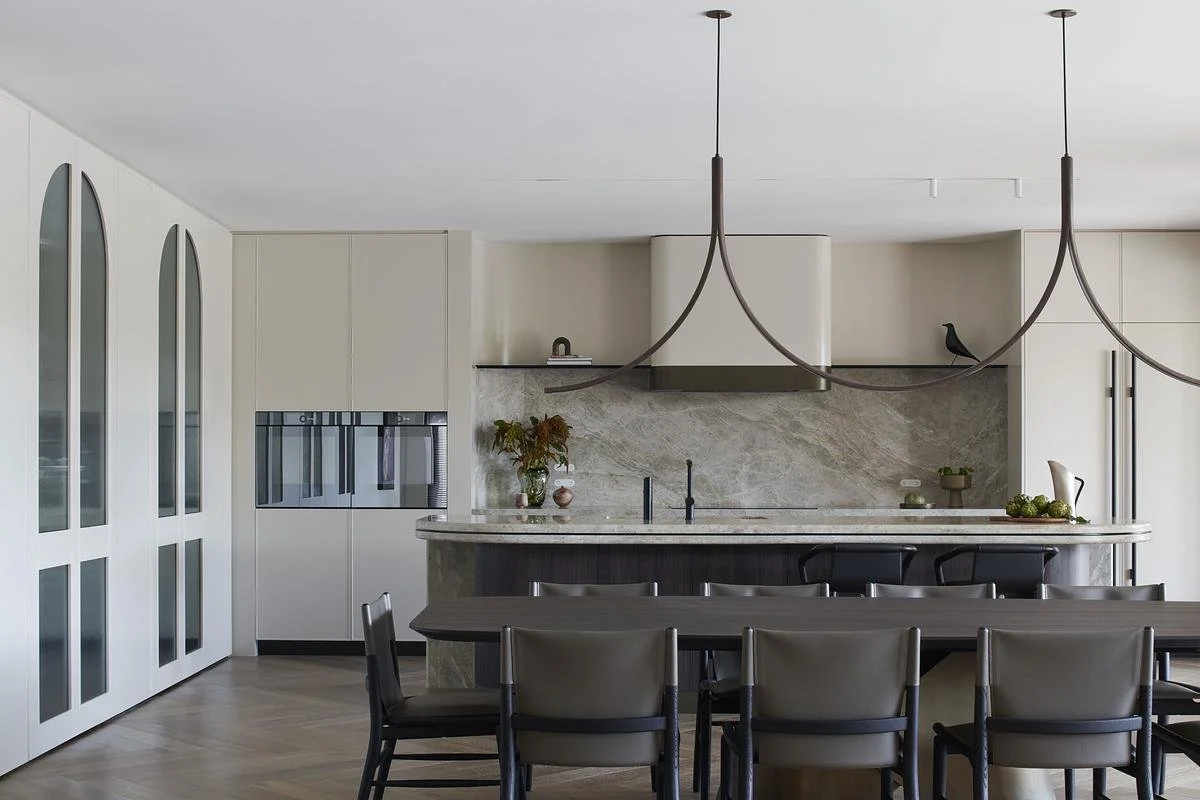
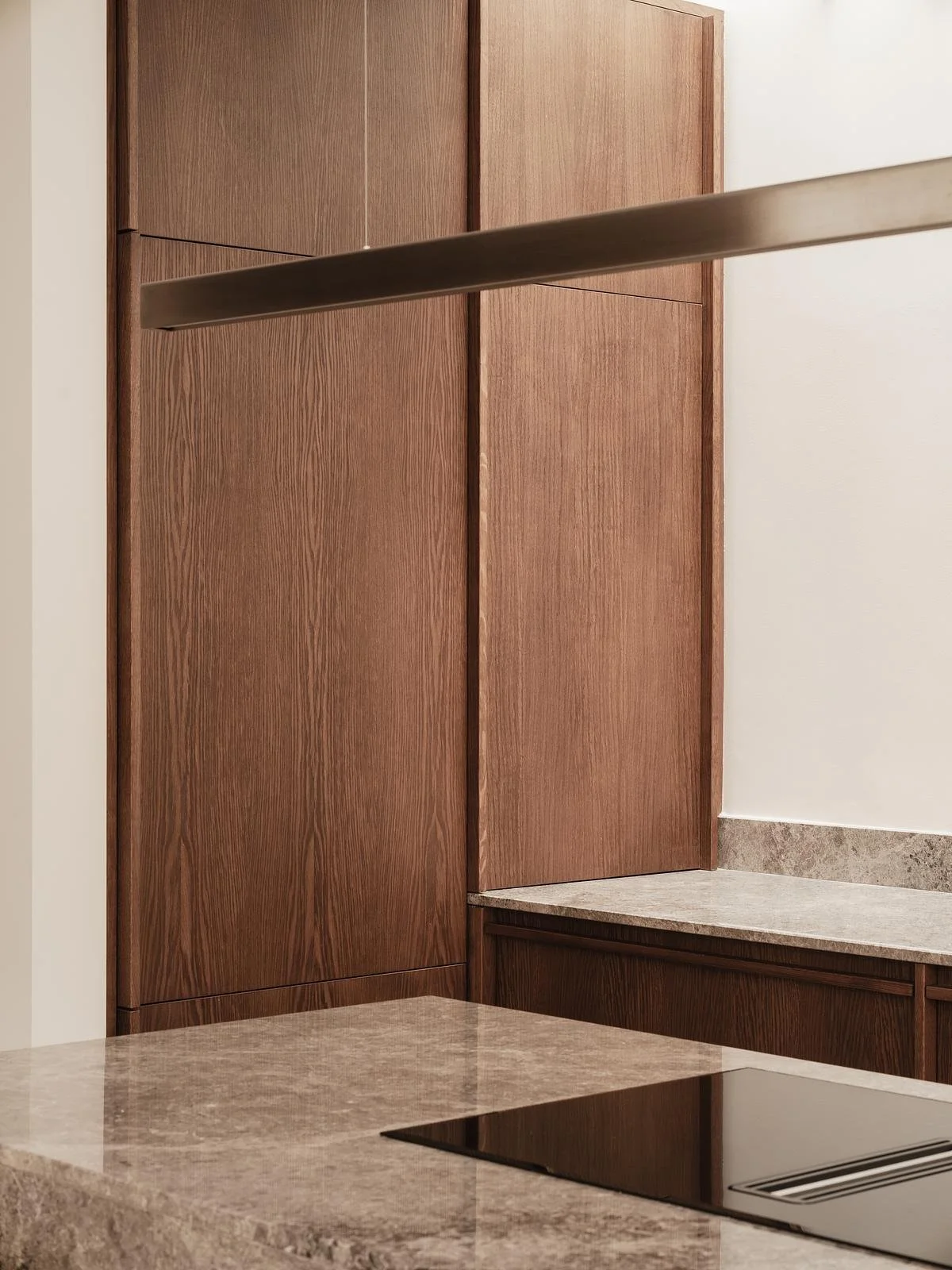
The tundra grey marble island anchors the kitchen as clerestory light slips along the oak cabinetry with an understated glow.
The plan unfolds along a clean visual axis that draws the eye from the front sitting room toward the courtyard at the rear. This single gesture sets the tone for the rest of the home. By keeping thresholds minimal and aligning openings along long sightlines, the design allows daylight to drift through the rooms in a way that feels effortless. Even the narrow central study and stairwell benefit from this approach, each one receiving soft overhead illumination that lifts the entire volume.
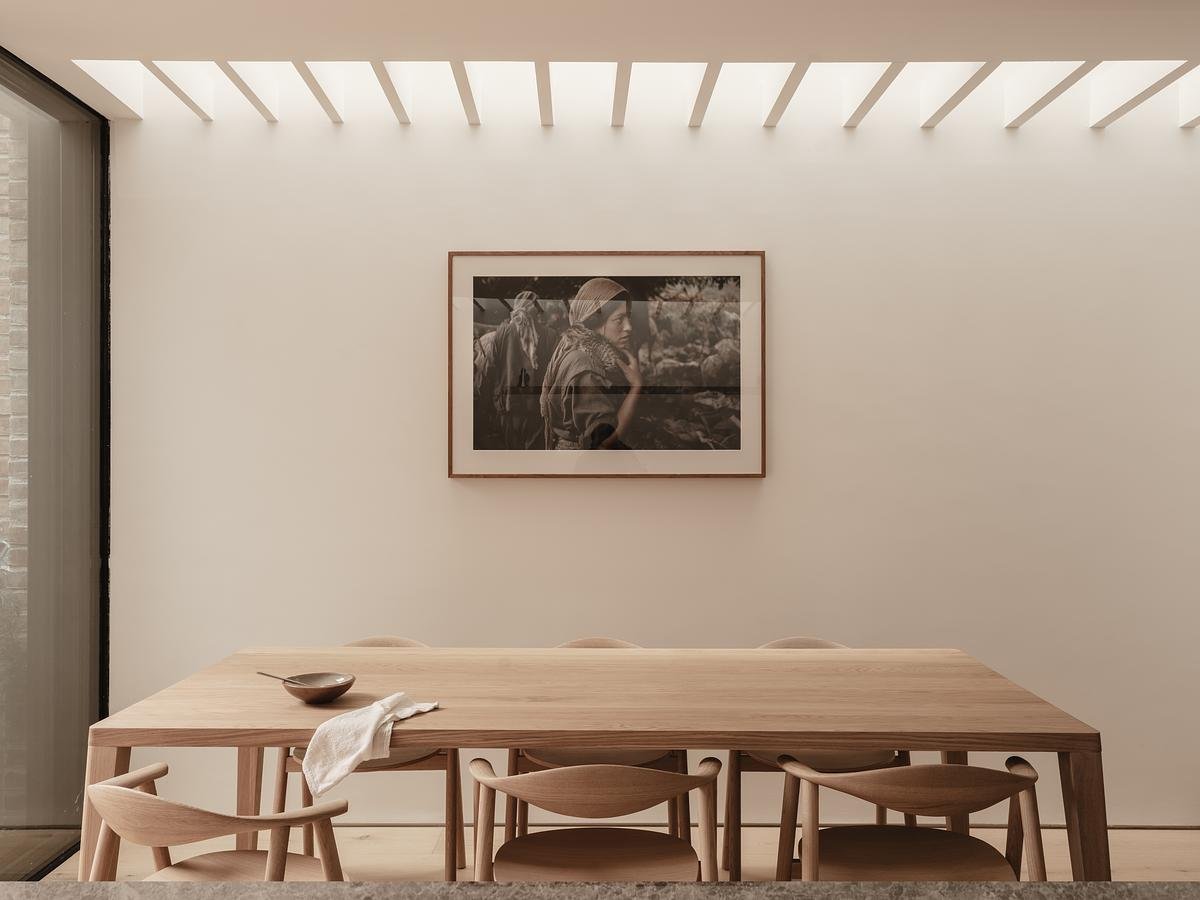
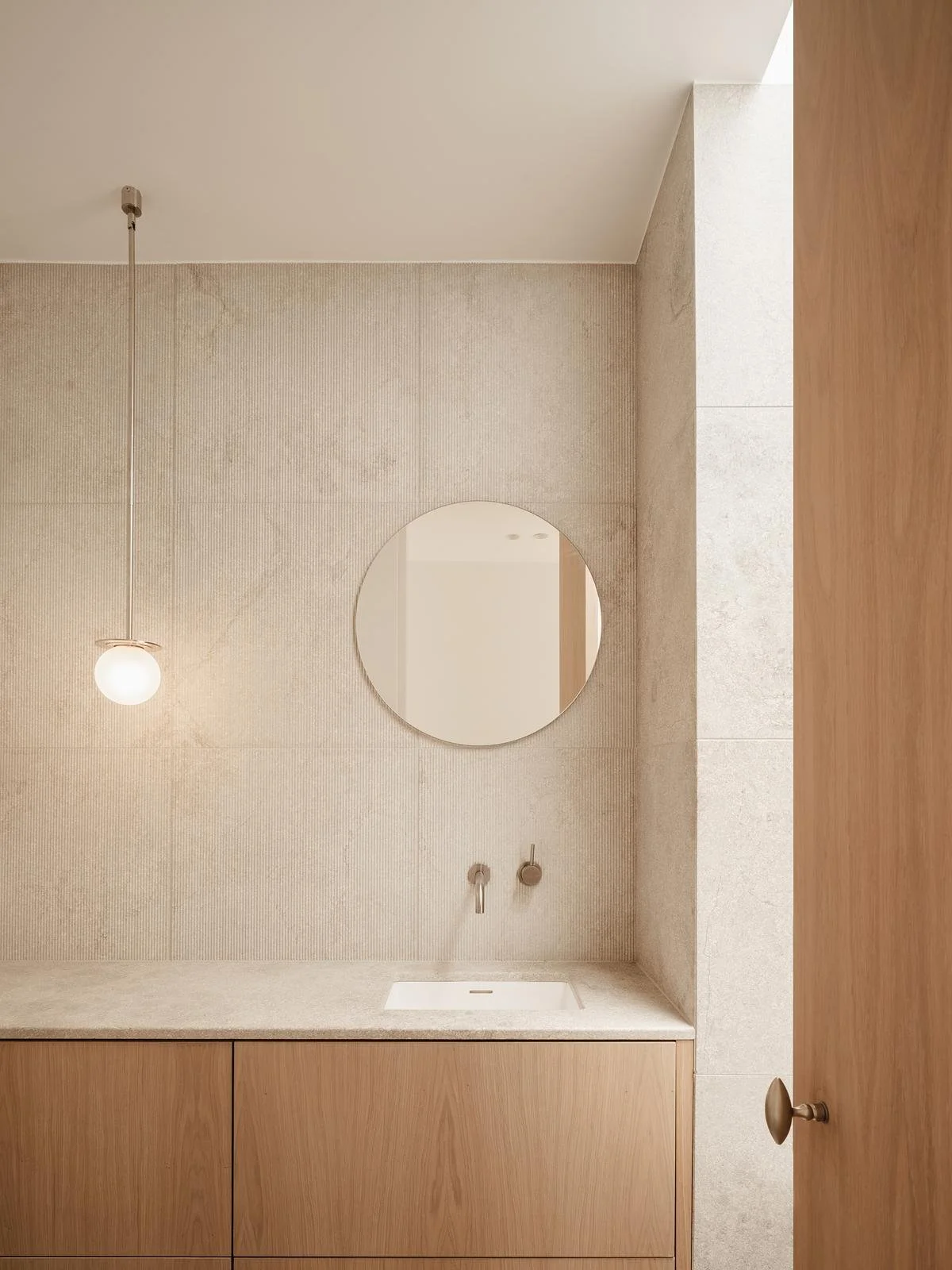
Roof lights play an essential role in this choreography. In the dining area, a series of slender skylight slots washes the space with diffused light, highlighting the quiet grain of the timber table below. The kitchen gains its own clerestory glow, which slips down the warm oak joinery and the tundra grey marble island that anchors the space. In the bathroom, a single skylight transforms the shower into a calm retreat, creating a moment that feels almost carved out of daylight.
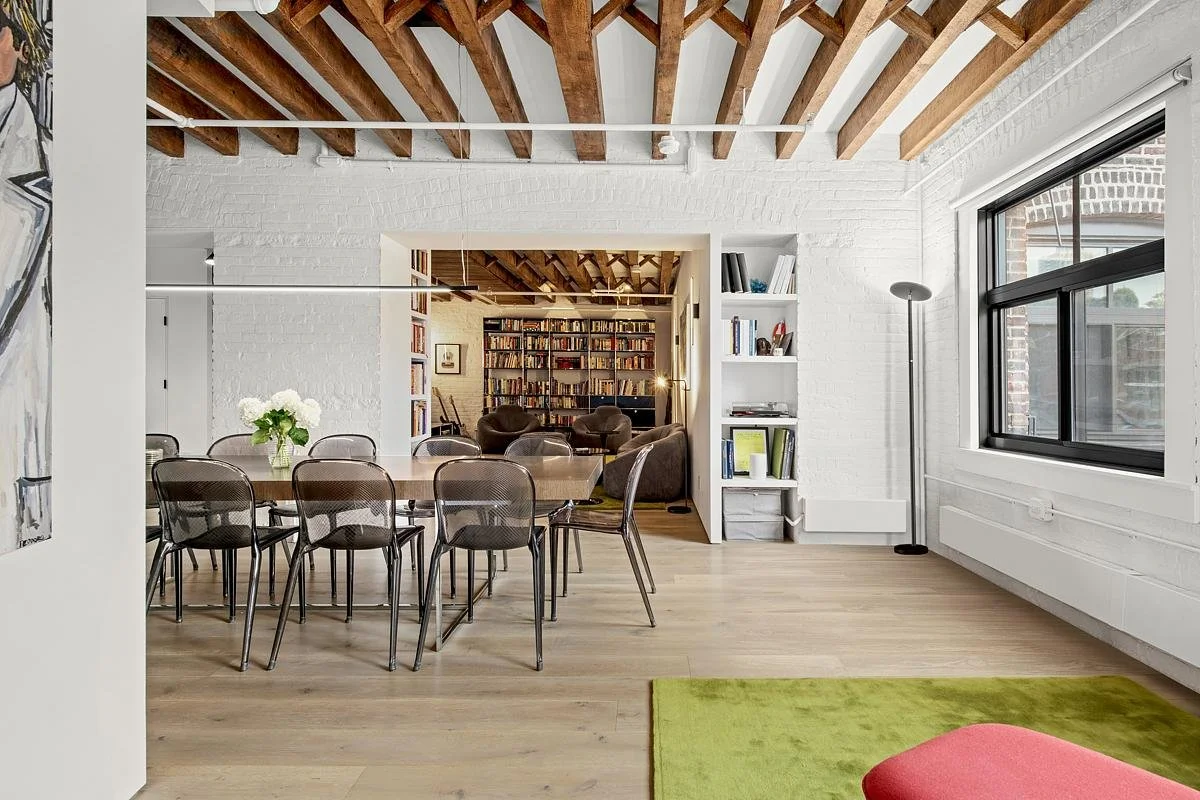
A row of slender skylights creates a gentle wash of light over the dining table, giving the compact space a sense of calm openness.
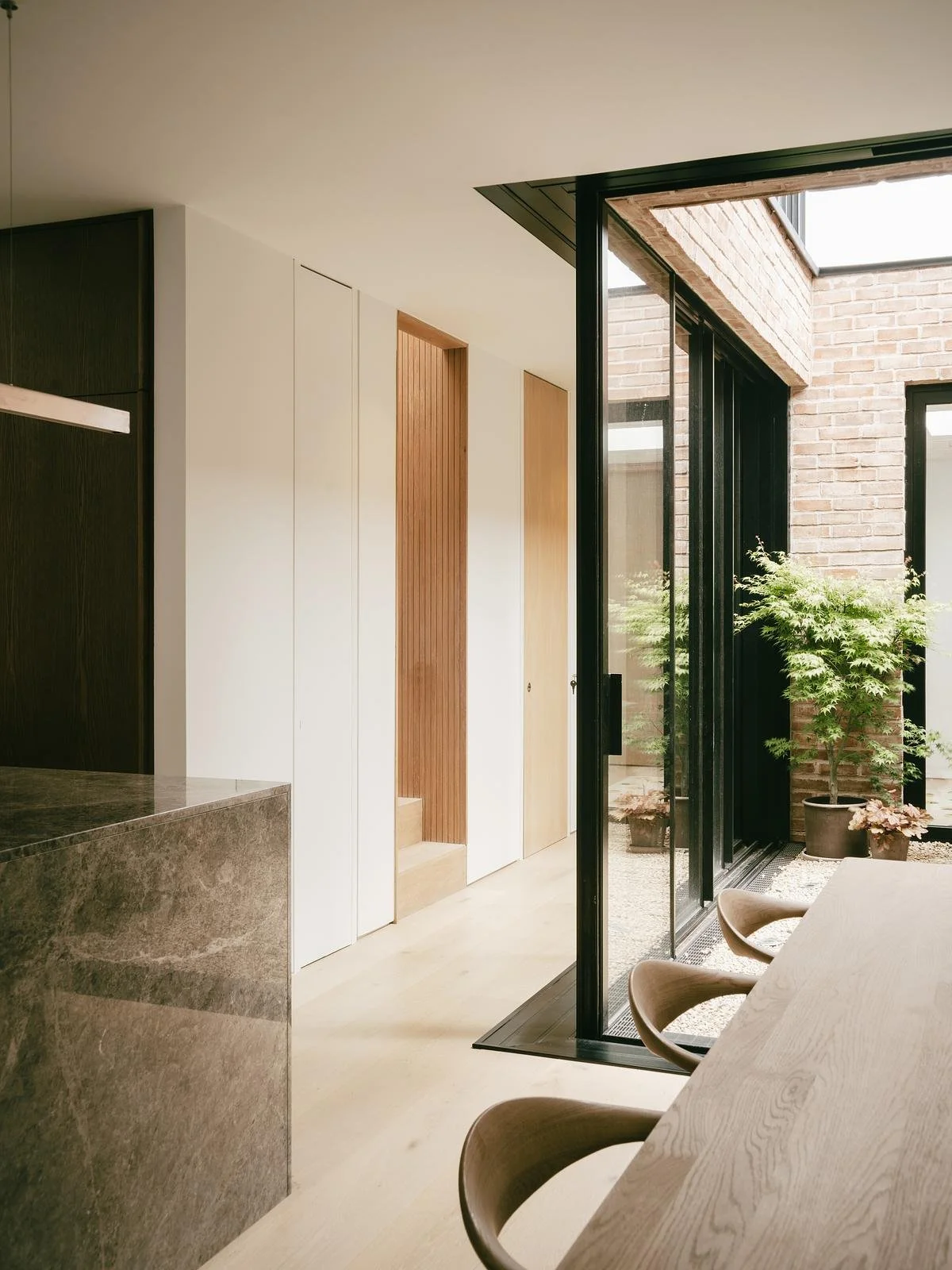
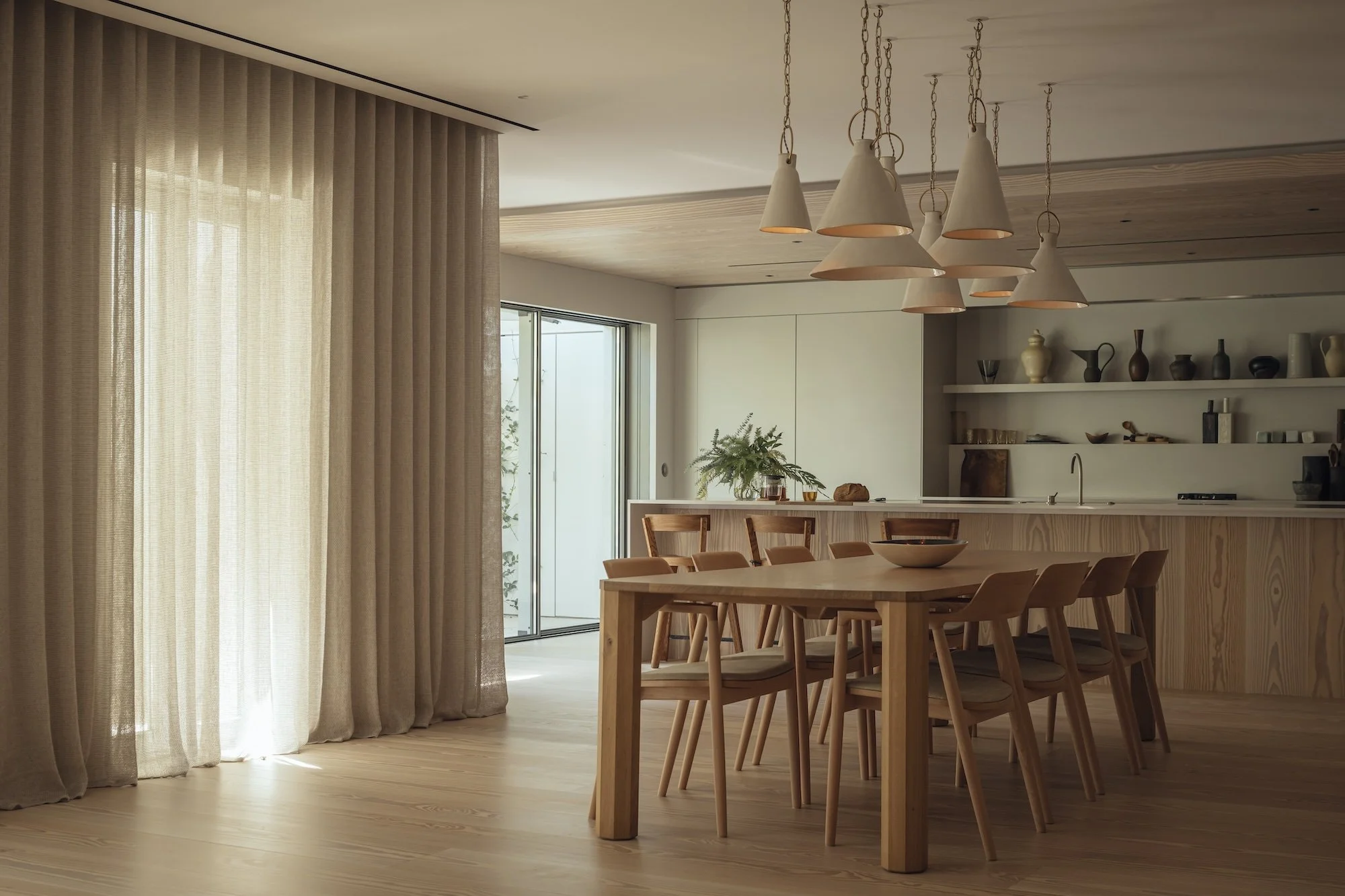
Soft daylight filters across the sitting room, highlighting the warm timber finishes that set the tone for the home’s quiet material palette.
A limited palette of natural materials enhances the character of these illuminated spaces. Pale timber floors run throughout the home to create continuity, while oak joinery adds depth without overwhelming the architecture. The marble island introduces a tactile contrast that subtly grounds the living area. Brick surfaces in the courtyard nod to the building’s nineteenth-century origins, creating a meaningful dialogue between old structure and new intention. Rather than compete for attention, these materials quietly support the atmosphere created by the light that touches them.
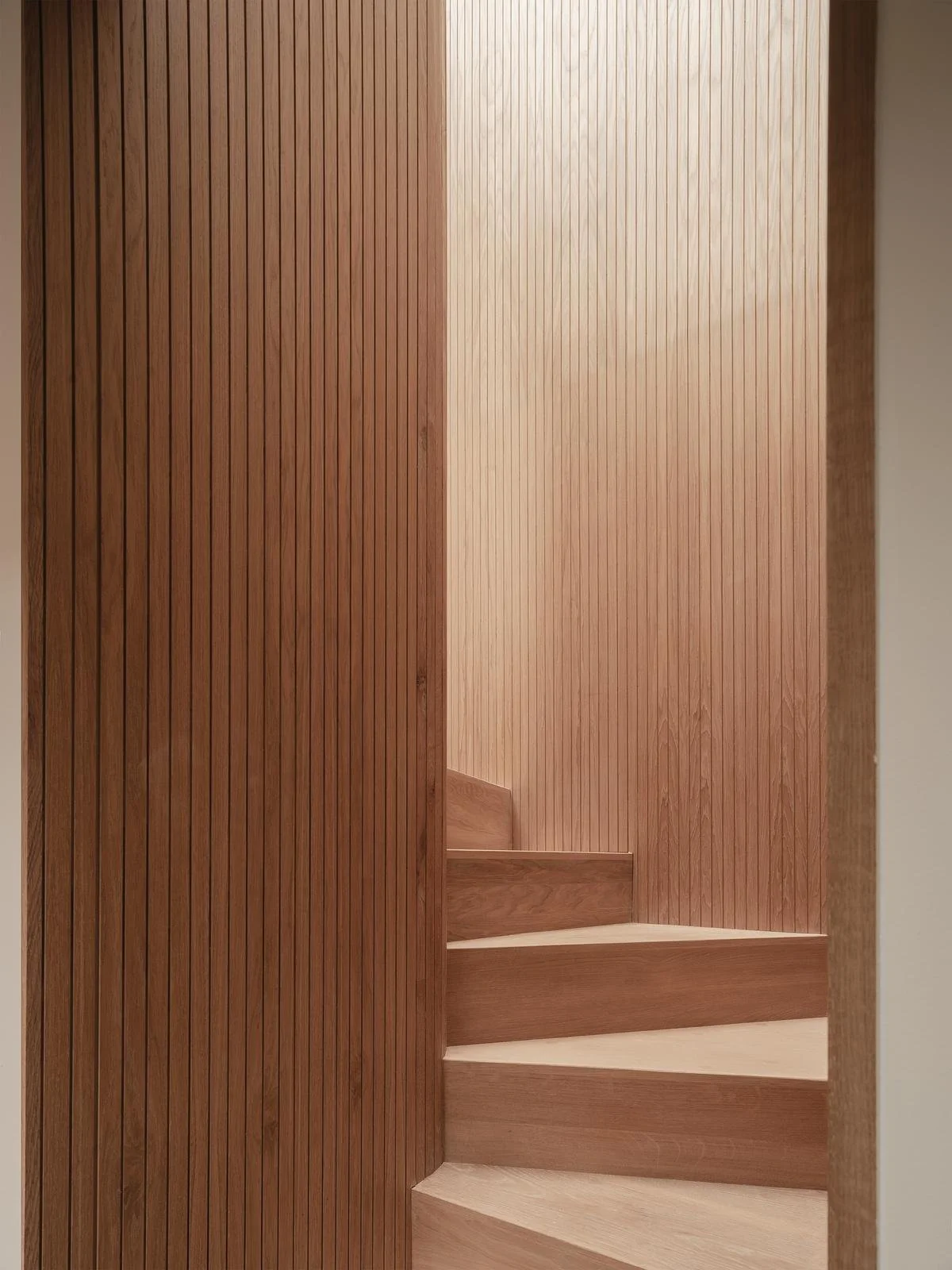
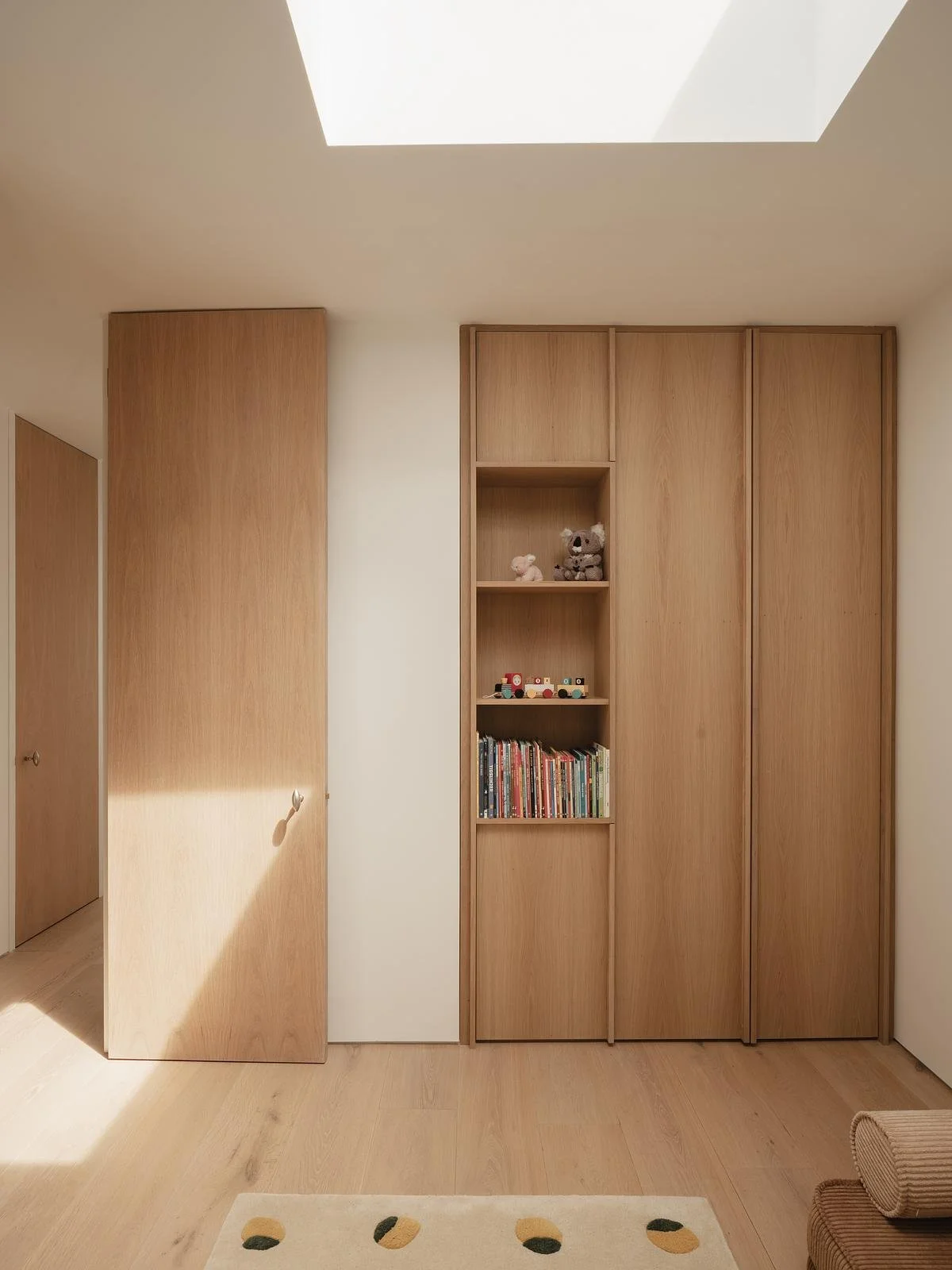
The compact nature of urban family living demands careful planning, and this home meets that challenge with intelligence. Floor-to-ceiling storage keeps the interiors uncluttered, allowing the architecture to breathe. Level changes guide movement naturally, creating a sense of flow rather than fragmentation. Even the staircase feels purposeful, wrapped in vertical timber that softens its form while helping light glide down its surfaces.
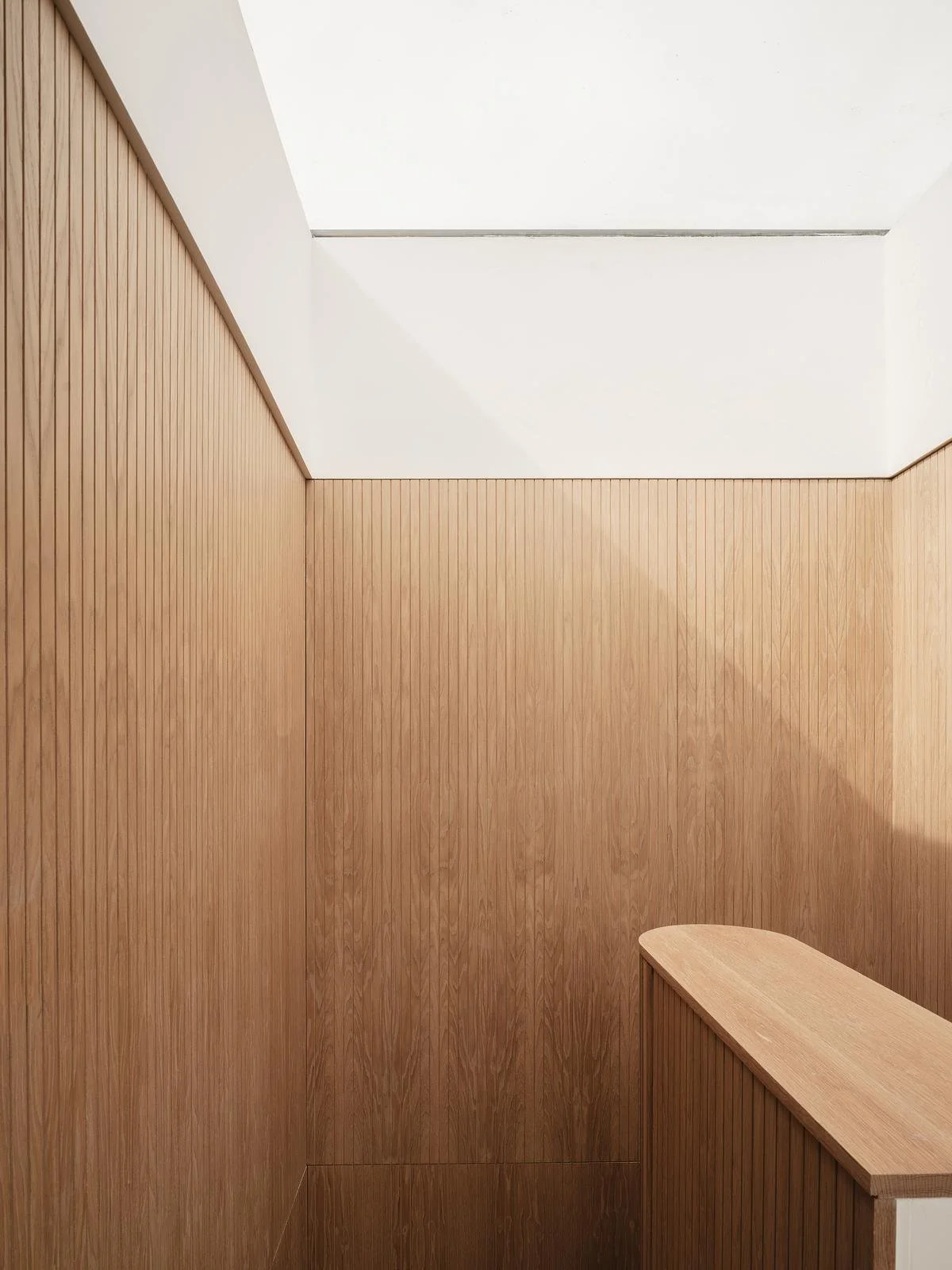
Above: Simple finishes and long sightlines give the bedroom a serene character that reflects the project’s emphasis on clarity. Below: The central study feels unexpectedly airy thanks to a carefully positioned roof light that brightens one of the narrowest areas of the house.
What emerges is a model for sustainable city living. Instead of expanding the house beyond its means or replacing it entirely, the renovation embraces what existed and enhances it with a renewed sense of clarity. The three-bedroom layout supports family life with ease. The living spaces feel open yet grounded. Every corner appears to carry the same careful thought that shaped the overall vision.
This transformation is not about grandeur or dramatic gestures. It is about precision, proportion, and the belief that light can elevate even the most modest structures. Greenville Terrace stands as a reminder that sustainable design often begins with understanding what a home already offers, then revealing its best qualities through thoughtful intervention.
It is quiet. It is warm. It is deeply personal. And above all, it is brighter by design.
PROJECT DETAILS
Architect: Rachel Carmody Design Limited
Location: Dublin
Photographer: Peter Molloy
Project size: 110 m2
Site size: 130 m2
Completion date: 2024
Building levels: 2