THE HOUSE THAT ALREADY KNEW || A Fisherman’s Home in Cadaqués Reclaims Mediterranean Climate Wisdom
Long before sustainability became a marketing term, Mediterranean homes were quietly solving the problem of heat, humidity, and light with stone, lime, and common sense.
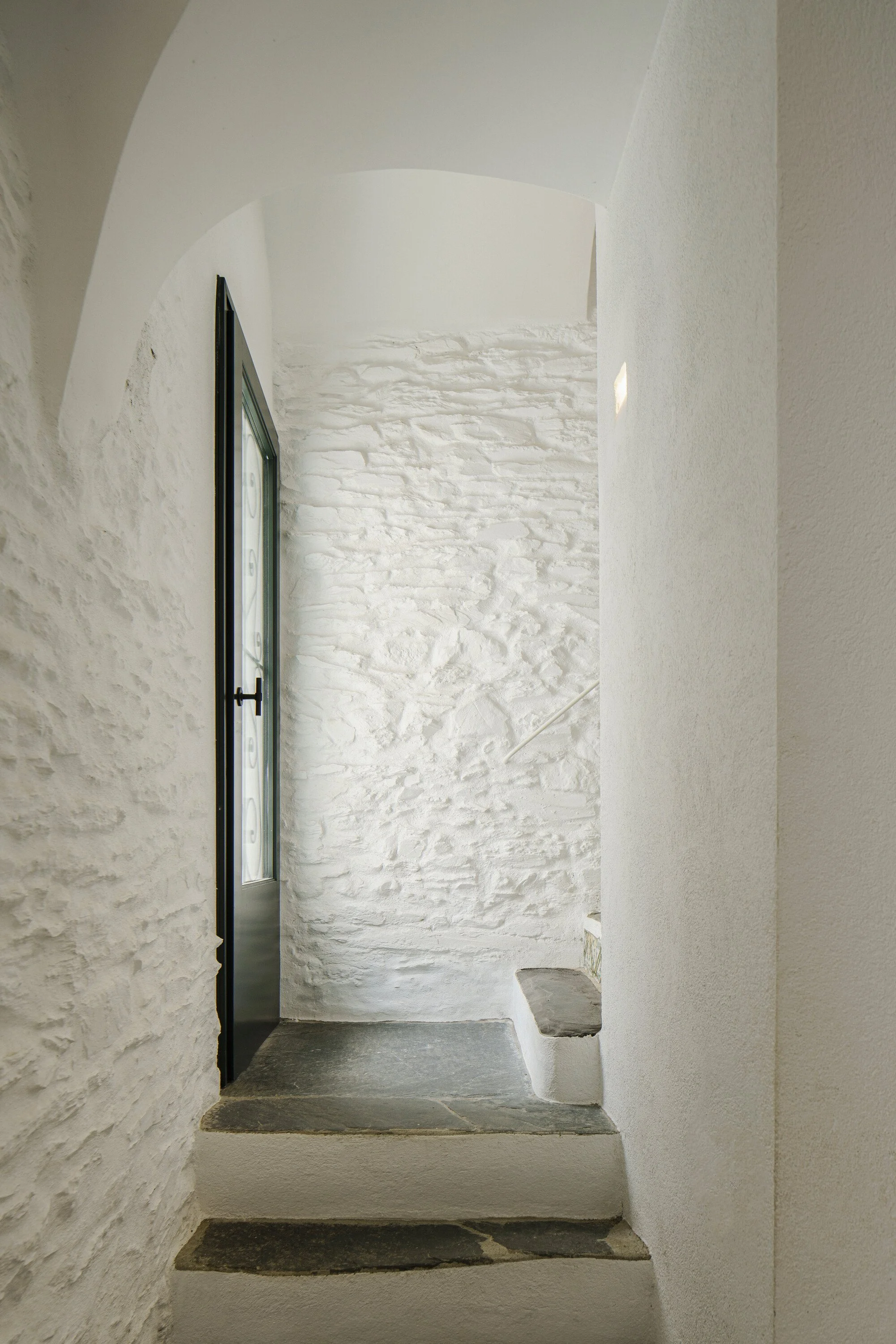
Located in the pedestrian heart of Cadaqués, this former fisherman’s house stands as proof that climate intelligence is not a new invention. It is simply something we once understood instinctively. Designed more than a century ago with 50-centimetre load-bearing stone walls, timber beams, ceramic vaults, and lime-plastered surfaces, the house was originally built to breathe, to cool, and to endure the humid air of the Empordà coast.
The preserved façade maintains its original proportions, wrought-iron balconies, and British racing green shutters, reinforcing the architectural continuity of Cadaqués’ historic centre.
When architects Bea Portabella and Jordi Pagès were commissioned to rehabilitate the property, the challenge was not to modernize it beyond recognition. It was to reinforce what already worked.
The house had fallen into disrepair. Structurally compromised and fragmented in layout, it required a careful intervention that balanced reinforcement with respect. The exterior façade was preserved in keeping with the urban fabric of Cadaqués, maintaining its British racing green shutters and wrought-iron balconies. The architectural memory of the village remains intact. Inside, however, the spatial logic was rethought to restore light, air, and fluidity.
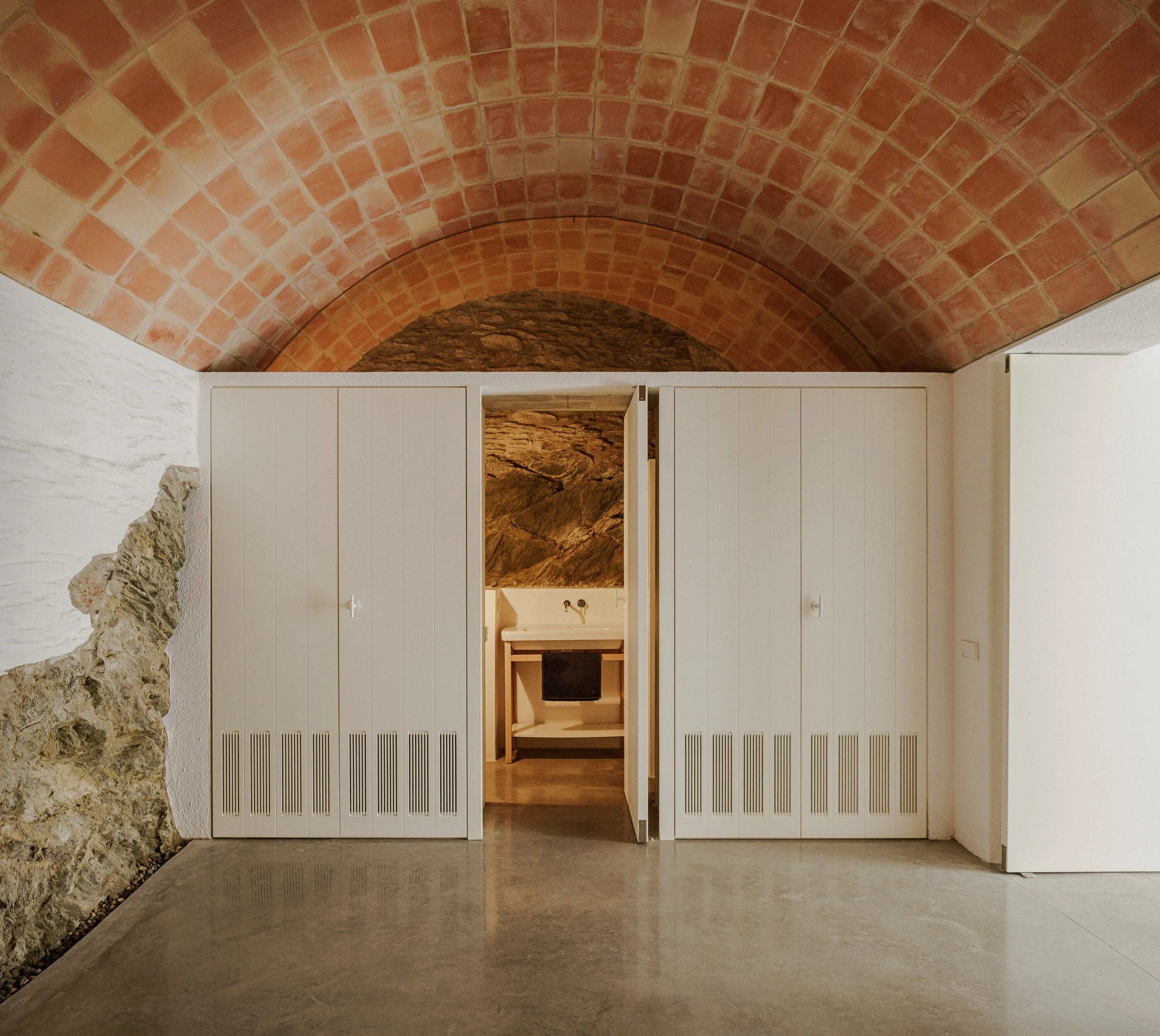
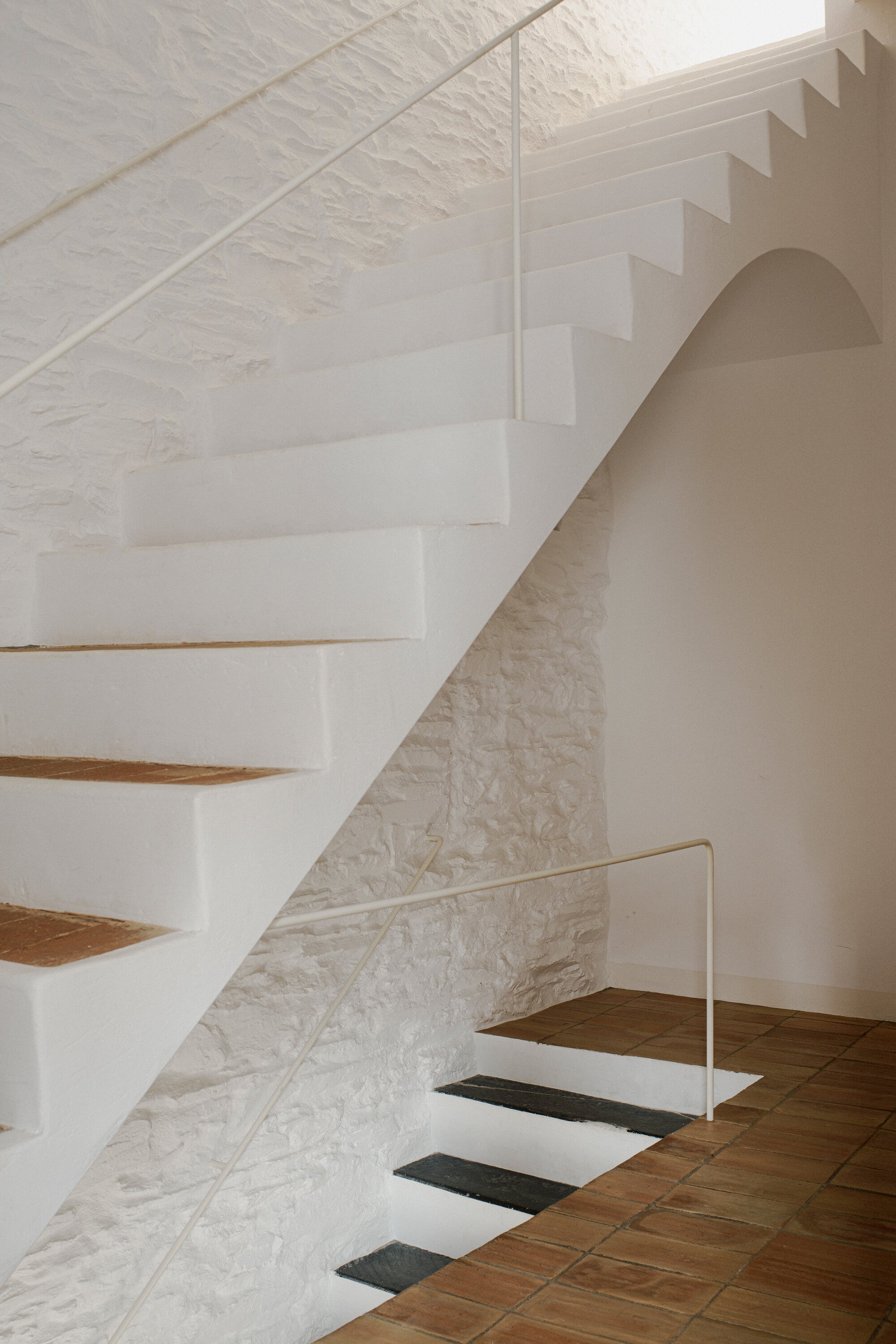
The original ceramic Catalan vaulted ceiling regulates temperature naturally while anchoring the space in vernacular construction techniques.
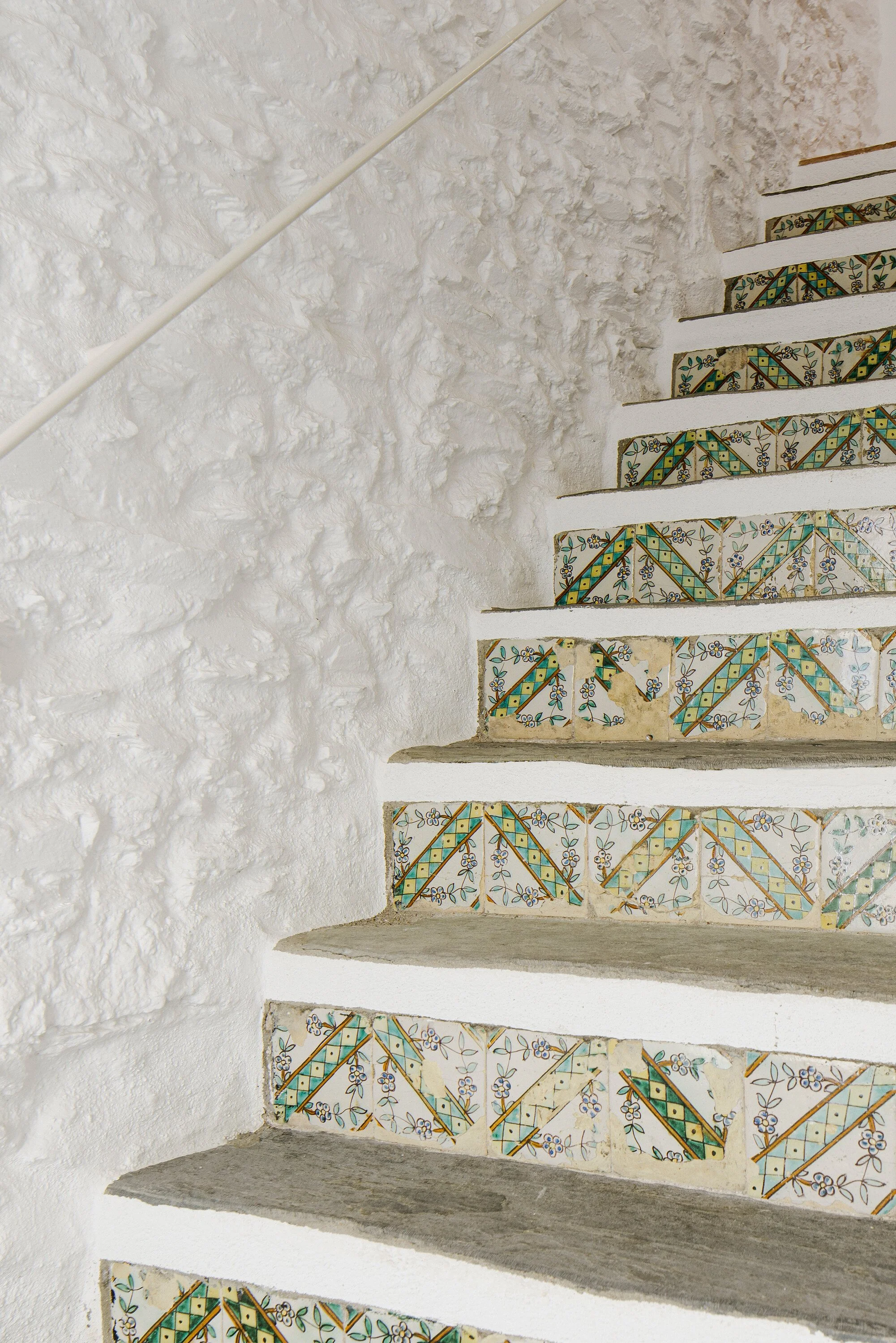
Organized across four compact levels within 82 square metres, the vertical sequence unfolds with deliberate clarity. The ground floor retains its Catalan vaulted ceiling, a ceramic structure that regulates temperature while grounding the space in material authenticity. A small patio introduced during the renovation draws natural light into a room carved from the original rock, allowing cross ventilation and reinforcing passive cooling principles that predate contemporary environmental discourse.
On the first floor, new openings in the thick stone walls create visual continuity between kitchen, dining, and living areas. These insertions are precise and measured. They do not compete with the existing structure but instead amplify it. A generous opening toward the patio establishes a seamless connection between interior and exterior, encouraging airflow and soft Mediterranean light to move freely through the home.
New openings carved into 50-centimetre load-bearing walls connect the kitchen, dining, and living areas, encouraging cross-ventilation and Mediterranean light.
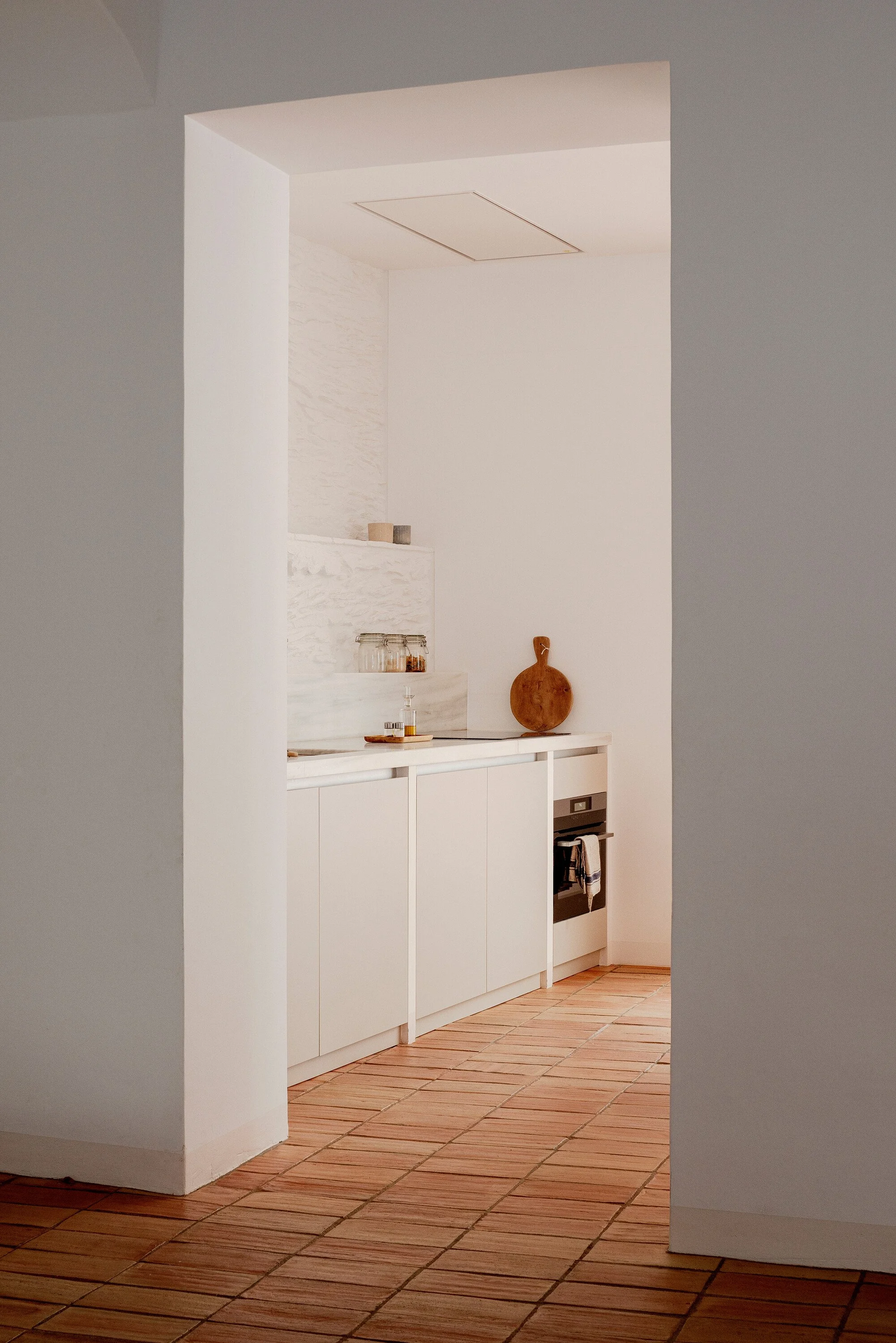
A large opening toward the newly introduced patio strengthens indoor-outdoor continuity and supports passive airflow throughout the home.
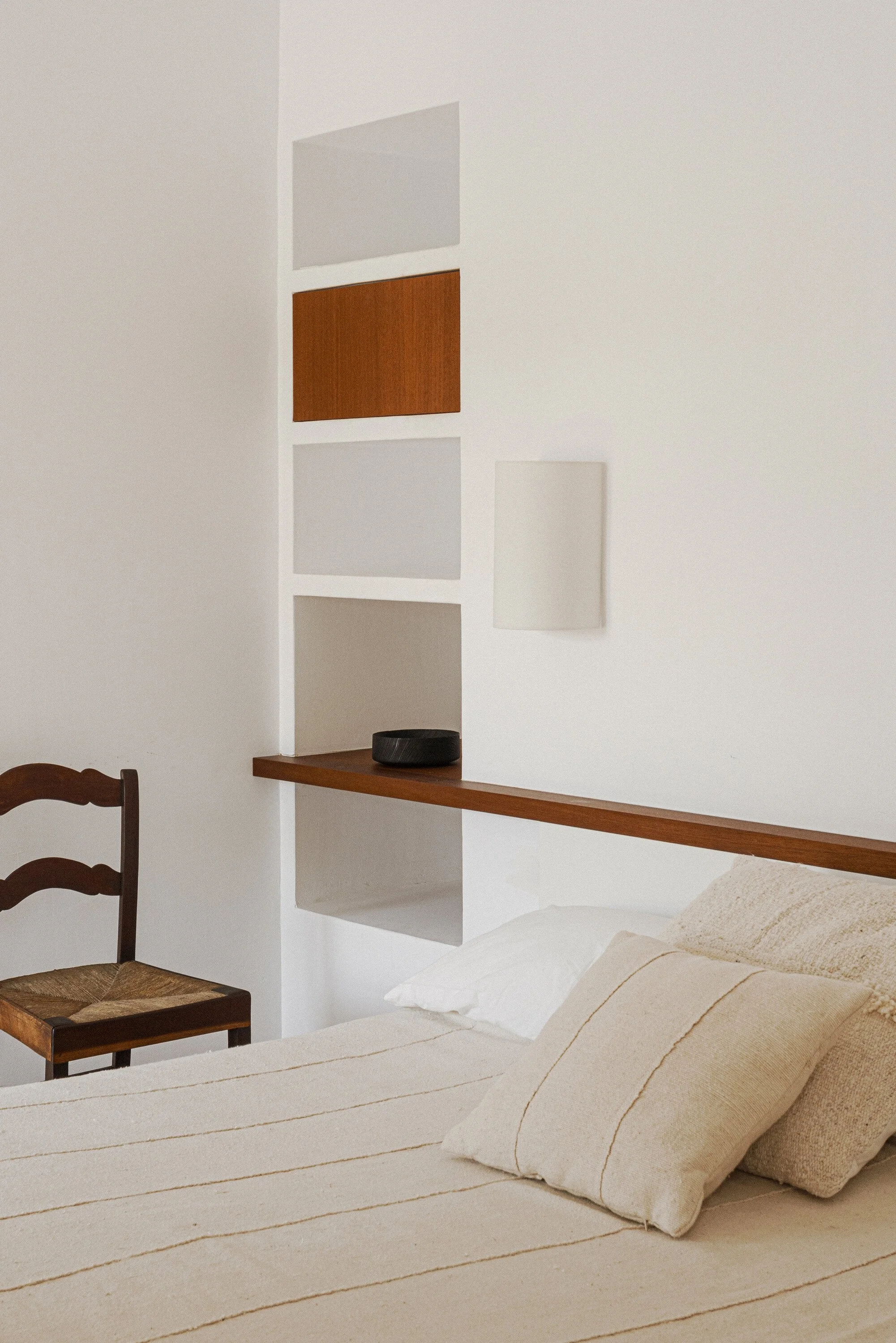
Private spaces on the second floor are restrained and calm. White lime-plastered walls allow the building envelope to regulate humidity naturally, a critical strategy in coastal climates. Terracotta floor tiles retain thermal mass, absorbing heat during the day and releasing it gradually as temperatures drop. Nothing here is decorative excess. Every material choice carries functional intelligence.
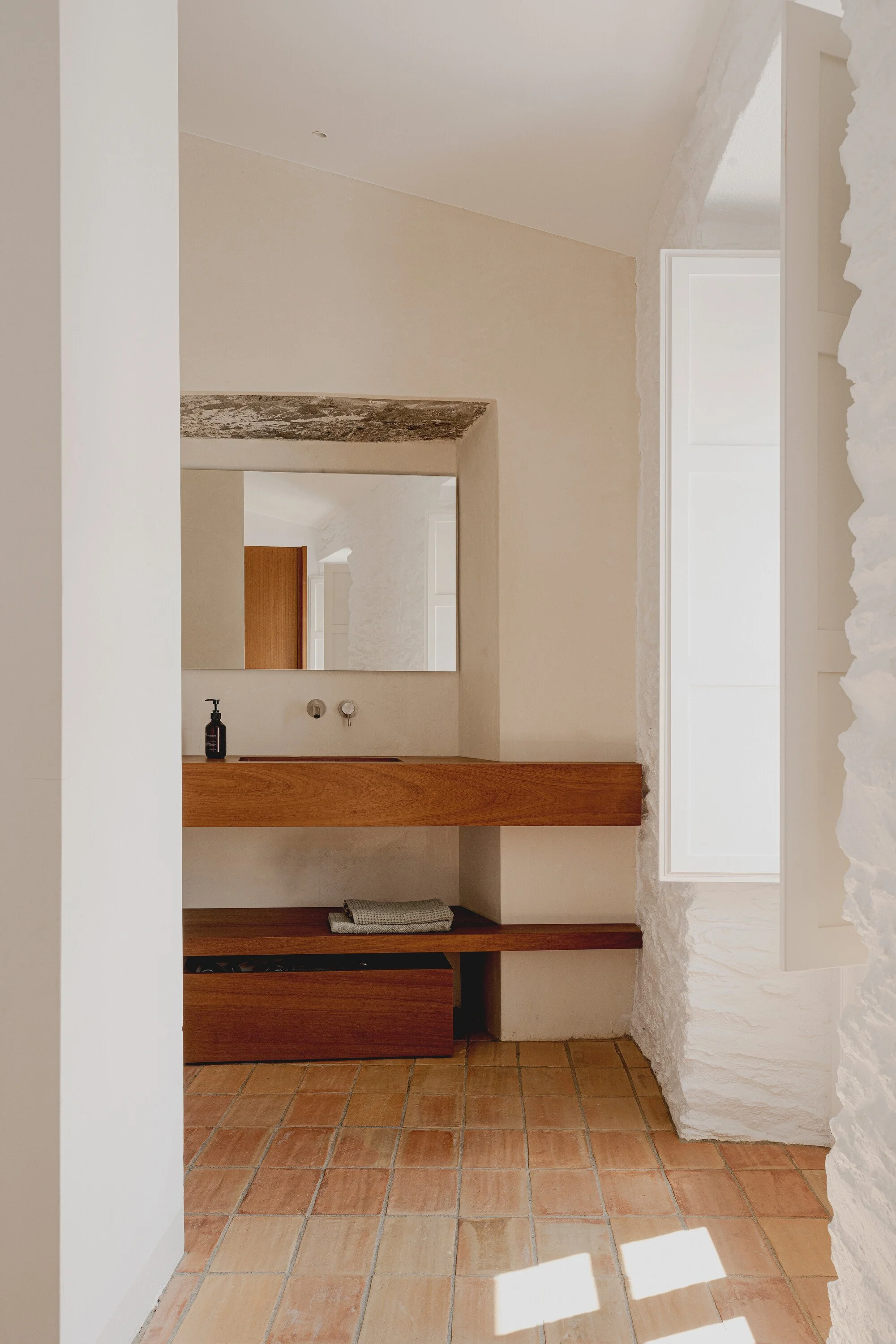
Iroko wood was introduced for custom joinery and built-in furniture, offering warmth against the mineral surfaces while maintaining durability in a humid environment. The palette remains deliberately narrow: stone, lime, ceramic, wood. It feels less like a stylistic decision and more like a continuation of local knowledge.
Exposed timber beams and operable shutters illustrate how vernacular construction mitigates glare, regulates airflow, and reduces summer heat without mechanical intervention. Terracotta flooring provides thermal mass, absorbing heat during the day and releasing it gradually as evening temperatures fall.
At the top, a sunlit terrace opens toward sea views. The Mediterranean becomes both backdrop and climate partner. Thick walls shield the interior from summer heat, while operable shutters manage glare and ventilation. The house performs quietly, without spectacle.
What makes this project compelling is not that it introduces sustainable strategies. It demonstrates that they were already embedded in vernacular architecture. The renovation simply reveals them again.
In Cadaqués, where whitewashed façades and narrow pedestrian streets define the urban rhythm, this fisherman’s house stands as an example of how tradition and modern life can coexist without conflict. Rather than imposing contemporary systems onto an old structure, the architects chose to listen to what the building already knew.
Sometimes the most forward-thinking move is to recognize that the answers were here all along.
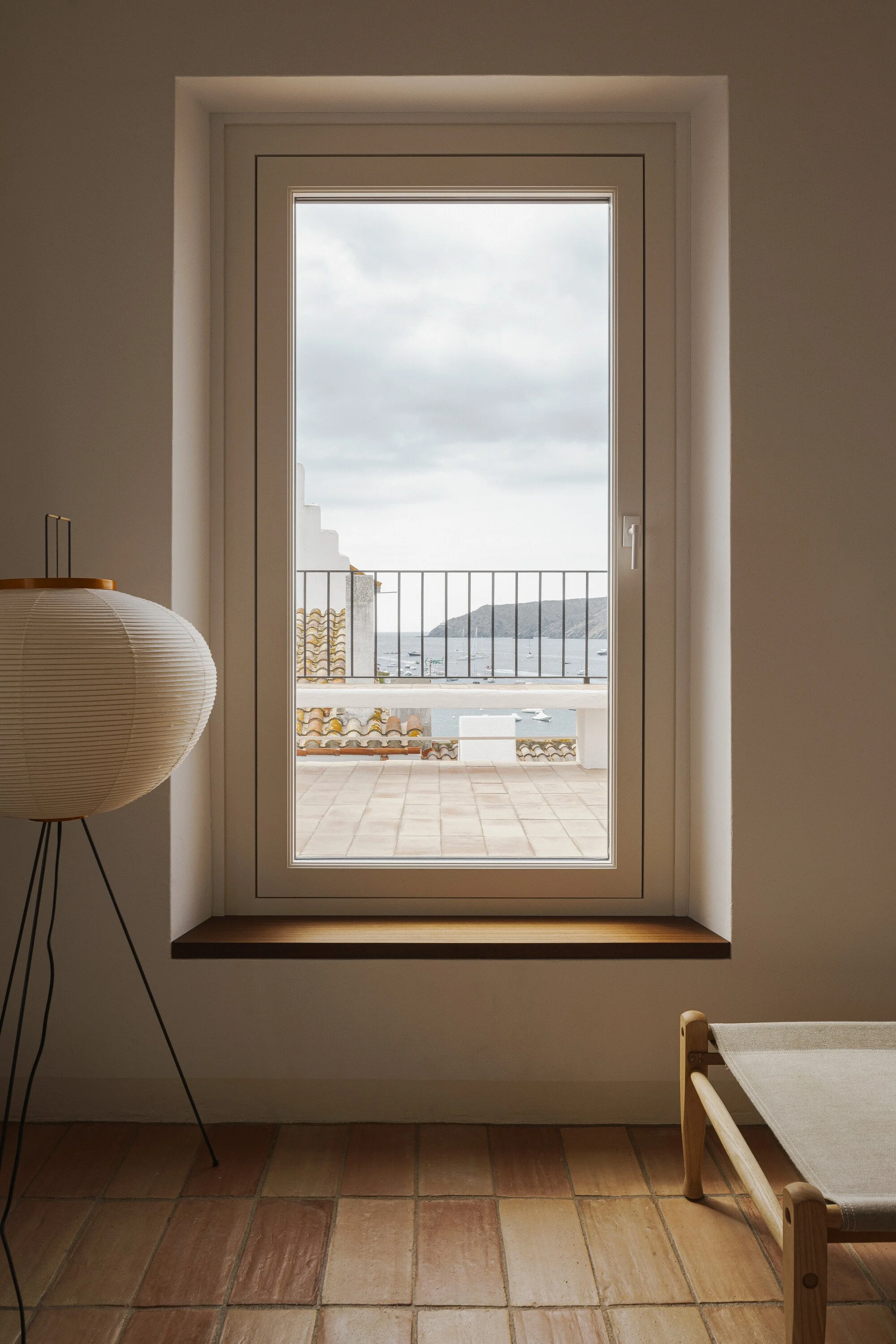
A view of the water from the upper living room.
PROJECT DETAILS
Author: Bea Portabella + Jordi Pagès
Studio address: Bea Portabella, Calle Folgueroles No. 2, Office 12, 08022 Barcelona, Spain
Project location: Cadaqués, Girona
Project country: Spain
Project year: 2022
Completion year: 2024
Built-up area: 82 m²
Gross floor area: 326 m²
Usable floor area: 263 m²
Plot size: 110 m²
Photographer: David Zarzoso, www.davidzarzoso.com, info@davidzarzoso.com
Collaborators and suppliers
Main contractor: Construcciones Llach