SHOU SUGI BAN HOUSE || A Perth Renovation Where a Mature Tree Set the Design Terms
In Perth's leafy western suburbs, the most important design decision on one residential site had nothing to do with materials, orientation, or style, because it had already been made by a tree.
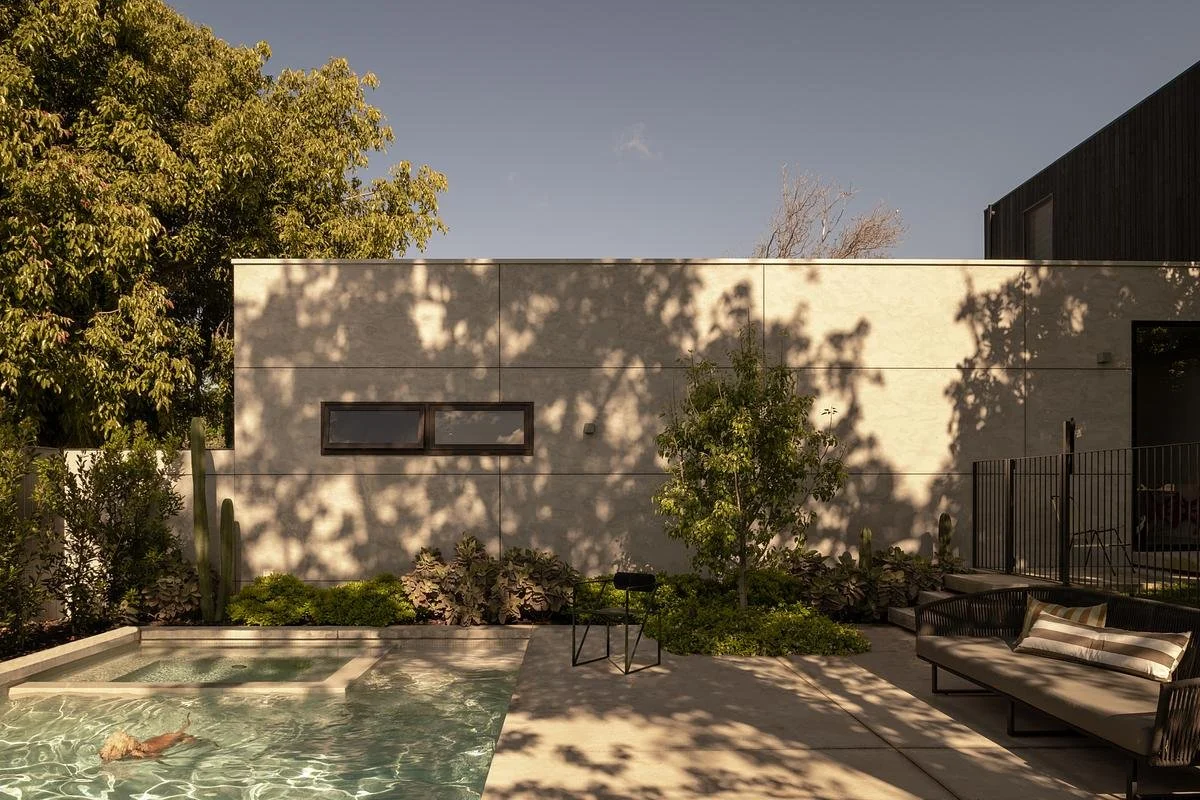
That tree, a large and well-loved specimen standing in the backyard of an established character home, became the fixed point around which architect Sandy Anghie of Sandy Anghie Architect built everything else. The pool was relocated. The addition was positioned to the west of the block. The upper-level bedrooms were placed so that they sit within the tree canopy. The design did not work around the tree so much as it worked with it, accepting the tree's presence as a given and letting that acceptance shape every subsequent move.
A key driver of the design was the retention of a much loved mature tree in the backyard of the original home.
Landscaping is an important element in the design.
The result is a two-storey renovation and addition completed in 2025, clad in shou sugi ban, the ancient Japanese technique of charring timber to create a surface that is at once visually striking and remarkably durable. The charred black cladding reads as a considered contrast to the existing character home, signalling the addition as something new without undermining the quiet, established nature of the neighbourhood. From the street, only a hint of the new build is visible, a deliberate restraint that honours the suburban streetscape while allowing the architecture to announce itself fully within the private realm of the garden.
The courtyard connecting the old and the new with a built-in fireplace.
The shou sugi ban selection was entirely client-driven. The owners, both design-literate and actively engaged throughout the process, researched the material independently and introduced it into the brief. It was their third renovation and addition to a character home, and their confidence in the process showed. Anghie's design philosophy is rooted in collaboration and listening, and in this project, that approach produced something neither party could have arrived at alone.
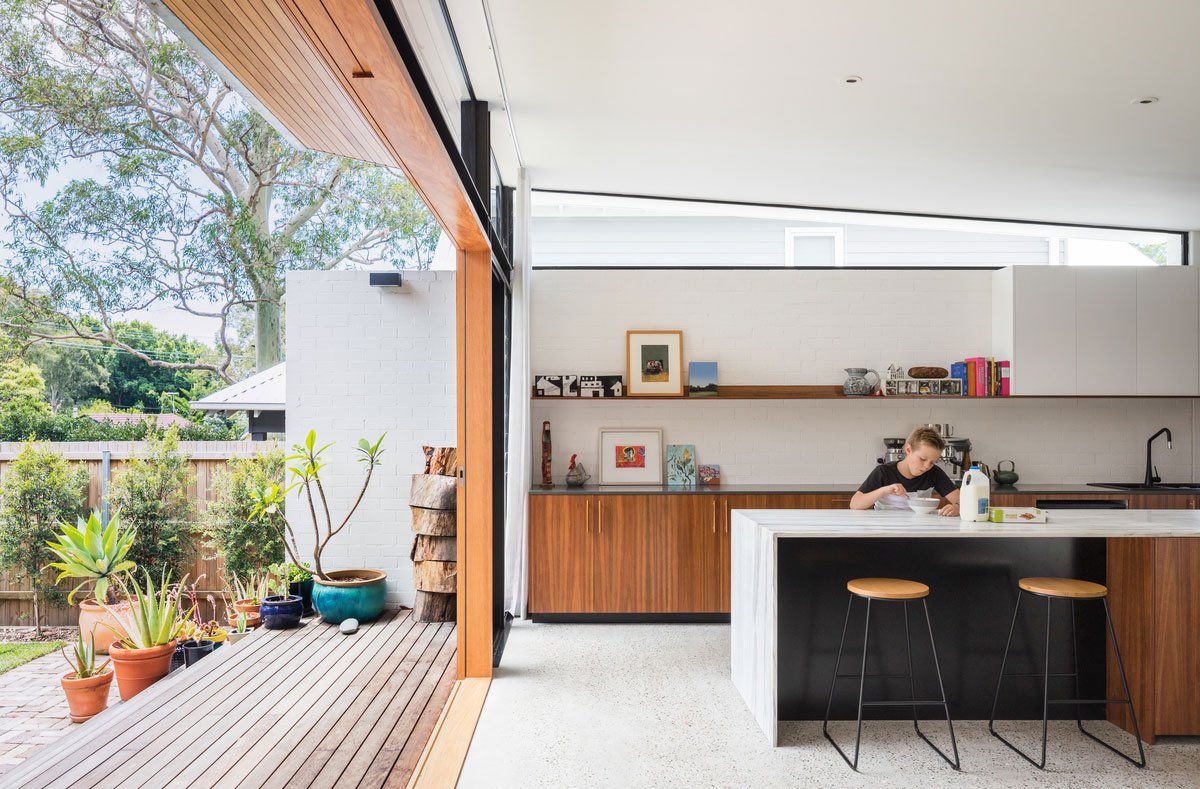
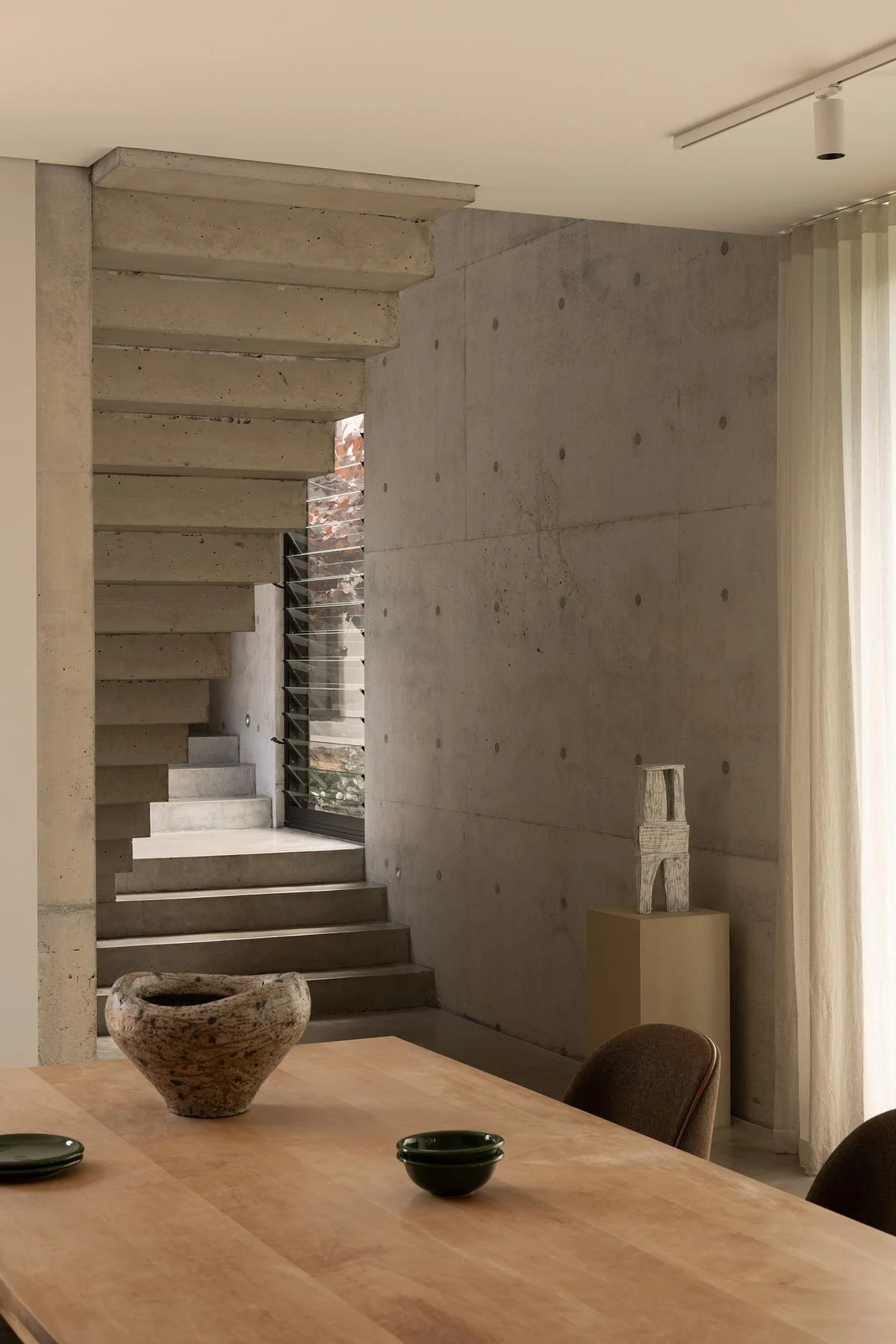
Inside, the material palette continues this conversation between old and new. Polished concrete floors run through the open-plan living and dining spaces, anchored by a curved green-tiled kitchen island and rich timber joinery set against dark stone. A concrete staircase rises through its own dedicated volume, its board-formed walls left exposed. An arched steel-framed opening connects the kitchen to an intimate courtyard, complete with a fireplace set into a painted brick wall, terracotta paving, and a bench seat in warm-toned brick. These spaces read as considered rather than curated, assembled with the same attentiveness that shaped the exterior.
The kitchen and dining area connects to the courtyard, which bridges the old and the new, drawing natural light into the living spaces.
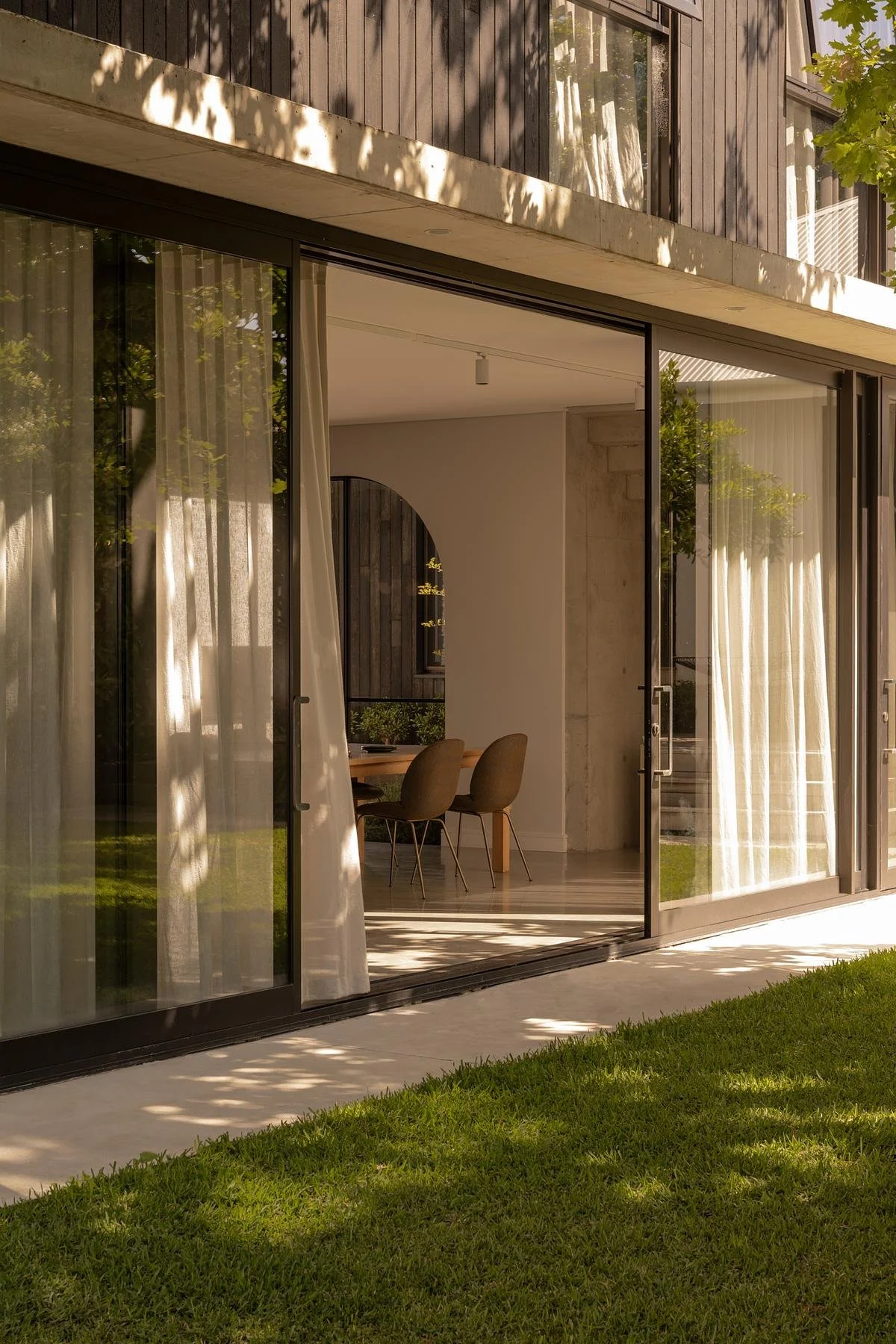
Generous east-facing openings draw morning sun into the downstairs living areas, filtered through the canopy of the retained tree. There are no openings to the west, a passive solar strategy well-suited to Perth's hot summers, where western afternoon sun can quickly make a home uncomfortable. The building responds to its climate as attentively as it responds to its landscape.
Modifications to the original home were kept to a minimum. The most significant intervention was the addition of a window at the entrance, a single opening that now connects the house to the garden from the moment of arrival. It is a small move with an outsized effect: a home that was once completely closed off from its beautiful backyard now offers a view through to it the instant you step inside.
Off-form concrete and charred timber cladding on the addition to the home. The terracotta bricks and outdoor furnishing add another tinge of rustic charm.
There is something worth noting in the way this project concludes. In the photographs, the addition recedes. The tree dominates. The built form is present, purposeful, and quietly confident, but it does not compete for attention. For Anghie, that is precisely the point: a home that fits into its landscape rather than imposing on it, and a design process that places as much value on what is kept as on what is added.
Shou Sugi Ban House is a demonstration of restraint in architecture, one that earns its place rather than announcing itself.
The pool was moved to accommodate the new addition, sheltered under the canopy of the mature tree.
PROJECT DETAILS
Project: Shou Sugi Ban House
Architect: Sandy Anghie Architect
Location: Perth, Western Australia, Australia
Completion: 2025
Building Levels: 2
Key Material: Shou sugi ban (charred timber cladding)
Photographer: Dion Robeson