THE HOUSE SHAPED BY WINTER || Rediscovering the Architectural Wisdom of the Krkonoše Cottage
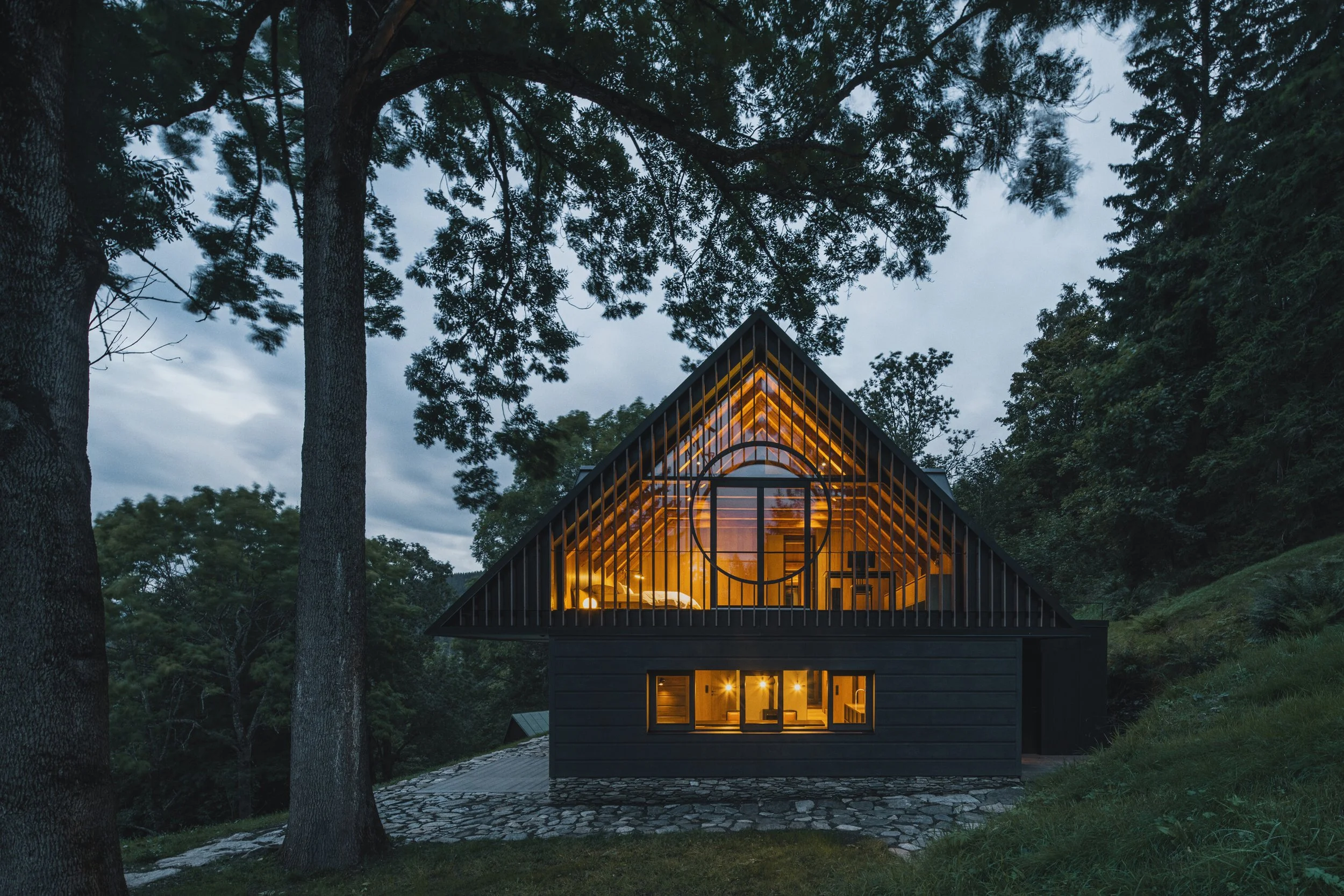
In the high mountains, architecture begins with a single question: how do you live well through winter?
Across the Krkonoše Mountains of the Czech Republic, traditional cottages were shaped by a practical understanding of climate and terrain. Their defining features are instantly recognizable: steep roofs designed to shed heavy snow, deep gables that protect timber façades, stone plinths that anchor buildings against harsh weather, and interiors organized around a compact, sheltered living core. These houses were never ornamental. They were simply the result of generations learning how to inhabit a demanding landscape.
On a hillside above the village of Strážné, a cottage once stood that embodied these traditions. Over time, however, decades of unsympathetic renovations and extensions had gradually erased its character. Layers of artificial cladding and improvised alterations buried the original structure beneath a patchwork of repairs. By the time the current owners approached Mimosa Architects, very little of the authentic building remained intact or structurally viable.
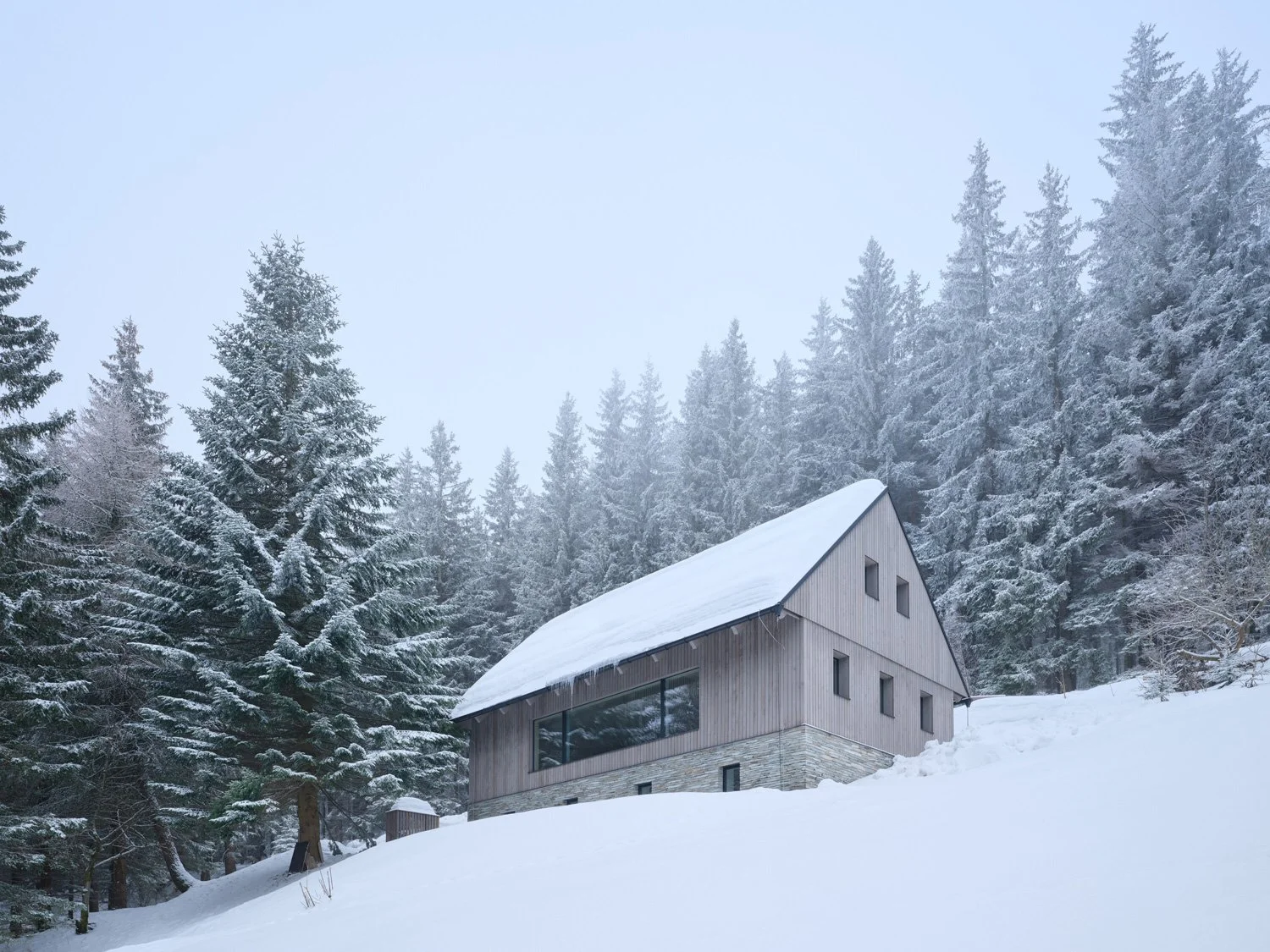
The steep roof and timber gables of Strážné Cottage reinterpret the architectural language of traditional Krkonoše mountain houses.
Rather than reconstructing a replica of the lost cottage, the architects chose a different path. Their goal was to rediscover the architectural logic that once defined mountain houses in the region and reinterpret it for contemporary living. The project, therefore, became less about preservation of materials and more about recovering the spirit of the original dwelling.
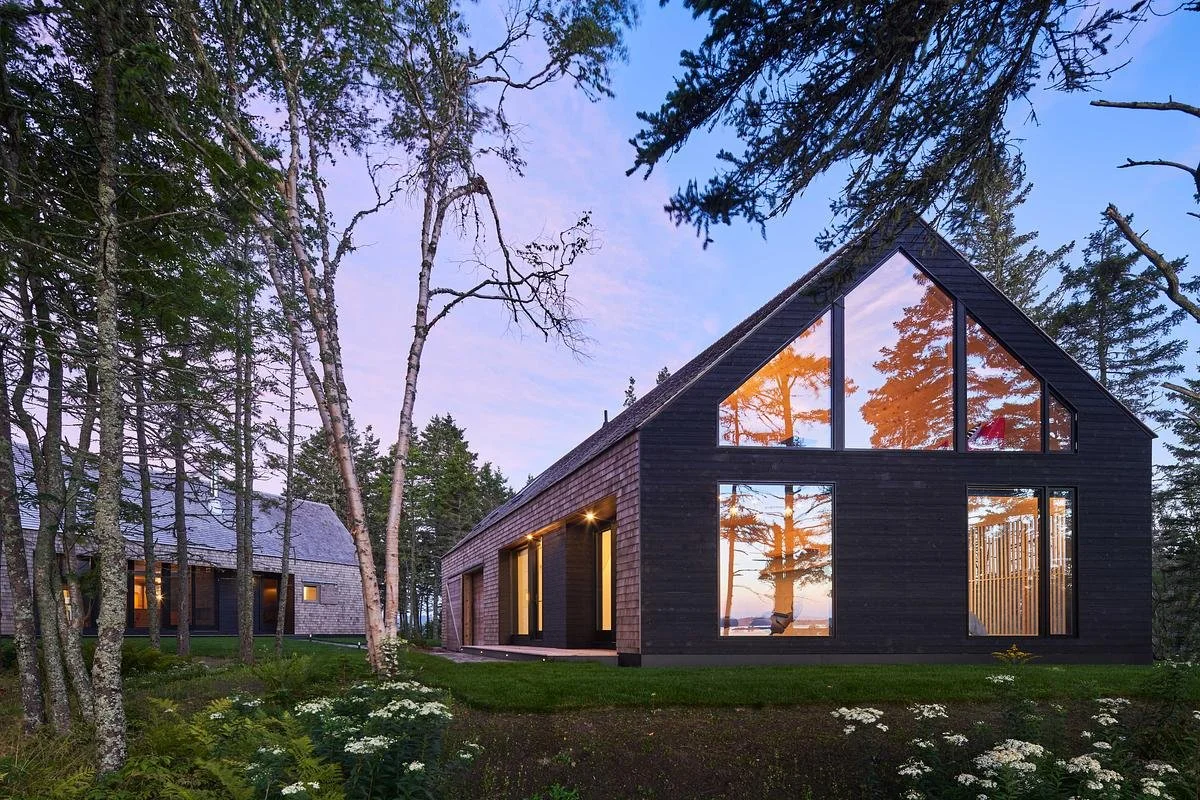
The resulting Strážné Cottage draws directly from the typology of historic Krkonoše homes. A steeply pitched roof dominates the silhouette, echoing the traditional forms that allowed houses to withstand long alpine winters. Beneath this roof, the building sits on a stone base, while timber cladding and vertical gable boards reinforce its connection to local building traditions. The proportions feel familiar within the landscape, yet the execution is unmistakably contemporary.
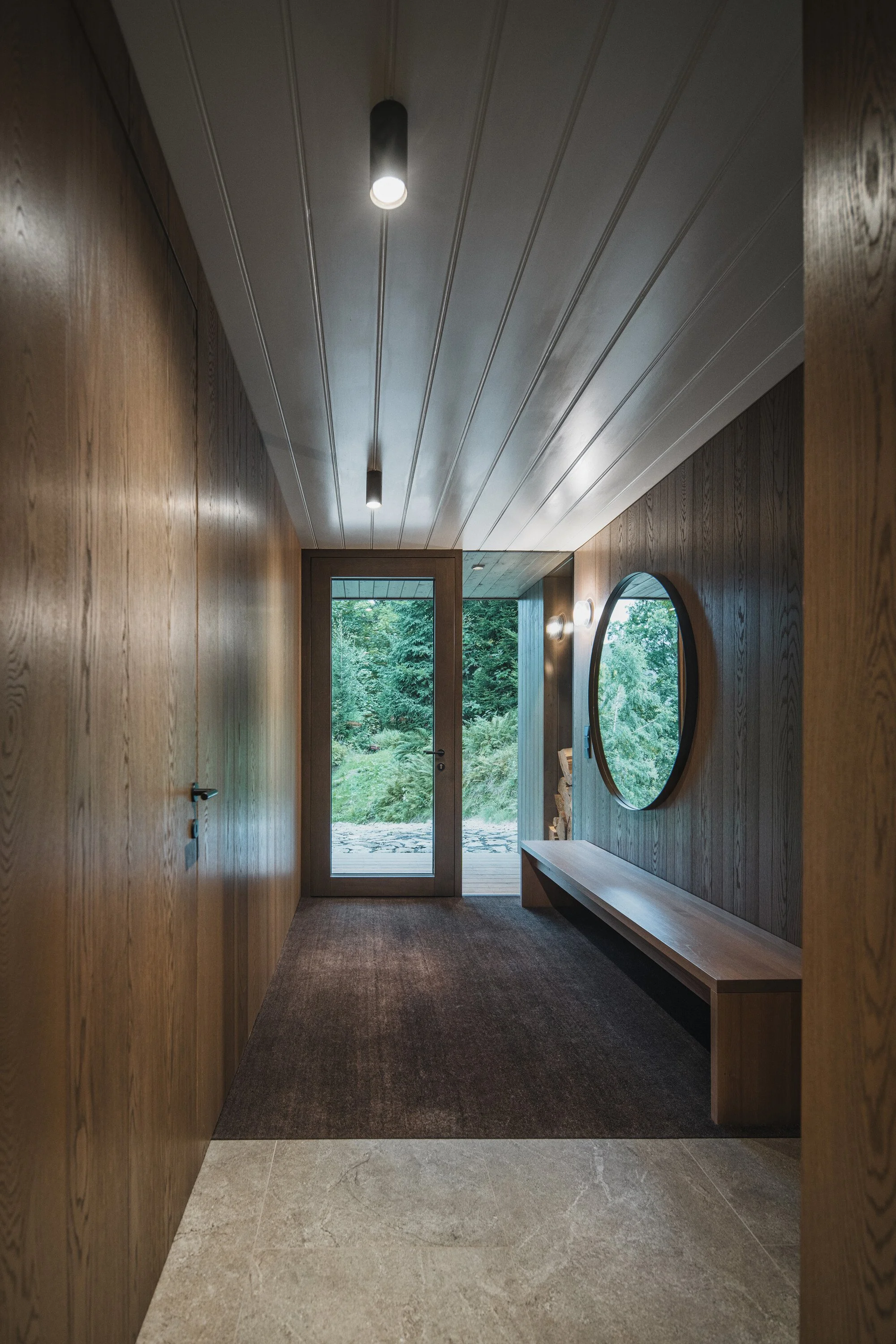
Warm timber interiors and restrained materials create a sheltered atmosphere at the heart of the mountain home.
Inside, the design continues this careful balance between tradition and modernity. The main living room forms the heart of the ground floor, conceived as an intimate, protective space that evokes the atmosphere of historic mountain cottages. One of the few preserved elements from the original structure, an exposed-beam ceiling, helped determine the interior's proportions and guided the scale of the surrounding rooms. The result is a living area that feels grounded, warm, and quietly connected to the building’s past.
The spacious room is flooded with natural light pouring in from the large-format windows. A comfortable sofa lines the length of the room, allowing residents to comfortably take in the expansive view.
At the same time, the house opens itself to the surrounding landscape. Large panes of frameless glazing preserve the rhythm of the timber structure while allowing expansive views toward the Krkonoše ridges. Built-in seating beneath the windows encourages moments of pause, whether watching snowfall in winter or the shifting light across the mountains during warmer months.
The plan also responds thoughtfully to the realities of mountain living. Within the original cottage volume, the architects introduced guest accommodations, circulation spaces, and a staircase. Adjacent to this core, a series of practical rooms was inserted between the slope and the main structure. These include storage for skiing and cycling equipment, a workshop, pantry, laundry facilities, and even a wash area designed for both dogs and bicycles after long outdoor excursions.
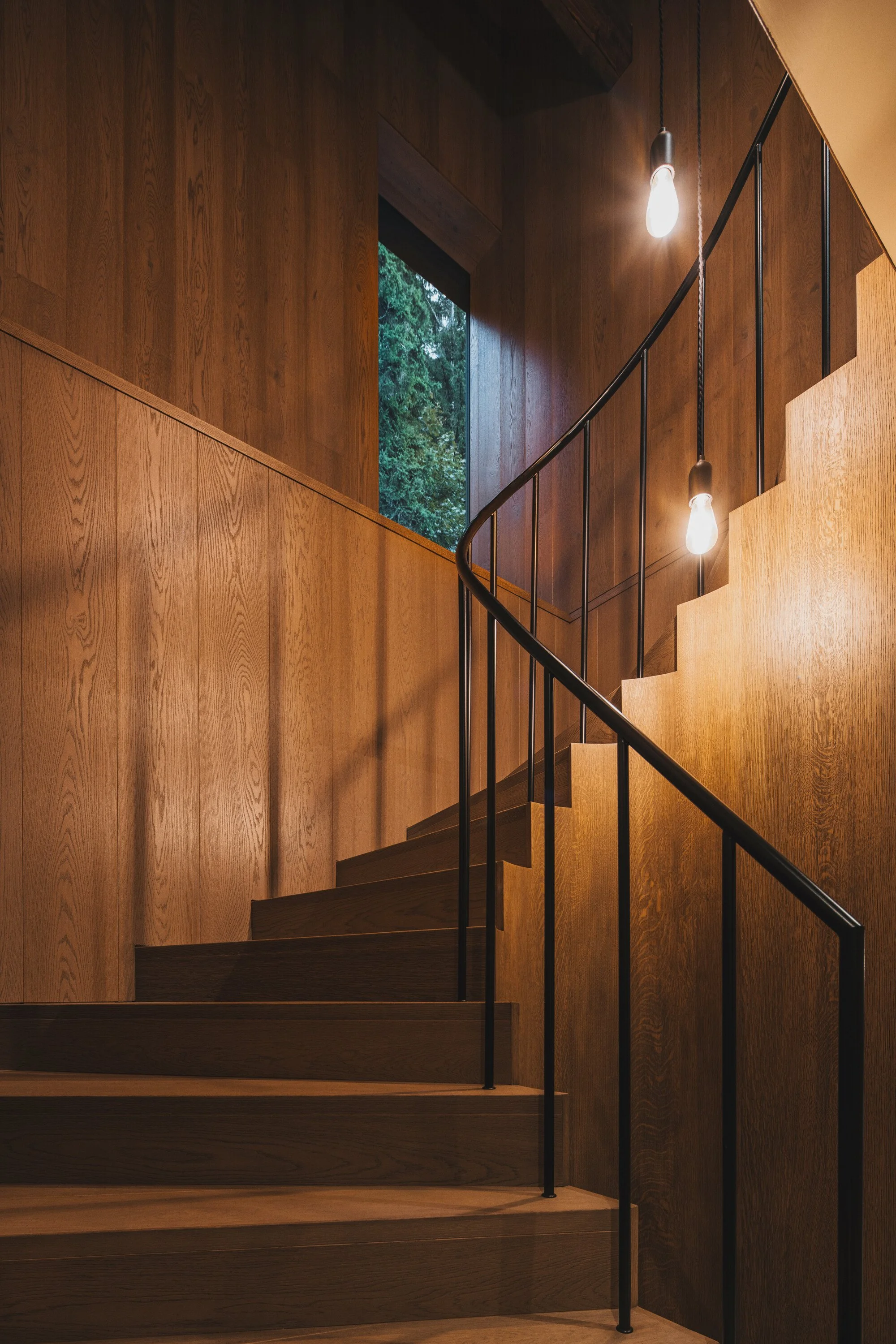
The open loft level sits beneath the steep roof, with large glazing framing views toward the Krkonoše mountain ridges.
Upstairs, the attic level reflects the character of traditional loft spaces found in historic cottages. The rooms remain open and airy beneath the pitched roof while still providing privacy for family members and guests. Bedrooms located in the gables frame sweeping views of the surrounding mountain landscape.
Although remote in feeling, the house is equipped with carefully considered technical systems suited to its location. Heating and domestic hot water are provided by a ground-source heat pump connected to a geothermal borehole. Water is drawn from a nearby spring, while wastewater is treated through an on-site system designed for minimal environmental impact. The intention was not technological spectacle, but rather a quiet, efficient operation that allows the house to function comfortably within its natural setting.
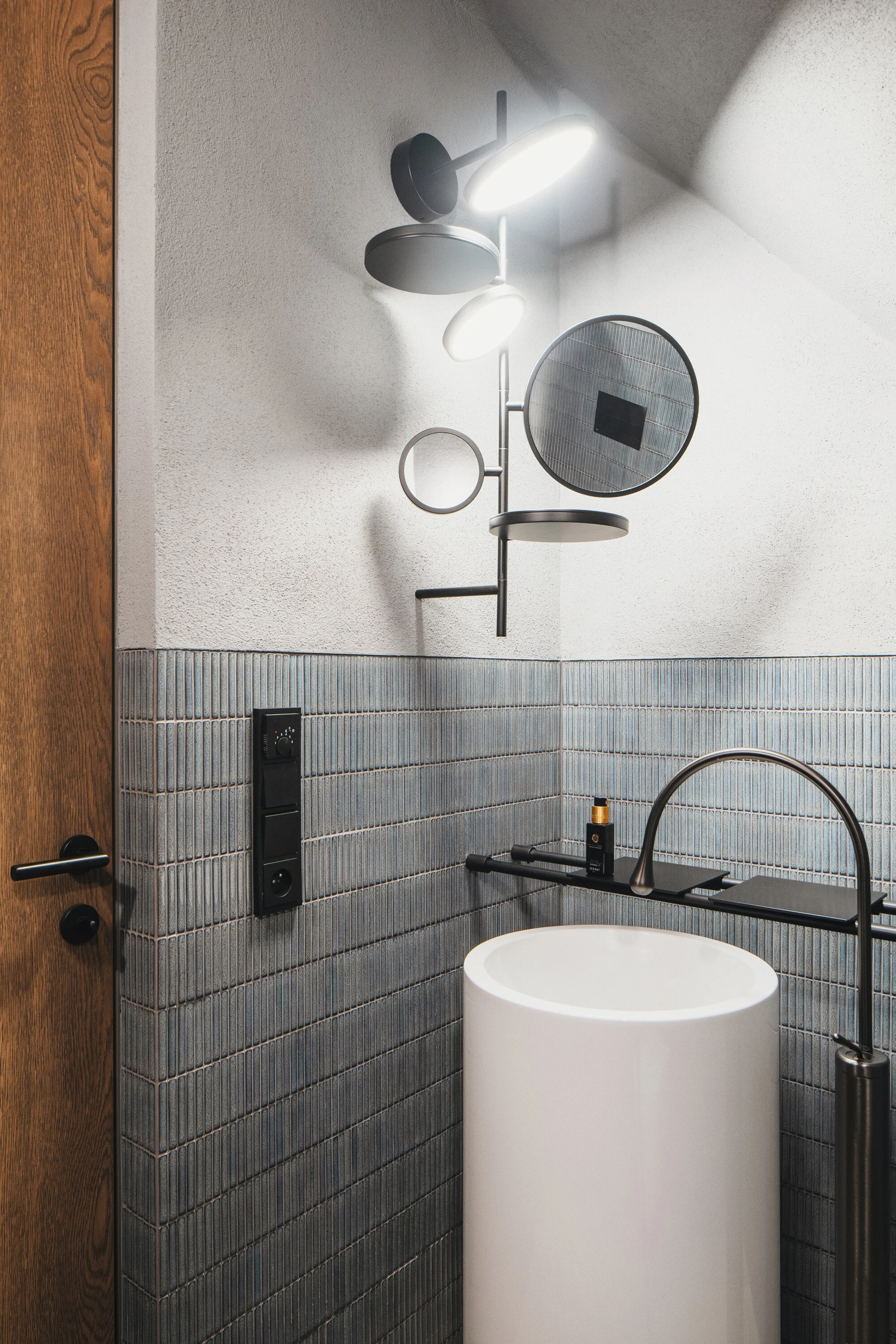
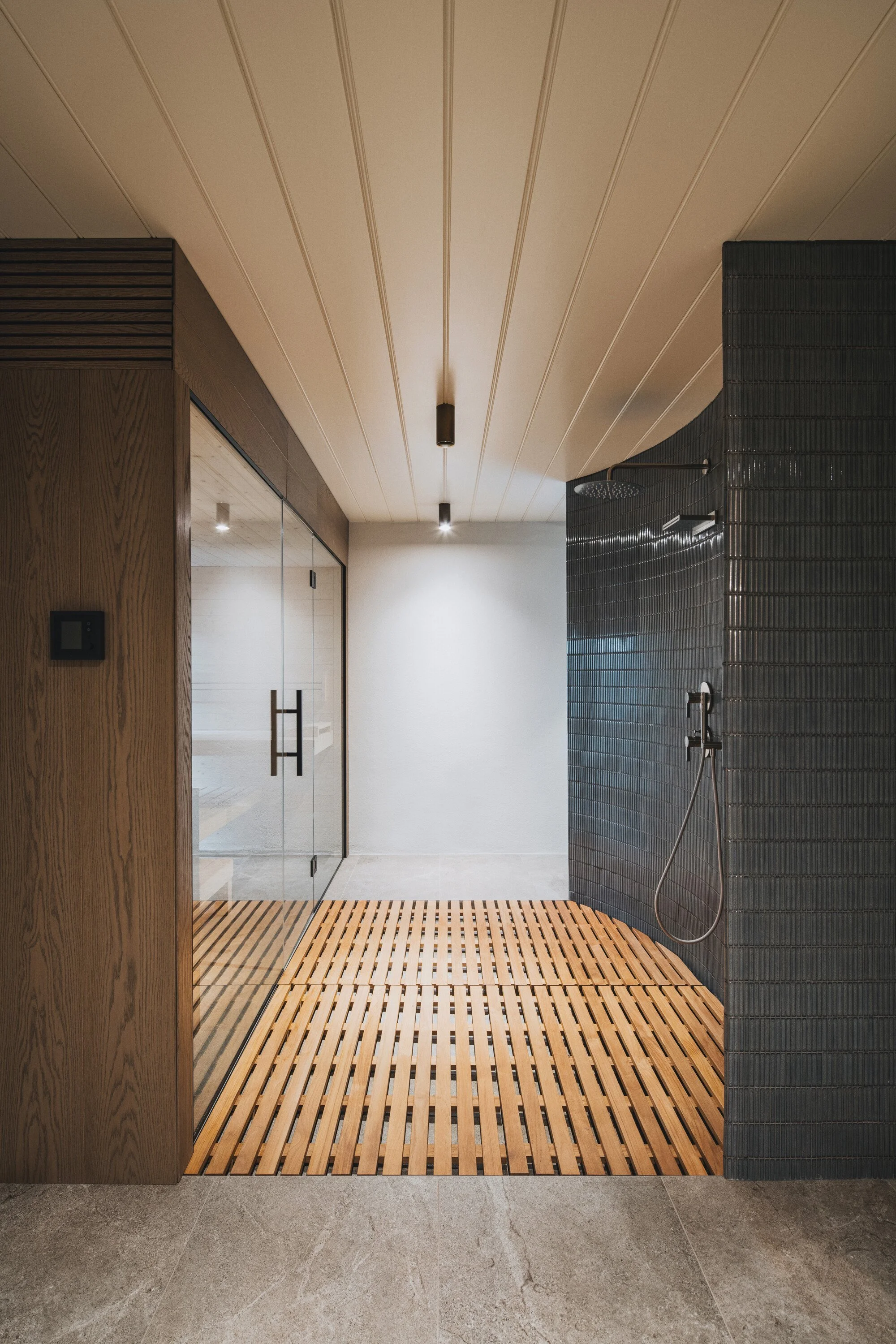
Light ceramic surfaces contrast with timber ceilings, balancing alpine warmth with modern simplicity. Below right: A spa and sauna were integrated into the ground floor, transforming previously added utility spaces into a place of relaxation.
Strážné Cottage demonstrates how contemporary architecture can honour regional traditions without resorting to nostalgia. By studying the logic of historic mountain dwellings and translating those principles into modern design, the project restores a sense of continuity between landscape, climate, and home. In the Krkonoše Mountains, where winter still shapes daily life, that wisdom remains as relevant as ever.
The bathroom on the first floor exist onto a terrace with a walkway into the surrounding greenery. Nature is as close as can be.
PROJECT DETAILS
Studio: Mimosa Architects
Author: Jana Zoubková, Petr Moráček, Pavel Matyska, Eliška Vinklárková
Project location: Strážné
Project country: Czech Republic
Project year: 2022
Completion year: 2025
Built-up area: 234 m²
Usable floor area: 306 m²
Photographer: Petr Polák
Collaborators and suppliers
Wood flooring, material for wooden wall cladding: Oakcent
Cladding and tiles: Archtiles
Joinery: Brick
Interior wall cladding and doors: AM Interior
Metalwork: Kurel
Light supplier: Bulb