Cacto Pizza || How a Wood-Fired Oven Informed the Architecture of a Buenos Aires Pizzeria
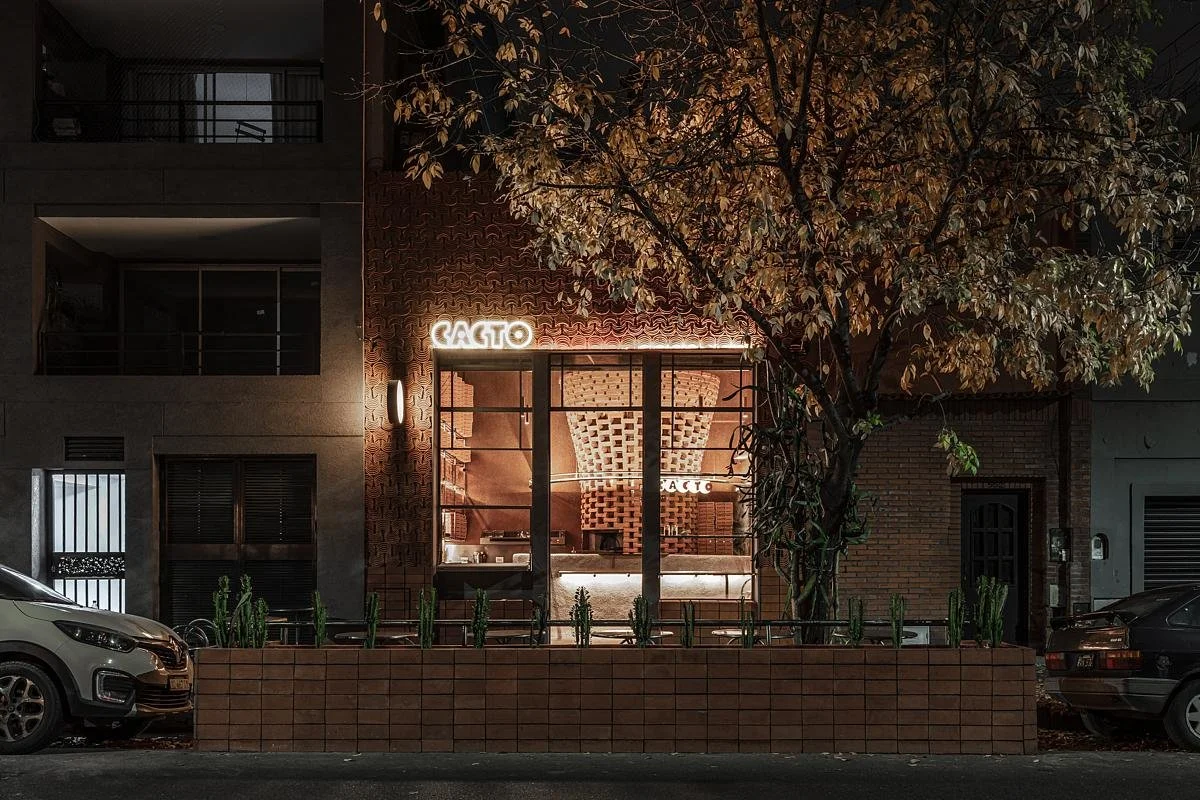
Although it only comes in at 30 square metres, Cacto Pizza's towering floor-to-ceiling wood-fired oven turns heads on the streets of Buenos Aires.
Designed by Grizzo Studio and Rocio Martinez Serra, this compact neighbourhood pizzeria in Buenos Aires treats its oven not as kitchen equipment but as the spatial anchor around which every material, surface, and detail is organized.
The oven itself is the project's most ambitious construction. Built from brick and engineered to expand in diameter as it rises in height, it dominates the room with the quiet authority of something that has always been there. Gaps in the brick's open weave allow light to filter through, simulating the glow of the fire burning inside, so that even when you're standing at the bar, the oven performs. From the street, its silhouette is visible through the steel-framed, glazed facade, making it as much a piece of signage as a cooking vessel.
Above: The cut colonial tile facade and neon signage announce Cacto's presence on the Buenos Aires streetscape long before you reach the door. Below: Six cut sections of colonial tile were assembled into modules that give the facade its distinctive rippling surface and handcrafted depth.
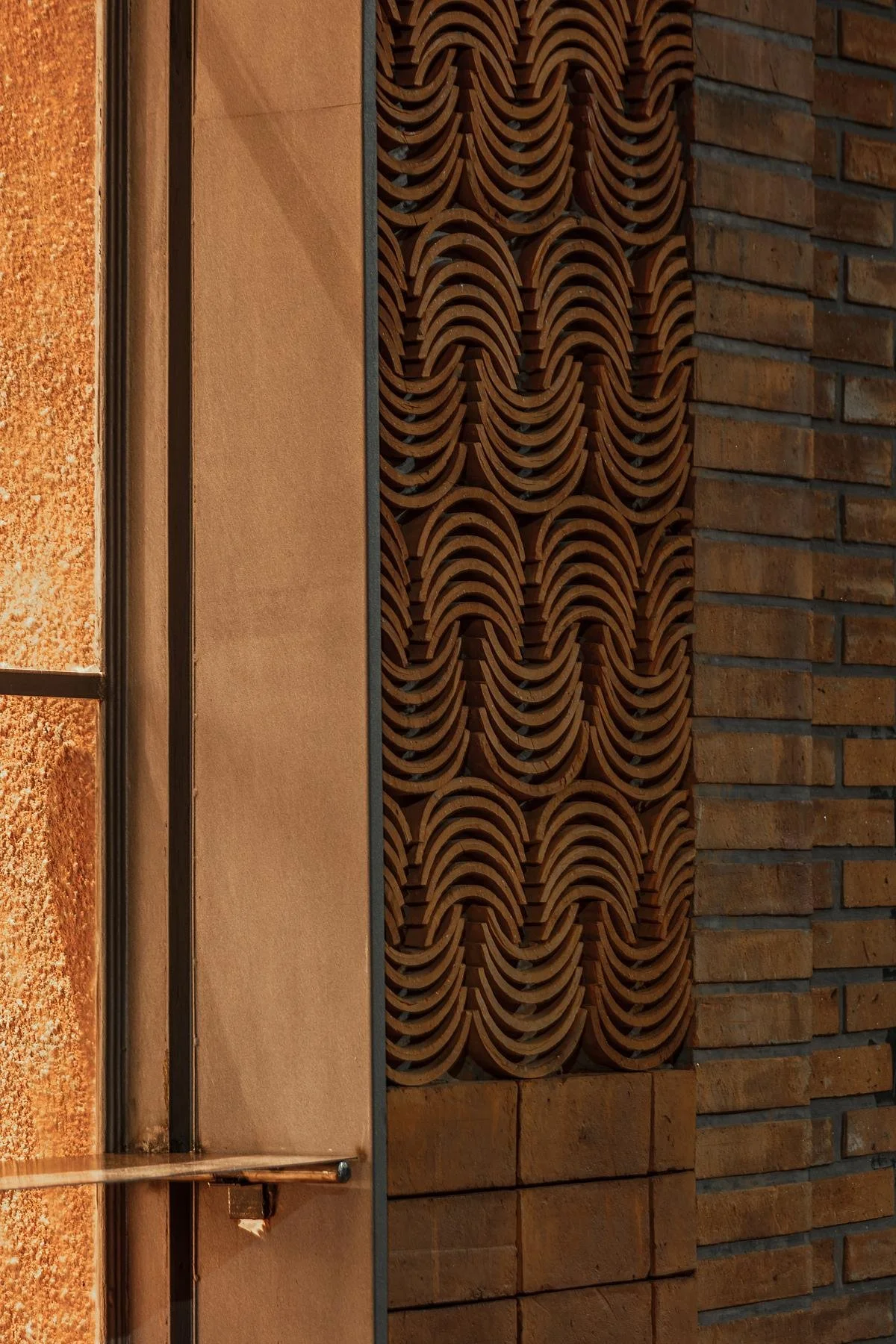
The facade itself deserves its own attention. Colonial tiles were cut into six distinct sectional pieces, then assembled into placement modules that create a rippling, tactile surface across the building's exterior. Brick tiles were extended to the sidewalk, connecting horizontal and vertical planes in a single continuous material gesture. The result is a streetscape presence that reads as considered rather than decorated.
Inside, the restored vaulted ceiling, original to the premises, anchors the space in its history. Rather than contrasting against it, the design leans in: raw, textured spatter coating covers the walls and curved modules in two tones, and a hydrowashed cement- and stone-based material, manufactured on-site, creates a seamless curve between the bar front and the floor.
Above: The restored vaulted ceiling and the latticed brick oven column together hold the room's sense of history, while the curved bar foreground pulls it firmly into the present. Below: The hydrowashed cement bar base curves cleanly into the floor, its textured surface set against the polished steel rail above.
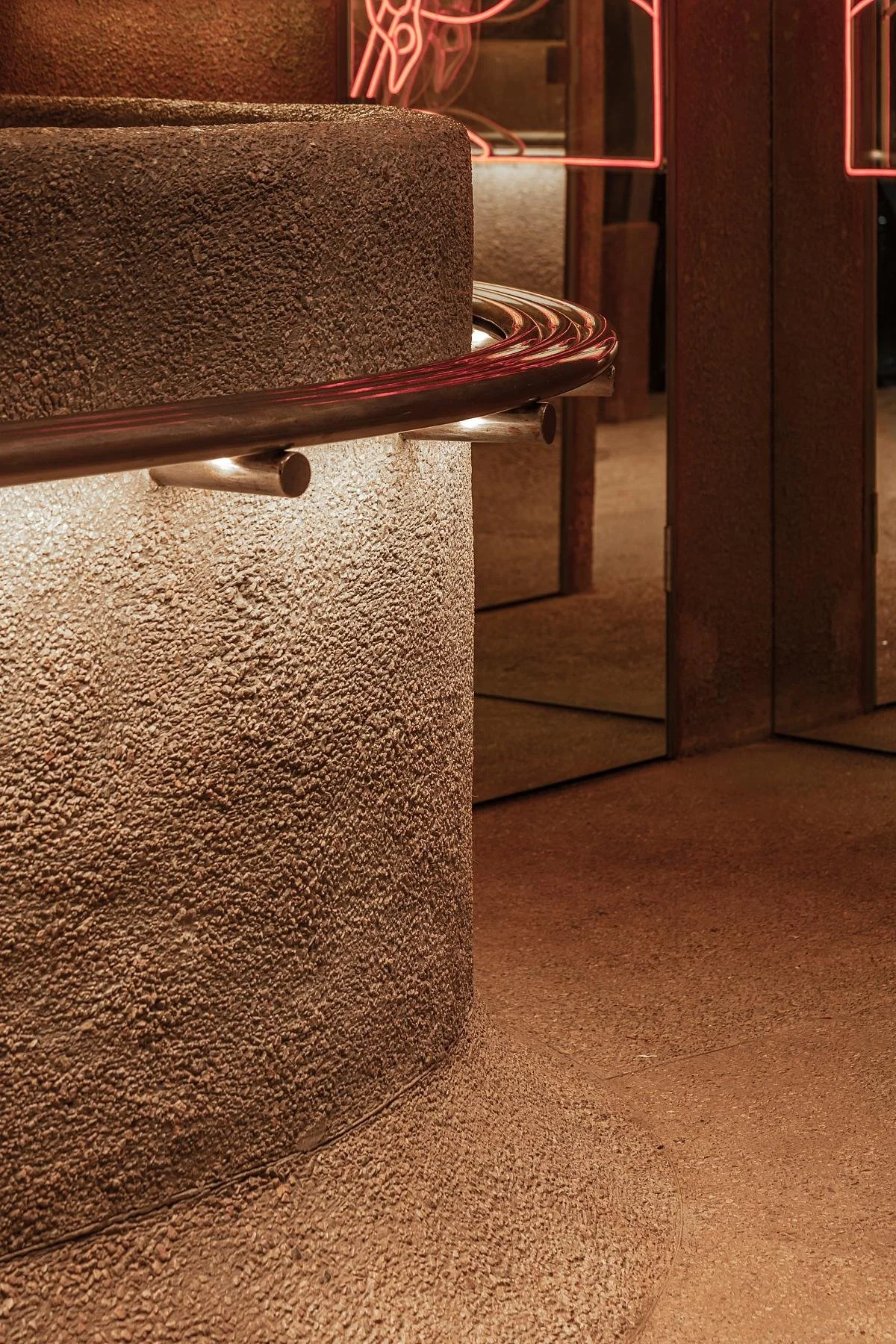
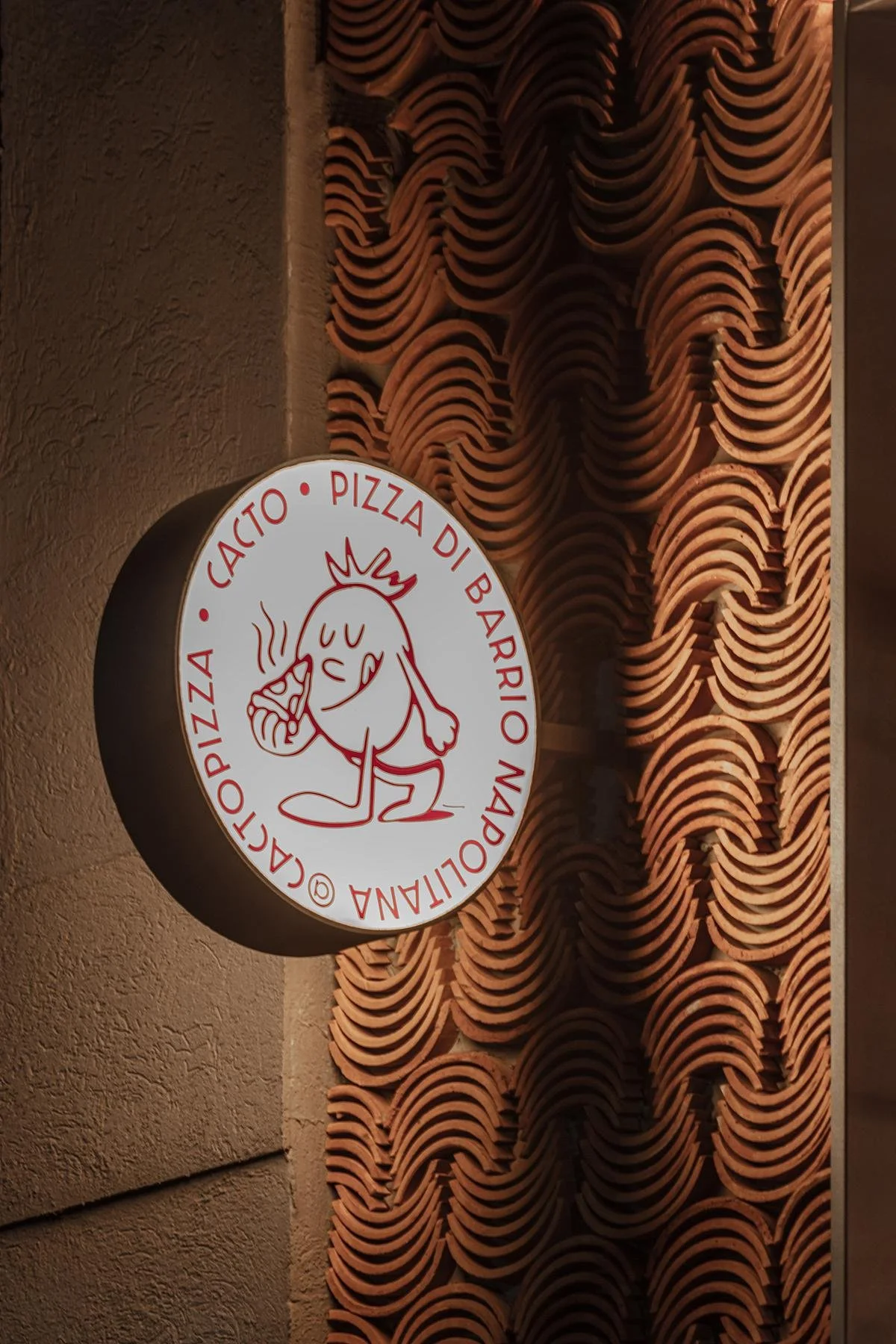
The neon mascot graphic, reflected in the mirror beyond, keeps the brand present even in the room's quietest corner.
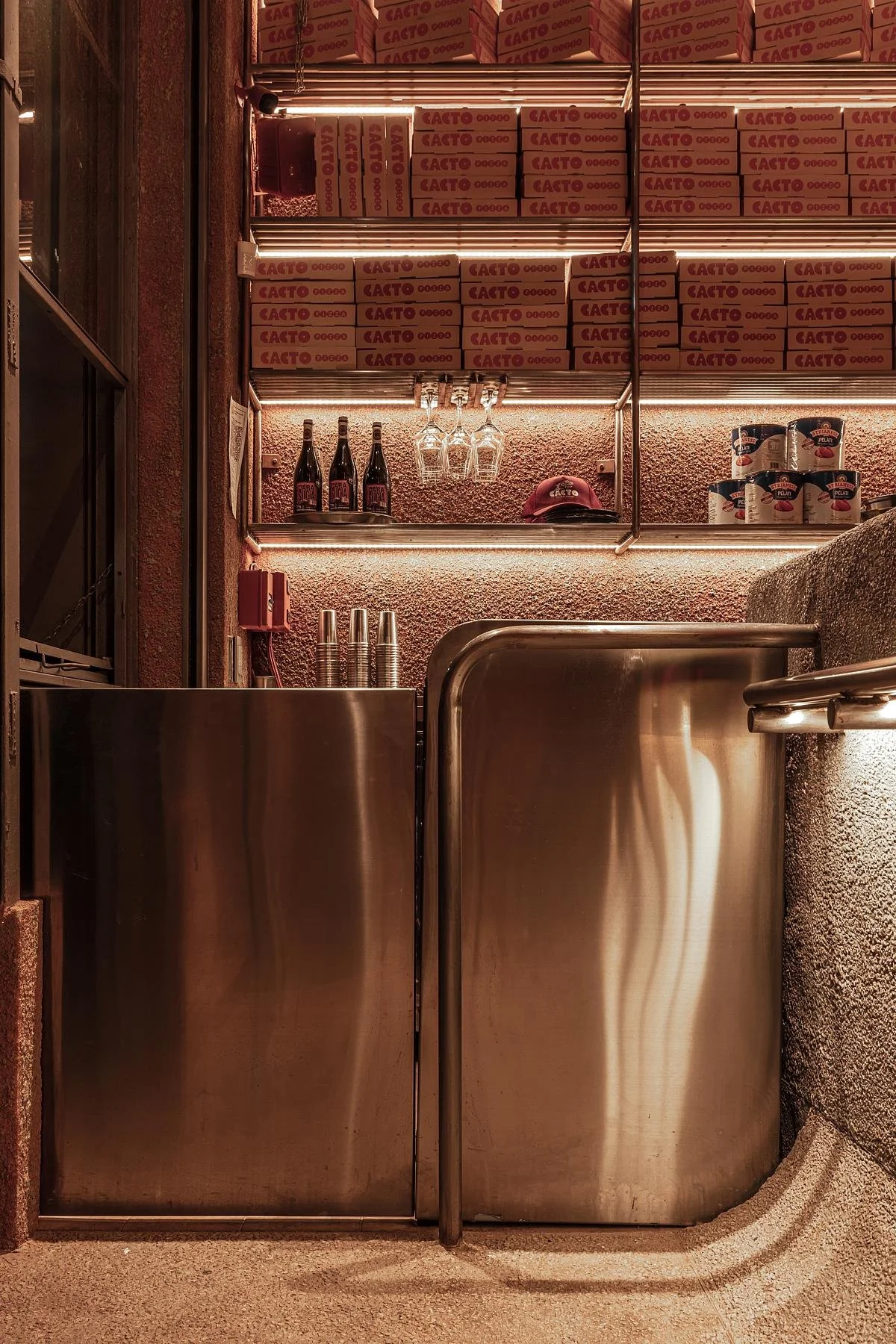
Where rustic material ends, the furniture begins. Polished raw sheet metal, treated with polyurethane lacquer for waterproofing, is used for the bar surfaces and shelving. The contrast is deliberate: shiny against rough, industrial against ancient, and it keeps the interior from tipping into pastiche. Two storage and bathroom modules are joined by a curved ribbon form, maintaining a sense of flow in a space where every square metre counts.
Outside, a brick-tiled planter box runs the length of the sidewalk frontage, softened by a row of cacti. It marks the boundary between restaurant and street with the same material logic that governs everything else here: nothing is introduced that doesn't belong to the same family.
The hand-lettered menu board and retro mascot graphics bring the Turkey Studio branding into the room.
The branding, developed in collaboration with Turkey Studio, carries the same sensibility into two dimensions. Retro Argentine advertising graphics, a hand-drawn mascot character, and a neon sign that glows crimson against the tile facade give Cacto its personality; it’s relaxed, a little cheeky, and entirely at home in the neighbourhood it serves.
In a city where pizza is practically civic infrastructure, Cacto earns its place not by reinventing the form, but by taking it seriously enough to build an entire room around it.
PROJECT DETAILS
Restaurant: Cacto Pizza
Location: Buenos Aires, Argentina
Project Size: 30 m²
Completion Date: 2023
Design: Grizzo Studio, Rocio Martinez Serra
Branding: Turkey Studio
Photography: Federico Kulekdjian