HOUSE OF PANES || An Edwardian Terrace Recast Through Glass, Concrete, and London Memory
What does it mean to modernize a period home in a conservation area without dulling its soul?
In Muswell Hill, Matthew Giles Architects answer that question not with mimicry, but with clarity. House of Panes reimagines an Edwardian terrace through a confident, light-filled extension shaped by the architectural language of nearby Alexandra Palace. Rather than dilute the home’s historic character, the intervention sharpens it, placing heritage and modernity in deliberate conversation.
The concrete and Crittall-style glazed extension establishes a contemporary exoskeleton that balances industrial precision with domestic scale.
The retained tiered layout encourages organic movement through the home, celebrating rather than flattening its Edwardian complexity.
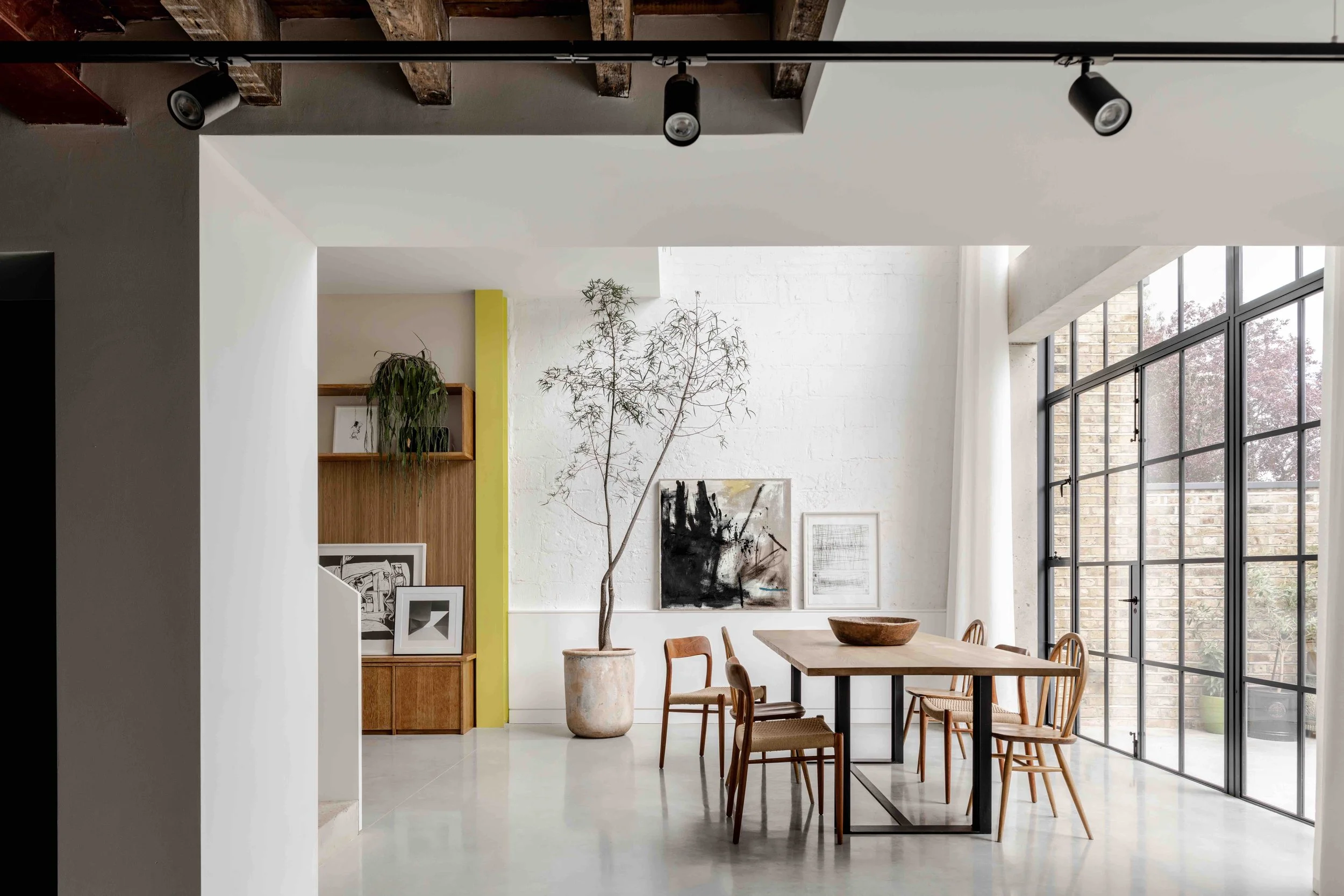
The rear elevation announces this dialogue immediately. A double-height concrete frame paired with slender steel glazing establishes a contemporary exoskeleton that references the Palace’s structural rhythm while remaining unmistakably domestic. The grid of Crittall-style glazing brings precision and lightness; textured concrete grounds the composition with weight and permanence. Together, they balance industrial character with an intimate, lived-in atmosphere.
Inside, the original split-level configuration is not erased but reinterpreted. Instead of imposing uniformity, the architects embrace the terrace's inherent complexity, shaping a sequence of tiered spaces that flow organically toward the garden and its defining willow tree. Each shift in level becomes a moment of transition, encouraging fluid circulation while preserving the layered narrative of the home’s past.
The double-height dining area is framed by slender steel glazing and textured concrete, drawing daylight deep into the Edwardian terrace while referencing Alexandra Palace’s structural rhythm.
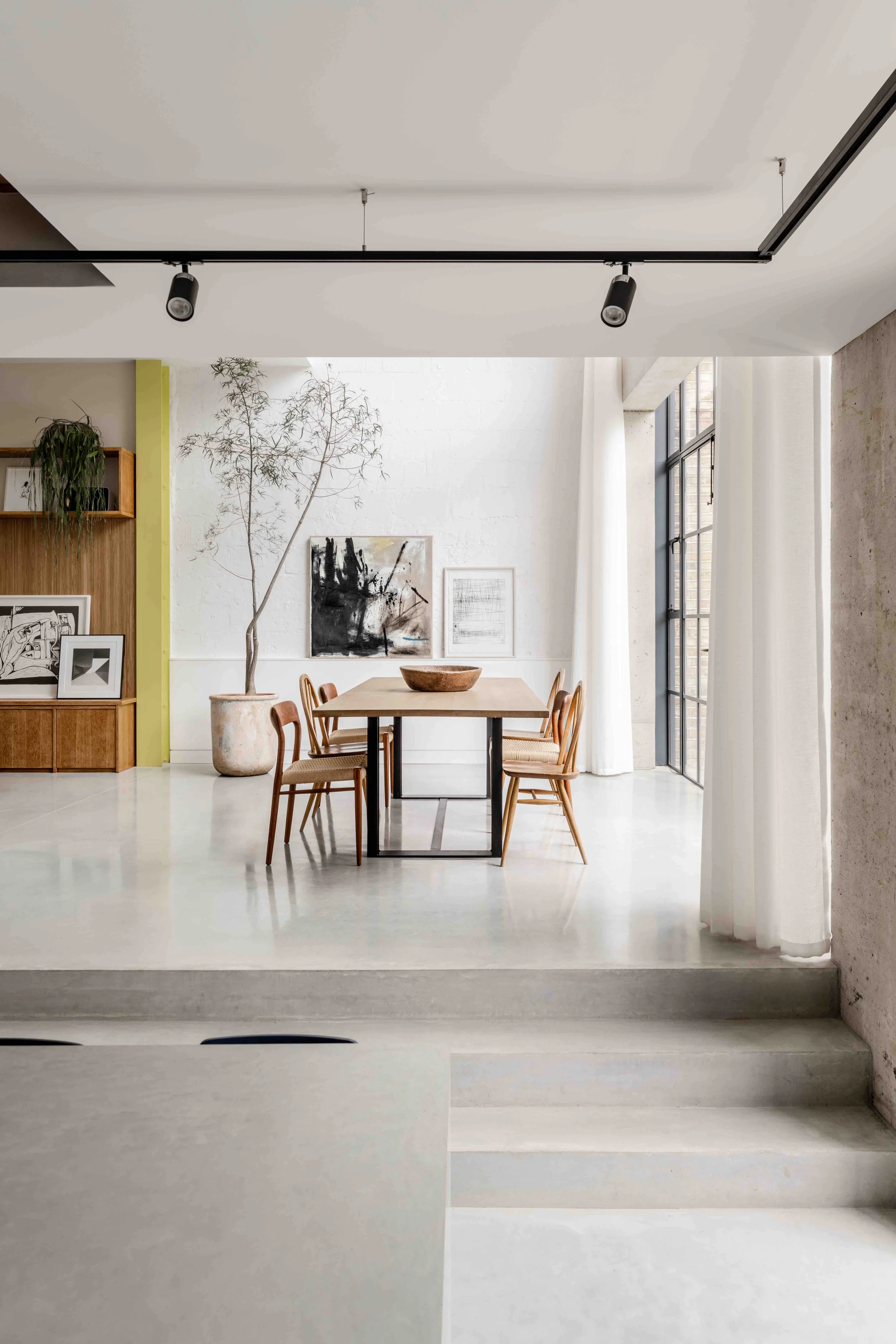
Floor-to-ceiling glazing opens the kitchen toward the garden, enhancing circulation and passive solar gain while maintaining a conservation-sensitive façade.
The kitchen anchors this new volume. Floor-to-ceiling glazing floods the open-plan dining area with daylight, dissolving the boundary between interior and garden. A tiled splashback inspired by the decorative columns of Harrods’ historic Food Hall introduces a playful nod to London’s architectural heritage, reinforcing the project’s broader theme of contextual continuity. Crisp white walls and restrained finishes allow the architectural structure and the clients’ eclectic furnishings to take centre stage.
Sustainability is quietly but rigorously embedded in the transformation. High-performance double glazing improves thermal efficiency while maintaining slender profiles suited to a conservation context. The concrete frame functions as thermal mass, absorbing warmth during the day and releasing it gradually to stabilize internal temperatures. Strategic insulation upgrades and passive solar considerations further reduce reliance on artificial heating and cooling.
A built-in desk beneath expansive glazing creates a light-filled workspace, reinforcing the focus on spatial flow and natural illumination.
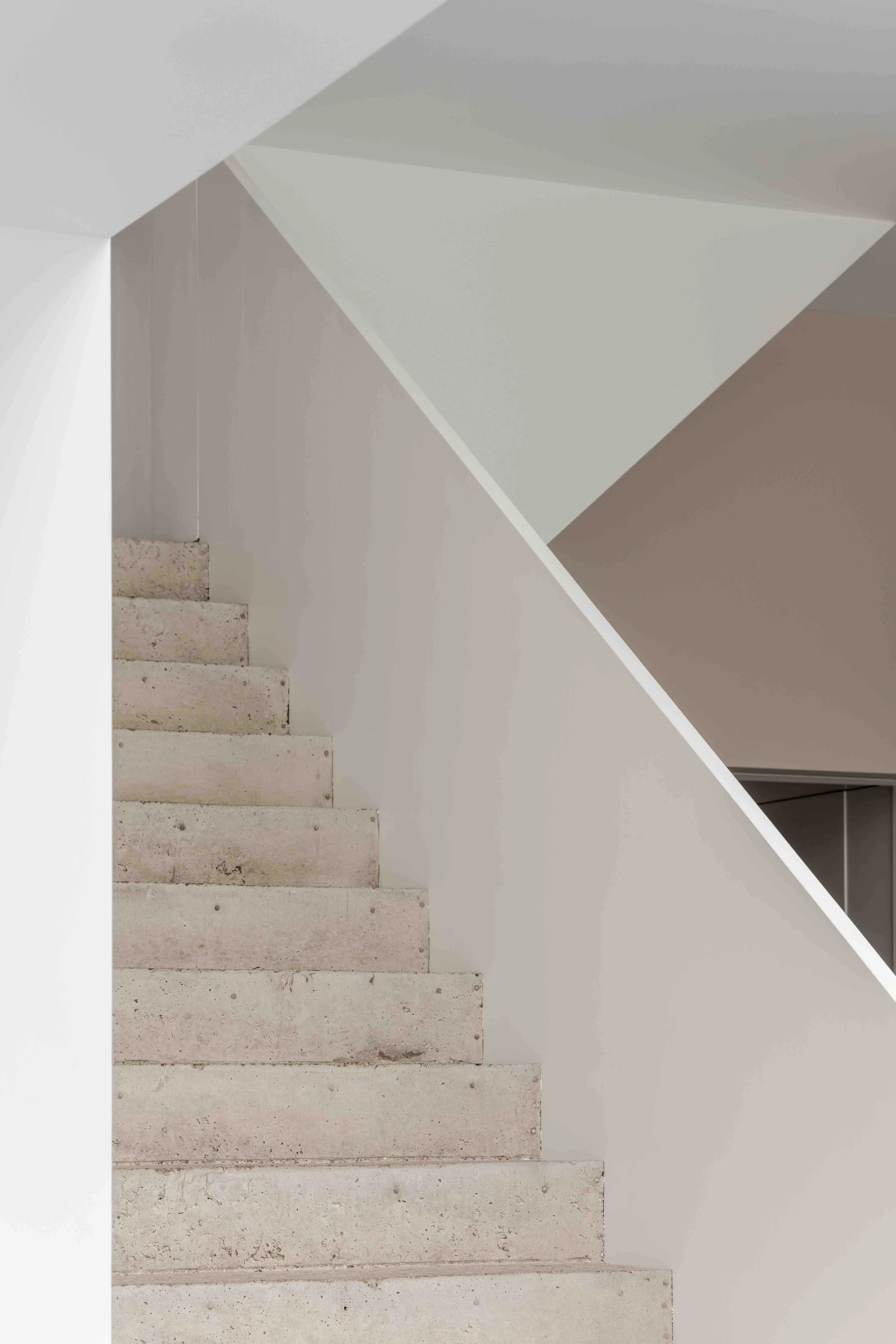
Material reuse reinforces this performance-driven approach. The main concrete staircase incorporates reclaimed aggregate from on-site demolition, reducing embodied carbon while giving physical continuity to the home’s evolution. Original timber beams, cornicing, and tiled floors are retained wherever possible, preserving historic fabric and minimizing environmental impact. The result is a retrofit that respects both heritage and climate responsibility.
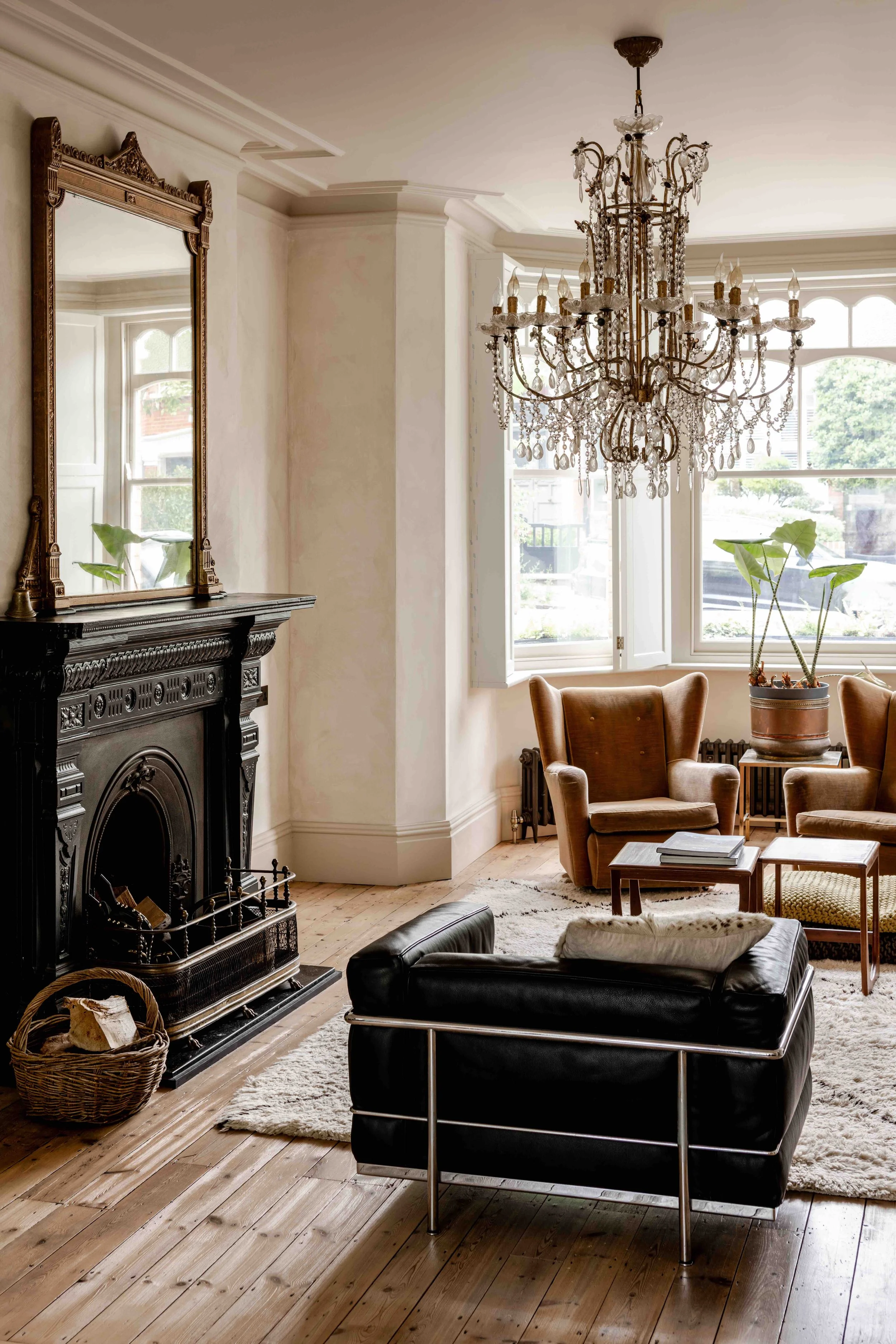
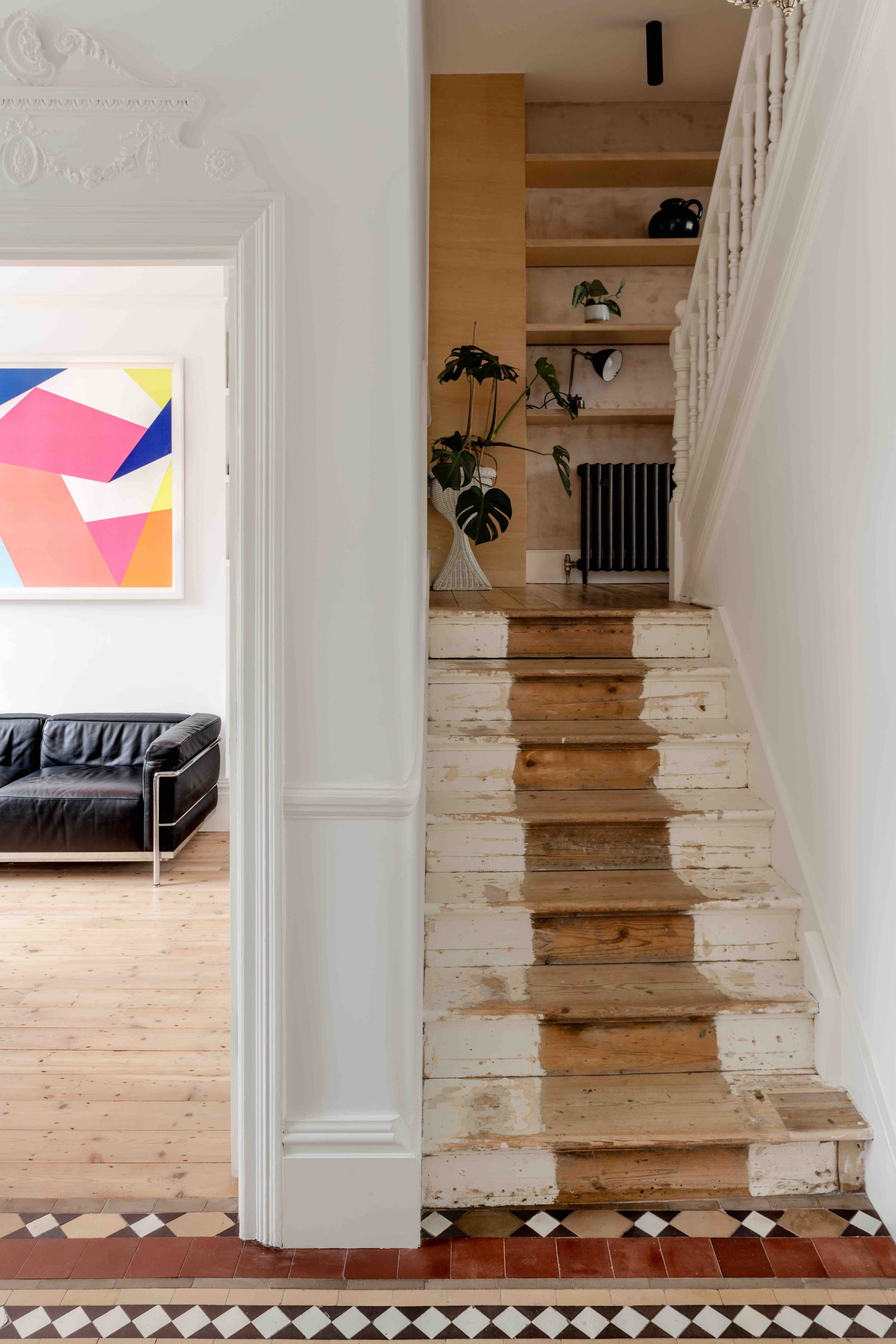
House of Panes ultimately demonstrates that extending an Edwardian terrace in London is not simply about adding square metres. It is about recalibrating flow, light, and energy performance while sustaining the cultural memory embedded in brick and timber. Here, glass does not overwrite history; it reframes it. Concrete does not dominate; it anchors. And within this carefully constructed balance, the terrace finds a renewed architectural voice that feels both contemporary and unmistakably London.
PROJECT DETAILS
Architects: Matthew Giles Architects | Instagram
Client: George and Alice
Gross internal area (sqm): 370 sqm
Structure engineer: Timothy George, BA(Oxon) CENG MICE MIStructE Chartered Structural Engineer
Interior Design: Matthew Giles Architects, Clients
Kitchen: Matthew Giles Architects, Sygnet Style
Main contractor: Sygnet Style
Glazing: Fabco Sanctuary
Photography: French + Tye