RIPAS APARTMENT || How Exposed Concrete Columns Defined a São Paulo Apartment Renovation
When two exposed concrete columns refused to disappear into the renovation plan, the architects made them the reason for everything else.
The columns emerged during the integration of the balcony into the living area of this 320 sqm São Paulo apartment. Rather than conceal them, architect Raphael Wittmann of RAWI Arquitetura clad them in vertical concrete slats—ripas in Portuguese—and let them serve as the spatial organizer of the entire floor plan. The project took its name from that decision. Constraint became identity.
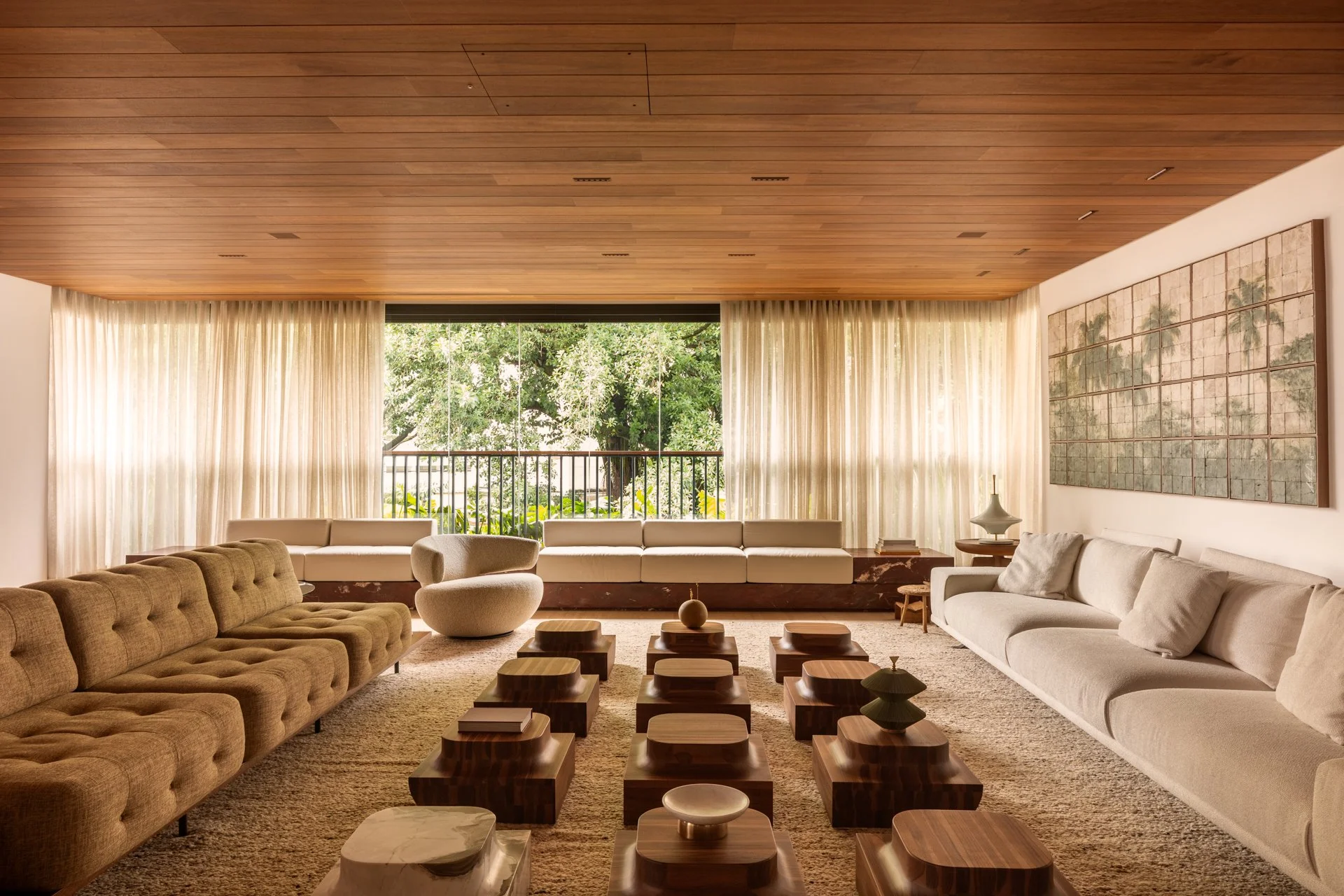
The reversible-backrest sofa anchors a living area designed to hold its gaze on the city beyond.
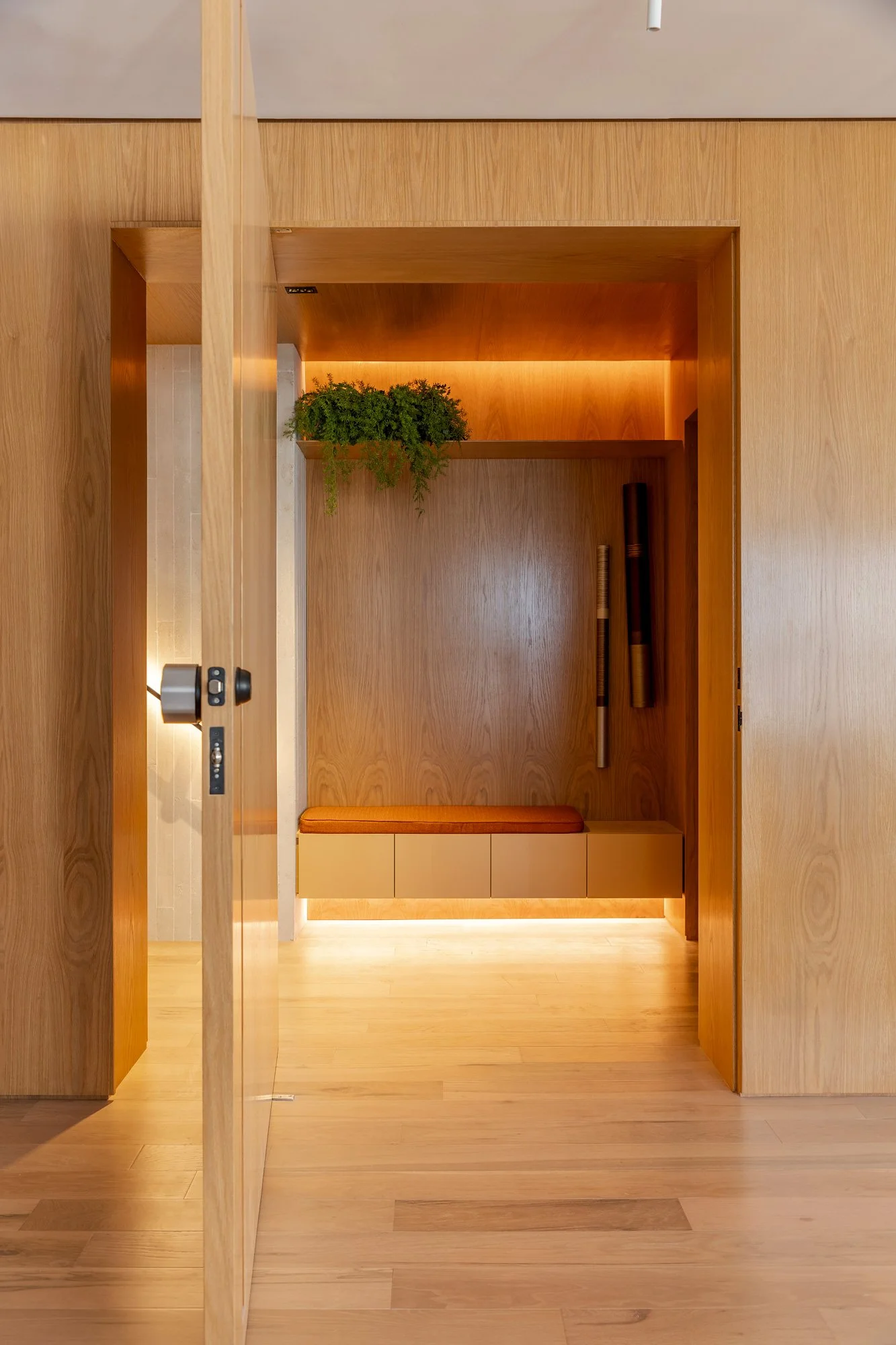
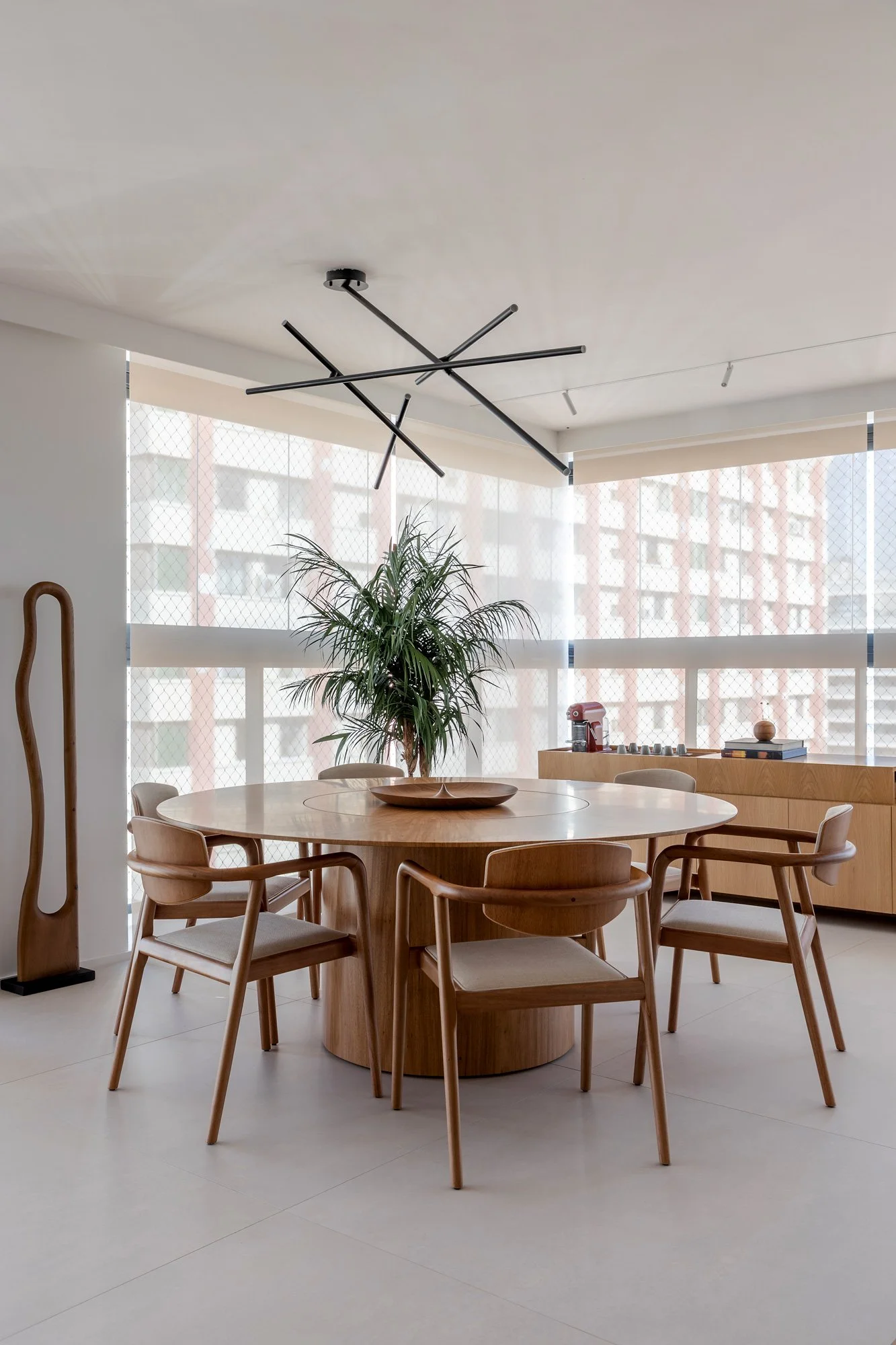
A steel-framed threshold dissolves the boundary between social and intimate without erasing it.
The original layout was fully dismantled in service of two goals: to expand communal living and to open the interior toward the views. Corridors were reduced, thresholds dissolved, and the balcony ceased to be an afterthought. It became the destination. An island sofa with reversible backrests orients the gaze toward the green canopy of the Jardins neighbourhood, lending the apartment a stillness that reads as intentional rather than accidental.
The social area is organized without hard divisions. A welded steel plate shelving unit separates the living space from a more intimate lounge without enclosing it. It frames, divides, and must be crossed to move between zones. It functions as neither furniture nor wall; it is a sculptural threshold traversed daily. Throughout, the project thinks in membranes rather than partitions.
The crimson shelving unit holds books, objects, and a television with the same quiet authority.
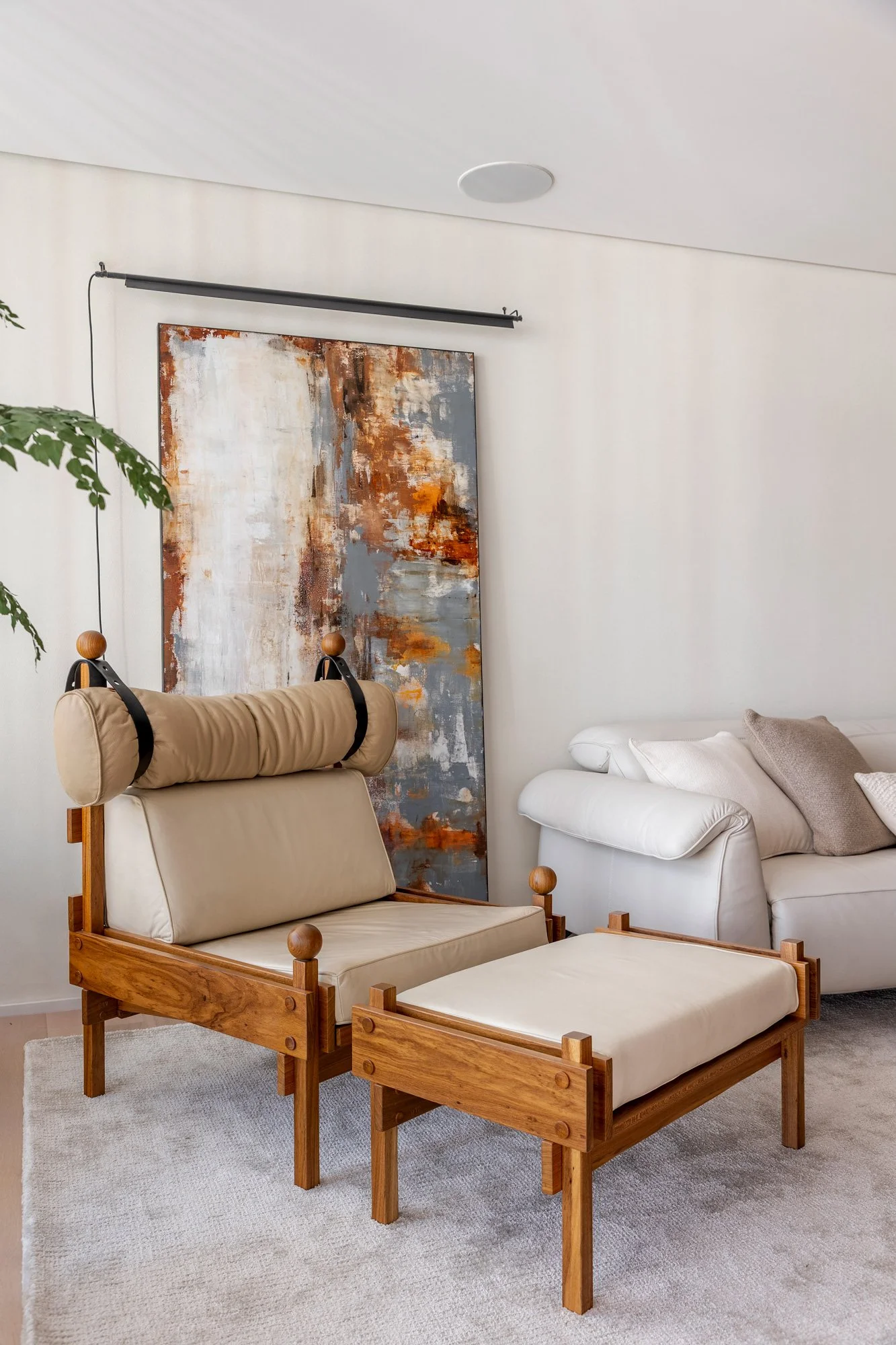
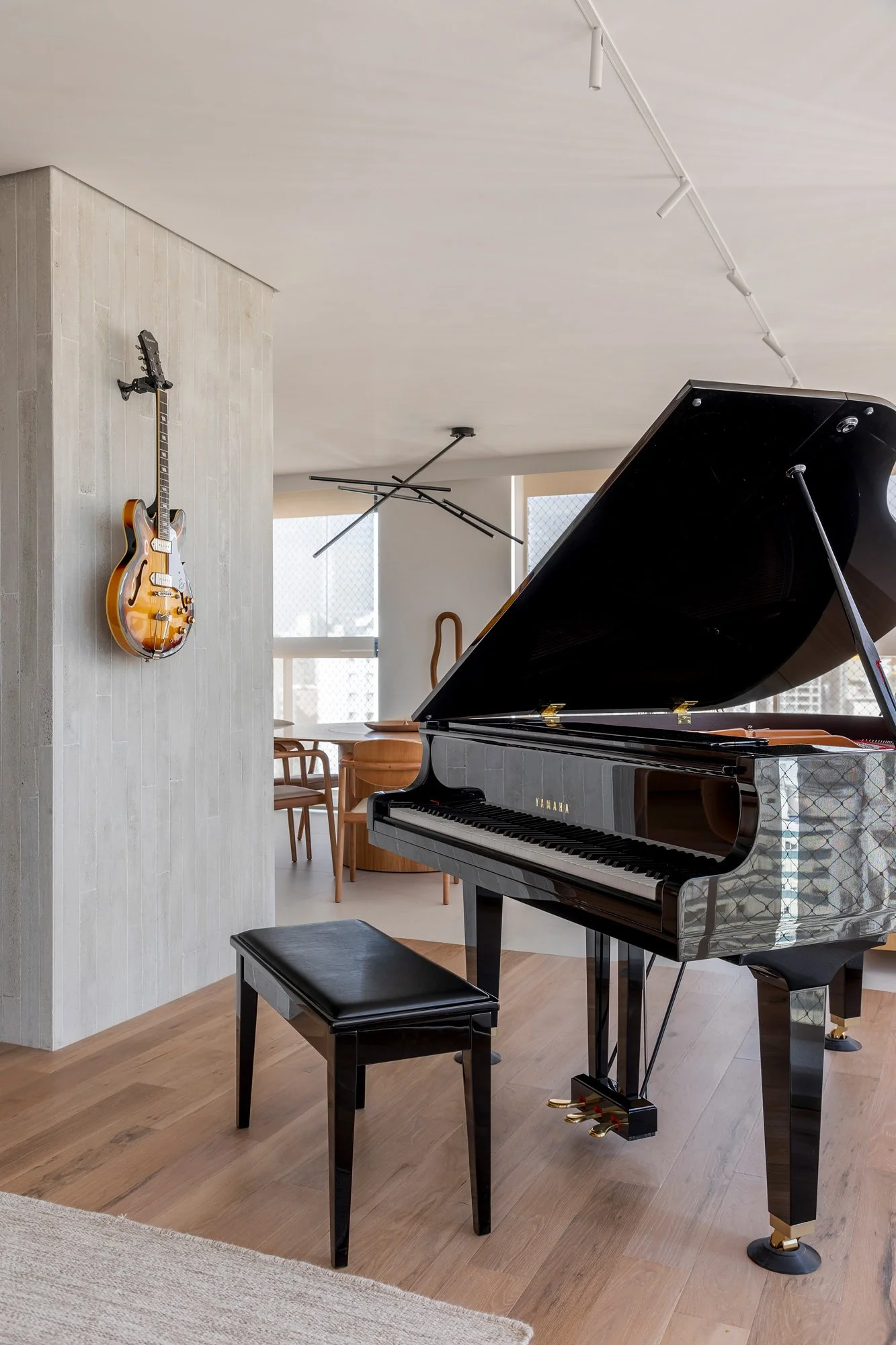
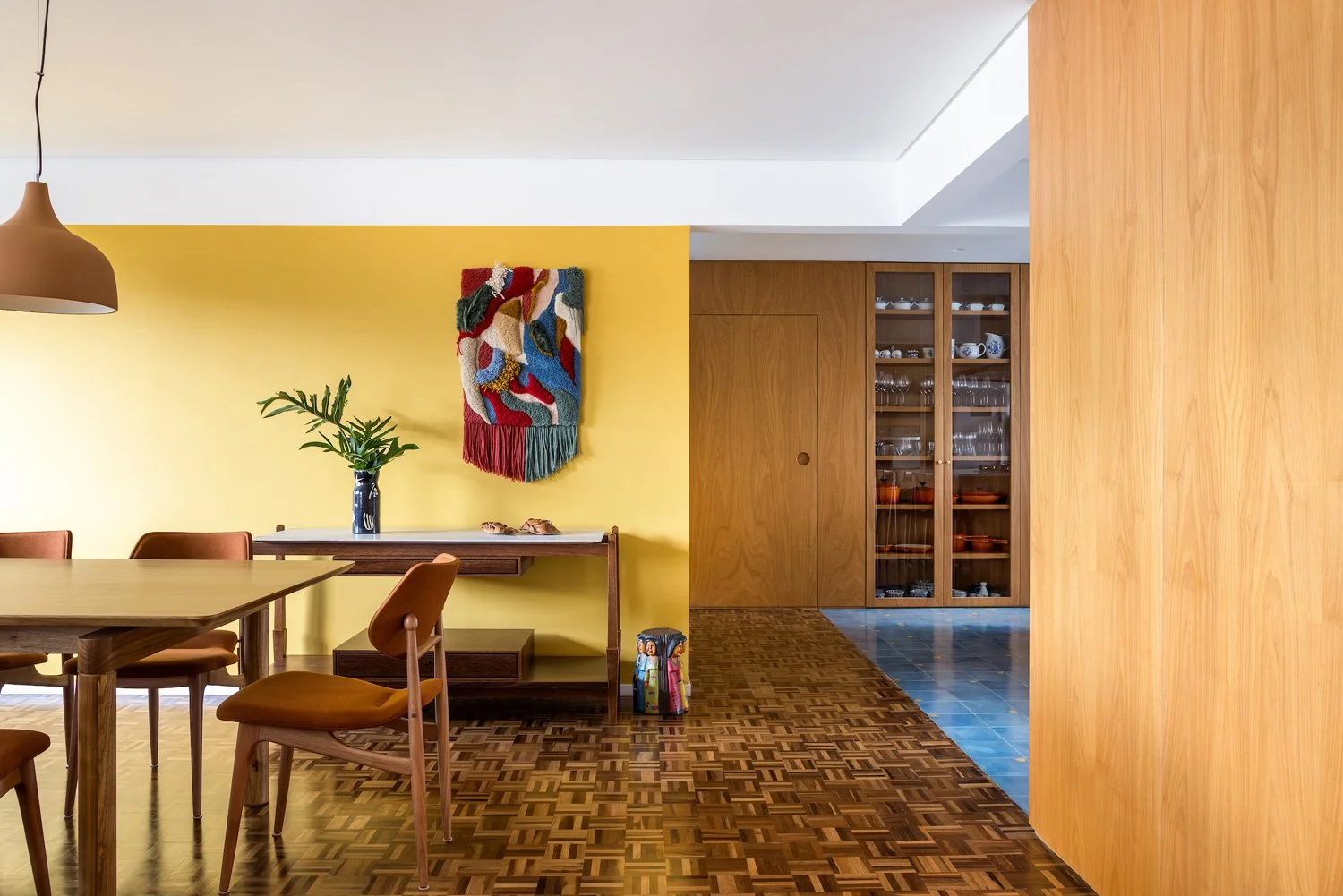
The furniture and art curation operates without hierarchy. The Wave armchair by Crystian Freiberger, the Tonico by Sérgio Rodrigues, the Charrua armchair, works by Ronald Lago and Eva Soban, and a faucet by the Campana Brothers bring together Brazilian authorial design spanning the twentieth century to the contemporary. These objects were not selected for display; they were chosen for coexistence. A Yamaha grand piano and a guitar occupy the social area with the same logic. Music is a private practice here, not a performance.
Concealed behind the continuous timber panelling, the powder room delivers one of the project's most focused moments: floor, walls, and ceiling clad in uninterrupted porcelain tile designed by Ruy Ohtake, with no visible joints. A sculpted Dekton countertop completes an interior that rejects ornament in favour of spatial intensity.
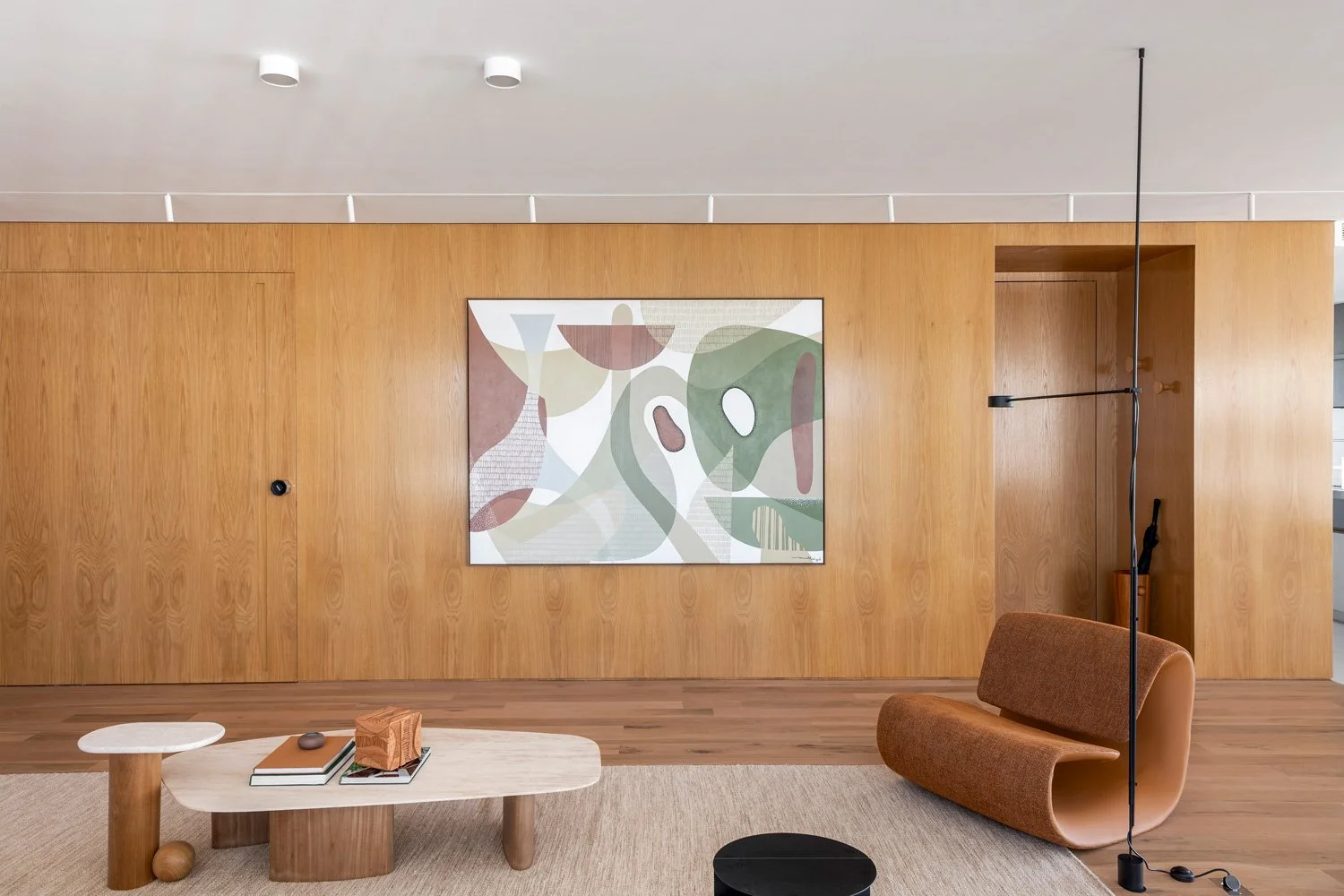
The flush timber door dissolves into the wall; a detail that rewards those who look closely.
The apartment is also home to two children, and their rooms were designed around autonomy rather than theme. Low beds, accessible shelving, personal bookshelves, and dedicated study areas give each child ownership of their space. The bathrooms carry the same principle, with handcrafted hexagonal tiles in colours selected by each child.
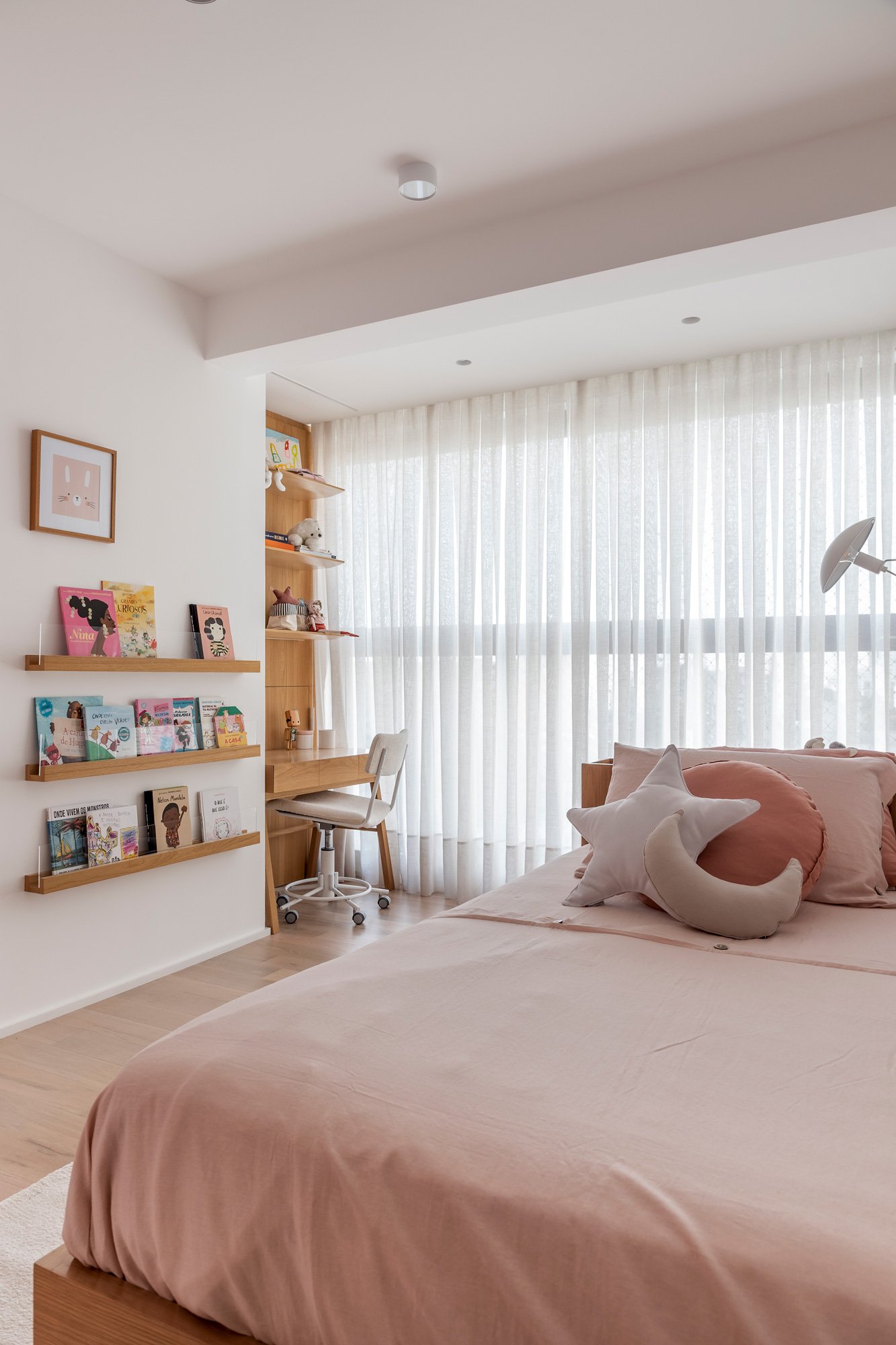
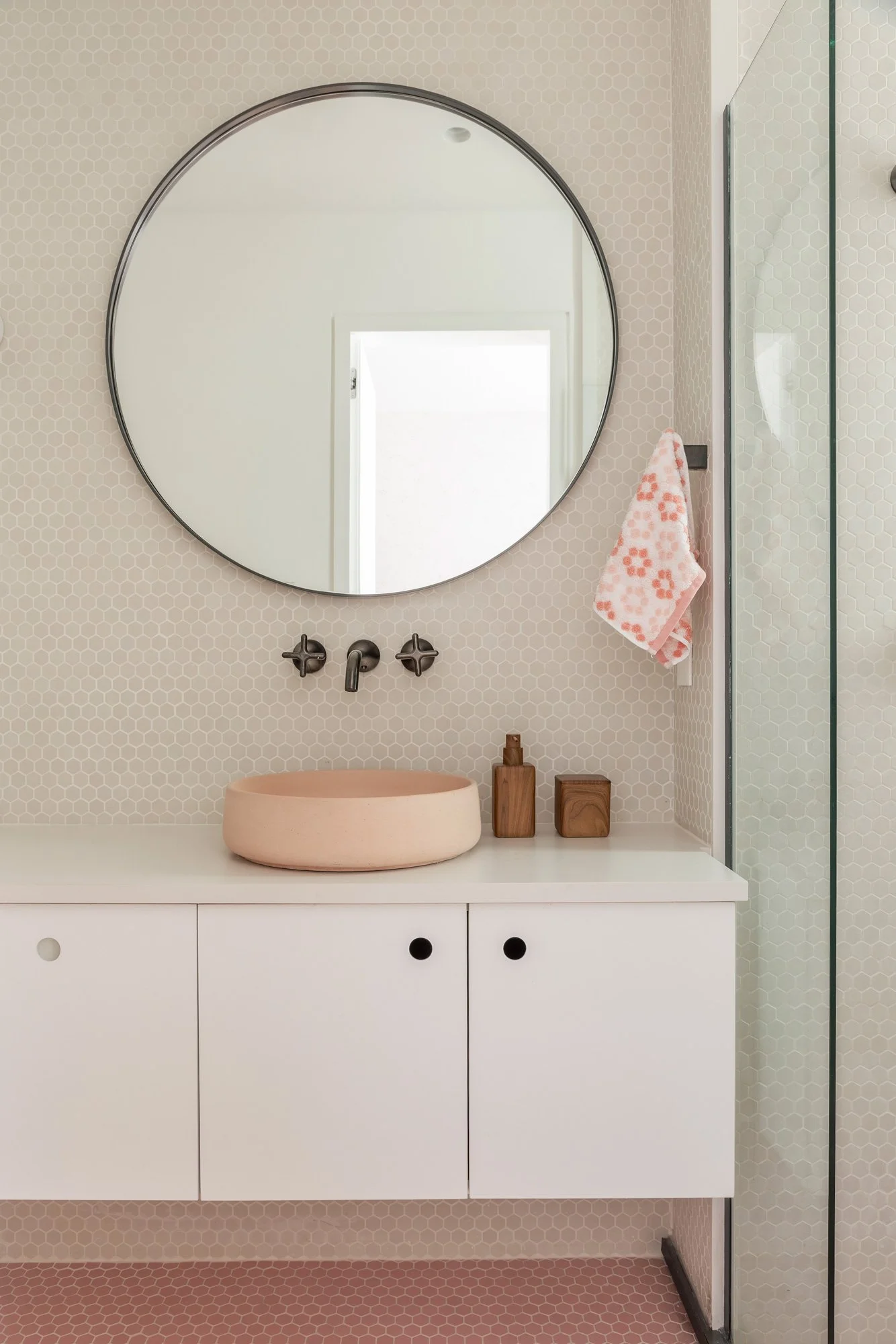
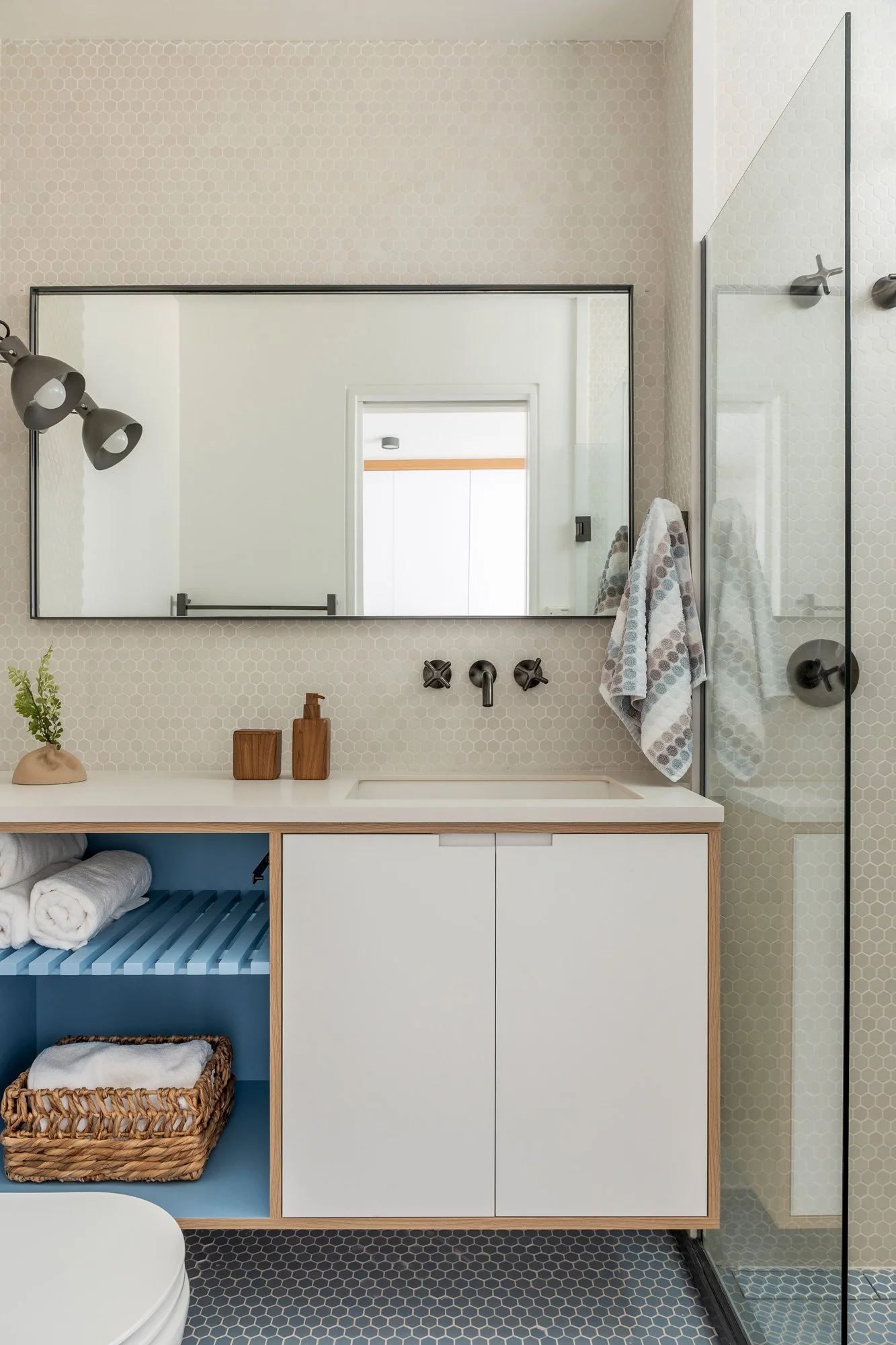
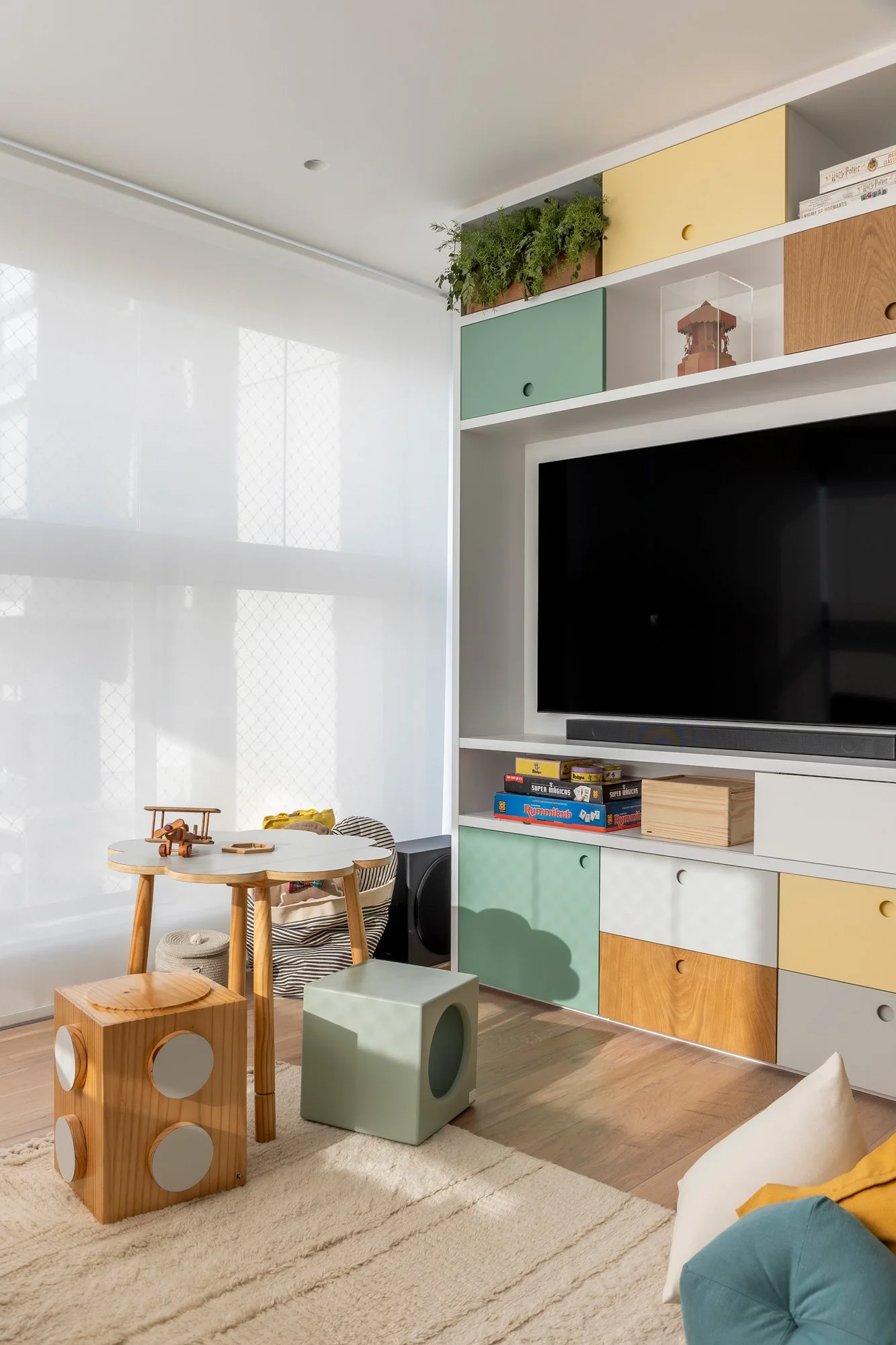
The material palette holds throughout: American oak, solid hardwood floors, and concrete. The slatted columns remain visible from entry to balcony, a continuous reminder of where the design logic originated. What began as an obstacle became a name, a rhythm, and a coherent spatial argument. Ripas Apartment does not hide its decisions; instead, it builds from them.
A suspended planter above the kitchen island brings the same material logic indoors that the balcony established beyond.
PROJECT DETAILS
Project: Ripas Apartment
Location: São Paulo, Brazil
Area: 320 sqm
Architecture: RAWI Arquitetura
Architect: Raphael Wittmann
Project Team: Giovanna Araújo, Mayara Yamaya, Ulisses Hubner, Wilmar Junior
Contractor: ZABO Engenharia
Photography: Rafael Renzo