HERITAGE RECLAIMED || A 163-Year-Old Australian House Becomes a Modern Family Sanctuary
At first, Glengrove House was a measured investment. Over time, it became something far less rational and far more important: a home the family could not imagine keeping at arm’s length.
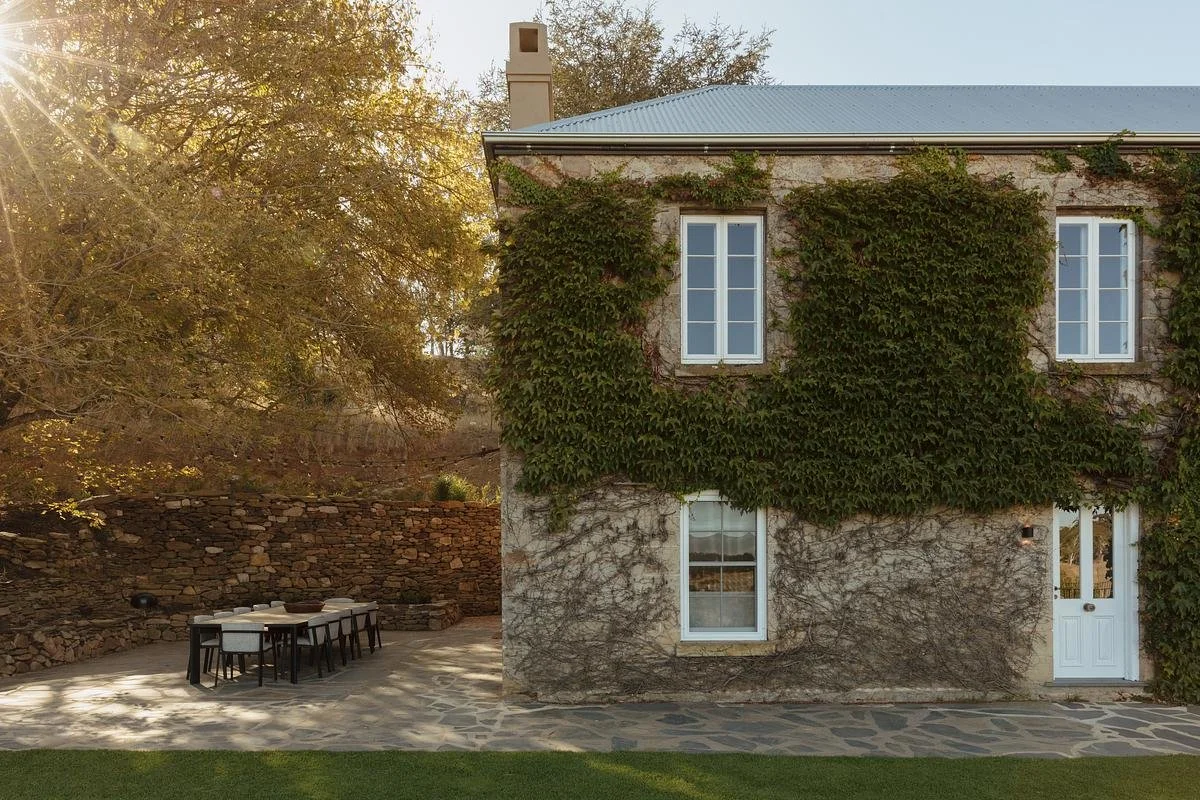
Set within the rolling hills of Kangarilla, the 163-year-old residence at Hillenvale Estate began its latest chapter with caution. Purchased sight unseen during the pandemic by the Brooks family, who were living in Tokyo at the time, the property was initially approached with restraint. The adjacent coach house received a light renovation for short-term stays, while the future of the main residence remained undecided. Yet the more time the family spent on the land, the more the house revealed itself not as a speculative project, but as a place worth restoring with conviction.
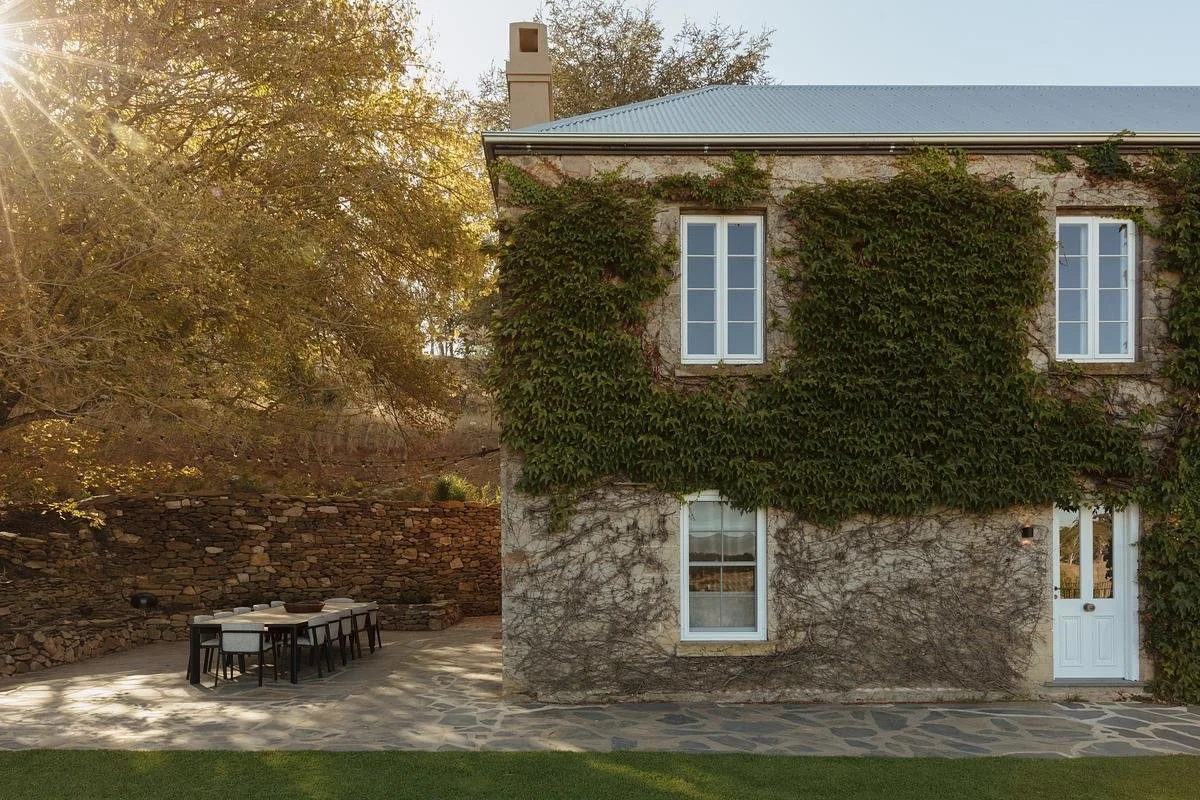
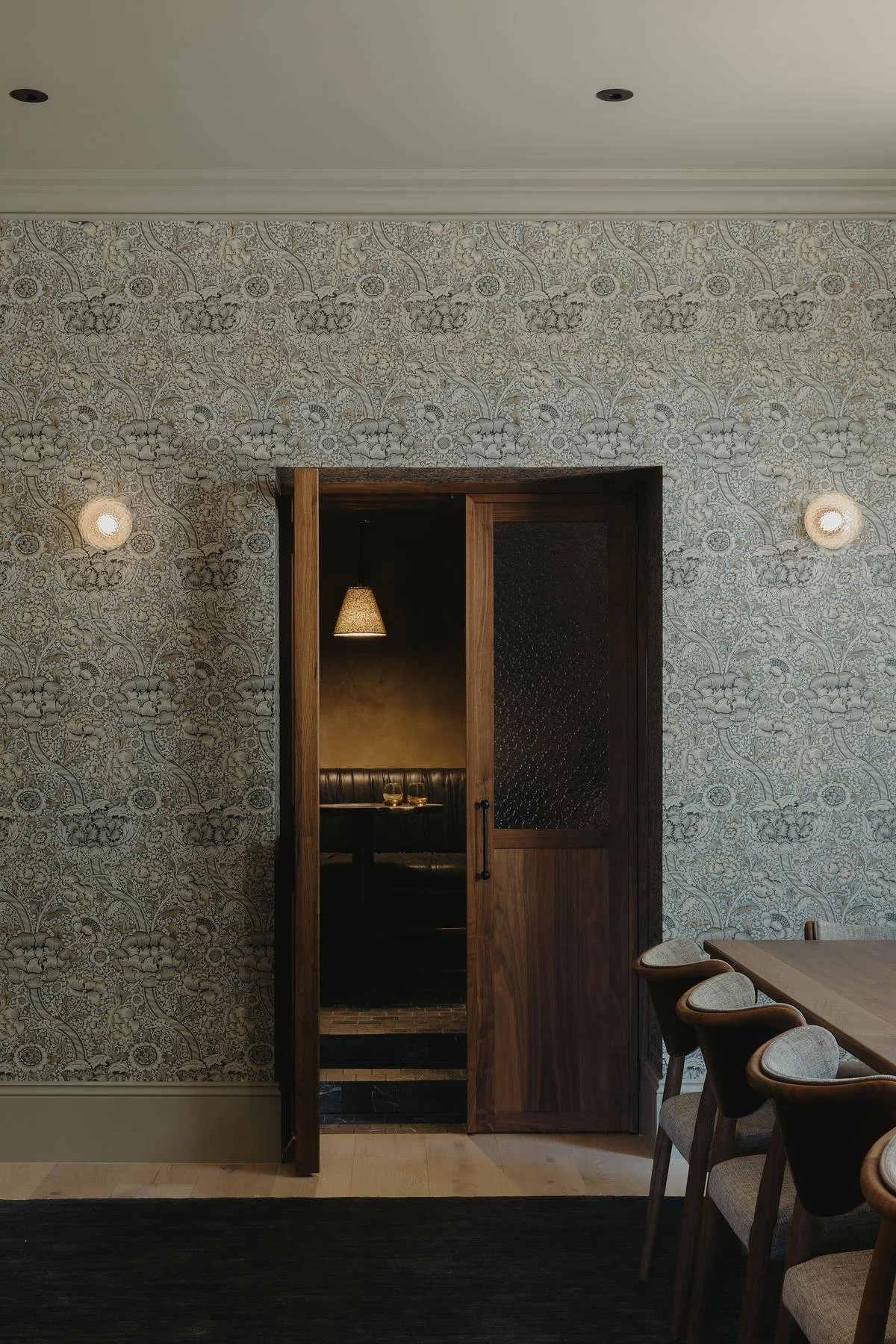
Above: Climbing vines and weathered stone preserve the romance of the original facade, while the restored house stands ready for a new chapter of family life. Below: A sculptural timber mirror anchors the dining room, where layered textures and patterned walls bring intimacy and depth to the restored heritage interior.
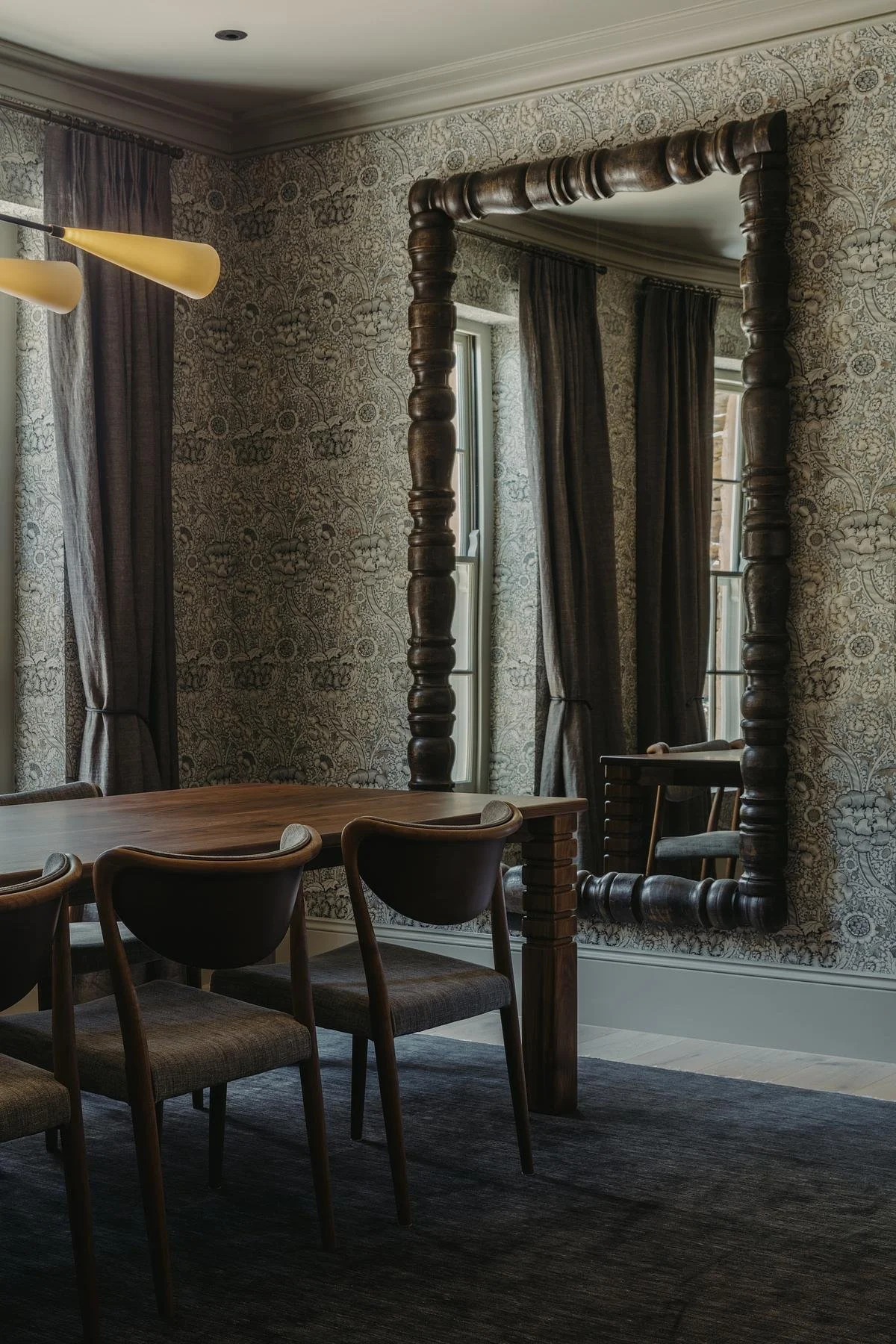
That emotional shift now defines the spirit of Glengrove House, a heritage home reimagined through a deeply personal collaboration between design studio Fabrikate and builder G-Force. Rather than flattening the past beneath a glossy renovation, the team chose a more thoughtful approach: one of respectful layering, careful discovery, and strategic renewal. The result is a modern family sanctuary that preserves the texture of its history while making room for contemporary life.
The house itself offered no neat or easy path forward. Its age came with complexity, from uneven walls to accumulated layers of plaster and long-concealed structural challenges. But it also came with gifts. Among the most remarkable was the discovery of a buried 19th-century rainwater tank, uncovered after a landslide and transformed into an atmospheric wine cellar and bar. What could have been dismissed as an obsolete relic became one of the home’s most memorable spaces, a literal excavation of the property’s past turned into a new setting for gathering and ritual.
Above: Discovered beneath the site and reimagined from a 19th-century rainwater tank, the wine cellar is one of Glengrove House’s most atmospheric acts of adaptive reuse. Below right: In the living room, soft plaster tones, warm timber, and collected artworks create a setting that feels quietly contemporary while remaining grounded in the home’s historic character. Below left: The casual dining area reflects the project’s Japanese influence through compact planning, built-in seating, and a restrained material palette.
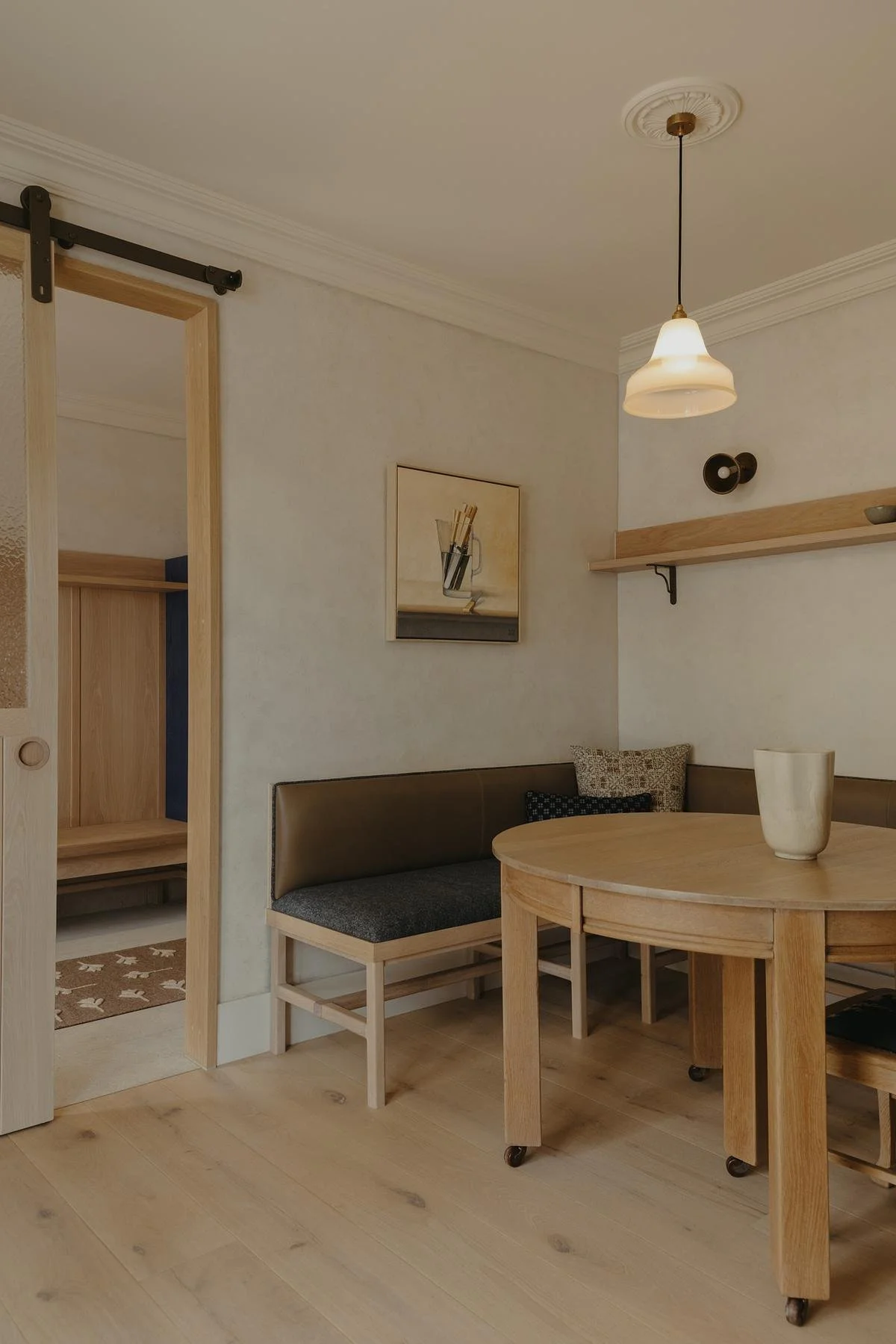
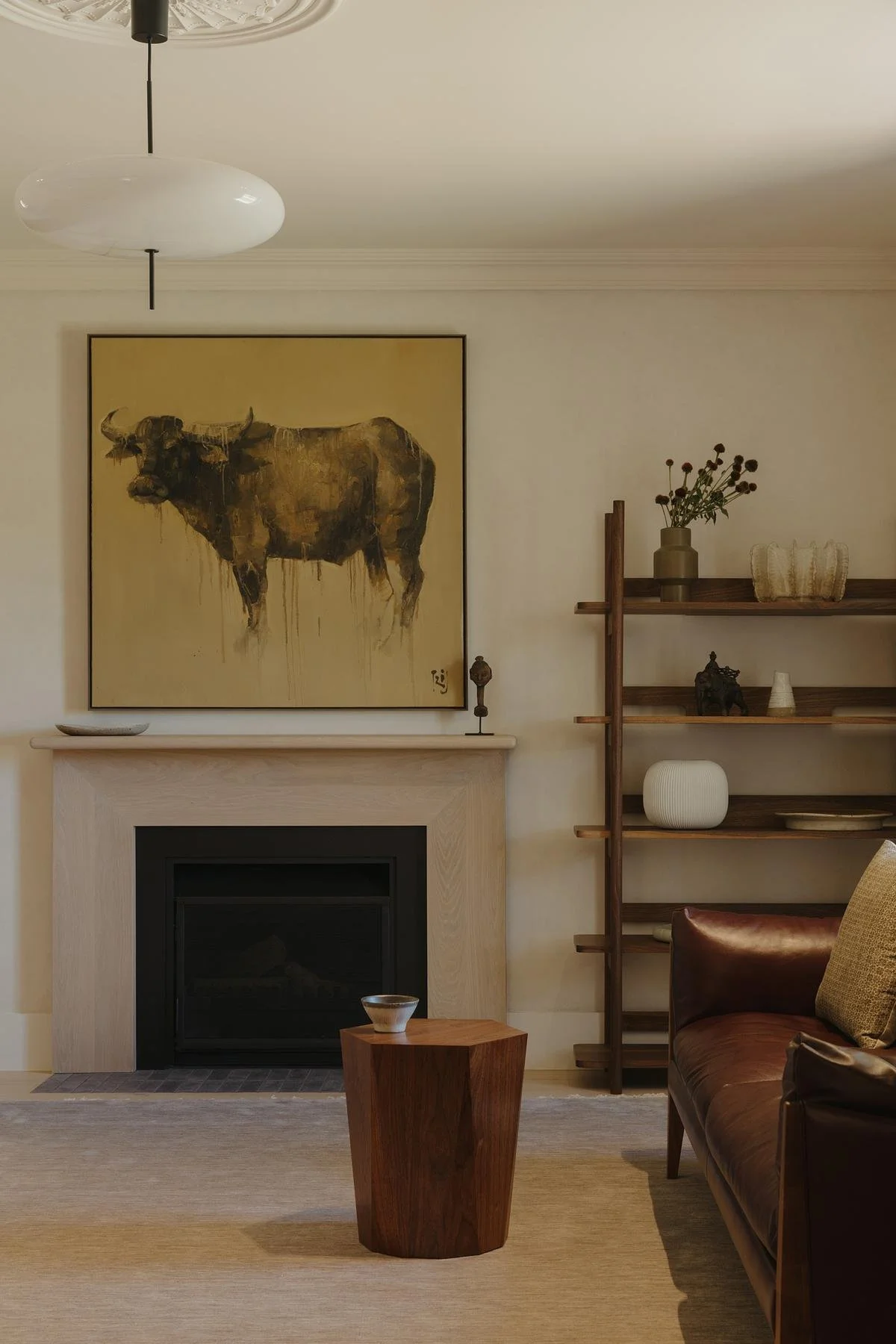
Elsewhere, damp and disused servants’ quarters were opened up rather than sealed away. Their rough stone surfaces were retained and celebrated, then balanced with finely resolved joinery that brings order without erasing character. This tension between rawness and refinement runs throughout the project. Original materials were not treated as decorative nostalgia, but as anchors. Salvaged stone from retaining walls was reused. Existing timber was preserved where possible. The home’s historic fabric remains legible, yet never feels frozen.
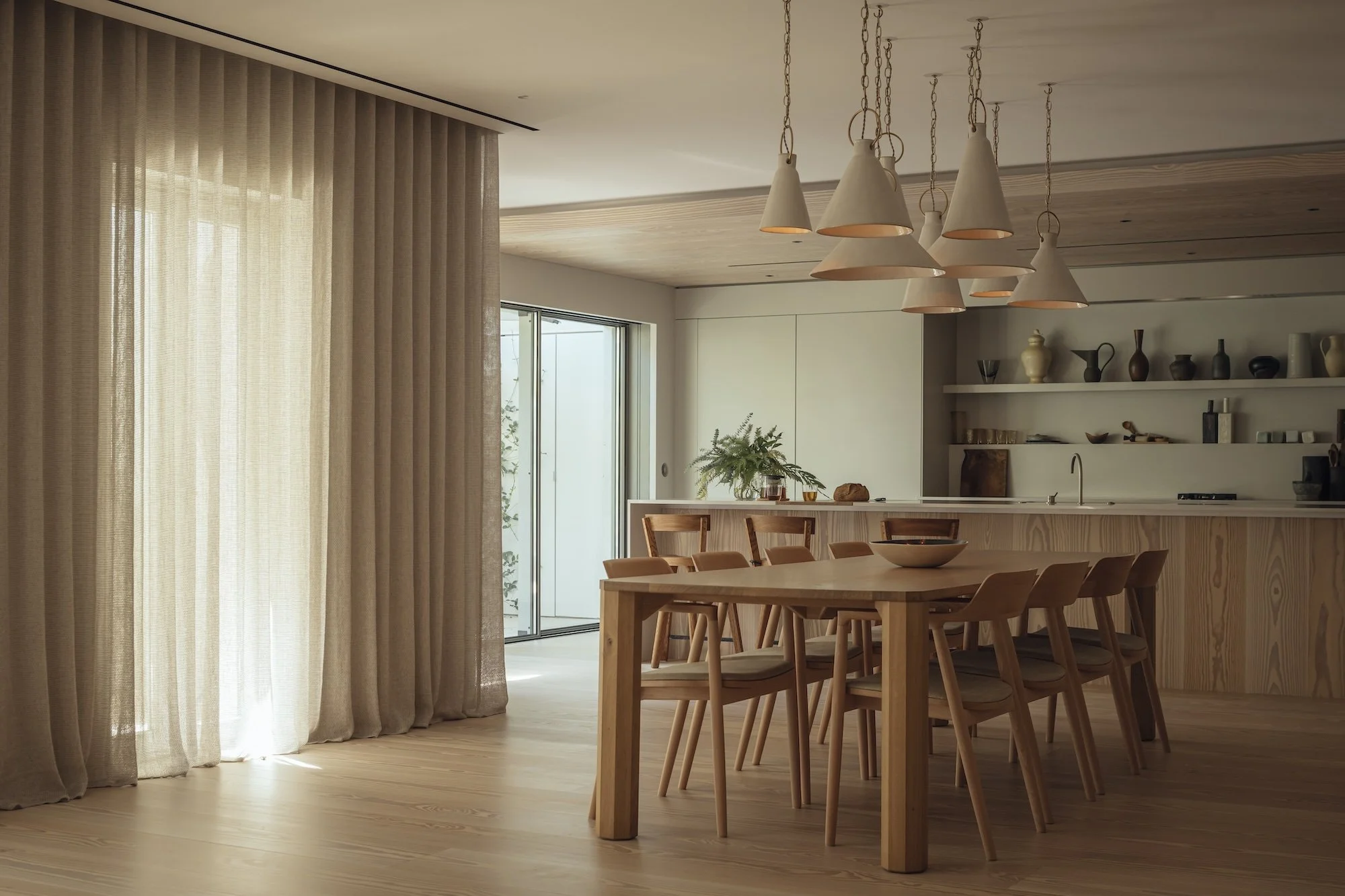
Japanese design influence is felt in the kitchen’s disciplined lines, efficient layout, and quiet interplay of dark timber, pale oak, and tactile surfaces.
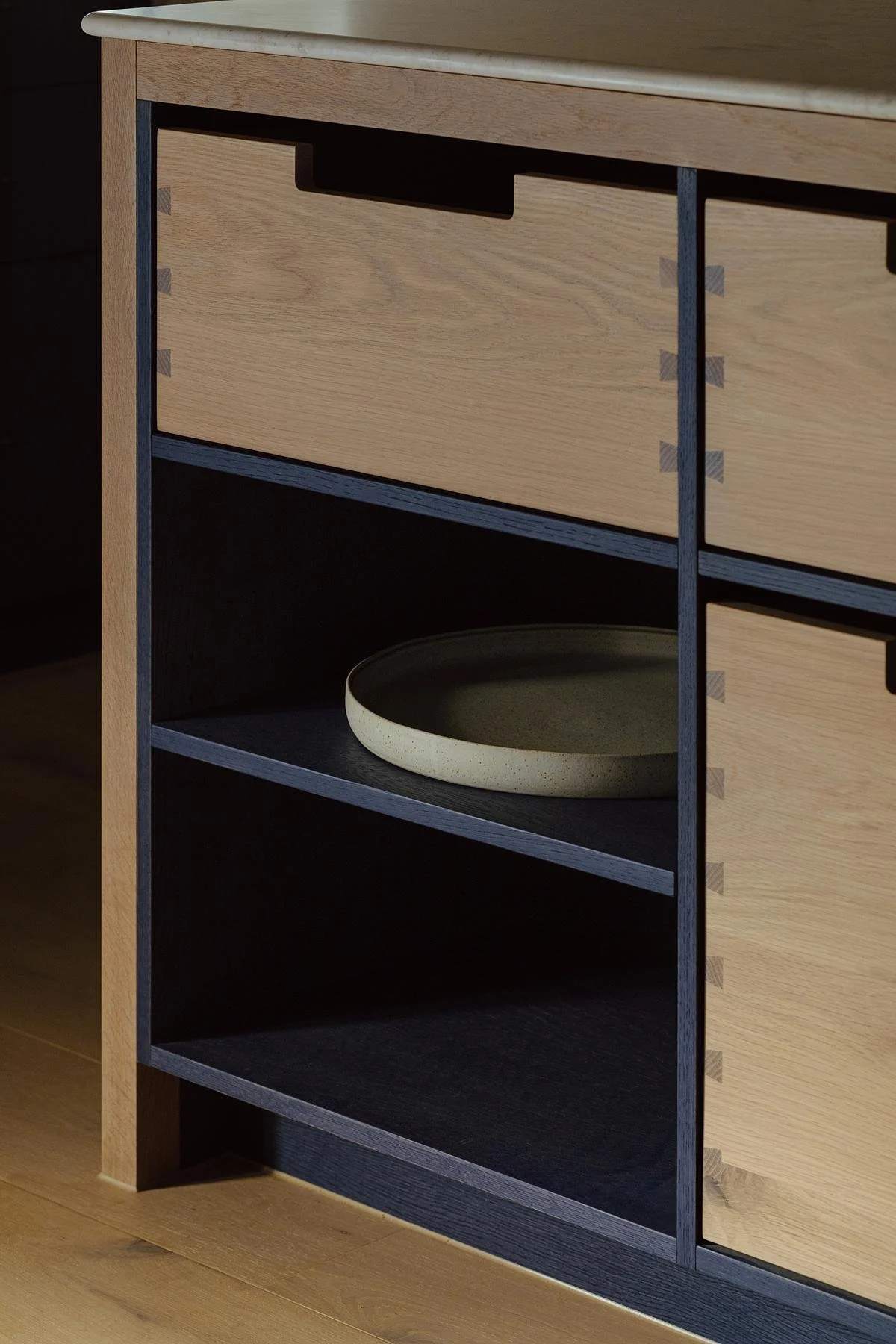
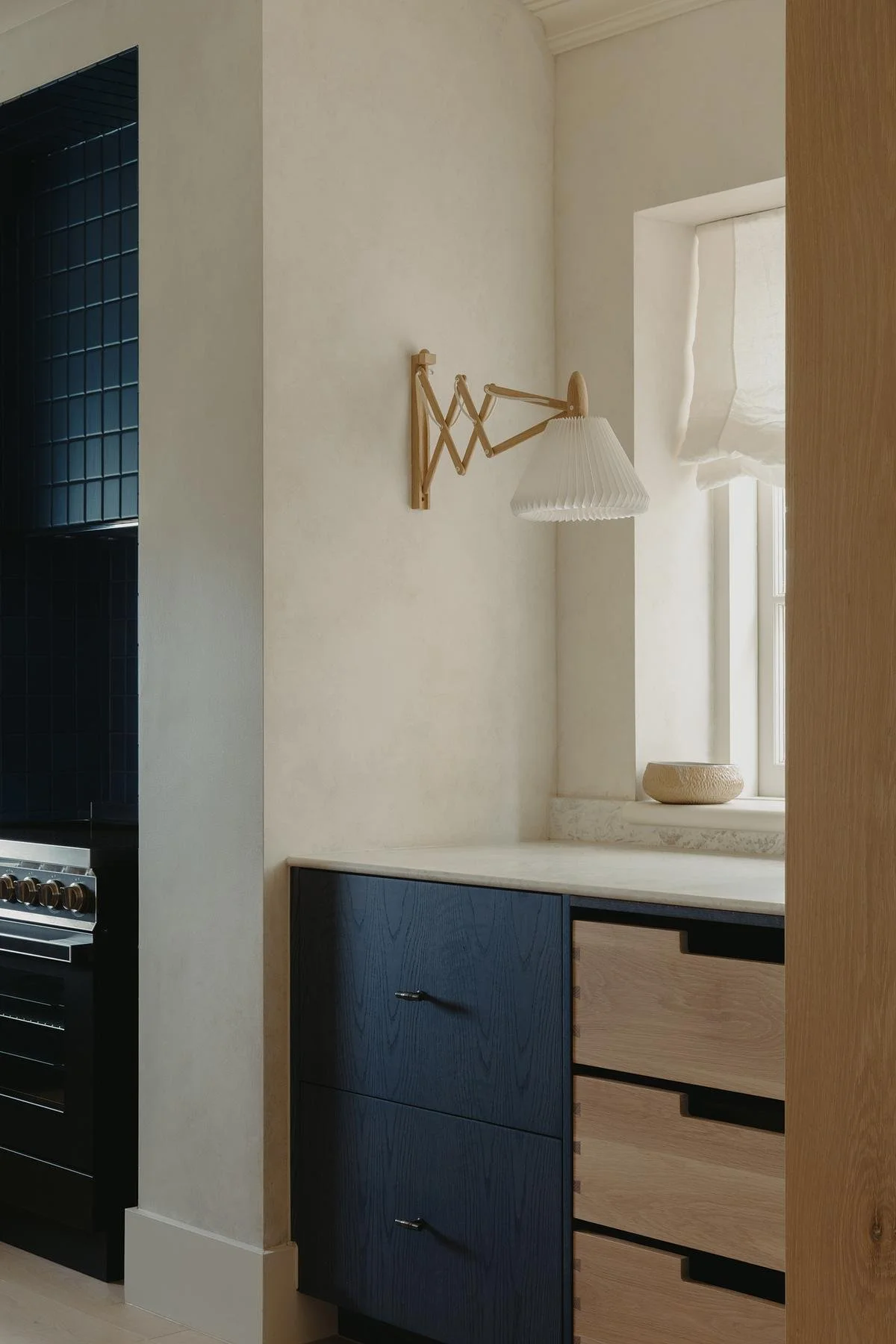
What gives the interiors their calm precision is the influence of Japanese design, shaped in part by the family’s years abroad. In the kitchen and bathrooms especially, that sensibility appears in the economy of line, the disciplined use of space, and the elegance of restraint. Pale timber joinery, carefully framed storage, and tactile material contrasts create moments of quiet utility that feel both contemporary and enduring. These gestures do not compete with the house’s age; they sharpen it.
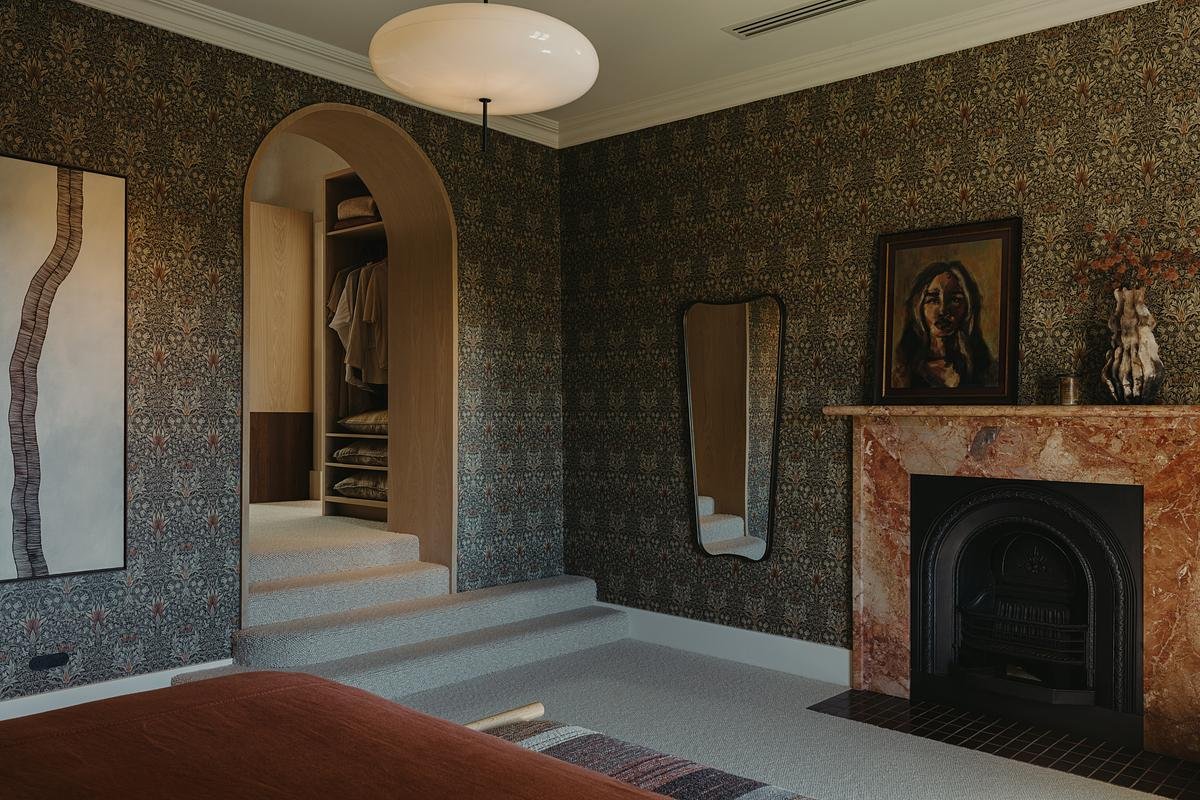
In the master suite, richly patterned walls, a marble fireplace, and softened architectural lines create a room that feels both grounded in history and quietly renewed.
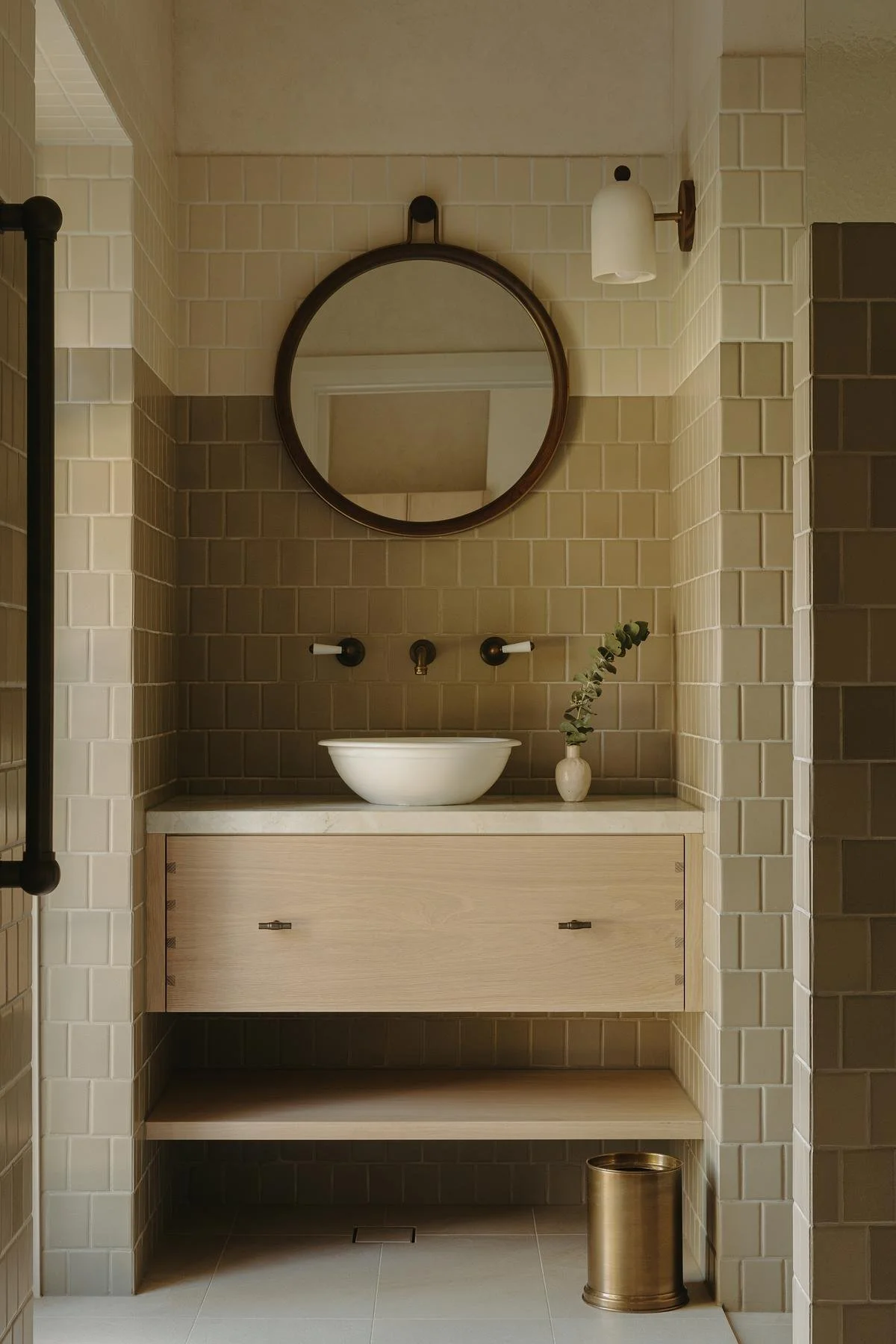
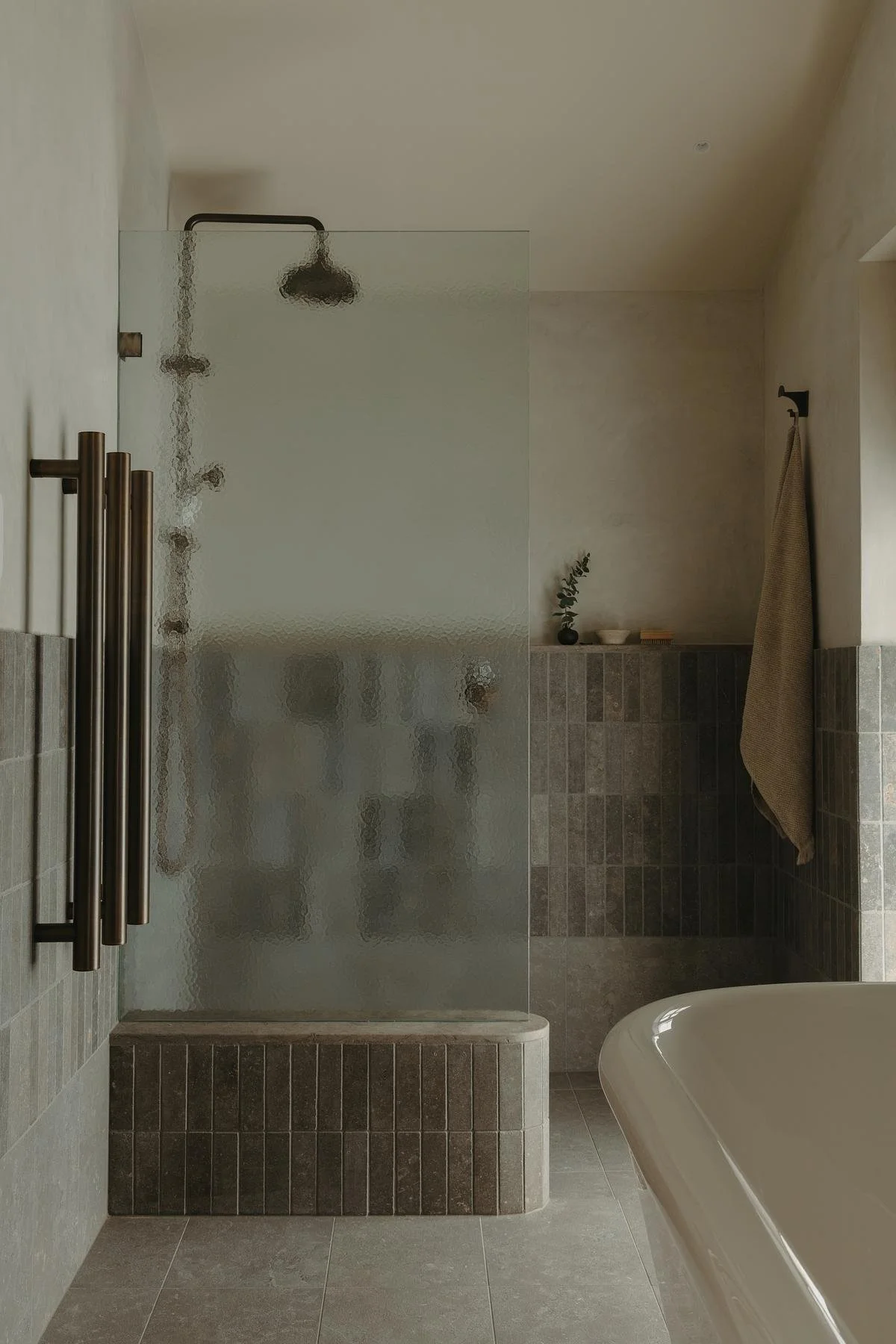
The master ensuite combines robust stone, pale timber, and tailored fittings in a composition that feels practical, elegant, and deeply connected to the home’s material language.
Sustainability was also woven into the restoration in ways that support the house’s future without overwhelming its identity. Solar power, rainwater systems, and the reuse of original materials sit alongside traditional craftsmanship, allowing the project to function as more than a beautiful country residence. It has been future-proofed for long-term family life, proving that heritage restoration and environmental responsibility need not sit at odds.
The guest room pairs gentle natural light with understated materials, creating a restful retreat shaped by simplicity, comfort, and careful proportion.
That balance is what makes Glengrove House so compelling. It is not merely a restored old home, nor simply a polished rural escape. It is a portrait of how attachment can deepen ambition, and how architecture can evolve when people stop asking what a house costs and begin asking what it could mean. At Hillenvale Estate, the answer is a home reclaimed with care, shaped by memory, and ready for the generations still to come.
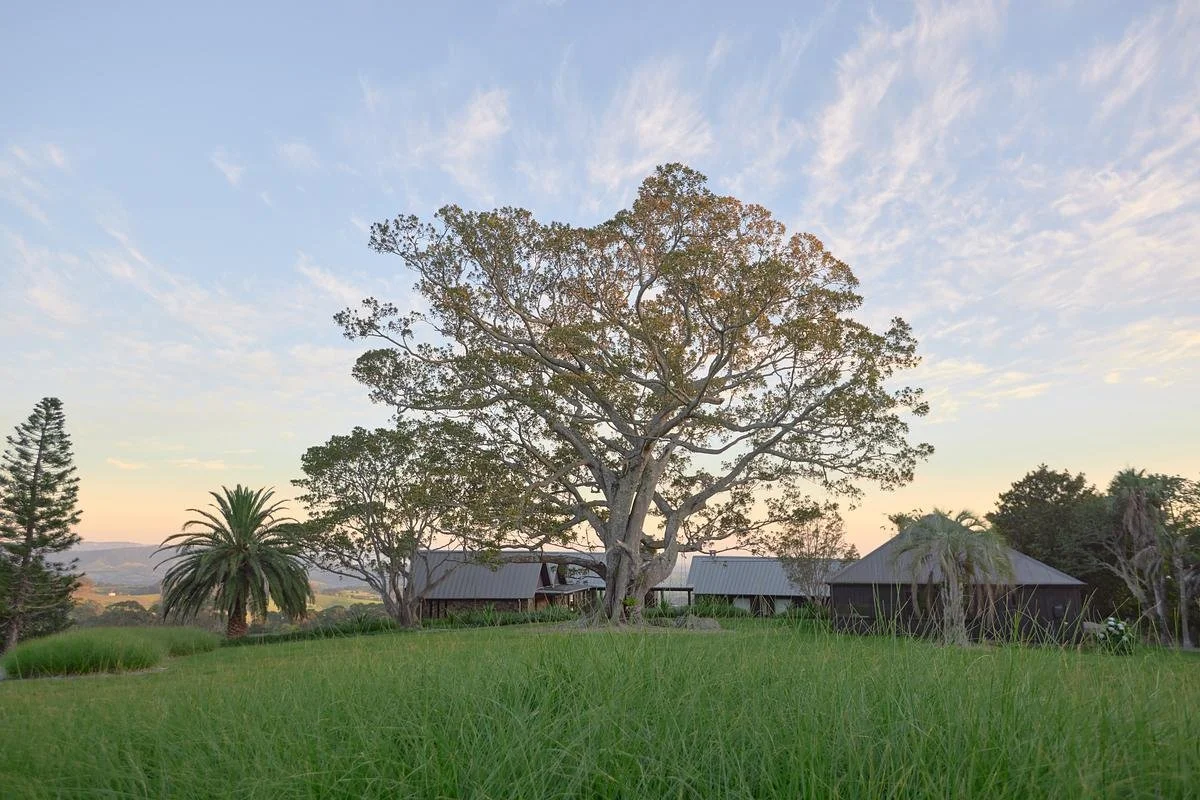
Set against the rolling hills of Kangarilla, Glengrove House opens to a landscape that reinforces the property’s sense of calm, scale, and rural permanence.
PROJECT DETAILS
Architects: Fabrikate, Jonathan Van Dyk - JVDK Studios
Photographer: Jonathan Van Dyk - JVDK Studios