FALSE BAY RESIDENCE || Sea Ranch Reborn on the Salish Sea
The Salish Sea does not make concessions to architecture, and the best buildings on its shores have always known better than to ask for any.
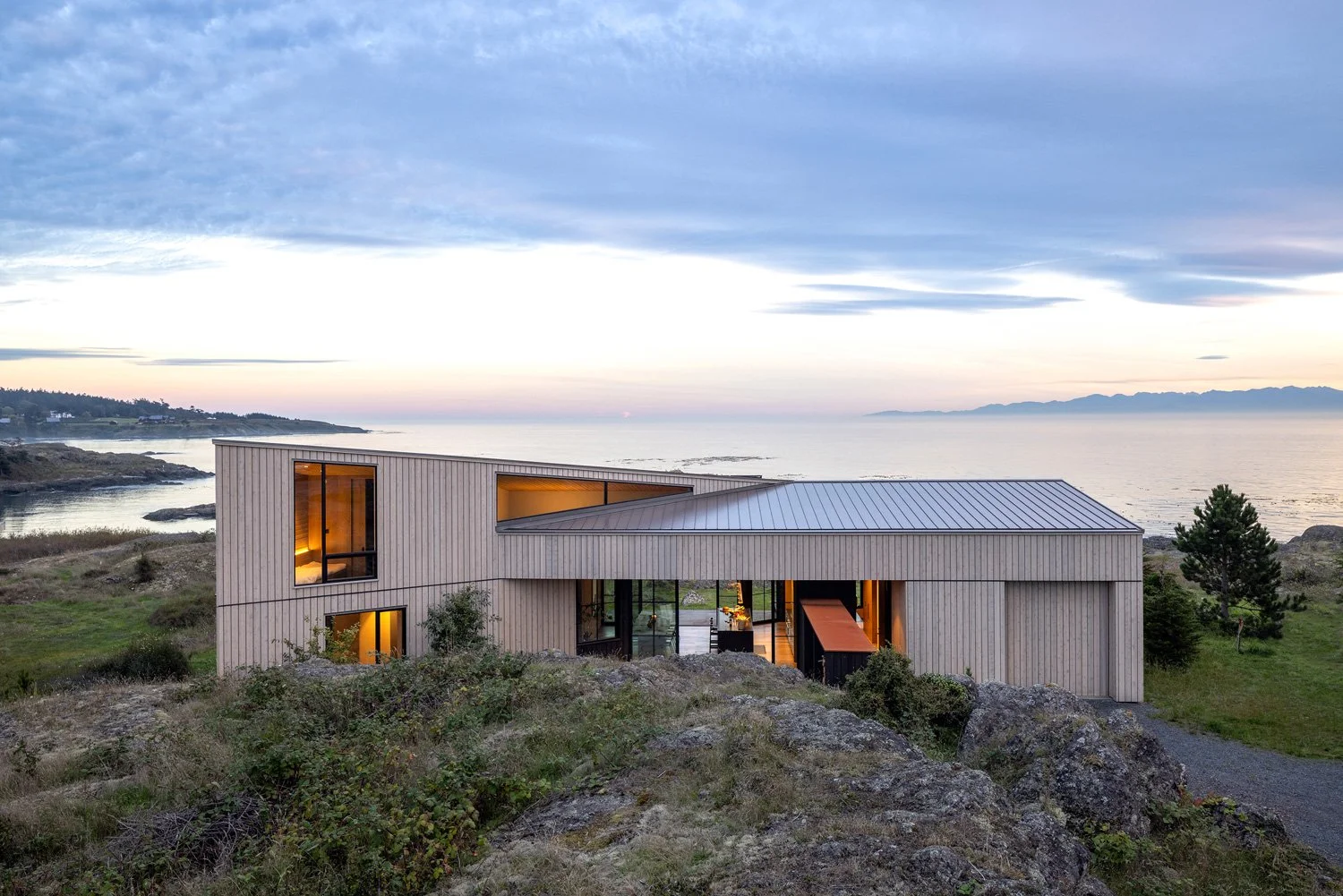
On a rocky, windswept point along the southern edge of San Juan Island, Seattle-based Heliotrope Architects has completed a 2,474-square-foot cedar-clad residence that earns its place on the land through restraint, intelligence, and a clear-eyed reading of what came before. The clients, longtime island visitors with a shared commitment to net-zero energy and site-sensitive design, brought Heliotrope into a conversation about building for now while planning for later: a getaway home today, a primary residence as they age.
Floor-to-ceiling steel-framed glazing draws the Salish Sea's rugged terrain into the living room, the ideal spot to pause and absorb the morning light.
The design team drew an explicit parallel between this exposed Salish Sea shoreline and the windswept Sonoma Coast that inspired the Sea Ranch development in the 1960s. That influential Northern California community established a vocabulary of shed roofs, weathered timber cladding, and buildings that deferred to terrain rather than dominating it. At False Bay, Heliotrope does not quote the Sea Ranch so much as continue its argument. The cedar cladding weathers toward the landscape. The rooflines pitch and shift in response to prevailing winds off the Strait of Juan de Fuca. The house does not announce itself.
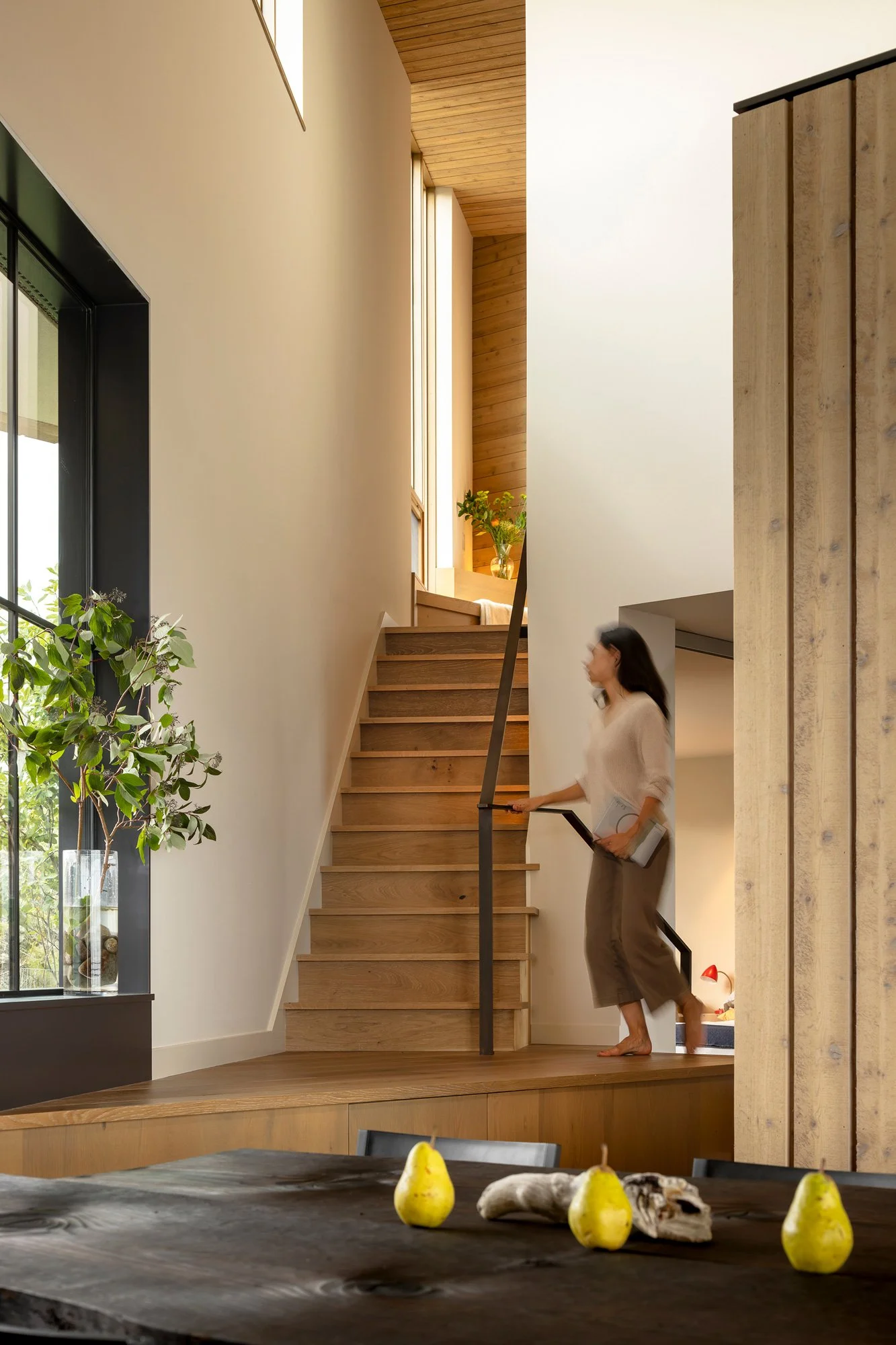
The carbonized-wood dining table holds quiet dialogue with the water and rock formations beyond at dusk.
What makes the siting particularly considered is the "bow tie" footprint, a configuration shaped entirely by the site's scattered rock outcroppings. Rather than disturbing them, the design nestles between the formations, allowing the gap between structure and a significant landward rock to become a sheltered terrace—a wind-protected outdoor room that would otherwise be impossible on such an exposed point. Views are deliberately oriented south toward open water and north toward the rock face, while remaining opaque to neighbouring properties on either side.
Cedar cladding and a pitched roofline rise from native grasses and outcropping, the Sea Ranch vocabulary redrawn on a Pacific Northwest shore.
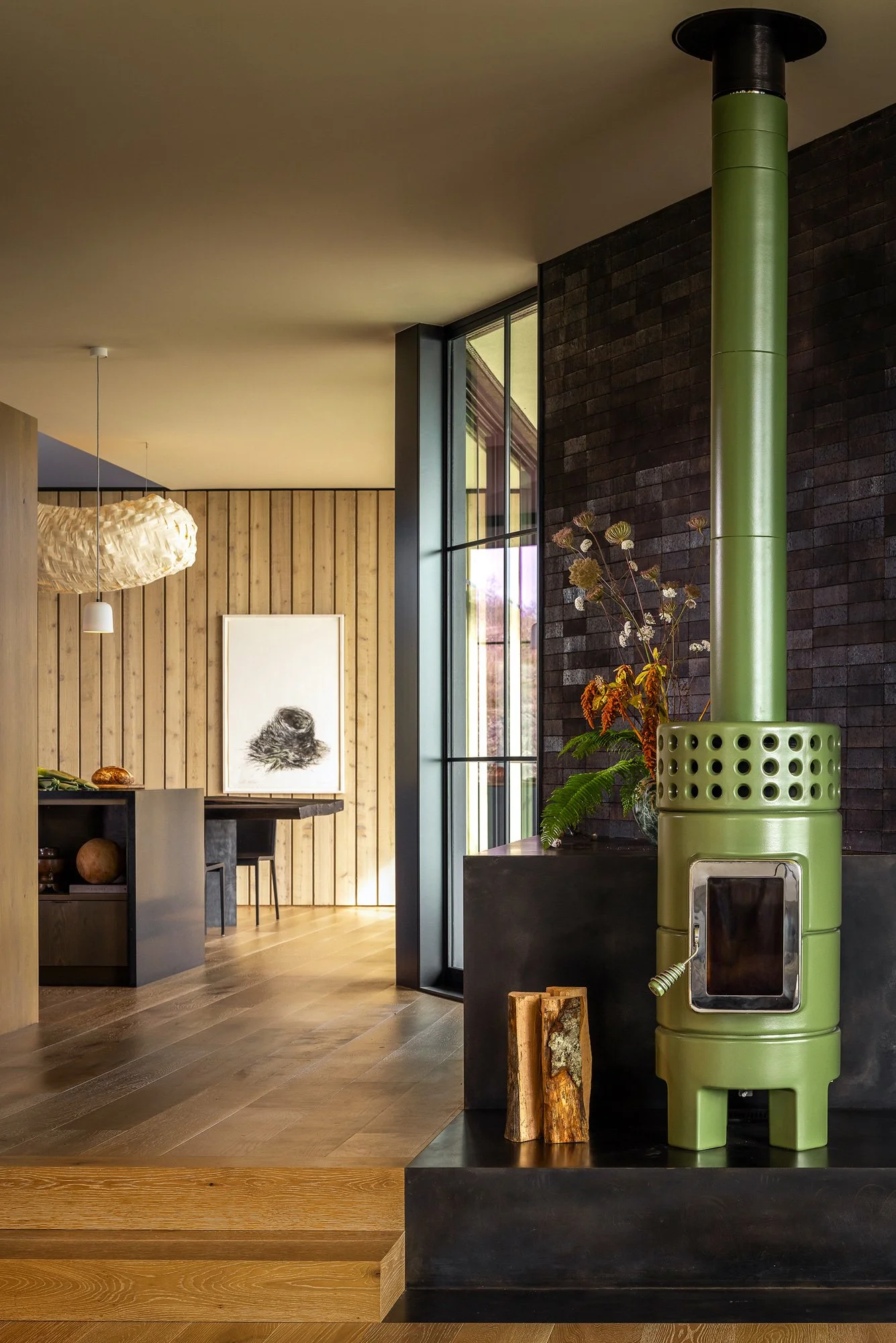
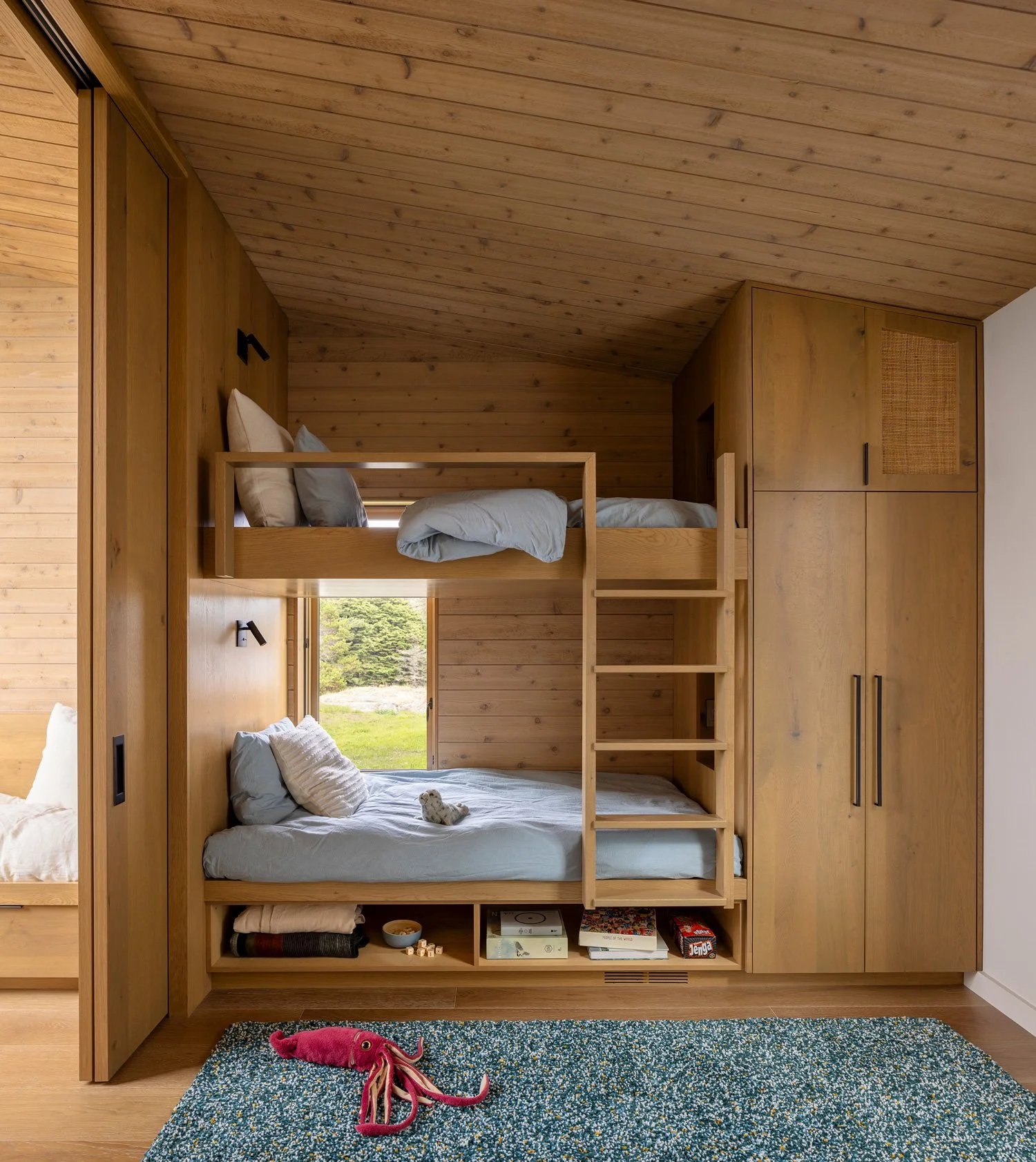
Inside, the palette is calm and continuous. Cedar and plasterboard wall surfaces, wood floors, and earth-toned tilework establish a material consistency that connects interior to exterior without effort. An 11-foot carbonized-wood dining table anchors the open-plan living space; its dark, textured surface reads as a direct echo of the rocky shoreline visible through the large sliding glass doors beyond. Primary and guest suites occupy the ground floor, while a loft above holds bunk beds, a reading nook, and northward views over the top of the rock.
The open kitchen looks through to a living area where a bold yellow artwork punctuates an otherwise restrained interior palette.
Waking here means waking to open water, the Salish Sea and its distant mountain silhouette filling the window before anything else does.
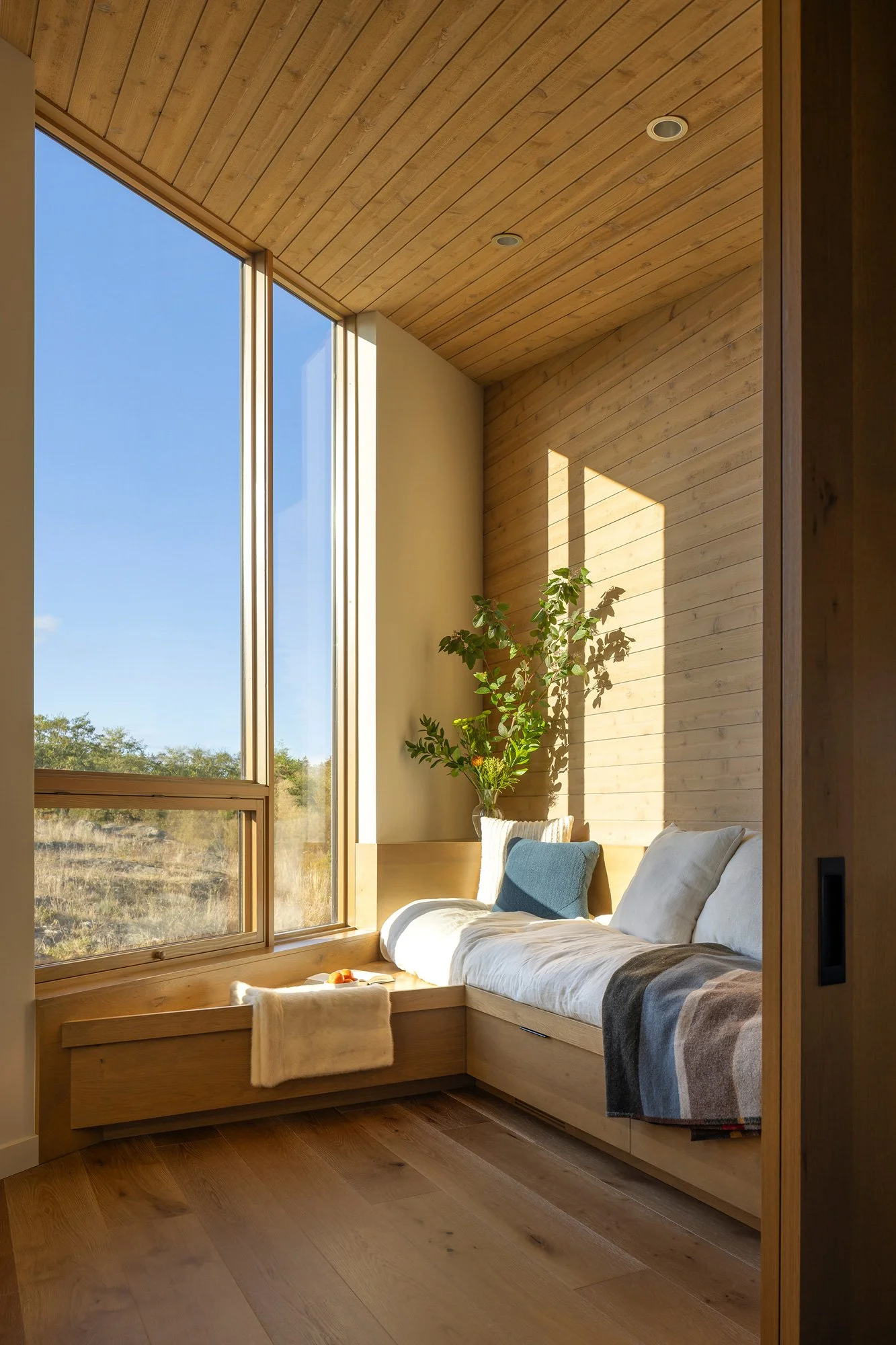
Cedar walls, collected stones, and an unobstructed view of the Salish Sea make the case for slowing down.
The building performs as well as it looks. Beyond-code insulation, high-performance glazing, heat-recovery ventilation, and an airtight envelope tested at 1.5 air changes per hour are paired with an 8 kW solar array. The house is calculated to exceed the 2030 Challenge for energy performance—a benchmark that here feels less like an achievement to advertise and more like a natural consequence of building carefully.
Native shore pines and Monterey cypress wrap the residence on its most exposed sides, mixing with indigenous cactus and grasses in a landscape that requires almost no intervention to feel complete. The architecture follows the same logic. At False Bay, Heliotrope has built something that the Sea Ranch's founders would have recognized immediately: a house that understands the land well enough to leave most of it alone.
A stone terrace tucked between structure and rock becomes the site's only concession to shelter.
PROJECT DETAILS
Architecture: Heliotrope Architects
Interiors: Heliotrope with owners
Contractor: DME Construction
Location: San Juan Island
Landscape: Garden Artisan Landscapes
Structural Engineer: Swenson Say Faget
Mechanical Engineer: Beyond Efficiency
Geotechnical Engineer: Stratum Group
Photography: Sean Airhart
Design Team: Joe Herrin AIA (Principal in charge), Chris Wong (Project Manager), Rachel Belcher (Designer)