Lakeside Landing || Where the Slope Became the Blueprint
There is a particular kind of architectural courage in choosing not to fight a difficult site.
When Graham Baba Architects was tasked with replacing an undersized house on a steep Seattle lakefront lot, the team made an early and decisive call: the slope was not a problem to be solved. It was the project.
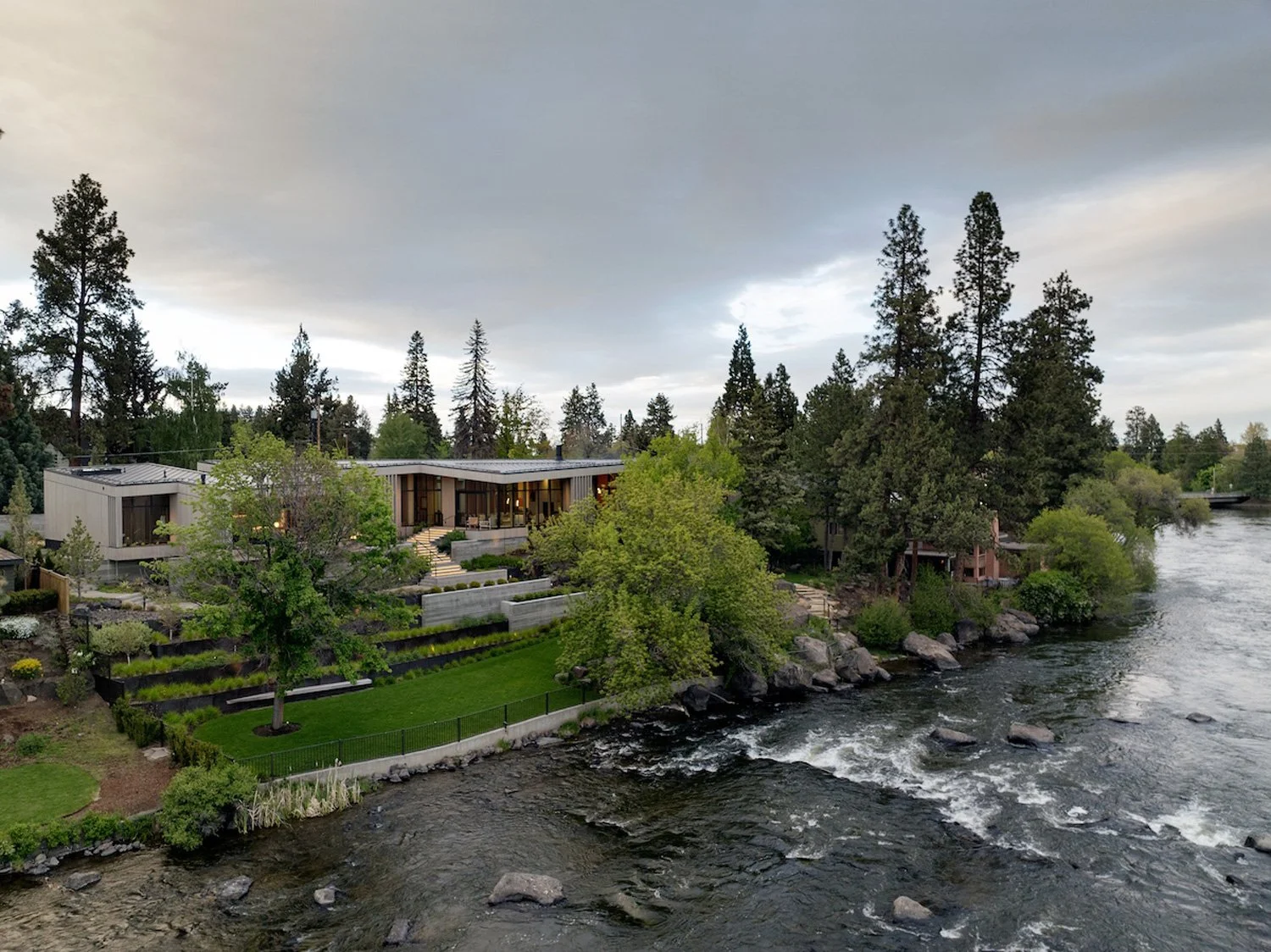
The result is Lakeside Landing, a three-story residence in Seattle, Washington, that reads as a direct expression of its terrain. A monolithic wall anchors the structure into the hillside on one side, grounding the home with a sense of geological permanence, while the opposite façade opens entirely to the water.
The three-story glass and steel façade rises from cascading landscaping at the water's edge, its stacked levels oriented toward the lake.
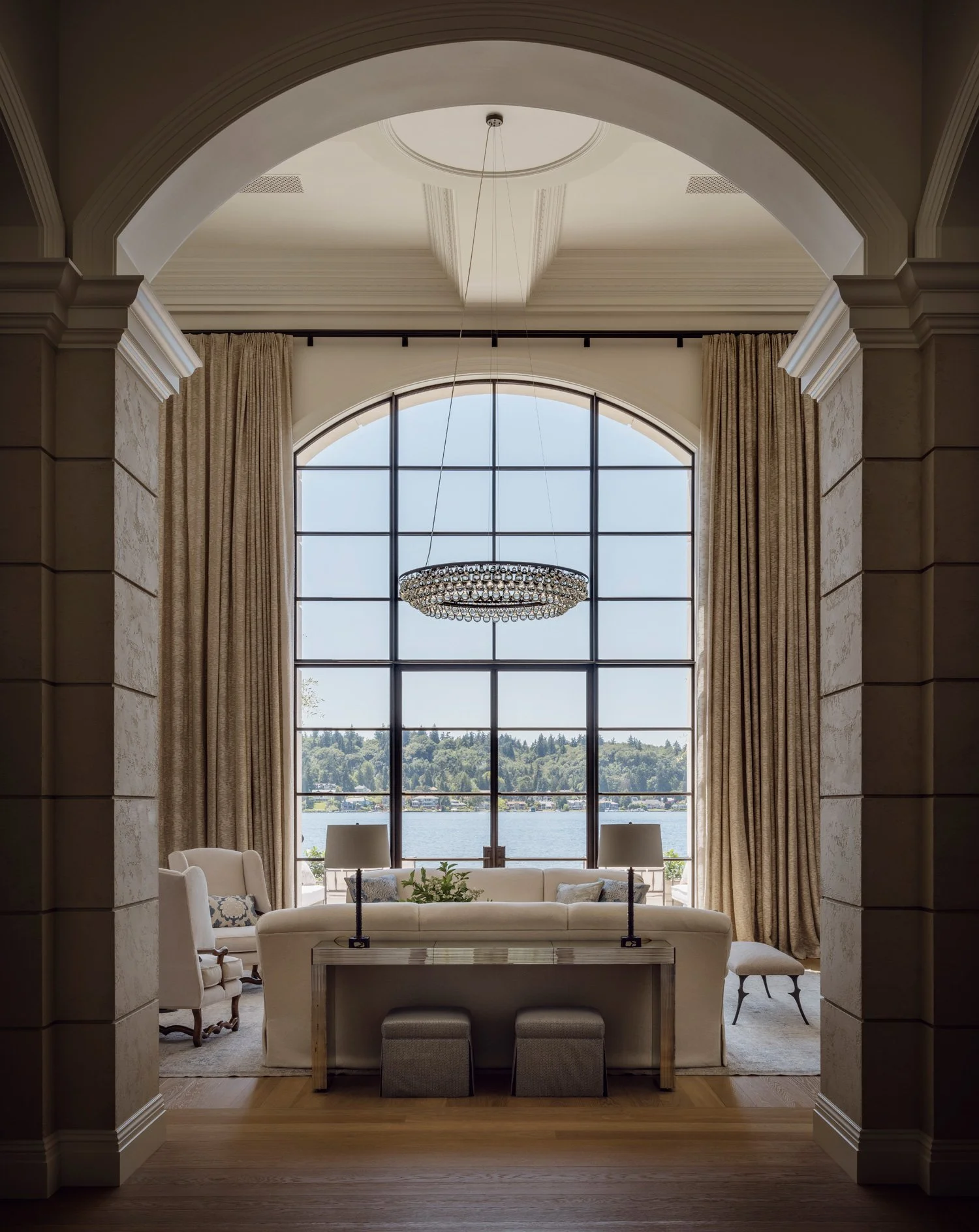
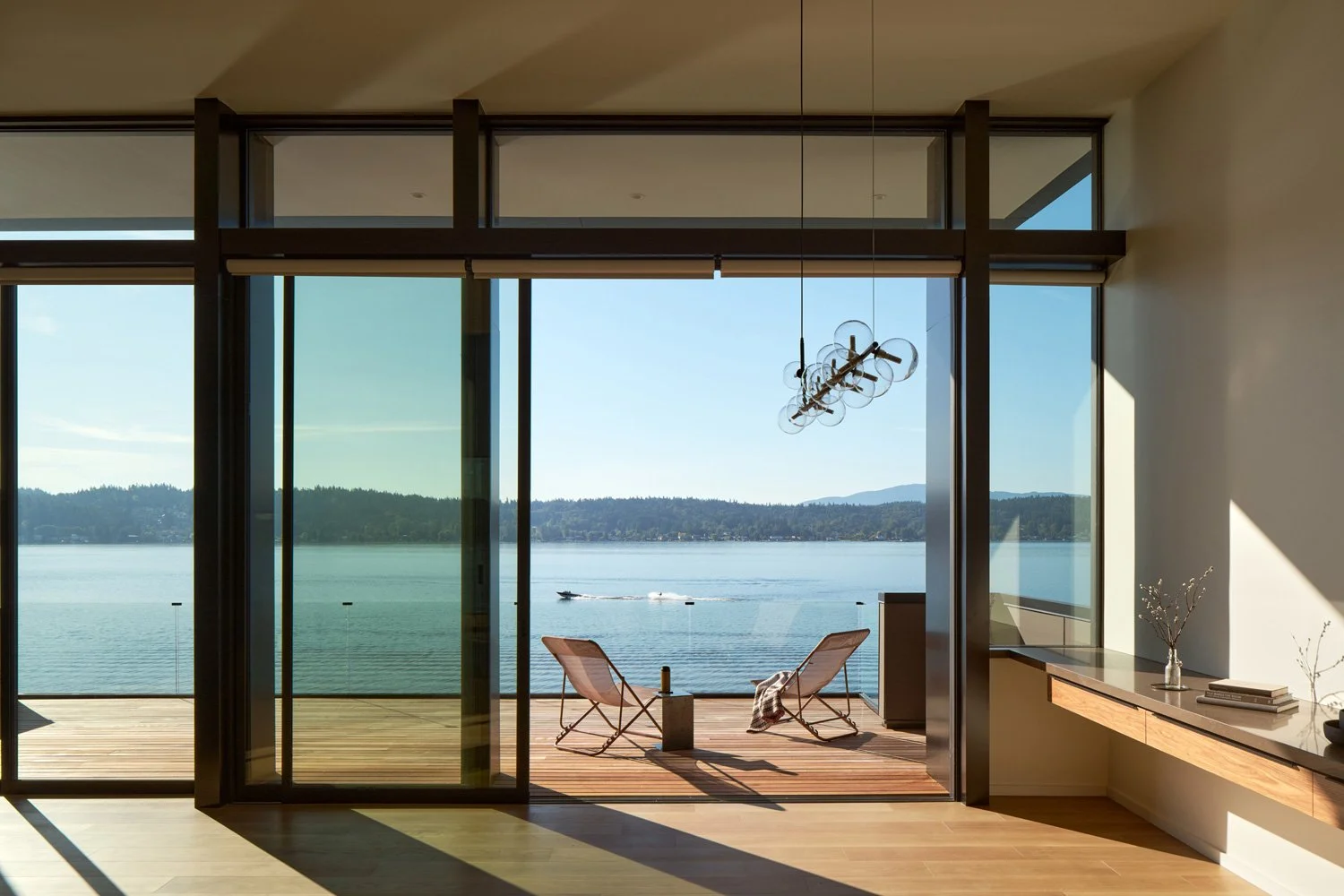
The entry itself immediately announces the design logic: a bridge spans the full one-story drop between the street and the front door, turning what might have been an awkward threshold into a considered arrival sequence. Step inside, and the panoramic lake view opens without warning, framed by floor-to-ceiling glazing across the living and dining spaces.
The steel-grate entry bridge, flanked by columnar trees and dark metal cladding, frames the arrival sequence with an architectural precision that signals the design logic within.
There is a direct sightline to the waterfront from to the entry via a framed window opening, flanked by a continuous wall of dark casework that conceals storage behind flush-panel doors.
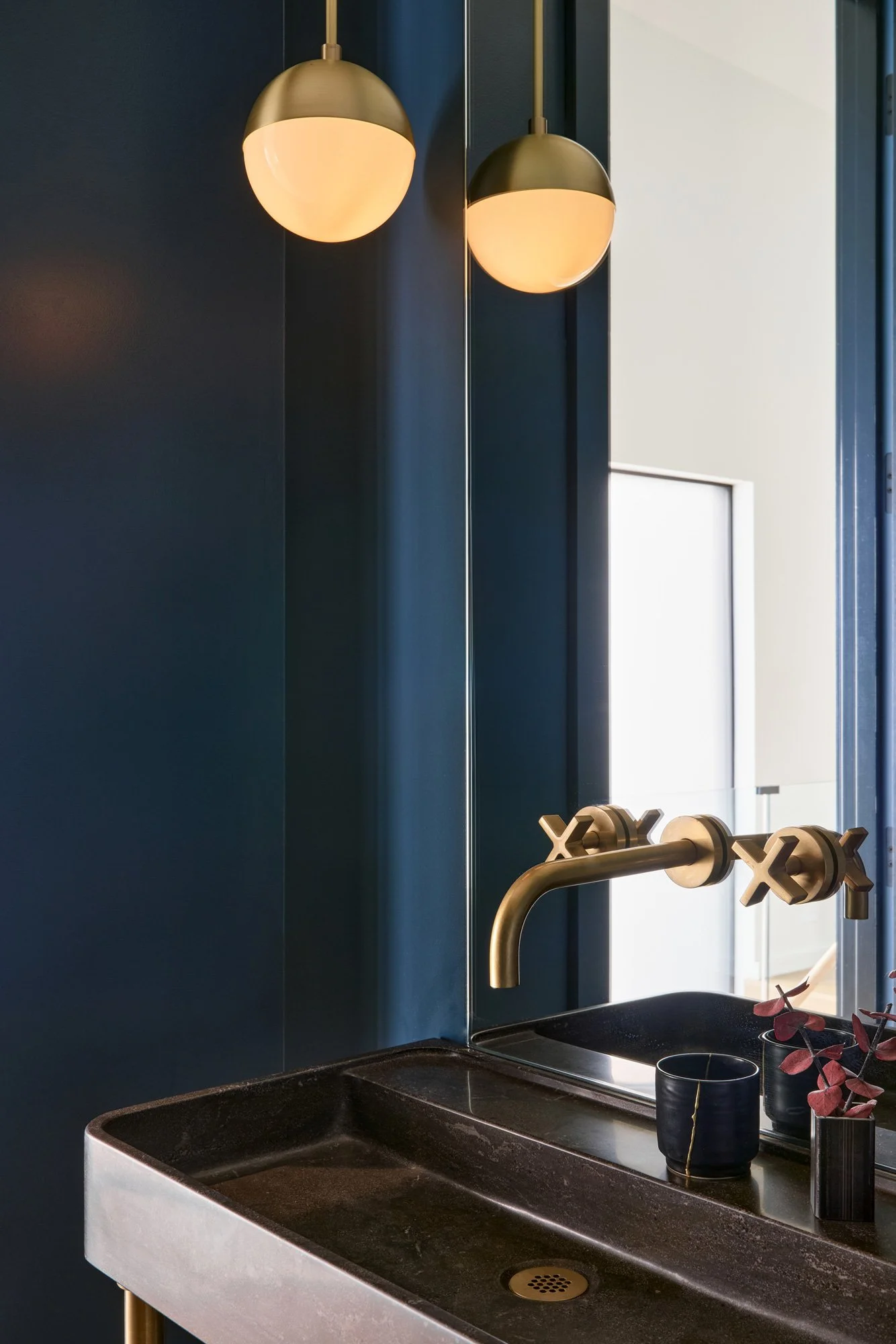
Each level of the home was oriented deliberately around the waterfront, ensuring that the most-used rooms on every floor benefit from the view. On the main level, a linear kitchen runs the full span between the water vista and a casework wall that conceals the pantry and media rooms behind it. A metal-clad box punctuates the open plan, housing the coffee bar, wine closet, elevator, and a jewel box powder room finished in deep navy with brass fittings. The public spaces form an L-shape, a layout that feels both expansive and considered.
Walnut cabinetry, a stone-topped island, and a series of suspended cylindrical pendants give the linear kitchen a warm European restraint that holds the water view at one end and concealed storage at the other.
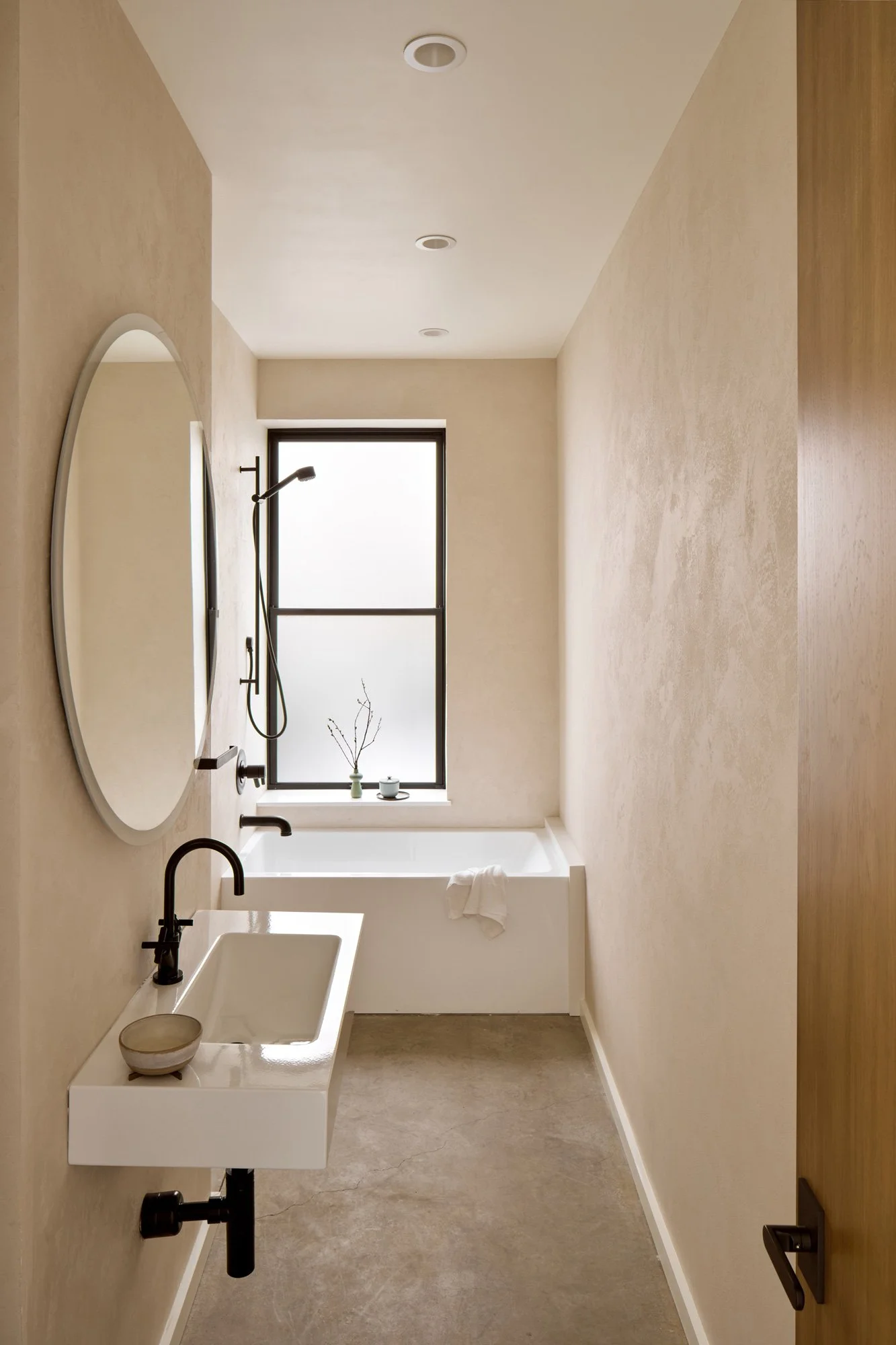
The middle level belongs to rest and restoration. The primary suite captures the waterfront view from the bedroom and a work-from-home office, while two dressing rooms and a spa-calibre primary bath complete the sequence. The influence of European spa culture, a direct reference point for the homeowners who had lived extensively across the continent, is legible in every material choice: honed stone, warm walnut, wall-mounted fixtures, and the kind of unhurried spatial logic that treats bathing as a ritual rather than a routine. A guest bedroom and secondary bath sit quietly at the rear, overlooking a private garden.
On the lower level, the home shifts register again. A second guest bedroom, a sauna, and a spa-adjacent bath are designed in direct dialogue with outdoor living, with cascading landscaping providing a natural path from interior to waterfront. The family room opens directly to the water, collapsing the distance between inside and lake.
Open-tread oak stairs rise against a full-height frosted window, the glass panel softening light into the home's core while the steel stringer hardware adds quiet industrial detail.
Threading all three levels together is a central stair flanked by a single multi-story window. It is a quietly brilliant move: the window draws natural light into the home's core and gives the staircase a sculptural presence that unifies the building vertically. The material palette throughout, warm woods, stone, and metal, keeps the home grounded and tactile without tipping into heaviness.
Lakeside Landing is a lesson in reading a site rather than overriding it. The slope that might have discouraged a lesser approach became the very thing that gives this home its structure, its drama, and its sense of inevitability.
The terrace promotes seamless indoor-outdoor living and is the perfect spot to take in the expansive water view.
PROJECT DETAILS
Architecture and Interiors: Graham Baba Architects | Instagram
Landscape Architect: Geyer Coburn Hutchins
Contractor: CA Adams, LLC
Photography: Ross Eckert